Importo totale (1 articolo articoli):
Destinazione ordine:

johann friedrich miescher (5 risultati)
Vai alla pagina principale dei risultati di ricerca
Tipo di articolo
- Tutti gli articoli
- Libri (5)
- Riviste e Giornali
- Fumetti
- Spartiti
- Arte, Stampe e Poster
- Fotografie
- Mappe
-
Manoscritti e
Collezionismo cartaceo
Condizioni
Legatura
- Tutte
- Rilegato
- Brossura
Ulteriori caratteristiche
- Prima edizione (2)
- Copia autografata
- Sovraccoperta
- Con foto (2)
- No print on demand
Paese del venditore
Valutazione venditore
-
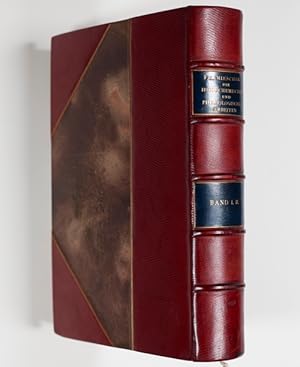
Die Histochemische und Physiologischen Arbeiten. 2 Bde. (all publ.).
Data di pubblicazione: 1897
Da: Antiq. F.-D. Söhn - Medicusbooks.Com, Marburg, Germania
Membro dell'associazione: ILAB VDA
Valutazione venditore:

Libro Prima edizione
Leipzig, Verlag von F.C.W. Vogel, 1897, 8°, (2), 138 pp., Portrait; (6), 543, (1) pp., mit 25 Abbildungen, Halbledereinband mit 5 Bünden mit eingebundener orig. Broschur, gebunden von A. Friedrich, Berlin; feines unbeschnittenes Expl. First Edition! "Die Würdigung Miescher's und seiner Arbeiten wird mit der Zeit nicht abnehmen, sondern wachsen, und die von ihmgefundenen Thatsachen und Gedanken sind Keime, denen noch eine fruchtbringende Zukunft bevorsteht. Leipzig, 9. Mail 1897. His." Vol. I: Einleitung v. W. His. F. Miescher (pp.5-32) v. W. His. Aus dem wissenschaftlichen Briefwechsel F. Miescher: Briefe I-XV. Die Entdeckung und Bearbeitung des Nucleins 1869-1870. Briefe XVI-XXIV. Das Laboratorium von C. Ludwig 1869-1870 und 1994-1895. Briefe XXV-XXXVI. Die ersten arbeiten über das Sperma 1871-1874. Briefe XXXVII-LXXXIII. Briefe über histochemische Probleme allgemeiner Natur (Bindesubstanzen, Gewebsathmung, Berfruchtung u.s.w.). Ueber die Chemie des unbefruchteten und befruchteten Eies, über die chemische Entwicklung der Spermatozoen u.s.w. Briefe LXXXIV-LXXXVII. Ernährung in Strafanstalten und Volksernährung 1876-1884. Briefe LXXXVIII-XCVI. Respirationsarbeiten. Briefe XCVI-XCVIII. Verschiedene Briefe allgemeinen Inhalts. Vol. II: A. Arbeiten von F.Miescher. 1. Ueber die chemische Zusammensetzung der Eiterzellen. 2. Die Kerngebilde im Dotter des Hühnereies. 3. Nachträgliche Bemerkungen. 4. Der physiologische Process der Athmung. 5. Die Spermatozoen einiger Wirbelthiere. 6. Ueber das Ei. 7. Statistische und biologische Beiträge zur Kenntniss vom Leben des Rheinlachses im Süsswasser. 8. Ueber das Leben des Rheinlachses im Süsswasser. (ohne 2 Tafeln). 9. Die Aufgabe der Volksernährung im Lichte der Wissenschaft. 10. Ueber die Ernährung der Sträflinge. 11. Bemerkungen zur Lehre von den Athembewegungen. Anhang zu den Bemerkungen zur Lehre von den Athembewegungen, redigirt von Dr. A. Jaquet . 12. Der Athemschieber. 13. Biologische Studien über das Leben des Rheinlachses im Süsswasser. 14. Physiologische Fragmente über den Rbeinlachs. 15. Ueber die Beziehungen zwischen Meereshöhe und Beschaffenheit des Blutes. 16. Physiologisch-chemische Untersuchungen über die Lachsmilch. 17. Miescher's Beobachtungen über die morphologische Entwickelung der Lachsspermatozoen. Nachtrag von W. His. B. Aus dem physiologischen Laboratorium von Weil. Prof. F. Miescher an der Universität in Basel. Untersuchungen über den Einfluss des Höhenklimas auf die Beschaffenheit des Blutes. 18. Veillon, E.: Der Fleischl-Miescher'sche Hämometer und die Prüfung seiner Leistungsfähigkeit. 19. Egger, F.: Beobachtungen an Menschen und Kaninchen über den Einfluss des Klimas von Arosa (Graubünden, 1890 m) auf das Blut. 20. Karcher, J., E. Veillon, F. Suter: Ueber die Veränderungen des Blutes beim Uebergang von Basel (266 m) nach Champéry (1052 m), Serneus (986 m) und Langenbruck (700 m). 21. Miescher, F.: Bemerkungen zur Physiologie des Höhenklimas. 22. Suter, F. und A. Jaquet: Höhenklima und Blutbildung, als Anhang. Second print of "Ueber die chemische Zusammensetzung der Eiterzellen*" Johann Friedrich Miescher (1844-1895) discovered a substance which he termed nuclein (nucleoprotein), later shown to be the hereditary genetic material. He demonstrated it in pure cells. He was also the first to suggest the existence of the genetic code. see- Nature (Lond.) 1967, (215), p.556 One of the earliest significant contributions to the field that would eventually be called molecular biology. "Miescher's first and most important discovery was a new class of compounds rich in organic phosphorus and forming the major constituent of cell nuclei. He rightly concluded that these 'nucleins,' as he called them, were as important a center of metabolic activity as the proteins". DSB Miescher's "nuclein" (nucleoprotein) was later demonstrated to be the hereditary genetic material (DNA). He also was the .
-

Ueber die chemische Zusammensetzung der Eiterzellen ((4): pp.441-460).
Data di pubblicazione: 1871
Da: Antiq. F.-D. Söhn - Medicusbooks.Com, Marburg, Germania
Membro dell'associazione: ILAB VDA
Valutazione venditore:
Libro Prima edizione
Histoch. physiol. Arb., 2. - Leipzig, Verlag von F.C.W. Vogel, 1897, 8°, (6), 543, (1) pp., mit 25 Abbildungen im Text, Halbledereinband mit eingebundener orig. Broschur. First Edition and second print of "Ueber die chemische Zusammensetzung der Eiterzellen" collected and edited by his friends in "Die Histochemischen und Physiologischen Arbeiten"! Johann Friedrich Miescher (1844-1895) discovered a substance which he termed nuclein (nucleoprotein), later shown to be the hereditary genetic material. He demonstrated it in pure cells. He was also the first to suggest the existence of the genetic code. see- Nature (Lond.) 1967, (215), p.556 One of the earliest significant contributions to the field that would eventually be called molecular biology. "Miescher's first and most important discovery was a new class of compounds rich in organic phosphorus and forming the major constituent of cell nuclei. He rightly concluded that these 'nucleins,' as he called them, were as important a center of metabolic activity as the proteins". DSB Miescher's "nuclein" (nucleoprotein) was later demonstrated to be the hereditary genetic material (DNA). He also was the first to suggest the existence of a genetic code. Content of this volume: A. Arbeiten von F. Miescher. 1. Ueber die chemische Zusammensetzung der Eiterzellen. 2. Die Kerngebilde im Dotter des Hühnereies. 3. Nachträgliche Bemerkungen. 4. Der physiologische Process der Athmung. 5. Die Spermatozoen einiger Wirbelthiere. 6. Ueber das Ei. 7. Statistische und biologische Beiträge zur Kenntniss vom Leben des Rheinlachses im Süsswasser. 8. Ueber das Leben des Rheinlachses im Süsswasser. (ohne 2 Tafeln). 9. Die Aufgabe der Volksernâhrung im Lichte der Wissenschaft. 10. Ueber die Ernährung der Sträflinge. 11. Bemerkungen zur Lehre von den Athembewegungen. Anhang zu den Bemerkungen zur Lehre von den Athembewegungen, redigirt von Dr. A. Jaquet . 12. Der Athemschieber. 13. Biologische Studien über das Leben des Rheinlachses im Süsswasser. 14. Physiologische Fragmente über den Rbeinlachs. 15. Ueber die Beziehungen zwischen Meereshöhe und Beschaffenheit des Blutes. 16. Physiologisch-chemische Untersuchungen über die Lachsmilch. 17. Miescher's Beobachtungen über die morphologische Entwickelung der Lachsspermatozoen. Nachtrag von W. His. B. Aus dem physiologischen Laboratorium von Weil. Prof. F. Miescheran der Universität in Basel. Untersuchungen über den Einfluss des Höhenklimas auf die Beschaffenheit des Blutes. 18. Veillon, E.: Der Fleischl-Miescher'sche Hämometer und die Prüfung seiner Leistungsfähigkeit. 19. Egger, F.: Beobachtungen an Menschen und Kaninchen über den Einfluss des Klimas von Arosa (Graubünden, 1890 m) auf das Blut. 20. Karcher, J., E. Veillon, F. Suter: Ueber die Veränderungen des Blutes beim Uebergang von Basel (266 m) nach Champéry (1052 m), Serneus (986 m) und Langenbruck (700 m). 21. Miescher, F.: Bemerkungen zur Physiologie des Höhenklimas. 22. Suter, F. und A. Jaquet: Höhenklima und Blutbildung, als Anhang. Garrison & Morton No. 695. (1st Ed. 1871).
-

Der "Athemschieber". Ein neuer Apparat zur künstlichen Respiration und seine Controle am lebenen Thiere (pp.341-348, 2 Abb.).
Data di pubblicazione: 1888
Da: Antiq. F.-D. Söhn - Medicusbooks.Com, Marburg, Germania
Membro dell'associazione: ILAB VDA
Valutazione venditore:
Libro
Zbl. Physiologie, 2/14. - Leipzig & Wien, Franz Deuticke, 13. October 1888, 8°, pp.341-372, feine Broschur.
-

Die histochemischen und physiologischen Arbeiten von Friedrich Miescher: Band 2 [Reprint of the Original from 1897]
Editore: EOD Network, 2014
ISBN 10: 322603054XISBN 13: 9783226030549
Libro
Paperback. Condizione: Brand New. 560 pages. German language. 7.88x5.51x1.27 inches. In Stock.
-

Die histochemischen und physiologischen Arbeiten von Friedrich Miescher: [Reprint of the Original from 1897]
Editore: EOD Network, 2014
ISBN 10: 322603040XISBN 13: 9783226030402
Libro
Paperback. Condizione: Brand New. 150 pages. German language. 9.84x6.30x0.34 inches. In Stock.