
Articoli correlati a Digital Logic and State Machine Design
Sinossi
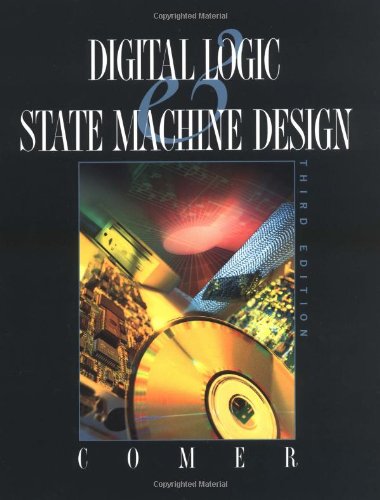
From one of the best known and successful authors in the field, this new edition provides concise, practical coverage of digital system design aimed at undergraduates. The primary goal of this book is to illustrate that sequential circuits can be designed using state machine techniques. These methods apply to sequential circuit design as efficiently as Boolean algebra and Karnaugh mapping methods apply to combinatorial design. Comer presents the techniques involved, then proceeds directly to designing digital systems - a task comprising producing the schematic or block diagram of a system based on a given set of specifications. The design serves as the basis for the construction of the actual hardware system. This new edition introduces state machines earlier than in previous editions, amd adds new chapters on programmable logic devices and computer organization.
Le informazioni nella sezione "Riassunto" possono far riferimento a edizioni diverse di questo titolo.
Contenuti
- Introduction to Digital Systems
- 1.1: Overview
- 1.2: The Integrated Circuit
- 1.3: Design and Analysis
- 1: Binary Systems and Logic Circuits
- 1.1: The Advantages of Binary
- 1.2: Number Systems
- 1.3: The Use of Binary in Digital Systems
- 1.4: Logic Gates
- 1.5: Logic Families
- 2: Boolean Algebra and Mapping Methods
- 2.1: Boolean Algebra
- 2.2: Karnaugh Maps
- 2.3: Variable-Entered Maps
- 2.4: Realizing Logic Functions with Gates
- 2.5: Combinational Design Examples
- 3: Logic Function Realization with MSI Circuits
- 3.1: Combinational Logic with Multiplexers and Decoders
- 3.2: Standard Logic Functions with MSI Circuits
- 3.3: Design Problem Using MSI Circuits
- 4: Flip-Flops, Counters, and Registers
- 4.1: The Bistable Multivibrator
- 4.2: Flip-Flop Applications
- 5: Introduction to State Machines
- 5.1: The Need for State Machines
- 5.2: The State Machine
- 5.3: Basic Concepts in State Machine Analysis
- 6: Synchronous State Machine Design
- 6.1: Sequential Counters
- 6.2: State Changes Referenced to Clock
- 6.3: Number of State Flip-Flops
- 6.4: Input Forming Logic
- 6.5: Output Forming Logic
- 6.6: Generation of a State Diagram from a Timing Chart
- 6.7: Redundant States
- 6.8: General State Machine Architecture
- 7: Interfacing and Design of Synchronous Systems
- 7.1: Mainly Synchronous Systems
- 7.2: Top-Down Design
- 7.3: Design Procedures
- 7.4: Design Examples
- 7.5: Micscellaneous Aspects of State Machine Design
- 8: Programmable Logic Devices
- 8.1: Introduction to Programmable Logic Devices
- 8.2: Read-Only Memory
- 8.3: Programmable Logic Arrays
- 8.4: Programmable Array Logic or PAL®
- 8.5: Combinational PLD-Based State Machines
- 8.6: State Machines on a Chip
- 9: Digital Computing
- 9.1: The Digital Computer
- 9.2: Binary Arithmetic
- 9.3: Arithmetic Circuits
- 9.4: Memory Circuits
- 9.5: The Control Unit
- 10: Asynchronous State Machines
- 10.1: The Fundamental-Mode Model
- 10.2: Problems of Asynchronous Circuits
- 10.3: Basic Design Principles
- 10.4: An Asynchronous Design Example
- Appendix 1: Logic Families
- Appendix 2: Pulse Generating Circuits
- Answers to Drill Problems
- Answers to Selected Problems
- Index
Le informazioni nella sezione "Su questo libro" possono far riferimento a edizioni diverse di questo titolo.
Risultati della ricerca per Digital Logic and State Machine Design

Foto dell'editore
Digital Logic and State Machine Design
Editore:
Oxford University Press, USA, 1994
ISBN 10: 0195107233
ISBN 13: 9780195107234
Antico o usato
Rilegato
Da: ThriftBooks-Atlanta, AUSTELL, GA, U.S.A.
Valutazione del venditore 5 su 5 stelle

Hardcover. Condizione: Very Good. No Jacket. May have limited writing in cover pages. Pages are unmarked. ~ ThriftBooks: Read More, Spend Less. Codice articolo G0195107233I4N00
Compra usato
EUR 26,32
Spedizione gratuita
Spedito in U.S.A.
Spedito in U.S.A.
Quantità: 1 disponibili
Immagini fornite dal venditore
Digital Logic and State Machine Design (The ^AOxford Series in Electrical and Computer Engineering)
Editore:
Oxford University Press, 1994
ISBN 10: 0195107233
ISBN 13: 9780195107234
Antico o usato
Rilegato
Da: Goodwill of Silicon Valley, SAN JOSE, CA, U.S.A.
Valutazione del venditore 4 su 5 stelle

Condizione: good. Supports Goodwill of Silicon Valley job training programs. The cover and pages are in Good condition! Any other included accessories are also in Good condition showing use. Use can include some highlighting and writing, page and cover creases as well as other types visible wear. Codice articolo GWSVV.0195107233.G
Compra usato
EUR 26,36
Spedizione EUR 3,56
Spedito in U.S.A.
Spedito in U.S.A.
Quantità: 1 disponibili
Foto dell'editore
Digital Logic and State Machine Design
Editore:
Oxford University Press, Incorporated, 1994
ISBN 10: 0195107233
ISBN 13: 9780195107234
Antico o usato
Rilegato
Da: Better World Books Ltd, Dunfermline, Regno Unito
Valutazione del venditore 5 su 5 stelle
Condizione: Good. Former library copy. Pages intact with minimal writing/highlighting. The binding may be loose and creased. Dust jackets/supplements are not included. Includes library markings. Stock photo provided. Product includes identifying sticker. Better World Books: Buy Books. Do Good. Codice articolo 9688301-6
Compra usato
EUR 26,31
Spedizione EUR 5,90
Spedito da Regno Unito a U.S.A.
Spedito da Regno Unito a U.S.A.
Quantità: 1 disponibili
Foto dell'editore
Digital Logic and State Machine Design (The ^AOxford Series in Electrical and Computer Engineering)
Editore:
Oxford University Press, 1994
ISBN 10: 0195107233
ISBN 13: 9780195107234
Antico o usato
Rilegato
Da: YESIBOOKSTORE, MIAMI, FL, U.S.A.
Valutazione del venditore 5 su 5 stelle
hardcover. Condizione: As New. Codice articolo 0195107233-VB
Compra usato
EUR 101,98
Spedizione gratuita
Spedito in U.S.A.
Spedito in U.S.A.
Quantità: 1 disponibili
Foto dell'editore
Digital Logic and State Machine Design (The ^AOxford Series in Electrical and Computer Engineering)
Da: GoldBooks, Denver, CO, U.S.A.
Valutazione del venditore 5 su 5 stelle
Hardcover. Condizione: new. New Copy. Customer Service Guaranteed. Codice articolo 86Q94_31_0195107233
Compra nuovo
EUR 227,07
Spedizione EUR 4,91
Spedito in U.S.A.
Spedito in U.S.A.
Quantità: 1 disponibili
Foto dell'editore
Digital Logic and State Machine Design (eng)
Print on DemandDa: Brook Bookstore On Demand, Napoli, NA, Italia
Valutazione del venditore 5 su 5 stelle
Condizione: new. Questo è un articolo print on demand. Codice articolo f3342b7c3713c2e62a62a4a1e4be2643
Compra nuovo
EUR 299,39
Spedizione EUR 11,00
Spedito da Italia a U.S.A.
Spedito da Italia a U.S.A.
Quantità: Più di 20 disponibili
Foto dell'editore
Digital Logic and State Machine Design (The Oxford Series in Electrical and Computer Engineering)
Da: BennettBooksLtd, Los Angeles, CA, U.S.A.
Valutazione del venditore 5 su 5 stelle
hardcover. Condizione: New. In shrink wrap. Looks like an interesting title! Codice articolo Q-0195107233
Compra nuovo
EUR 695,58
Spedizione EUR 6,21
Spedito in U.S.A.
Spedito in U.S.A.
Quantità: 1 disponibili