Sinossi
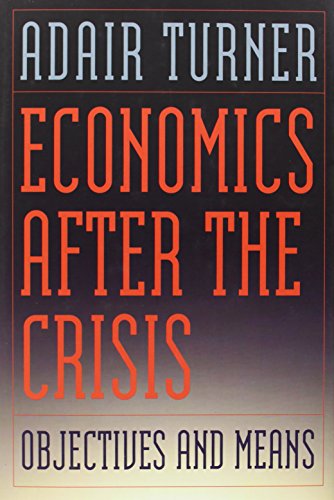
A noted economist challenges the fundamental economic assumptions that cast economic growth as the objective and markets as the universally applicable means of achieving it.
The global economic crisis of 2008–2009 seemed a crisis not just of economic performance but also of the system's underlying political ideology and economic theory. But a second Great Depression was averted, and the radical shift to New Deal-like economic policies predicted by some never took place. Perhaps the correct response to the crisis is simply careful management of the macroeconomic challenges as we recover, combined with reform of financial regulation to prevent a recurrence. In Economics After the Crisis, Adair Turner offers a strong counterargument to this somewhat complacent view. The crisis of 2008–2009, he writes, should prompt a wide set of challenges to economic and political assumptions and to economic theory.
Turner argues that more rapid growth should not be the overriding objective for rich developed countries, that inequality should concern us, that the pre-crisis confidence in financial markets as the means of pursuing objectives was profoundly misplaced.
Le informazioni nella sezione "Riassunto" possono far riferimento a edizioni diverse di questo titolo.
Informazioni sull?autore
Adair Turner, Chairman of Britain's Financial Services Authority from September 2008 to March 2013, is a Senior Fellow of the Institute for New Economic Thinking. He is Visiting Professor at the London School of Economics and at Cass Business School, City University London, and the author of Just Capital: The Liberal Economy.
Le informazioni nella sezione "Su questo libro" possono far riferimento a edizioni diverse di questo titolo.
Altre edizioni note dello stesso titolo

Risultati della ricerca per Economics After the Crisis: Objectives and Means

Foto dell'editore
Economics After the Crisis: Objectives and Means (The Lionel Robbins Lectures)
Editore:
MIT Press (edition ), 2012
ISBN 10: 026201744X
ISBN 13: 9780262017442
Antico o usato
Rilegato
Da: BooksRun, Philadelphia, PA, U.S.A.
Valutazione del venditore 5 su 5 stelle

Hardcover. Condizione: Very Good. It's a well-cared-for item that has seen limited use. The item may show minor signs of wear. All the text is legible, with all pages included. It may have slight markings and/or highlighting. Codice articolo 026201744X-8-1
Compra usato
EUR 4,30
Spese di spedizione:
GRATIS
In U.S.A.
Quantità: 1 disponibili
Immagini fornite dal venditore
Economics After the Crisis: Objectives and Means (The Lionel Robbins Lectures)
Da: Bellwetherbooks, McKeesport, PA, U.S.A.
Valutazione del venditore 5 su 5 stelle
hardcover. Condizione: Very Good. Very Good Condition- May show some limited signs of wear and may have a black line or red dot on edge of pages. Pages and dust cover are intact and not marred by notes or highlighting. Codice articolo MIT-HC-VG-M-026201744X
Compra usato
EUR 2,39
Spese di spedizione:
EUR 3,39
In U.S.A.
Quantità: 1 disponibili
Foto dell'editore
Economics after the Crisis : Objectives and Means
Da: Better World Books, Mishawaka, IN, U.S.A.
Valutazione del venditore 5 su 5 stelle
Condizione: Good. Former library book; may include library markings. Used book that is in clean, average condition without any missing pages. Codice articolo 361471-75
Compra usato
EUR 6,09
Spese di spedizione:
GRATIS
In U.S.A.
Quantità: 2 disponibili
Foto dell'editore
Economics after the Crisis : Objectives and Means
Da: Better World Books: West, Reno, NV, U.S.A.
Valutazione del venditore 5 su 5 stelle
Condizione: Very Good. Used book that is in excellent condition. May show signs of wear or have minor defects. Codice articolo 9744826-6
Compra usato
EUR 6,09
Spese di spedizione:
GRATIS
In U.S.A.
Quantità: 1 disponibili
Foto dell'editore
Economics After the Crisis: Objectives and Means
Da: ThriftBooks-Dallas, Dallas, TX, U.S.A.
Valutazione del venditore 5 su 5 stelle
Hardcover. Condizione: As New. No Jacket. Pages are clean and are not marred by notes or folds of any kind. ~ ThriftBooks: Read More, Spend Less. Codice articolo G026201744XI2N00
Compra usato
EUR 6,23
Spese di spedizione:
GRATIS
In U.S.A.
Quantità: 1 disponibili
Foto dell'editore
Economics After the Crisis: Objectives and Means
Da: ThriftBooks-Atlanta, AUSTELL, GA, U.S.A.
Valutazione del venditore 5 su 5 stelle
Hardcover. Condizione: As New. No Jacket. Pages are clean and are not marred by notes or folds of any kind. ~ ThriftBooks: Read More, Spend Less. Codice articolo G026201744XI2N00
Compra usato
EUR 6,23
Spese di spedizione:
GRATIS
In U.S.A.
Quantità: 1 disponibili
Foto dell'editore
Economics after the Crisis â" Objectives and Means (Lionel Robbins Lectures)
Da: WorldofBooks, Goring-By-Sea, WS, Regno Unito
Valutazione del venditore 5 su 5 stelle
Paperback. Condizione: Very Good. The book has been read, but is in excellent condition. Pages are intact and not marred by notes or highlighting. The spine remains undamaged. Codice articolo GOR006488677
Compra usato
EUR 3,54
Spese di spedizione:
EUR 6,41
Da: Regno Unito a: U.S.A.
Quantità: 4 disponibili
Foto dell'editore
Economics After the Crisis: Objectives and Means (Lionel Robbins Lectures)
Da: Murphy-Brookfield Books, Iowa City SE, IA, U.S.A.
Valutazione del venditore 5 su 5 stelle
Hardcover. Condizione: Fine. Condizione sovraccoperta: Near Fine. clean, unmarked copy. Codice articolo 365637
Compra usato
EUR 8,85
Spese di spedizione:
EUR 4,72
In U.S.A.
Quantità: 1 disponibili
Foto dell'editore
Economics After the Crisis: Objectives and Means
Editore:
MIT Press March 2012, 2012
ISBN 10: 026201744X
ISBN 13: 9780262017442
Antico o usato
Rilegato
Da: Montclair Book Center, Montclair, NJ, U.S.A.
Valutazione del venditore 4 su 5 stelle

Hardcover. Condizione: USED Good. Codice articolo 588049
Compra usato
EUR 11,07
Spese di spedizione:
EUR 4,29
In U.S.A.
Quantità: 1 disponibili
Immagini fornite dal venditore
Economics After the Crisis: Objectives and Means
Da: Bookbot, Prague, Repubblica Ceca
Valutazione del venditore 5 su 5 stelle
Hardcover. Condizione: Fair. Beschriftungen / Markierungen. A noted economist challenges the fundamental economic assumptions that cast economic growth as the objective and markets as the universally applicable means of achieving it. The global economic crisis of 2008-2009 seemed a crisis not just of economic performance but also of the system's underlying political ideology and economic theory. But a second Great Depression was averted, and the radical shift to New Deal-like economic policies predicted by some never took place. Perhaps the correct response to the crisis is simply careful management of the macroeconomic challenges as we recover, combined with reform of financial regulation to prevent a recurrence. In Economics After the Crisis, Adair Turner offers a strong counterargument to this somewhat complacent view. The crisis of 2008-2009, he writes, should prompt a wide set of challenges to economic and political assumptions and to economic theory. Turner argues that more rapid growth should not be the overriding objective for rich developed countries, that inequality should concern us, that the pre-crisis confidence in financial markets as the means of pursuing objectives was profoundly misplaced. Codice articolo 28f65fbd-fd44-457f-95fe-c3c0e84de98f
Compra usato
EUR 4,14
Spese di spedizione:
EUR 15,99
Da: Repubblica Ceca a: U.S.A.
Quantità: 1 disponibili