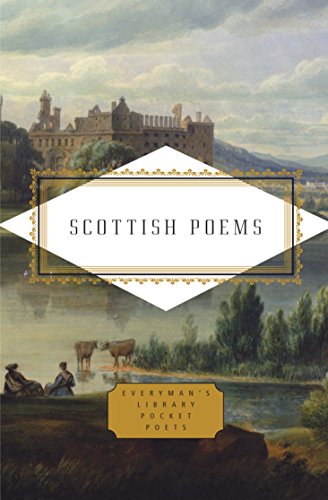
Sinossi
Scotland, like so many other nations, has produced poetry that is patriotic, that paints landscapes, people and situations, that speaks to personal matters, and those equally everyday matters pertaining to the mind and to the spirit. The Christian heritage of Scotland has long been played out in verse, through Celtic devotional works, Catholic works, Protestant works, and not forgetting satires on the Puritanism in Scotland's post-Reformation identity. Language and culture have been equally multifarious in the nation so that three major languages: Scots, English and Gaelic (examples of which are translated in this anthology) compete and co-exist in poetry. The fifteenth century poet, William Dunbar, joked that there was no music in hell except for the bagpipes, and there speaks something of the historic lowland attitude to the Gaidhealtachd (Gaelic speaking Scotland, principally the highlands). Hostility and eventual harmony is a marker of the Scottish highlands/lowlands divide as much as for that between Scotland and England. Historic tension is not to be dismissed but, certainly, the poetic palette of Scotland is one of multilingual richness, and shows an enduringly high quality whatever the cultural vicissitudes that play a part. The medieval Makars, most prominently Robert Henryson, William Dunbar and Gavin Douglas, are often taken to represent a golden age when poetry in Scots ran the full range of mood, mode and subject matter. If this has, perhaps, never been bettered, the sixteenth century lyrics and sonnets of Alexander Montgomerie, Alexander Scott and other poets around the court of James VI, and the eighteenth century vernacular 'revival' of Allan Ramsay, Alexander Ross, Robert Fergusson and Robert Burns represent at points equally brilliant periods; and the twentieth century 'modern renaissance' of Hugh MacDiarmid, Violet Jacob and William Souter proved that Scots remained a viable poetic currency, as a living poet such as Tom Leonard continues to demonstrate.
Poetry in Gaelic too has its tradition of peaks where the flame seems to burn more visibly at certain times than others. Alexander Macdonald (Alasdair Mac Mhaghstir Alasdair), Rob Donn (Rob Donn MacAoidh) and Duncan MacIntyre (Donnchadh Bàn Mac an t-Saoir) make the eighteenth century a high point in achievement, while Sorley Maclean, George Campbell Hay and Iain Crichton Smith do similarly for the twentieth century: the latter three, arguably, making Gaelic verse the most able variety in Scotland during the last sixty years. Historically as many successes are scored in Scottish poetry in English. James Thomson, author of The Seasons, joins James Macpherson translator/creator of the poetry of 'Ossian' in promulgating works that are seminally iconic and influential right across the artistic genres, painting and music as much as literature, in western culture. The romantic, patriotic poetic image of Scotland is sounded in English as much as in any other language, as the writing of Walter Scott or Lady Nairne attests. James (B.V.) Thomson, John Davidson, Edwin Muir, Norman MacCaig, W.S. Graham, Edwin Morgan, Liz Lochhead, Kathleen Jamie and Don Paterson are all deeply Scottish poets speaking through the nineteenth and twentieth centuries to the worldwide audience that exists for creative utterance that both emanates from but is never limited by the particularity of place. Scotland's story is one that is never certain, but, enduringly and importantly its poetry is.
Le informazioni nella sezione "Riassunto" possono far riferimento a edizioni diverse di questo titolo.
Descrizione del libro
Scottish poetry has a long and distinguished history in both English and Gaelic, stretching back into the Middle Ages. Its characteristic marks are energy, wit, satire and-especially in Gaelic - passionate lyrical intensity.
Most readers of English poetry are familiar with Irish writing in English, less so with Scots. This volume will add a whole new dimension to their experience of the unparalleled heritage of great poetry produced in these islands.
The collection contains all the poets everyone has heard of - Burns, Stevenson, MacDiarmid,Henryson, Scott, Drummond of Hawthornden - and many more beside, including writers from the current renaissance in Scottish poetry. There are many old friends here and many new delights.
Le informazioni nella sezione "Su questo libro" possono far riferimento a edizioni diverse di questo titolo.
Altre edizioni note dello stesso titolo

Risultati della ricerca per Scottish Poems

Foto dell'editore
Scottish Poems
Da: Better World Books Ltd, Dunfermline, Regno Unito
Valutazione del venditore 5 su 5 stelle

Condizione: Very Good. Ships from the UK. Former library book; may include library markings. Used book that is in excellent condition. May show signs of wear or have minor defects. Codice articolo 52780846-20
Compra usato
EUR 5,55
Spese di spedizione:
EUR 9,17
Da: Regno Unito a: U.S.A.
Quantità: 1 disponibili
Foto dell'editore
Scottish Poems
Da: Better World Books Ltd, Dunfermline, Regno Unito
Valutazione del venditore 5 su 5 stelle
Condizione: Good. Ships from the UK. Former library book; may include library markings. Used book that is in clean, average condition without any missing pages. Codice articolo 40098190-20
Compra usato
EUR 5,55
Spese di spedizione:
EUR 9,17
Da: Regno Unito a: U.S.A.
Quantità: 1 disponibili
Immagini fornite dal venditore
Scottish Poems
Da: GreatBookPrices, Columbia, MD, U.S.A.
Valutazione del venditore 5 su 5 stelle
Condizione: New. Codice articolo 5423363-n
Compra nuovo
EUR 13,38
Spese di spedizione:
EUR 2,27
In U.S.A.
Quantità: 4 disponibili
Immagini fornite dal venditore
Scottish Poems (Hardcover)
Da: Grand Eagle Retail, Bensenville, IL, U.S.A.
Valutazione del venditore 5 su 5 stelle
Hardcover. Condizione: new. Hardcover. Scottish poetry has a long and distinguished history in both English and Gaelic, stretching back into the Middle Ages. Its characteristic marks are energy, wit, satire and-especially in Gaelic - passionate lyrical intensity.Most readers of English poetry are familiar with Irish writing in English, less so with Scots. This volume will add a whole new dimension to their experience of the unparalleled heritage of great poetry produced in these islands.The collection contains all the poets everyone has heard of - Burns, Stevenson, MacDiarmid,Henryson, Scott, Drummond of Hawthornden - and many more beside, including writers from the current renaissance in Scottish poetry. There are many old friends here and many new delights.Scotland, like so many other nations, has produced poetry that is patriotic, that paints landscapes, people and situations, that speaks to personal matters, and those equally everyday matters pertaining to the mind and to the spirit. The Christian heritage of Scotland has long been played out in verse, through Celtic devotional works, Catholic works, Protestant works, and not forgetting satires on the Puritanism in Scotland's post-Reformation identity. Language and culture have been equally multifarious in the nation so that three major languages- Scots, English and Gaelic (examples of which are translated in this anthology) compete and co-exist in poetry. The fifteenth century poet, William Dunbar, joked that there was no music in hell except for the bagpipes, and there speaks something of the historic lowland attitude to the Gaidhealtachd (Gaelic speaking Scotland, principally the highlands). Hostility and eventual harmony is a marker of the Scottish highlands/lowlands divide as much as for that between Scotland and England. Historic tension is not to be dismissed but, certainly, the poetic palette of Scotland is one of multilingual richness, and shows an enduringly high quality whatever the cultural vicissitudes that play a part. The medieval Makars, most prominently Robert Henryson, William Dunbar and Gavin Douglas, are often taken to represent a golden age when poetry in Scots ran the full range of mood, mode and subject matter. If this has, perhaps, never been bettered, the sixteenth century lyrics and sonnets of Alexander Montgomerie, Alexander Scott and other poets around the court of James VI, and the eighteenth century vernacular 'revival' of Allan Ramsay, Alexander Ross, Robert Fergusson and Robert Burns represent at points equally brilliant periods; and the twentieth century 'modern renaissance' of Hugh MacDiarmid, Violet Jacob and William Souter proved that Scots remained a viable poetic currency, as a living poet such as Tom Leonard continues to demonstrate.Poetry in Gaelic too has its tradition of peaks where the flame seems to burn more visibly at certain times than others. Alexander Macdonald (Alasdair Mac Mhaghstir Alasdair), Rob Donn (Rob Donn MacAoidh) and Duncan MacIntyre (Donnchadh B n Mac an t-Saoir) make the eighteenth century a high point in achievement, while Sorley Maclean, George Campbell Hay and Iain Crichton Smith do similarly for the twentieth century- the latter three, arguably, making Gaelic verse the most able variety in Scotland during the last sixty years. Historically as many successes are scored in Scottish poetry in English. James Thomson, author of The Seasons, joins James Macpherson translator/creator of the poetry of 'Ossian' in promulgating works that are seminally iconic and influential right across the artistic genres, painting and music as much as literature, in western culture. The romantic, patriotic poetic image of Scotland is sounded in English as much as in any other language, as the writing of Walter Scott or Lady Nairne attests. James (B.V.) Thomson, John Davidson, Edwin Muir, Norman MacCaig, W.S. Graham, Edwin Morgan, Liz Lochhead, Kathleen Jamie and Shipping may be from multiple locations in the US or from the UK, depending on stock availability. Codice articolo 9781841597799
Compra nuovo
EUR 15,73
Spese di spedizione:
GRATIS
In U.S.A.
Quantità: 1 disponibili
Immagini fornite dal venditore
Scottish Poems
Da: Rarewaves.com USA, London, LONDO, Regno Unito
Valutazione del venditore 5 su 5 stelle
Hardback. Condizione: New. Scotland, like so many other nations, has produced poetry that is patriotic, that paints landscapes, people and situations, that speaks to personal matters, and those equally everyday matters pertaining to the mind and to the spirit. The Christian heritage of Scotland has long been played out in verse, through Celtic devotional works, Catholic works, Protestant works, and not forgetting satires on the Puritanism in Scotland's post-Reformation identity. Language and culture have been equally multifarious in the nation so that three major languages: Scots, English and Gaelic (examples of which are translated in this anthology) compete and co-exist in poetry. The fifteenth century poet, William Dunbar, joked that there was no music in hell except for the bagpipes, and there speaks something of the historic lowland attitude to the Gaidhealtachd (Gaelic speaking Scotland, principally the highlands). Hostility and eventual harmony is a marker of the Scottish highlands/lowlands divide as much as for that between Scotland and England. Historic tension is not to be dismissed but, certainly, the poetic palette of Scotland is one of multilingual richness, and shows an enduringly high quality whatever the cultural vicissitudes that play a part. The medieval Makars, most prominently Robert Henryson, William Dunbar and Gavin Douglas, are often taken to represent a golden age when poetry in Scots ran the full range of mood, mode and subject matter. If this has, perhaps, never been bettered, the sixteenth century lyrics and sonnets of Alexander Montgomerie, Alexander Scott and other poets around the court of James VI, and the eighteenth century vernacular 'revival' of Allan Ramsay, Alexander Ross, Robert Fergusson and Robert Burns represent at points equally brilliant periods; and the twentieth century 'modern renaissance' of Hugh MacDiarmid, Violet Jacob and William Souter proved that Scots remained a viable poetic currency, as a living poet such as Tom Leonard continues to demonstrate. Poetry in Gaelic too has its tradition of peaks where the flame seems to burn more visibly at certain times than others. Alexander Macdonald (Alasdair Mac Mhaghstir Alasdair), Rob Donn (Rob Donn MacAoidh) and Duncan MacIntyre (Donnchadh Bàn Mac an t-Saoir) make the eighteenth century a high point in achievement, while Sorley Maclean, George Campbell Hay and Iain Crichton Smith do similarly for the twentieth century: the latter three, arguably, making Gaelic verse the most able variety in Scotland during the last sixty years. Historically as many successes are scored in Scottish poetry in English. James Thomson, author of The Seasons, joins James Macpherson translator/creator of the poetry of 'Ossian' in promulgating works that are seminally iconic and influential right across the artistic genres, painting and music as much as literature, in western culture. The romantic, patriotic poetic image of Scotland is sounded in English as much as in any other language, as the writing of. Codice articolo LU-9781841597799
Compra nuovo
EUR 15,88
Spese di spedizione:
GRATIS
Da: Regno Unito a: U.S.A.
Quantità: 3 disponibili
Immagini fornite dal venditore
Scottish Poems
Editore:
Everyman's Library, 2009
ISBN 10: 1841597791
ISBN 13: 9781841597799
Antico o usato
Rilegato
Da: GreatBookPrices, Columbia, MD, U.S.A.
Valutazione del venditore 5 su 5 stelle
Condizione: As New. Unread book in perfect condition. Codice articolo 5423363
Compra usato
EUR 14,18
Spese di spedizione:
EUR 2,27
In U.S.A.
Quantità: 4 disponibili
Immagini fornite dal venditore
Scottish Poems (Everyman's Library POCKET POETS)
Da: M Godding Books Ltd, Devizes, WILTS, Regno Unito
Valutazione del venditore 5 su 5 stelle
hardcover. Condizione: Very Good. Condizione sovraccoperta: Very Good Jacket. . Posted within 1 working day. 1st class tracked post to the UK, Airmail with tracking worldwide. Robust recyclable packaging. Picture is the actual item. Codice articolo 252748
Compra usato
EUR 4,36
Spese di spedizione:
EUR 12,74
Da: Regno Unito a: U.S.A.
Quantità: 1 disponibili
Foto dell'editore
Scottish Poems
Da: PBShop.store UK, Fairford, GLOS, Regno Unito
Valutazione del venditore 5 su 5 stelle
HRD. Condizione: New. New Book. Shipped from UK. Established seller since 2000. Codice articolo GB-9781841597799
Compra nuovo
EUR 13,94
Spese di spedizione:
EUR 4,77
Da: Regno Unito a: U.S.A.
Quantità: 4 disponibili
Foto dell'editore
Scottish Poems
Da: Majestic Books, Hounslow, Regno Unito
Valutazione del venditore 4 su 5 stelle

Condizione: New. pp. 256. Codice articolo 38618755
Compra nuovo
EUR 14,94
Spese di spedizione:
EUR 7,45
Da: Regno Unito a: U.S.A.
Quantità: 3 disponibili
Foto dell'editore
Scottish Poems
Da: Brit Books, Milton Keynes, Regno Unito
Valutazione del venditore 5 su 5 stelle
Hardcover. Condizione: Used; Very Good. ***Simply Brit*** Welcome to our online used book store, where affordability meets great quality. Dive into a world of captivating reads without breaking the bank. We take pride in offering a wide selection of used books, from classics to hidden gems, ensuring there is something for every literary palate. All orders are shipped within 24 hours and our lightning fast-delivery within 48 hours coupled with our prompt customer service ensures a smooth journey from ordering to delivery. Discover the joy of reading with us, your trusted source for affordable books that do not compromise on quality. Codice articolo 3752700
Compra usato
EUR 5,72
Spese di spedizione:
EUR 18,33
Da: Regno Unito a: U.S.A.
Quantità: 1 disponibili