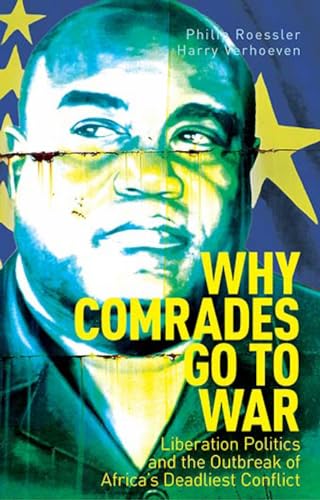
Why Comrades Go to War: Liberation Politics and the Outbreak of Africa's Deadliest Conflict - Brossura
Sinossi
In October 1996, a motley crew of ageing Marxists and unemployed youth coalesced to revolt against Mobutu Seso Seko, president of Zaire/Congo since 1965. The rebels of the AFDL marched over 1500km in seven months to crush the dictatorship, heralding liberation as a second independence for Central Africa as a whole. US President Bill Clinton toasted AFDL leader Laurent-Desire Kabila and his regional allies - having developed a unique camaraderie and personal trust on the region's battlefronts -- as a 'new generation of African leaders' ushering in an 'African Renaissance.' Within months, however, the Pan-Africanist alliance fell apart. The AFDL's collapse triggered a cataclysmic fratricide between the heroes of liberationthat became the deadliest conflict since the Second World War, drawing in eight African countries. This book draws on hundreds of interviews with protagonists from Africa and the international community to offer a novel theoretical and empirical account of Africa's Great War. Bridging the gap between comparative politics and international relations, it argues that the renewed outbreak of calamitous violence in August 1998 was a function of the kind of regime the AFDL was and how its leaders saw Congo, theregion and themselves. As a Pan-Africanist liberation movement, the collapse of the AFDL government internally and the unravelling of regional order externally were inextricably linked.
Le informazioni nella sezione "Riassunto" possono far riferimento a edizioni diverse di questo titolo.
Recensione
'[Roessler and Verhoeven's] purpose is to answer the question: "Why did comrades go to war?" and to view the conflict through the prism of "liberation politics". The merit of their book is that it includes interviews with many of the protagonists, clarifying critical details about their involvement ... The depth of the authors' research is impressive.' --Times Literary Supplement
'This is a rare combination: a book that combines exceptional academic rigor with deep, personal knowledge of a place and its main actors. As important for political scientists as it is for historians and congophiles.' --Jason Stearns, Director, Congo Research Group, New York University and author of Dancing in the Glory of Monsters: The Collapse of the Congo and the Great War of Africa
'One of the most intelligent books on conflict in Africa that I have read in a long time. Based on an astoundingly comprehensive array of interviews with the key actors in this war.' --Professor William Reno, Northwestern University
L'autore
Philip Roessler is an assistant professor in the Department of Government at the College of William and Mary, where he is also Director of the Center for African Development. He is the author of Ethnic Politics and State Power in Africa: The Logic of the Coup-Civil War Trap (2016). Harry Verhoeven is an assistant professor at the School of Foreign Service of Georgetown University in Qatar. He is the Convenor of the Oxford University China Africa Network and author of Water, Civilisation and Power in Sudan: The Political Economy of Military-Islamist State Building (2015).
Le informazioni nella sezione "Su questo libro" possono far riferimento a edizioni diverse di questo titolo.
Altre edizioni note dello stesso titolo

Risultati della ricerca per Why Comrades Go to War: Liberation Politics and the...

Foto dell'editore
Why Comrades Go to War: Liberation Politics and the Outbreak of Africa's Deadliest Conflict
Editore:
C Hurst & Co (Publishers) Ltd, 2017
ISBN 10: 1849049084
ISBN 13: 9781849049085
Nuovo
Brossura
Da: Brook Bookstore On Demand, Napoli, NA, Italia
Valutazione del venditore 5 su 5 stelle

Condizione: new. Codice articolo 0d83889eeebf532bf7b3a208c1e63176
Compra nuovo
EUR 32,43
EUR 5,50 shipping
Spedito da Italia a U.S.A.
Spedito da Italia a U.S.A.
Quantità: Più di 20 disponibili
Foto dell'editore
Why Comrades Go to War (Paperback)
Editore:
C Hurst & Co Publishers Ltd, London, 2017
ISBN 10: 1849049084
ISBN 13: 9781849049085
Nuovo
Paperback
Da: Grand Eagle Retail, Bensenville, IL, U.S.A.
Valutazione del venditore 5 su 5 stelle
Paperback. Condizione: new. Paperback. In October 1996, a motley crew of ageing Marxists and unemployed youth coalesced to revolt against Mobutu Seso Seko, president of Zaire/Congo since 1965. The rebels of the AFDL marched over 1500km in seven months to crush the dictatorship, heralding liberation as a second independence for Central Africa as a whole. US President Bill Clinton toasted AFDL leader Laurent-Desire Kabila and his regional allies - having developed a unique camaraderie and personal trust on the region's battlefronts -- as a 'new generation of African leaders' ushering in an 'African Renaissance.' Within months, however, the Pan-Africanist alliance fell apart. The AFDL's collapse triggered a cataclysmic fratricide between the heroes of liberationthat became the deadliest conflict since the Second World War, drawing in eight African countries. This book draws on hundreds of interviews with protagonists from Africa and the international community to offer a novel theoretical and empirical account of Africa's Great War. Bridging the gap between comparative politics and international relations, it argues that the renewed outbreak of calamitous violence in August 1998 was a function of the kind of regime the AFDL was and how its leaders saw Congo, theregion and themselves. As a Pan-Africanist liberation movement, the collapse of the AFDL government internally and the unravelling of regional order externally were inextricably linked. A critical examination of liberation/pan-Africanist ideologies and the ambitions of many of the key players in Zaire/DRC's long-running civil war that helps explain why neighbouring countries intervened in the conflict Shipping may be from multiple locations in the US or from the UK, depending on stock availability. Codice articolo 9781849049085
Compra nuovo
EUR 39,54
Spedizione gratuita
Spedito in U.S.A.
Spedito in U.S.A.
Quantità: 1 disponibili
Immagini fornite dal venditore
Why Comrades Go to War
Editore:
C Hurst and Co Publishers Ltd, GB, 2017
ISBN 10: 1849049084
ISBN 13: 9781849049085
Nuovo
Paperback
Da: Rarewaves.com USA, London, LONDO, Regno Unito
Valutazione del venditore 5 su 5 stelle
Paperback. Condizione: New. In October 1996, a motley crew of ageing Marxists and unemployed youth coalesced to revolt against Mobutu Seso Seko, president of Zaire/Congo since 1965. The rebels of the AFDL marched over 1500km in seven months to crush the dictatorship, heralding liberation as a second independence for Central Africa as a whole. US President Bill Clinton toasted AFDL leader Laurent-Desire Kabila and his regional allies - having developed a unique camaraderie and personal trust on the region's battlefronts -- as a 'new generation of African leaders' ushering in an 'African Renaissance.' Within months, however, the Pan-Africanist alliance fell apart. The AFDL's collapse triggered a cataclysmic fratricide between the heroes of liberationthat became the deadliest conflict since the Second World War, drawing in eight African countries. This book draws on hundreds of interviews with protagonists from Africa and the international community to offer a novel theoretical and empirical account of Africa's Great War. Bridging the gap between comparative politics and international relations, it argues that the renewed outbreak of calamitous violence in August 1998 was a function of the kind of regime the AFDL was and how its leaders saw Congo, theregion and themselves. As a Pan-Africanist liberation movement, the collapse of the AFDL government internally and the unravelling of regional order externally were inextricably linked. Codice articolo LU-9781849049085
Compra nuovo
EUR 39,55
Spedizione gratuita
Spedito da Regno Unito a U.S.A.
Spedito da Regno Unito a U.S.A.
Quantità: Più di 20 disponibili
Foto dell'editore
Why Comrades Go To War: Liberation Politics and the Outbreak of Africa's Deadliest Conflict
Editore:
C Hurst & Co (Publishers) Ltd, 2017
ISBN 10: 1849049084
ISBN 13: 9781849049085
Nuovo
Brossura
Da: Majestic Books, Hounslow, Regno Unito
Valutazione del venditore 4 su 5 stelle

Condizione: New. pp. 488. Codice articolo 384256402
Compra nuovo
EUR 35,33
EUR 7,44 shipping
Spedito da Regno Unito a U.S.A.
Spedito da Regno Unito a U.S.A.
Quantità: 3 disponibili
Foto dell'editore
Why Comrades Go to War
Da: PBShop.store UK, Fairford, GLOS, Regno Unito
Valutazione del venditore 5 su 5 stelle
PAP. Condizione: New. New Book. Shipped from UK. Established seller since 2000. Codice articolo FV-9781849049085
Compra nuovo
EUR 37,09
EUR 5,74 shipping
Spedito da Regno Unito a U.S.A.
Spedito da Regno Unito a U.S.A.
Quantità: 10 disponibili
Foto dell'editore
Why Comrades Go To War: Liberation Politics and the Outbreak of Africa's Deadliest Conflict
Editore:
C Hurst & Co (Publishers) Ltd, 2017
ISBN 10: 1849049084
ISBN 13: 9781849049085
Nuovo
Brossura
Da: Books Puddle, New York, NY, U.S.A.
Valutazione del venditore 4 su 5 stelle
Condizione: New. pp. 488. Codice articolo 26378598989
Compra nuovo
EUR 46,17
EUR 3,43 shipping
Spedito in U.S.A.
Spedito in U.S.A.
Quantità: 3 disponibili
Foto dell'editore
Why Comrades Go To War: Liberation Politics and the Outbreak of Africa's Deadliest Conflict
Editore:
C Hurst & Co (Publishers) Ltd, 2017
ISBN 10: 1849049084
ISBN 13: 9781849049085
Nuovo
Brossura
Da: Biblios, Frankfurt am main, HESSE, Germania
Valutazione del venditore 4 su 5 stelle
Condizione: New. pp. 488. Codice articolo 18378598983
Compra nuovo
EUR 43,07
EUR 9,95 shipping
Spedito da Germania a U.S.A.
Spedito da Germania a U.S.A.
Quantità: 3 disponibili
Foto dell'editore
Why Comrades Go to War: Liberation Politics and the Outbreak of Africa's Deadliest Conflict
Editore:
C Hurst & Co Publishers Ltd, 2017
ISBN 10: 1849049084
ISBN 13: 9781849049085
Nuovo
Paperback / softback
Da: THE SAINT BOOKSTORE, Southport, Regno Unito
Valutazione del venditore 5 su 5 stelle
Paperback / softback. Condizione: New. New copy - Usually dispatched within 4 working days. Codice articolo B9781849049085
Compra nuovo
EUR 36,35
EUR 18,32 shipping
Spedito da Regno Unito a U.S.A.
Spedito da Regno Unito a U.S.A.
Quantità: 10 disponibili
Immagini fornite dal venditore
Why Comrades Go to War
Editore:
C Hurst & Co Publishers Ltd, 2017
ISBN 10: 1849049084
ISBN 13: 9781849049085
Nuovo
Brossura
Da: moluna, Greven, Germania
Valutazione del venditore 4 su 5 stelle
Condizione: New. A critical examination of liberation/pan-Africanist ideologies and the ambitions of many of the key players in Zaire/DRC s long-running civil war that helps explain why neighbouring countries intervened in the conflictKlappentextrnrnA critic. Codice articolo 2166326420
Compra nuovo
EUR 34,89
EUR 48,99 shipping
Spedito da Germania a U.S.A.
Spedito da Germania a U.S.A.
Quantità: Più di 20 disponibili
Foto dell'editore
Why Comrades Go to War (Paperback)
Editore:
C Hurst & Co Publishers Ltd, London, 2017
ISBN 10: 1849049084
ISBN 13: 9781849049085
Nuovo
Paperback
Da: AussieBookSeller, Truganina, VIC, Australia
Valutazione del venditore 5 su 5 stelle
Paperback. Condizione: new. Paperback. In October 1996, a motley crew of ageing Marxists and unemployed youth coalesced to revolt against Mobutu Seso Seko, president of Zaire/Congo since 1965. The rebels of the AFDL marched over 1500km in seven months to crush the dictatorship, heralding liberation as a second independence for Central Africa as a whole. US President Bill Clinton toasted AFDL leader Laurent-Desire Kabila and his regional allies - having developed a unique camaraderie and personal trust on the region's battlefronts -- as a 'new generation of African leaders' ushering in an 'African Renaissance.' Within months, however, the Pan-Africanist alliance fell apart. The AFDL's collapse triggered a cataclysmic fratricide between the heroes of liberationthat became the deadliest conflict since the Second World War, drawing in eight African countries. This book draws on hundreds of interviews with protagonists from Africa and the international community to offer a novel theoretical and empirical account of Africa's Great War. Bridging the gap between comparative politics and international relations, it argues that the renewed outbreak of calamitous violence in August 1998 was a function of the kind of regime the AFDL was and how its leaders saw Congo, theregion and themselves. As a Pan-Africanist liberation movement, the collapse of the AFDL government internally and the unravelling of regional order externally were inextricably linked. A critical examination of liberation/pan-Africanist ideologies and the ambitions of many of the key players in Zaire/DRC's long-running civil war that helps explain why neighbouring countries intervened in the conflict Shipping may be from our Sydney, NSW warehouse or from our UK or US warehouse, depending on stock availability. Codice articolo 9781849049085
Compra nuovo
EUR 64,32
EUR 31,82 shipping
Spedito da Australia a U.S.A.
Spedito da Australia a U.S.A.
Quantità: 1 disponibili