Importo totale (1 articolo articoli):
Destinazione ordine:

1801 dresden (8 risultati)
Vai alla pagina principale dei risultati di ricerca
Filtri di ricerca
Tipo di articolo
- Tutti i tipi di prodotto
- Libri (1)
- Riviste e Giornali (Nessun altro risultato corrispondente a questo perfezionamento)
- Fumetti (Nessun altro risultato corrispondente a questo perfezionamento)
- Spartiti (Nessun altro risultato corrispondente a questo perfezionamento)
- Arte, Stampe e Poster (7)
- Fotografie (Nessun altro risultato corrispondente a questo perfezionamento)
- Mappe (Nessun altro risultato corrispondente a questo perfezionamento)
- Manoscritti e Collezionismo cartaceo (Nessun altro risultato corrispondente a questo perfezionamento)
Condizioni Maggiori informazioni
- Nuovo (Nessun altro risultato corrispondente a questo perfezionamento)
- Come nuovo, Ottimo o Quasi ottimo (Nessun altro risultato corrispondente a questo perfezionamento)
- Molto buono o Buono (1)
- Discreto o Mediocre (Nessun altro risultato corrispondente a questo perfezionamento)
- Come descritto (7)
Legatura
- Tutte
- Rilegato (Nessun altro risultato corrispondente a questo perfezionamento)
- Brossura (Nessun altro risultato corrispondente a questo perfezionamento)
Ulteriori caratteristiche
- Prima ed. (Nessun altro risultato corrispondente a questo perfezionamento)
- Copia autograf. (Nessun altro risultato corrispondente a questo perfezionamento)
- Sovracoperta (Nessun altro risultato corrispondente a questo perfezionamento)
- Con foto (8)
- Non Print on Demand (8)
Lingua (1)
Prezzo
- Qualsiasi prezzo
- Inferiore a EUR 20 (Nessun altro risultato corrispondente a questo perfezionamento)
- EUR 20 a EUR 45
- Superiore a EUR 45
Spedizione gratuita
- Spedizione gratuita in U.S.A. (Nessun altro risultato corrispondente a questo perfezionamento)
Paese del venditore
Valutazione venditore
-

Porträt. Halbfigur, halbrechts. Original - Lithographie (anonym), 22 x 15 cm, ca. 1840.
Da: Antiquariat Michael Eschmann, Groß-Gerau, Germania
Valutazione del venditore 5 su 5 stelle

Arte / Stampa / Poster
EUR 45,00
Spedizione EUR 22,00
Spedito da Germania a U.S.A.Quantità: 1 disponibili
Aggiungi al carrello0. Sprache: Deutschu.
-

Porträt. Halbfigur, halblinks. Original - Kupferstich von Rosmäsler, Blattgröße: 24,5 x 19 cm, ca. 1821.
Da: Antiquariat Michael Eschmann, Groß-Gerau, Germania
Valutazione del venditore 5 su 5 stelle
Arte / Stampa / Poster
EUR 45,00
Spedizione EUR 22,00
Spedito da Germania a U.S.A.Quantità: 1 disponibili
Aggiungi al carrello0. Sprache: Deutschu.
-

Dekorative Urkunde im Namen vom Kurfürst (und späteren König) Friedrich August I. von Sachsen: Die Unehelichkeit der Geburt von Gottlob Richter, geb. am 24. Februar 1787 in Grimma als Sohn der Johanna Elisabeth Richter und des Dragoners Murken, wird aufgehoben / legitimiert; Gottlob Richter werden dieselben Rechte wie einem ehelich Geborenen zuerkannt.
Editore: Dresden 1801, 1801
Da: Antiquariat Thomas Mertens, Berlin, Germania
Membro dell'associazione: GIAQ ILAB VDA
Valutazione del venditore 4 su 5 stelle

EUR 90,00
Spedizione EUR 55,00
Spedito da Germania a U.S.A.Quantità: 1 disponibili
Aggiungi al carrelloDatiert Dresden, den 23. März 1801. Deutsche Handschrift auf Papier (34,3 x 42,7 cm). Mit papiergedecktem der Kanzlei; mit zwei Signaturen. -- Zustand: Kräftiges Papier leicht fleckig, mit kleineren Knicken.
-
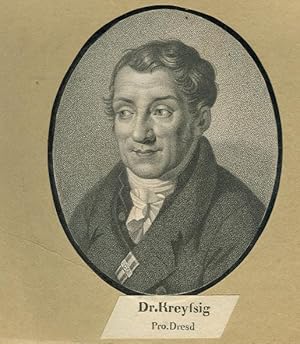
Porträt. Brustbild, halblinks. Original - Punktierstich (anonym), auf altem Papier aufmontiert, 11 cm x 9 cm, ca. 1820.
Da: Antiquariat Michael Eschmann, Groß-Gerau, Germania
Valutazione del venditore 5 su 5 stelle
Arte / Stampa / Poster
EUR 60,00
Spedizione EUR 22,00
Spedito da Germania a U.S.A.Quantità: 1 disponibili
Aggiungi al carrello0. Selten! - Schönes Blatt. Sprache: Deutschu.
-
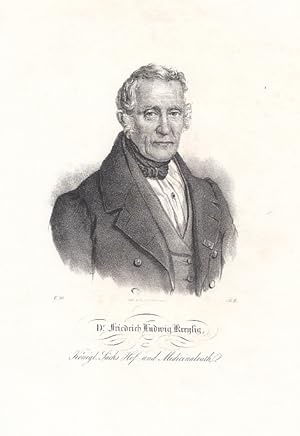
Porträt. Brustbild. Original - Lithographie von Fr. Zimmermann, 28 cm x 18,5 cm, ca. 1840.
Da: Antiquariat Michael Eschmann, Groß-Gerau, Germania
Valutazione del venditore 5 su 5 stelle
Arte / Stampa / Poster
EUR 60,00
Spedizione EUR 22,00
Spedito da Germania a U.S.A.Quantità: 4 disponibili
Aggiungi al carrello0. Vgl. Hirsch Bd. III, 551 ff. - Schönes, fleckenfr. Blatt ! Sprache: Deutschu.
-
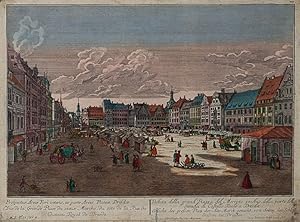
Prospectus Areae Fori Veteris, Ex Parte Arcis Plateae Dresdae.
Editore: Augsburg, Georg Balthasar, [c.]., 1770
Da: Inanna Rare Books Ltd., Skibbereen, CORK, Irlanda
Valutazione del venditore 5 su 5 stelle
Arte / Stampa / Poster
EUR 375,00
Spedizione EUR 28,00
Spedito da Irlanda a U.S.A.Quantità: 1 disponibili
Aggiungi al carrelloOriginal hand-coloured copper engraving of Dresden's marketplace. Plate Size: 40 cm x 30 cm. Sheet Size: 42 cm x 31 cm. Original engraving. In very good- condition. Some slight smudges to outer margins. Carefully repaired tear to lower edge. Beautiful copper engraving showing the panoramic view (vue d'optique) of the Altmarkt Square in 18th Century Dresden. Markets, festivities, tournaments and games were staged here and important historical events also turned the Altmarkt square into one of the social centres in town. During the bombing raids of February 1945 the historical Altmarkt square was completely destroyed. Here the Altmarkt is captured in a more peaceful time with people coming and going around the stalls and markets in the early hours of a dawning day. The artist's use of shadowing and light is attention grabbing. In the middle background the dome and steeple of the famous Frauenkirche can be seen. Beneath the illustration, the title and text - in Latin, French, Italian and German - reads as follows:"Prospectus Areae Fori veteris, ex parte Arcis Plateae Dresdae. Vüe de la Grande Place du vieux Marche, du cote de la Rue du Chateau Royal de Dresde. Veduta della grand Piazza del Mercato vecchio, della parte della Strada di Castello Reale a Dresda. Gesicht des großen Plaz der Alte Marck genannt, von Seiten der Schloß Graßen zu Dreßen. Georg Balthaser Probst excud. A. V. Median Folo. No. 7., 77." From about 1740 to about 1820 optical prints, also called "vue optique" or "vue d'optique" prints were made to be viewed through a Zograscope, or other devices of convex lens and mirror, all of which produced optical illusion of depth. Intaglio optical prints have exaggerated converging lines and bright hand-colours which contribute to the illusion of depth. Typically the legends of optical prints have reversed words along the top edge as those would be seen though the scope, but words on the bottom of the prints are normal. (Wikipedia) Georg Balthasar Probst (1732-1801) was a German engraver and print publisher working in Augsburg between 1766-1790.
-
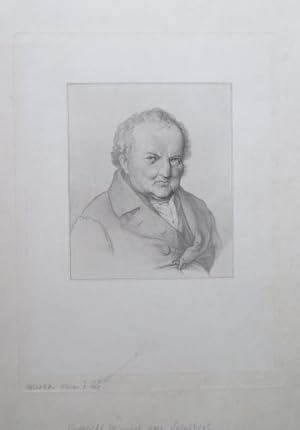
Porträt. Halbfigur. Altersbildnis mit eingedrucktem Hinweis: CCXL, 29. 1.(?), 55. Künstlermonogramm: TC. Radierung aufgewaltzt auf Karton, Blatt: 24,5 x 18 cm, Karton: 33 x 23,4 cm, o. J., darunter handschriftliche Notiz (Geburts- und Sterbejahr) mit Bleistift eines Vorbesitzers.
Da: Antiquariat Michael Eschmann, Groß-Gerau, Germania
Valutazione del venditore 5 su 5 stelle
Arte / Stampa / Poster
EUR 280,00
Spedizione EUR 22,00
Spedito da Germania a U.S.A.Quantità: 1 disponibili
Aggiungi al carrello0. *** Sehr selten. *** Kein bibliographischer Nachweis in den öffentlichen Sammlungen zu diesem Blatt. *** Gute Erhaltung. Sprache: Deutschu.
-

Junger Maler seine junge Frau als Madonna malend, ihnen zu Füßen ein Kind.
Da: Galerie Joseph Fach GmbH, Oberursel im Taunus, Germania
Membro dell'associazione: BVDG GIAQ
Valutazione del venditore 5 su 5 stelle
Arte / Stampa / Poster
EUR 780,00
Spedizione EUR 45,00
Spedito da Germania a U.S.A.Quantità: 1 disponibili
Aggiungi al carrelloCondizione: guter Zustand. Feder in Schwarz, mit Sepia laviert, auf festem Bütten. 16,1:12,8 cm. Papier leicht vergilbt, minimale Fehlstelle im rechten Rand, verso Klebereste an den Ecken. Der Vater Ludwig Richters war seit 1814 Schüler der Dresdener Akademie, 1817-1820 bei F. Matthäi (1777-1845). 1824 oder 1825 ging er nach München zu P. von Cornelius (1783-1867), der ihn beeinflusste. 1826/27 hielt er sich im Kreis von J. Schnorr von Carolsfeld (1794-1872) in Wien auf, 1827-1829 folgte ein Aufenthalt in Italien, meist in Rom im Nazarenerkreis. 1830 kehrte er nach Dresden zurück und wurde Lehrer an der Akademie. Seit 1839 litt er an einer fortschreitenden geistigen Erkrankung, 1845 wurde er aus dem Lehramt abgelöst und in der Heilanstalt Sonnenstein interniert. Die mit sensiblem Strich aufs Papier gebrachte Zeichnung ist vermutlich in Italien um 1827/29 entstanden, denn die den Hintergrund bildende Landschaft trägt südlichen Charakter. Das Bildmotiv ist ein Zitat des christlichen Themas Der heilige Lukas malt die Madonna".