Importo totale (1 articolo articoli):
Destinazione ordine:

hinds lyn (5 risultati)
Vai alla pagina principale dei risultati di ricerca
Filtri di ricerca
Tipo di articolo
- Tutti i tipi di prodotto
- Libri (5)
- Riviste e Giornali (Nessun altro risultato corrispondente a questo perfezionamento)
- Fumetti (Nessun altro risultato corrispondente a questo perfezionamento)
- Spartiti (Nessun altro risultato corrispondente a questo perfezionamento)
- Arte, Stampe e Poster (Nessun altro risultato corrispondente a questo perfezionamento)
- Fotografie (Nessun altro risultato corrispondente a questo perfezionamento)
- Mappe (Nessun altro risultato corrispondente a questo perfezionamento)
- Manoscritti e Collezionismo cartaceo (Nessun altro risultato corrispondente a questo perfezionamento)
Condizioni Maggiori informazioni
- Nuovo (Nessun altro risultato corrispondente a questo perfezionamento)
- Come nuovo, Ottimo o Quasi ottimo (1)
- Molto buono o Buono (1)
- Discreto o Mediocre (Nessun altro risultato corrispondente a questo perfezionamento)
- Come descritto (3)
Legatura
Ulteriori caratteristiche
- Prima ed. (2)
- Copia autograf. (Nessun altro risultato corrispondente a questo perfezionamento)
- Sovracoperta (Nessun altro risultato corrispondente a questo perfezionamento)
- Con foto (2)
- Non Print on Demand (5)
Lingua (2)
Prezzo
- Qualsiasi prezzo
- Inferiore a EUR 20 (Nessun altro risultato corrispondente a questo perfezionamento)
- EUR 20 a EUR 45 (Nessun altro risultato corrispondente a questo perfezionamento)
- Superiore a EUR 45
Spedizione gratuita
- Spedizione gratuita in U.S.A. (Nessun altro risultato corrispondente a questo perfezionamento)
Paese del venditore
Valutazione venditore
-

Ecologically-Based Management Of Rodent Pests
Lingua: Inglese
Editore: Australian Centre for International Agricultural Research, Canberra, 1999
ISBN 10: 1863202625 ISBN 13: 9781863202626
Da: Marlowes Books and Music, Ferny Grove, QLD, Australia
Valutazione del venditore 4 su 5 stelle

Prima edizione
EUR 53,13
Spedizione EUR 17,14
Spedito da Australia a U.S.A.Quantità: 1 disponibili
Aggiungi al carrelloHard Cover. Condizione: As New. First Edition. 494 pages. Book appears to have hardly been read and is in As new condition throughout. The Seed For This Book Was Sown In Morogoro, Tanzania, In 1996, Following The Strong Ecological Theme That Emerged At An International Workshop.
-

Rats, Mice and People: Rodent Biology and Management.
Da: Lawrence Jones Books, Ashmore, QLD, Australia
Valutazione del venditore 5 su 5 stelle

Prima edizione
EUR 75,90
Spedizione EUR 21,54
Spedito da Australia a U.S.A.Quantità: 1 disponibili
Aggiungi al carrelloSoft Cover. Condizione: Very Good. First Edition. HEAVY. 564pp, index, references, tables, graphs. Or card. Minor edge wear and rubbing. Ex-library with minimal stamps etc (inc cancelled stamps). Numerous papers published to coincide with the 2nd International Conference on Rodent Biology and Management, Bogor, Indonesia in 2002. Sections include: disease, conservation, behaviour, management (field), population ecology and modelling, sociology and economics of rodent managemnt, management-urban rodents and rodenticide resistance, taxonomy and rodent biology-contrasting perspectives. Size: 4to.
-

Ecologically-Based Management of Rodent Pests.
Editore: Australian Center for International Agricultural Research, 1999., 1999
Da: The Book Firm, Subiaco, WA, Australia
Valutazione del venditore 2 su 5 stelle

EUR 58,44
Spedizione EUR 12,06
Spedito da Australia a U.S.A.Quantità: 1 disponibili
Aggiungi al carrelloHardcover. 4to. No dj. Slight bump to bottom edge of front cover, o/wise condition vg. 494pp. ISBN 1863202625.
-
Ecologically-Based Management of Rodent Pests.
Editore: Australian Center for International Agricultural Research, 1999., 1999
Da: The Book Firm, Subiaco, WA, Australia
Valutazione del venditore 2 su 5 stelle
EUR 61,93
Spedizione EUR 12,06
Spedito da Australia a U.S.A.Quantità: 1 disponibili
Aggiungi al carrelloHardcover. 4to. No dj. Condition vg. 494pp. ISBN 1863202625.
-
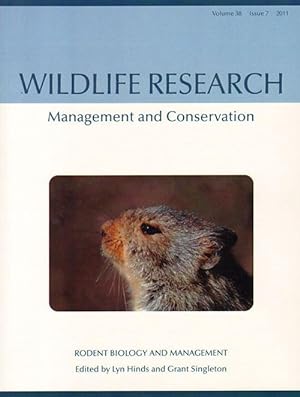
Rodent biology and management: Wildlife Research Special Issue, volume 38 number 7.
Editore: Melbourne: CSIRO Publishing, 2011., 2011
Da: Andrew Isles Natural History Books, Prahran, VIC, Australia
Membro dell'associazione: ANZAAB ILAB
Valutazione del venditore 5 su 5 stelle
EUR 47,44
Spedizione EUR 26,71
Spedito da Australia a U.S.A.Quantità: 1 disponibili
Aggiungi al carrelloOctavo, paperback,107 pp.,maps. Among the 42% of mammals classified as rodents, only 10% of them are significant agricultural pests. However, those 10% have 3 major impacts â" they cause major pre-harvest losses to most stages of growing crops, cause post-harvest losses to stored grain and vegetables and they are carriers of at least 20 diseases which are severely debilitating to human health. If these impacts could be reduced by only a small percentage, then there would be substantial increased food security and better livelihoods for smallholder farmers in many developing countries. This special issue comprises a selection of the presentations delivered at the 4th International Conference on Rodent Biology and Management held in Bloemfontein in April 2010. It represents important research advances in our knowledge and understanding of rodents for their conservation and management and will be of ongoing interest to wildlife biologists, crop protection and conservation specialists, students and policy makers.