
Importo totale (1 articolo articoli):
Destinazione ordine:

scheef lukas (15 risultati)
Vai alla pagina principale dei risultati di ricerca
Filtri di ricerca
Tipo di articolo
- Tutti i tipi di prodotto
- Libri (15)
- Riviste e Giornali (Nessun altro risultato corrispondente a questo perfezionamento)
- Fumetti (Nessun altro risultato corrispondente a questo perfezionamento)
- Spartiti (Nessun altro risultato corrispondente a questo perfezionamento)
- Arte, Stampe e Poster (Nessun altro risultato corrispondente a questo perfezionamento)
- Fotografie (Nessun altro risultato corrispondente a questo perfezionamento)
- Mappe (Nessun altro risultato corrispondente a questo perfezionamento)
- Manoscritti e Collezionismo cartaceo (Nessun altro risultato corrispondente a questo perfezionamento)
Condizioni Maggiori informazioni
- Nuovo (15)
- Come nuovo, Ottimo o Quasi ottimo (Nessun altro risultato corrispondente a questo perfezionamento)
- Molto buono o Buono (Nessun altro risultato corrispondente a questo perfezionamento)
- Discreto o Mediocre (Nessun altro risultato corrispondente a questo perfezionamento)
- Come descritto (Nessun altro risultato corrispondente a questo perfezionamento)
Legatura
Ulteriori caratteristiche
- Prima ed. (Nessun altro risultato corrispondente a questo perfezionamento)
- Copia autograf. (Nessun altro risultato corrispondente a questo perfezionamento)
- Sovracoperta (Nessun altro risultato corrispondente a questo perfezionamento)
- Con foto (10)
- Non Print on Demand (8)
Lingua (1)
Prezzo
- Qualsiasi prezzo
- Inferiore a EUR 20 (Nessun altro risultato corrispondente a questo perfezionamento)
- EUR 20 a EUR 45 (Nessun altro risultato corrispondente a questo perfezionamento)
- Superiore a EUR 45
Spedizione gratuita
- Spedizione gratuita in U.S.A. (Nessun altro risultato corrispondente a questo perfezionamento)
Paese del venditore
Valutazione venditore
-

Functional Neuroimaging in Exercise and Sport Sciences
Da: Ria Christie Collections, Uxbridge, Regno Unito
Valutazione del venditore 5 su 5 stelle

EUR 262,91
EUR 13,63 per la spedizione da Regno Unito a U.S.A.Quantità: Più di 20 disponibili
Aggiungi al carrelloCondizione: New. In.
-

Functional Neuroimaging in Exercise and Sport Sciences
Da: Ria Christie Collections, Uxbridge, Regno Unito
Valutazione del venditore 5 su 5 stelle
EUR 262,91
EUR 13,63 per la spedizione da Regno Unito a U.S.A.Quantità: Più di 20 disponibili
Aggiungi al carrelloCondizione: New. In.
-
EUR 260,15
EUR 70,00 per la spedizione da Germania a U.S.A.Quantità: 5 disponibili
Aggiungi al carrelloTaschenbuch. Condizione: Neu. Functional Neuroimaging in Exercise and Sport Sciences | Henning Boecker (u. a.) | Taschenbuch | xx | Englisch | 2014 | Springer US | EAN 9781493901784 | Verantwortliche Person für die EU: Springer Verlag GmbH, Tiergartenstr. 17, 69121 Heidelberg, juergen[dot]hartmann[at]springer[dot]com | Anbieter: preigu.
-

Functional Neuroimaging in Exercise and Sport Sciences
Editore: Springer New York, Springer US Jun 2012, 2012
ISBN 10: 1461432928 ISBN 13: 9781461432920
Lingua: Inglese
Da: buchversandmimpf2000, Emtmannsberg, BAYE, Germania
Valutazione del venditore 5 su 5 stelle
EUR 299,59
EUR 60,00 per la spedizione da Germania a U.S.A.Quantità: 2 disponibili
Aggiungi al carrelloBuch. Condizione: Neu. Neuware -Regular physical exercise is associated with substantial health benefits. Recent evidence not only holds for cardiovascular effects promoting 'physical health', but also for the central nervous systembelieved to promote 'brain health¿. Moderate physical exercise has been found to improve learning, memory, and attentional processing, with recent research indicating that neuroprotectivemechanisms and associated plasticity in brain structure and function also benefit. Physical exercise is also known to induce a range of acute or sustained psychophysiological effects, among thesemood elevation, stress reduction, anxiolysis, and hypoalgesia.Today, modern functional neuroimaging techniques afford direct measurement of the acute and chronic relation of physical exercise onthe human brain, as well as the correlation of the derived physiologicalin vivosignals with behavioral outcomes recorded during and after exercise. A wide range of imaging techniques have beenapplied to human exercise research, ranging from electroencephalography (EEG), magnetoencephalography (MEG), near infrared spectroscopy (NIRS), magnetic resonance imaging (MRI) to positronemission tomography (PET). All of these imaging methods provide distinct information, and they differ considerably in terms of spatial and temporal resolution, availability, cost, and associated risks.However, from a ¿multimodal imaging¿ perspective, neuroimaging provides an unprecedented potential to unravel the neurobiology of human exercise, covering a wide spectrum ranging from structuralplasticity in gray and white matter, network dynamics, global and regional perfusion, evoked neuronal responses to the quantification of neurotransmitter release.The aim of this book is to provide thecurrent state of the human neuroimaging literature in the emerging field of the neurobiological exercise sciences and to outline future applications and directions of research.Springer Verlag GmbH, Tiergartenstr. 17, 69121 Heidelberg 540 pp. Englisch.
-

Functional Neuroimaging in Exercise and Sport Sciences
Editore: Springer New York, Springer New York Jul 2014, 2014
ISBN 10: 1493901788 ISBN 13: 9781493901784
Lingua: Inglese
Da: buchversandmimpf2000, Emtmannsberg, BAYE, Germania
Valutazione del venditore 5 su 5 stelle
EUR 299,59
EUR 60,00 per la spedizione da Germania a U.S.A.Quantità: 2 disponibili
Aggiungi al carrelloTaschenbuch. Condizione: Neu. Neuware -Regular physical exercise is associated with substantial health benefits. Recent evidence not only holds for cardiovascular effects promoting 'physical health', but also for the central nervous systembelieved to promote 'brain health¿. Moderate physical exercise has been found to improve learning, memory, and attentional processing, with recent research indicating that neuroprotectivemechanisms and associated plasticity in brain structure and function also benefit. Physical exercise is also known to induce a range of acute or sustained psychophysiological effects, among thesemood elevation, stress reduction, anxiolysis, and hypoalgesia.Today, modern functional neuroimaging techniques afford direct measurement of the acute and chronic relation of physical exercise onthe human brain, as well as the correlation of the derived physiologicalin vivosignals with behavioral outcomes recorded during and after exercise. A wide range of imaging techniques have beenapplied to human exercise research, ranging from electroencephalography (EEG), magnetoencephalography (MEG), near infrared spectroscopy (NIRS), magnetic resonance imaging (MRI) to positronemission tomography (PET). All of these imaging methods provide distinct information, and they differ considerably in terms of spatial and temporal resolution, availability, cost, and associated risks.However, from a ¿multimodal imaging¿ perspective, neuroimaging provides an unprecedented potential to unravel the neurobiology of human exercise, covering a wide spectrum ranging from structuralplasticity in gray and white matter, network dynamics, global and regional perfusion, evoked neuronal responses to the quantification of neurotransmitter release.The aim of this book is to provide thecurrent state of the human neuroimaging literature in the emerging field of the neurobiological exercise sciences and to outline future applications and directions of research.Springer Verlag GmbH, Tiergartenstr. 17, 69121 Heidelberg 540 pp. Englisch.
-

EUR 303,19
EUR 64,05 per la spedizione da Germania a U.S.A.Quantità: 1 disponibili
Aggiungi al carrelloTaschenbuch. Condizione: Neu. Druck auf Anfrage Neuware - Printed after ordering - Regular physical exercise is associated with substantial health benefits. Recent evidence not only holds for cardiovascular effects promoting 'physical health', but also for the central nervous system believed to promote 'brain health'. Moderate physical exercise has been found to improve learning, memory, and attentional processing, with recent research indicating that neuroprotective mechanisms and associated plasticity in brain structure and function also benefit. Physical exercise is also known to induce a range of acute or sustained psychophysiological effects, among these mood elevation, stress reduction, anxiolysis, and hypoalgesia. Today, modern functional neuroimaging techniques afford direct measurement of the acute and chronic relation of physical exercise on the human brain, as well as the correlation of the derived physiological in vivo signals with behavioral outcomes recorded during and after exercise. A wide range of imaging techniques have been applied to human exercise research, ranging from electroencephalography (EEG), magnetoencephalography (MEG), near infrared spectroscopy (NIRS), magnetic resonance imaging (MRI) to positron emission tomography (PET). All of these imaging methods provide distinct information, and they differ considerably in terms of spatial and temporal resolution, availability, cost, and associated risks. However, from a 'multimodal imaging' perspective, neuroimaging provides an unprecedented potential to unravel the neurobiology of human exercise, covering a wide spectrum ranging from structural plasticity in gray and white matter, network dynamics, global and regional perfusion, evoked neuronal responses to the quantification of neurotransmitter release. The aim of this book is to provide the current state of the human neuroimaging literature in the emerging field of the neurobiological exercise sciences and to outline future applications and directions of research.
-
Functional Neuroimaging in Exercise and Sport Sciences
Editore: Springer New York, Springer US, 2012
ISBN 10: 1461432928 ISBN 13: 9781461432920
Lingua: Inglese
EUR 304,12
EUR 64,85 per la spedizione da Germania a U.S.A.Quantità: 1 disponibili
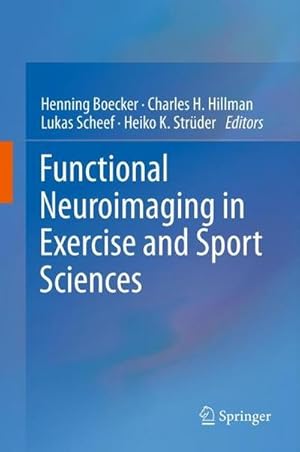
Aggiungi al carrelloBuch. Condizione: Neu. Druck auf Anfrage Neuware - Printed after ordering - Regular physical exercise is associated with substantial health benefits. Recent evidence not only holds for cardiovascular effects promoting 'physical health', but also for the central nervous system believed to promote 'brain health'. Moderate physical exercise has been found to improve learning, memory, and attentional processing, with recent research indicating that neuroprotective mechanisms and associated plasticity in brain structure and function also benefit. Physical exercise is also known to induce a range of acute or sustained psychophysiological effects, among these mood elevation, stress reduction, anxiolysis, and hypoalgesia. Today, modern functional neuroimaging techniques afford direct measurement of the acute and chronic relation of physical exercise on the human brain, as well as the correlation of the derived physiological in vivo signals with behavioral outcomes recorded during and after exercise. A wide range of imaging techniques have been applied to human exercise research, ranging from electroencephalography (EEG), magnetoencephalography (MEG), near infrared spectroscopy (NIRS), magnetic resonance imaging (MRI) to positron emission tomography (PET). All of these imaging methods provide distinct information, and they differ considerably in terms of spatial and temporal resolution, availability, cost, and associated risks. However, from a 'multimodal imaging' perspective, neuroimaging provides an unprecedented potential to unravel the neurobiology of human exercise, covering a wide spectrum ranging from structural plasticity in gray and white matter, network dynamics, global and regional perfusion, evoked neuronal responses to the quantification of neurotransmitter release. The aim of this book is to provide the current state of the human neuroimaging literature in the emerging field of the neurobiological exercise sciences and to outline future applications and directions of research.
-
Functional Neuroimaging in Exercise and Sport Sciences
Da: Revaluation Books, Exeter, Regno Unito
Valutazione del venditore 5 su 5 stelle
EUR 411,51
EUR 14,22 per la spedizione da Regno Unito a U.S.A.Quantità: 2 disponibili
Aggiungi al carrelloHardcover. Condizione: Brand New. 1st edition. 520 pages. 9.25x6.25x1.25 inches. In Stock.
-
Functional Neuroimaging in Exercise and (eng)
Da: Brook Bookstore On Demand, Napoli, NA, Italia
Valutazione del venditore 5 su 5 stelle
EUR 230,32
EUR 8,00 per la spedizione da Italia a U.S.A.Quantità: Più di 20 disponibili
Aggiungi al carrelloCondizione: new. Questo è un articolo print on demand.
-
Functional Neuroimaging in Exercise and (eng)
Da: Brook Bookstore On Demand, Napoli, NA, Italia
Valutazione del venditore 5 su 5 stelle
EUR 230,32
EUR 8,00 per la spedizione da Italia a U.S.A.Quantità: Più di 20 disponibili
Aggiungi al carrelloCondizione: new. Questo è un articolo print on demand.
-
EUR 250,30
EUR 48,99 per la spedizione da Germania a U.S.A.Quantità: Più di 20 disponibili
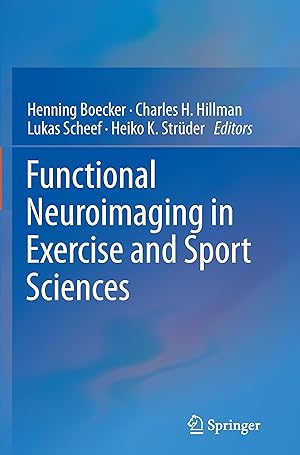
Aggiungi al carrelloCondizione: New. Dieser Artikel ist ein Print on Demand Artikel und wird nach Ihrer Bestellung fuer Sie gedruckt. The book discusses the current state of the human neuroimaging literature in the emerging fields of the neurobiological sports sciencesWhile there are numerous neuroimaging books on the market, there are none devoted exclusively to exercise/sport .
-

EUR 250,30
EUR 48,99 per la spedizione da Germania a U.S.A.Quantità: Più di 20 disponibili
Aggiungi al carrelloGebunden. Condizione: New. Dieser Artikel ist ein Print on Demand Artikel und wird nach Ihrer Bestellung fuer Sie gedruckt. The book discusses the current state of the human neuroimaging literature in the emerging fields of the neurobiological sports sciencesWhile there are numerous neuroimaging books on the market, there are none devoted exclusively to exercise/sport .
-
Functional Neuroimaging in Exercise and Sport Sciences
Editore: Springer New York Jul 2014, 2014
ISBN 10: 1493901788 ISBN 13: 9781493901784
Lingua: Inglese
Da: BuchWeltWeit Ludwig Meier e.K., Bergisch Gladbach, Germania
Valutazione del venditore 5 su 5 stelle
EUR 299,59
EUR 23,00 per la spedizione da Germania a U.S.A.Quantità: 2 disponibili
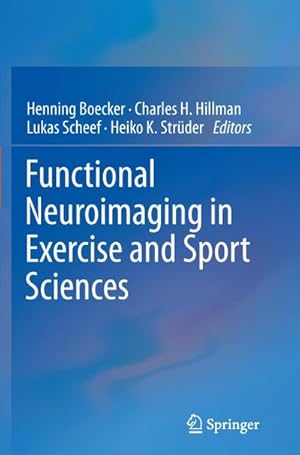
Aggiungi al carrelloTaschenbuch. Condizione: Neu. This item is printed on demand - it takes 3-4 days longer - Neuware -Regular physical exercise is associated with substantial health benefits. Recent evidence not only holds for cardiovascular effects promoting 'physical health', but also for the central nervous system believed to promote 'brain health'. Moderate physical exercise has been found to improve learning, memory, and attentional processing, with recent research indicating that neuroprotective mechanisms and associated plasticity in brain structure and function also benefit. Physical exercise is also known to induce a range of acute or sustained psychophysiological effects, among these mood elevation, stress reduction, anxiolysis, and hypoalgesia. Today, modern functional neuroimaging techniques afford direct measurement of the acute and chronic relation of physical exercise on the human brain, as well as the correlation of the derived physiological in vivo signals with behavioral outcomes recorded during and after exercise. A wide range of imaging techniques have been applied to human exercise research, ranging from electroencephalography (EEG), magnetoencephalography (MEG), near infrared spectroscopy (NIRS), magnetic resonance imaging (MRI) to positron emission tomography (PET). All of these imaging methods provide distinct information, and they differ considerably in terms of spatial and temporal resolution, availability, cost, and associated risks. However, from a 'multimodal imaging' perspective, neuroimaging provides an unprecedented potential to unravel the neurobiology of human exercise, covering a wide spectrum ranging from structural plasticity in gray and white matter, network dynamics, global and regional perfusion, evoked neuronal responses to the quantification of neurotransmitter release. The aim of this book is to provide the current state of the human neuroimaging literature in the emerging field of the neurobiological exercise sciences and to outline future applications and directions of research. 540 pp. Englisch.
-
Functional Neuroimaging in Exercise and Sport Sciences
Editore: Springer New York Jun 2012, 2012
ISBN 10: 1461432928 ISBN 13: 9781461432920
Lingua: Inglese
Da: BuchWeltWeit Ludwig Meier e.K., Bergisch Gladbach, Germania
Valutazione del venditore 5 su 5 stelle
EUR 299,59
EUR 23,00 per la spedizione da Germania a U.S.A.Quantità: 2 disponibili
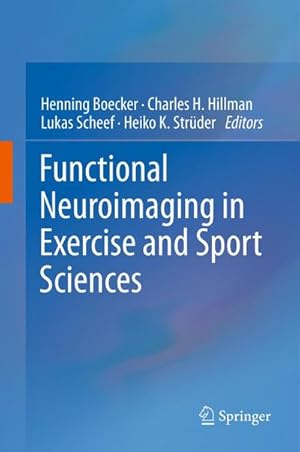
Aggiungi al carrelloBuch. Condizione: Neu. This item is printed on demand - it takes 3-4 days longer - Neuware -Regular physical exercise is associated with substantial health benefits. Recent evidence not only holds for cardiovascular effects promoting 'physical health', but also for the central nervous system believed to promote 'brain health'. Moderate physical exercise has been found to improve learning, memory, and attentional processing, with recent research indicating that neuroprotective mechanisms and associated plasticity in brain structure and function also benefit. Physical exercise is also known to induce a range of acute or sustained psychophysiological effects, among these mood elevation, stress reduction, anxiolysis, and hypoalgesia. Today, modern functional neuroimaging techniques afford direct measurement of the acute and chronic relation of physical exercise on the human brain, as well as the correlation of the derived physiological in vivo signals with behavioral outcomes recorded during and after exercise. A wide range of imaging techniques have been applied to human exercise research, ranging from electroencephalography (EEG), magnetoencephalography (MEG), near infrared spectroscopy (NIRS), magnetic resonance imaging (MRI) to positron emission tomography (PET). All of these imaging methods provide distinct information, and they differ considerably in terms of spatial and temporal resolution, availability, cost, and associated risks. However, from a 'multimodal imaging' perspective, neuroimaging provides an unprecedented potential to unravel the neurobiology of human exercise, covering a wide spectrum ranging from structural plasticity in gray and white matter, network dynamics, global and regional perfusion, evoked neuronal responses to the quantification of neurotransmitter release. The aim of this book is to provide the current state of the human neuroimaging literature in the emerging field of the neurobiological exercise sciences and to outline future applications and directions of research. 540 pp. Englisch.
-
EUR 260,15
EUR 70,00 per la spedizione da Germania a U.S.A.Quantità: 5 disponibili
Aggiungi al carrelloBuch. Condizione: Neu. Functional Neuroimaging in Exercise and Sport Sciences | Henning Boecker (u. a.) | Buch | xx | Englisch | 2012 | Springer US | EAN 9781461432920 | Verantwortliche Person für die EU: Springer Verlag GmbH, Tiergartenstr. 17, 69121 Heidelberg, juergen[dot]hartmann[at]springer[dot]com | Anbieter: preigu Print on Demand.


