
Articoli correlati a From Third World to First: Singapore and the Asian...
Sinossi
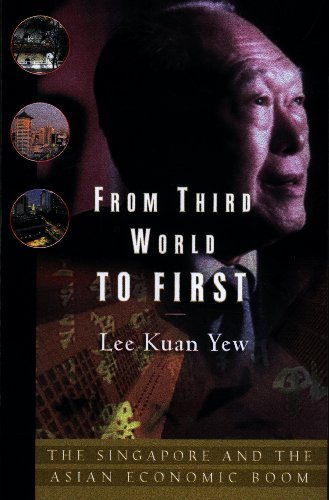
Few gave tiny Singapore much chance of survival when it was granted independence in 1965. How is it, then, that today the former British colonial trading post is a thriving Asian metropolis with not only the world's number one airline, best airport, and busiest port of trade, but also the world's fourth–highest per capita real income?
The story of that transformation is told here by Singapore's charismatic, controversial founding father, Lee Kuan Yew. Rising from a legacy of divisive colonialism, the devastation of the Second World War, and general poverty and disorder following the withdrawal of foreign forces, Singapore now is hailed as a city of the future. This miraculous history is dramatically recounted by the man who not only lived through it all but who fearlessly forged ahead and brought about most of these changes.
Delving deep into his own meticulous notes, as well as previously unpublished government papers and official records, Lee details the extraordinary efforts it took for an island city–state in Southeast Asia to survive at that time.
Lee explains how he and his cabinet colleagues finished off the communist threat to the fledgling state's security and began the arduous process of nation building: forging basic infrastructural roads through a land that still consisted primarily of swamps, creating an army from a hitherto racially and ideologically divided population, stamping out the last vestiges of colonial–era corruption, providing mass public housing, and establishing a national airline and airport.
In this illuminating account, Lee writes frankly about his trenchant approach to political opponents and his often unorthodox views on human rights, democracy, and inherited intelligence, aiming always "to be correct, not politically correct." Nothing in Singapore escaped his watchful eye: whether choosing shrubs for the greening of the country, restoring the romance of the historic Raffles Hotel, or openly, unabashedly persuading young men to marry women as well educated as themselves. Today's safe, tidy Singapore bears Lee's unmistakable stamp, for which he is unapologetic: "If this is a nanny state, I am proud to have fostered one."
Though Lee's domestic canvas in Singapore was small, his vigor and talent assured him a larger place in world affairs. With inimitable style, he brings history to life with cogent analyses of some of the greatest strategic issues of recent times and reveals how, over the years, he navigated the shifting tides of relations among America, China, and Taiwan, acting as confidant, sounding board, and messenger for them. He also includes candid, sometimes acerbic pen portraits of his political peers, including the indomitable Margaret Thatcher and Ronald Reagan, the poetry–spouting Jiang Zemin, and ideologues George Bush and Deng Xiaoping.
Lee also lifts the veil on his family life and writes tenderly of his wife and stalwart partner, Kwa Geok Choo, and of their pride in their three children –– particularly the eldest son, Hsien Loong, who is now Singapore's deputy prime minister.
For more than three decades, Lee Kuan Yew has been praised and vilified in equal measure, and he has established himself as a force impossible to ignore in Asian and international politics. From Third World to First offers readers a compelling glimpse into this visionary's heart, soul, and mind.
Le informazioni nella sezione "Riassunto" possono far riferimento a edizioni diverse di questo titolo.
Informazioni sull'autore
Lee Kuan Yew was born in Singapore on September 16, 1923, a third-generation descendant of immigrants from China's Guangdong Province. He read law at Cambridge University, England. In 1954 he formed the People's Action Party, which won the first Singapore general election five years later. Lee became the country's first prime minister in 1959, at the age of thirty-five. In November 1990 he resigned the office to assume the post of senior minister in the Singapore cabinet.
Dalla quarta di copertina
Few gave tiny Singapore much chance of survival when it was granted independence in 1965. How is it, then, that today the former British colonial trading post is a thriving Asian metropolis with not only the world's number one airline, best airport, and busiest port of trade, but also the world's fourth–highest per capita real income?
The story of that transformation is told here by Singapore's charismatic, controversial founding father, Lee Kuan Yew. Rising from a legacy of divisive colonialism, the devastation of the Second World War, and general poverty and disorder following the withdrawal of foreign forces, Singapore now is hailed as a city of the future. This miraculous history is dramatically recounted by the man who not only lived through it all but who fearlessly forged ahead and brought about most of these changes.
Delving deep into his own meticulous notes, as well as previously unpublished government papers and official records, Lee details the extraordinary efforts it took for an island city–state in Southeast Asia to survive at that time.
Lee explains how he and his cabinet colleagues finished off the communist threat to the fledgling state's security and began the arduous process of nation building: forging basic infrastructural roads through a land that still consisted primarily of swamps, creating an army from a hitherto racially and ideologically divided population, stamping out the last vestiges of colonial–era corruption, providing mass public housing, and establishing a national airline and airport.
In this illuminating account, Lee writes frankly about his trenchant approach to political opponents and his often unorthodox views on human rights, democracy, and inherited intelligence, aiming always "to be correct, not politically correct." Nothing in Singapore escaped his watchful eye: whether choosing shrubs for the greening of the country, restoring the romance of the historic Raffles Hotel, or openly, unabashedly persuading young men to marry women as well educated as themselves. Today's safe, tidy Singapore bears Lee's unmistakable stamp, for which he is unapologetic: "If this is a nanny state, I am proud to have fostered one."
Though Lee's domestic canvas in Singapore was small, his vigor and talent assured him a larger place in world affairs. With inimitable style, he brings history to life with cogent analyses of some of the greatest strategic issues of recent times and reveals how, over the years, he navigated the shifting tides of relations among America, China, and Taiwan, acting as confidant, sounding board, and messenger for them. He also includes candid, sometimes acerbic pen portraits of his political peers, including the indomitable Margaret Thatcher and Ronald Reagan, the poetry–spouting Jiang Zemin, and ideologues George Bush and Deng Xiaoping.
Lee also lifts the veil on his family life and writes tenderly of his wife and stalwart partner, Kwa Geok Choo, and of their pride in their three children –– particularly the eldest son, Hsien Loong, who is now Singapore's deputy prime minister.
For more than three decades, Lee Kuan Yew has been praised and vilified in equal measure, and he has established himself as a force impossible to ignore in Asian and international politics. From Third World to First offers readers a compelling glimpse into this visionary's heart, soul, and mind.
Le informazioni nella sezione "Su questo libro" possono far riferimento a edizioni diverse di questo titolo.
Risultati della ricerca per From Third World to First: Singapore and the Asian...

Foto dell'editore
From Third World to First
Da: PBShop.store UK, Fairford, GLOS, Regno Unito
Valutazione del venditore 5 su 5 stelle

PAP. Condizione: New. New Book. Shipped from UK. Established seller since 2000. Codice articolo HR-9780060957513
Compra nuovo
EUR 14,30
Spedizione EUR 6,96
Spedito da Regno Unito a U.S.A.
Spedito da Regno Unito a U.S.A.
Quantità: 15 disponibili
Immagini fornite dal venditore
From Third World to First (Paperback)
Editore:
HarperCollins Publishers Inc, New York, 2011
ISBN 10: 0060957514
ISBN 13: 9780060957513
Nuovo
Paperback
Da: Grand Eagle Retail, Bensenville, IL, U.S.A.
Valutazione del venditore 5 su 5 stelle
Paperback. Condizione: new. Paperback. Few gave tiny Singapore much chance of survival when it was granted independence in 1965. How is it, then, that today the former British colonial trading post is a thriving Asian metropolis with not only the world's number one airline, best airport, and busiest port of trade, but also the world's fourthhighest per capita real income The story of that transformation is told here by Singapore's charismatic, controversial founding father, Lee Kuan Yew. Rising from a legacy of divisive colonialism, the devastation of the Second World War, and general poverty and disorder following the withdrawal of foreign forces, Singapore now is hailed as a city of the future. This miraculous history is dramatically recounted by the man who not only lived through it all but who fearlessly forged ahead and brought about most of these changes. Delving deep into his own meticulous notes, as well as previously unpublished government papers and official records, Lee details the extraordinary efforts it took for an island citystate in Southeast Asia to survive at that time. Lee explains how he and his cabinet colleagues finished off the communist threat to the fledgling state's security and began the arduous process of nation building: forging basic infrastructural roads through a land that still consisted primarily of swamps, creating an army from a hitherto racially and ideologically divided population, stamping out the last vestiges of colonialera corruption, providing mass public housing, and establishing a national airline and airport. In this illuminating account, Lee writes frankly about his trenchant approach to political opponents and his often unorthodox views on human rights, democracy, and inherited intelligence, aiming always "to be correct, not politically correct." Nothing in Singapore escaped his watchful eye: whether choosing shrubs for the greening of the country, restoring the romance of the historic Raffles Hotel, or openly, unabashedly persuading young men to marry women as well educated as themselves. Today's safe, tidy Singapore bears Lee's unmistakable stamp, for which he is unapologetic: "If this is a nanny state, I am proud to have fostered one." Though Lee's domestic canvas in Singapore was small, his vigor and talent assured him a larger place in world affairs. With inimitable style, he brings history to life with cogent analyses of some of the greatest strategic issues of recent times and reveals how, over the years, he navigated the shifting tides of relations among America, China, and Taiwan, acting as confidant, sounding board, and messenger for them. He also includes candid, sometimes acerbic pen portraits of his political peers, including the indomitable Margaret Thatcher and Ronald Reagan, the poetryspouting Jiang Zemin, and ideologues George Bush and Deng Xiaoping. Lee also lifts the veil on his family life and writes tenderly of his wife and stalwart partner, Kwa Geok Choo, and of their pride in their three children particularly the eldest son, Hsien Loong, who is now Singapore's deputy prime minister. For more than three decades, Lee Kuan Yew has been praised and vilified in equal measure, and he has established himself as a force impossible to ignore in Asian and international politics. From Third World to First offers readers a compelling glimpse into this visionary's heart, soul, and mind. Few gave tiny Singapore much chance of survival when it was granted independence in 1965. How is it, then, that today the former British colonial trading post is a thriving Asian metropolis with not only the world's number one airline, but also the world's fourth-highest per capita real income? This title is the story of that transformation. Shipping may be from multiple locations in the US or from the UK, depending on stock availability. Codice articolo 9780060957513
Compra nuovo
EUR 21,92
Spedizione gratuita
Spedito in U.S.A.
Spedito in U.S.A.
Quantità: 1 disponibili
Immagini fornite dal venditore
From Third World to First
Editore:
HarperCollins Publishers Inc, US, 2011
ISBN 10: 0060957514
ISBN 13: 9780060957513
Nuovo
Paperback
Da: Rarewaves.com USA, London, LONDO, Regno Unito
Valutazione del venditore 5 su 5 stelle
Paperback. Condizione: New. Few gave tiny Singapore much chance of survival when it was granted independence in 1965. How is it, then, that today the former British colonial trading post is a thriving Asian metropolis with not only the world's number one airline, best airport, and busiest port of trade, but also the world's fourth-highest per capita real income? The story of that transformation is told here by Singapore's charismatic, controversial founding father, Lee Kuan Yew. Rising from a legacy of divisive colonialism, the devastation of the Second World War, and general poverty and disorder following the withdrawal of foreign forces, Singapore now is hailed as a city of the future. This miraculous history is dramatically recounted by the man who not only lived through it all but who fearlessly forged ahead and brought about most of these changes. Mr. Lee is one of the most respected political figures in the world today ("Time" and "Newsweek" regularly profile his socio-economic strategies and his regime), and recognition of his name among academic, political, historical and sociological circles is guaranteed. This volume also features a foreword from Dr. Henry Kissinger. Codice articolo LU-9780060957513
Compra nuovo
EUR 25,26
Spedizione gratuita
Spedito da Regno Unito a U.S.A.
Spedito da Regno Unito a U.S.A.
Quantità: Più di 20 disponibili
Immagini fornite dal venditore
From Third World to First: A Statesmanâs Powerful Story of Transformation from Poverty to National Leadership
Da: Zoom Books Company, Lynden, WA, U.S.A.
Valutazione del venditore 5 su 5 stelle
Condizione: very_good. Book is in very good condition and may include minimal underlining highlighting. The book can also include "From the library of" labels. May not contain miscellaneous items toys, dvds, etc. . We offer 100% money back guarantee and 24 7 customer service. Codice articolo ZBV.0060957514.VG
Compra usato
EUR 26,60
Spedizione gratuita
Spedito in U.S.A.
Spedito in U.S.A.
Quantità: 1 disponibili
Foto dell'editore
From Third World to First
Da: Kennys Bookshop and Art Galleries Ltd., Galway, GY, Irlanda
Valutazione del venditore 5 su 5 stelle
Condizione: New. 2011. International ed. Paperback. Few gave tiny Singapore much chance of survival when it was granted independence in 1965. How is it, then, that today the former British colonial trading post is a thriving Asian metropolis with not only the world's number one airline, but also the world's fourth-highest per capita real income? This title is the story of that transformation. Num Pages: 768 pages, black & white halftones. BIC Classification: 1FMS; HBJF; HBLW3. Category: (G) General (US: Trade). Dimension: 229 x 151 x 38. Weight in Grams: 812. . . . . . Codice articolo V9780060957513
Compra nuovo
EUR 18,93
Spedizione EUR 9,50
Spedito da Irlanda a U.S.A.
Spedito da Irlanda a U.S.A.
Quantità: Più di 20 disponibili
Foto dell'editore
From Third World to First
Da: Majestic Books, Hounslow, Regno Unito
Valutazione del venditore 4 su 5 stelle

Condizione: New. pp. xix + 729 Illus. Codice articolo 5842845
Compra nuovo
EUR 20,87
Spedizione EUR 7,71
Spedito da Regno Unito a U.S.A.
Spedito da Regno Unito a U.S.A.
Quantità: 3 disponibili
Foto dell'editore
From Third World To First Intl: Singapore And The Asian Economic Boom
Da: Readify Books, Newark, DE, U.S.A.
Valutazione del venditore 5 su 5 stelle
Paperback. Condizione: NEW. Brand New, We ship to PO , APO and FPO adresses in U.S.A. Ship from multiple Locations including India Choose Expedited Shipping for FASTER DELIVERY.Customer Satisfaction Guaranteed. Codice articolo INISB1#9780060957513
Compra nuovo
EUR 29,69
Spedizione gratuita
Spedito in U.S.A.
Spedito in U.S.A.
Quantità: 9 disponibili
Foto dell'editore
From Third World to First Intl: Singapore and the Asian Economic Boom
Da: Revaluation Books, Exeter, Regno Unito
Valutazione del venditore 5 su 5 stelle
Paperback. Condizione: Brand New. 1 pages. 9.02x5.94x1.42 inches. In Stock. Codice articolo __0060957514
Compra nuovo
EUR 16,01
Spedizione EUR 14,82
Spedito da Regno Unito a U.S.A.
Spedito da Regno Unito a U.S.A.
Quantità: 2 disponibili
Foto dell'editore
From Third World to First
Da: Kennys Bookstore, Olney, MD, U.S.A.
Valutazione del venditore 5 su 5 stelle
Condizione: New. 2011. International ed. Paperback. Few gave tiny Singapore much chance of survival when it was granted independence in 1965. How is it, then, that today the former British colonial trading post is a thriving Asian metropolis with not only the world's number one airline, but also the world's fourth-highest per capita real income? This title is the story of that transformation. Num Pages: 768 pages, black & white halftones. BIC Classification: 1FMS; HBJF; HBLW3. Category: (G) General (US: Trade). Dimension: 229 x 151 x 38. Weight in Grams: 812. . . . . . Books ship from the US and Ireland. Codice articolo V9780060957513
Compra nuovo
EUR 22,42
Spedizione EUR 9,34
Spedito in U.S.A.
Spedito in U.S.A.
Quantità: Più di 20 disponibili
Foto dell'editore
From Third World to First
Da: Books Puddle, Woodside, NY, U.S.A.
Valutazione del venditore 4 su 5 stelle
Condizione: New. pp. xix + 729 Index. Codice articolo 263053634
Compra nuovo
EUR 30,36
Spedizione EUR 3,55
Spedito in U.S.A.
Spedito in U.S.A.
Quantità: 1 disponibili