
Articoli correlati a Principles of Biomedical Informatics
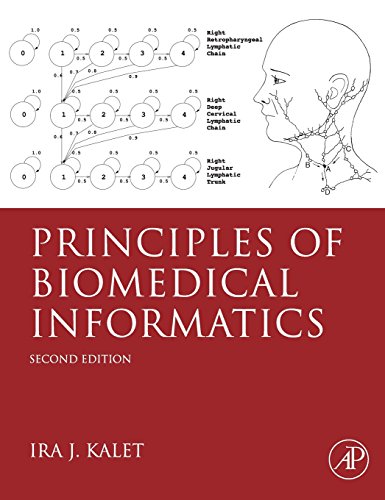
Sinossi
This second edition of a pioneering technical work in biomedical informatics provides a very readable treatment of the deep computational ideas at the foundation of the field.Principles of Biomedical Informatics, 2nd Edition is radically reorganized to make it especially useable as a textbook for courses that move beyond the standard introductory material. It includes exercises at the end of each chapter, ideas for student projects, and a number of new topics, such as: • tree structured data, interval trees, and time-oriented medical data and their use • On Line Application Processing (OLAP), an old database idea that is only recently coming of age and finding surprising importance in biomedical informatics • a discussion of nursing knowledge and an example of encoding nursing advice in a rule-based system • X-ray physics and algorithms for cross-sectional medical image reconstruction, recognizing that this area was one of the most central to the origin of biomedical computing • an introduction to Markov processes, and • an outline of the elements of a hospital IT security program, focusing on fundamental ideas rather than specifics of system vulnerabilities or specific technologies.
It is simultaneously a unified description of the core research concept areas of biomedical data and knowledge representation, biomedical information access, biomedical decision-making, and information and technology use in biomedical contexts, and a pre-eminent teaching reference for the growing number of healthcare and computing professionals embracing computation in health-related fields.
As in the first edition, it includes many worked example programs in Common LISP, the most powerful and accessible modern language for advanced biomedical concept representation and manipulation.
The text also includes humor, history, and anecdotal material to balance the mathematically and computationally intensive development in many of the topic areas. The emphasis, as in the first edition, is on ideas and methods that are likely to be of lasting value, not just the popular topics of the day. Ira Kalet is Professor Emeritus of Radiation Oncology, and of Biomedical Informatics and Medical Education, at the University of Washington. Until retiring in 2011 he was also an Adjunct Professor in Computer Science and Engineering, and Biological Structure. From 2005 to 2010 he served as IT Security Director for the University of Washington School of Medicine and its major teaching hospitals. He has been a member of the American Medical Informatics Association since 1990, and an elected Fellow of the American College of Medical Informatics since 2011. His research interests include simulation systems for design of radiation treatment for cancer, software development methodology, and artificial intelligence applications to medicine, particularly expert systems, ontologies and modeling.
* Develops principles and methods for representing biomedical data, using information in context and in decision making, and accessing information to assist the medical community in using data to its full potential
* Provides a series of principles for expressing biomedical data and ideas in a computable form to integrate biological, clinical, and public health applications
* Includes a discussion of user interfaces, interactive graphics, and knowledge resources and reference material on programming languages to provide medical informatics programmers with the technical tools to develop systems
Le informazioni nella sezione "Riassunto" possono far riferimento a edizioni diverse di questo titolo.
Informazioni sull'autore
Ira J. Kalet works in the Department of Radiation Oncology at University of Washington Medical Center, Seattle, USA.
Dalla quarta di copertina
This second edition of a pioneering technical work in biomedical informatics provides a very readable treatment of the deep computational ideas at the foundation of the field.Principles of Biomedical Informatics, 2nd Edition is radically reorganized to make it especially useable as a textbook for courses that move beyond the standard introductory material. It includes exercises at the end of each chapter, ideas for student projects, and a number of new topics, such as: tree structured data, interval trees, and time-oriented medical data and their use On Line Application Processing (OLAP), an old database idea that is only recently coming of age and finding surprising importance in biomedical informatics a discussion of nursing knowledge and an example of encoding nursing advice in a rule-based system X-ray physics and algorithms for cross-sectional medical image reconstruction, recognizing that this area was one of the most central to the origin of biomedical computing an introduction to Markov processes, and an outline of the elements of a hospital IT security program, focusing on fundamental ideas rather than specifics of system vulnerabilities or specific technologies.
It is simultaneously a unified description of the core research concept areas of biomedical data and knowledge representation, biomedical information access, biomedical decision-making, and information and technology use in biomedical contexts, and a pre-eminent teaching reference for the growing number of healthcare and computing professionals embracing computation in health-related fields.
As in the first edition, it includes many worked example programs in Common LISP, the most powerful and accessible modern language for advanced biomedical concept representation and manipulation.
The text also includes humor, history, and anecdotal material to balance the mathematically and computationally intensive development in many of the topic areas. The emphasis, as in the first edition, is on ideas and methods that are likely to be of lasting value, not just the popular topics of the day. Ira Kalet is Professor Emeritus of Radiation Oncology, and of Biomedical Informatics and Medical Education, at the University of Washington. Until retiring in 2011 he was also an Adjunct Professor in Computer Science and Engineering, and Biological Structure. From 2005 to 2010 he served as IT Security Director for the University of Washington School of Medicine and its major teaching hospitals. He has been a member of the American Medical Informatics Association since 1990, and an elected Fellow of the American College of Medical Informatics since 2011. His research interests include simulation systems for design of radiation treatment for cancer, software development methodology, and artificial intelligence applications to medicine, particularly expert systems, ontologies and modeling.
Le informazioni nella sezione "Su questo libro" possono far riferimento a edizioni diverse di questo titolo.
Risultati della ricerca per Principles of Biomedical Informatics

Foto dell'editore
Principles of Biomedical Informatics, Second Edition
Da: Basi6 International, Irving, TX, U.S.A.
Valutazione del venditore 5 su 5 stelle

Condizione: Brand New. New. US edition. Expediting shipping for all USA and Europe orders excluding PO Box. Excellent Customer Service. Codice articolo ABEOCT25-398406
Compra nuovo
EUR 62,15
Spedizione gratuita
Spedito in U.S.A.
Spedito in U.S.A.
Quantità: 1 disponibili
Foto dell'editore
Principles of Biomedical Informatics
Da: HPB-Red, Dallas, TX, U.S.A.
Valutazione del venditore 5 su 5 stelle
Hardcover. Condizione: Good. Connecting readers with great books since 1972! Used textbooks may not include companion materials such as access codes, etc. May have some wear or writing/highlighting. We ship orders daily and Customer Service is our top priority! Codice articolo S_417899624
Compra usato
EUR 60,40
Spedizione EUR 3,27
Spedito in U.S.A.
Spedito in U.S.A.
Quantità: 1 disponibili
Foto dell'editore
Principles of Biomedical Informatics
Editore:
Academic Press Inc 2013-11-08, 2013
ISBN 10: 0124160190
ISBN 13: 9780124160194
Nuovo
Rilegato
Da: Chiron Media, Wallingford, Regno Unito
Valutazione del venditore 5 su 5 stelle
Hardcover. Condizione: New. Brand new book, sourced directly from publisher. Dispatch time is 9-10 days from our warehouse. Book will be sent in robust, secure packaging to ensure it reaches you securely. Codice articolo 6666-ELS-9780124160194
Compra nuovo
EUR 76,86
Spedizione EUR 8,73
Spedito da Regno Unito a U.S.A.
Spedito da Regno Unito a U.S.A.
Quantità: Più di 20 disponibili
Foto dell'editore
Principles of Biomedical Informatics
Print on DemandDa: Brook Bookstore On Demand, Napoli, NA, Italia
Valutazione del venditore 5 su 5 stelle
Condizione: new. Questo è un articolo print on demand. Codice articolo 8b3712cae90ab131d9060c34c3b1320c
Compra nuovo
EUR 74,48
Spedizione EUR 13,50
Spedito da Italia a U.S.A.
Spedito da Italia a U.S.A.
Quantità: Più di 20 disponibili
Immagini fornite dal venditore
Principles of Biomedical Informatics
Print on DemandDa: BuchWeltWeit Ludwig Meier e.K., Bergisch Gladbach, Germania
Valutazione del venditore 5 su 5 stelle
Buch. Condizione: Neu. This item is printed on demand - it takes 3-4 days longer - Neuware -This second edition of a pioneering technical work in biomedical informatics provides a very readable treatment of the deep computational ideas at the foundation of the field. Principles of Biomedical Informatics, 2nd Edition is radically reorganized to make it especially useable as a textbook for courses that move beyond the standard introductory material. It includes exercises at the end of each chapter, ideas for student projects, and a number of new topics, such as:. tree structured data, interval trees, and time-oriented medical data and their use. On Line Application Processing (OLAP), an old database idea that is only recently coming of age and finding surprising importance in biomedical informatics. a discussion of nursing knowledge and an example of encoding nursing advice in a rule-based system. X-ray physics and algorithms for cross-sectional medical image reconstruction, recognizing that this area was one of the most central to the origin of biomedical computing. an introduction to Markov processes, and. an outline of the elements of a hospital IT security program, focusing on fundamental ideas rather than specifics of system vulnerabilities or specific technologies. It is simultaneously a unified description of the core research concept areas of biomedical data and knowledge representation, biomedical information access, biomedical decision-making, and information and technology use in biomedical contexts, and a pre-eminent teaching reference for the growing number of healthcare and computing professionals embracing computation in health-related fields. As in the first edition, it includes many worked example programs in Common LISP, the most powerful and accessible modern language for advanced biomedical concept representation and manipulation. The text also includes humor, history, and anecdotal material to balance the mathematically and computationally intensive development in many of the topic areas. The emphasis, as in the first edition, is on ideas and methods that are likely to be of lasting value, not just the popular topics of the day. Ira Kalet is Professor Emeritus of Radiation Oncology, and of Biomedical Informatics and Medical Education, at the University of Washington. Until retiring in 2011 he was also an Adjunct Professor in Computer Science and Engineering, and Biological Structure. From 2005 to 2010 he served as IT Security Director for the University of Washington School of Medicine and its major teaching hospitals. He has been a member of the American Medical Informatics Association since 1990, and an elected Fellow of the American College of Medical Informatics since 2011. His research interests include simulation systems for design of radiation treatment for cancer, software development methodology, and artificial intelligence applications to medicine, particularly expert systems, ontologies and modeling. Englisch. Codice articolo 9780124160194
Compra nuovo
EUR 79,95
Spedizione EUR 23,00
Spedito da Germania a U.S.A.
Spedito da Germania a U.S.A.
Quantità: 2 disponibili
Immagini fornite dal venditore
Principles of Biomedical Informatics
Da: GreatBookPrices, Columbia, MD, U.S.A.
Valutazione del venditore 5 su 5 stelle
Condizione: New. Codice articolo 19784281-n
Compra nuovo
EUR 106,13
Spedizione EUR 2,30
Spedito in U.S.A.
Spedito in U.S.A.
Quantità: Più di 20 disponibili
Foto dell'editore
Principles of Biomedical Informatics
Print on DemandDa: Revaluation Books, Exeter, Regno Unito
Valutazione del venditore 5 su 5 stelle
Hardcover. Condizione: Brand New. 2nd edition. 668 pages. 9.25x7.75x1.50 inches. In Stock. This item is printed on demand. Codice articolo __0124160190
Compra nuovo
EUR 89,49
Spedizione EUR 23,32
Spedito da Regno Unito a U.S.A.
Spedito da Regno Unito a U.S.A.
Quantità: 2 disponibili
Immagini fornite dal venditore
Principles of Biomedical Informatics
Da: GreatBookPrices, Columbia, MD, U.S.A.
Valutazione del venditore 5 su 5 stelle
Condizione: As New. Unread book in perfect condition. Codice articolo 19784281
Compra usato
EUR 123,95
Spedizione EUR 2,30
Spedito in U.S.A.
Spedito in U.S.A.
Quantità: Più di 20 disponibili
Foto dell'editore
Principles of Biomedical Informatics
Da: Books Puddle, Woodside, NY, U.S.A.
Valutazione del venditore 4 su 5 stelle

Condizione: New. pp. 710. Codice articolo 2654444591
Compra nuovo
EUR 124,36
Spedizione EUR 3,48
Spedito in U.S.A.
Spedito in U.S.A.
Quantità: 1 disponibili
Foto dell'editore
Principles of Biomedical Informatics
Da: Majestic Books, Hounslow, Regno Unito
Valutazione del venditore 4 su 5 stelle
Condizione: New. pp. 710 16:B&W 7.5 x 9.25 in or 235 x 191 mm Case Laminate on White w/Gloss Lam. Codice articolo 55148016
Compra nuovo
EUR 122,53
Spedizione EUR 7,58
Spedito da Regno Unito a U.S.A.
Spedito da Regno Unito a U.S.A.
Quantità: 1 disponibili