
Articoli correlati a Unix Network Programming: Interprocess Communications...
Sinossi
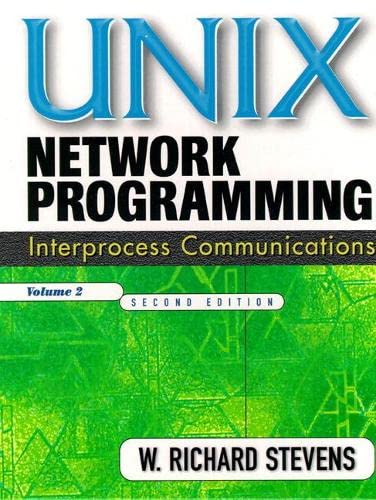
W. Richard Stevens' UNIX Network Programming has long been the classic in its field. Now, Stevens has tripled the coverage of interprocess communications, giving the topic a volume of its own. Virtually very major application today uses IPC -- from spreadsheets to air traffic control systems. For UNIX programmers working with IPC, especially those using the Posix threads standard, this is the most comprehensive tutorial and reference available.KEY TOPICS:This volume is a complete rewrite and expansion of Chapters 3 and 18 from the 1990 edition of UNIX Network Programming. In additional to covering the three forms of System V IPC (message queues, semaphores and shared memory), Stevens systematically reviews the superior new POSIX functions that implement each form of IPX. POSIX functions for synchronization are also covered, including mutex locks, condition variables, and read-write locks. Stevens shows how these can be used to synchronize threads, processes, and access to shared memory.MARKET:For all UNIX programmers.
Le informazioni nella sezione "Riassunto" possono far riferimento a edizioni diverse di questo titolo.
Dalla quarta di copertina
8108A-2
Don't miss the rest of the series!
- Vol. 1, Networking APIs: Sockets and XTI
- Vol. 3, Applications (forthcoming)
The only guide to UNIX(r) interprocess communications you'll ever need!
Well-implemented interprocess communications (IPC) are key to the performance of virtually every non-trivial UNIX program. In UNIX Network Programming, Volume 2, Second Edition, legendary UNIX expert W. Richard Stevens presents a comprehensive guide to every form of IPC, including message passing, synchronization, shared memory, and Remote Procedure Calls (RPC).
Stevens begins with a basic introduction to IPC and the problems it is intended to solve. Step-by-step you'll learn how to maximize both System V IPC and the new Posix standards, which offer dramatic improvements in convenience and performance. You'll find extensive coverage of Pthreads, with many examples reflecting multiple threads instead of multiple processes. Along the way, you'll master every current IPC technique and technology, including:
- Pipes and FIFOs.
- Posix and System V Message Queues
- Mutexes and Condition Variables
- Read-Write Locks
- Record Locking
- Posix and System V Semaphores
- Posix and System V Shared Memory
- Solaris Doors and Sun RPC
- Performance Measurements of IPC Techniques
If you've read Stevens' best-selling first edition of UNIX Network Programming, this book expands its IPC coverage by a factor of five! You won't just learn about IPC "from the outside." You'll actually create implementations of Posix message queues, read-write locks, and semaphores, gaining an in-depth understanding of these capabilities you simply can't get anywhere else.
The book contains extensive new source code-all carefully optimized and available on the Web. You'll even find a complete guide to measuring IPC performance with message passing bandwidth and latency programs, and thread and process synchronization programs.
The better you understand IPC, the better your UNIX software will run. One book contains all you need to know: UNIX Network Programming, Volume 2, Second Edition.
Le informazioni nella sezione "Su questo libro" possono far riferimento a edizioni diverse di questo titolo.
Risultati della ricerca per Unix Network Programming: Interprocess Communications...

Foto dell'editore
UNIX Network Programming: Interprocess Communications, Volume 2
Da: HPB-Red, Dallas, TX, U.S.A.
Valutazione del venditore 5 su 5 stelle

paperback. Condizione: Good. Connecting readers with great books since 1972! Used textbooks may not include companion materials such as access codes, etc. May have some wear or writing/highlighting. We ship orders daily and Customer Service is our top priority! Codice articolo S_482491775
Compra usato
EUR 63,02
Spedizione EUR 3,35
Spedito in U.S.A.
Spedito in U.S.A.
Quantità: 1 disponibili