
Articoli correlati a The Treaty of Versailles: A Very Short Introduction
The Treaty of Versailles: A Very Short Introduction - Brossura
Libro 214 di 405: Very Short Introductions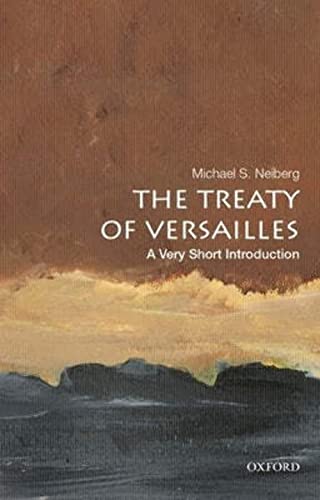
Sinossi
Signed on June 28, 1919 between Germany and the principal Allied powers, the Treaty of Versailles formally ended World War I. Problematic from the very beginning, even its contemporaries saw the treaty as a mediocre compromise, creating a precarious order in Europe and abroad and destined to fall short of ensuring lasting peace. At the time, observers read the treaty through competing lenses: a desire for peace after five years of disastrous war, demands for vengeance against Germany, the uncertain future of colonialism, and, most alarmingly, the emerging threat of Bolshevism. A century after its signing, we can look back at how those developments evolved through the twentieth century, evaluating the treaty and its consequences with unprecedented depth of perspective.
The author of several award-winning books, Michael S. Neiberg provides a lucid and authoritative account of the Treaty of Versailles, explaining the enormous challenges facing those who tried to put the world back together after the global destruction of the World War I. Rather than assessing winners and losers, this compelling book analyzes the many subtle factors that influenced the treaty and the dominant, at times ambiguous role of the "Big Four" leaders: Woodrow Wilson of the United States, David Lloyd George of Great Britain, Vittorio Emanuele Orlando of Italy, and Georges Clémenceau of France.
The Treaty of Versailles was not solely responsible for the catastrophic war that crippled Europe and the world just two decades later, but it played a critical role. As Neiberg reminds us, to understand decolonization, World War II, the Cold War, and even the complex world we inhabit today, there is no better place to begin than with World War I and the treaty that tried, and perhaps failed, to end it.
Le informazioni nella sezione "Riassunto" possono far riferimento a edizioni diverse di questo titolo.
Informazioni sull'autore
Michael S. Neiberg is the Chair of War Studies in the Department of National Security and Strategy at the US Army War College in Carlisle, Pennsylvania. He is the author of many books on the First and Second World Wars, including The Path to War: How the First World War Created Modern America, The Blood of Free Men: The Liberation of Paris, 1944, and Dance of the Furies: Europe and the Outbreak of World War I, which was named one of the five best books ever written about the war by the Wall Street Journal.
Le informazioni nella sezione "Su questo libro" possono far riferimento a edizioni diverse di questo titolo.
Risultati della ricerca per The Treaty of Versailles: A Very Short Introduction

Foto dell'editore
The Treaty of Versailles: A Very Short Introduction (Very Short Introductions)
Editore:
Oxford University Press, 2019
ISBN 10: 0190644982
ISBN 13: 9780190644987
Antico o usato
paperback
Da: Books From California, Simi Valley, CA, U.S.A.
Valutazione del venditore 4 su 5 stelle

paperback. Condizione: Fine. Codice articolo mon0003787002
Compra usato
EUR 6,75
Spedizione EUR 4,38
Spedito in U.S.A.
Spedito in U.S.A.
Quantità: 8 disponibili
Immagini fornite dal venditore
The Treaty of Versailles
Editore:
Oxford University Press Inc, US, 2019
ISBN 10: 0190644982
ISBN 13: 9780190644987
Nuovo
Paperback
Da: Rarewaves USA, HEBRON, KY, U.S.A.
Valutazione del venditore 5 su 5 stelle

Paperback. Condizione: New. Signed on June 28, 1919 between Germany and the principal Allied powers, the Treaty of Versailles formally ended World War I. Problematic from the very beginning, even its contemporaries saw the treaty as a mediocre compromise, creating a precarious order in Europe and abroad and destined to fall short of ensuring lasting peace. At the time, observers read the treaty through competing lenses: a desire for peace after five years of disastrous war, demands for vengeance against Germany, the uncertain future of colonialism, and, most alarmingly, the emerging threat of Bolshevism. A century after its signing, we can look back at how those developments evolved through the twentieth century, evaluating the treaty and its consequences with unprecedented depth of perspective.The author of several award-winning books, Michael S. Neiberg provides a lucid and authoritative account of the Treaty of Versailles, explaining the enormous challenges facing those who tried to put the world back together after the global destruction of the World War I. Rather than assessing winners and losers, this compelling book analyzes the many subtle factors that influenced the treaty and the dominant, at times ambiguous role of the "Big Four" leaders: Woodrow Wilson of the United States, David Lloyd George of Great Britain, Vittorio Emanuele Orlando of Italy, and Georges Clémenceau of France.The Treaty of Versailles was not solely responsible for the catastrophic war that crippled Europe and the world just two decades later, but it played a critical role. As Neiberg reminds us, to understand decolonization, World War II, the Cold War, and even the complex world we inhabit today, there is no better place to begin than with World War I and the treaty that tried, and perhaps failed, to end it. Codice articolo LU-9780190644987
Compra nuovo
EUR 11,65
Spedizione gratuita
Spedito in U.S.A.
Spedito in U.S.A.
Quantità: 10 disponibili
Foto dell'editore
The Treaty of Versailles: A Very Short Introduction (Very Short Introductions)
Editore:
Oxford University Press, 2019
ISBN 10: 0190644982
ISBN 13: 9780190644987
Antico o usato
paperback
Da: Books From California, Simi Valley, CA, U.S.A.
Valutazione del venditore 4 su 5 stelle
paperback. Condizione: Very Good. Codice articolo mon0004058914
Compra usato
EUR 7,32
Spedizione EUR 4,38
Spedito in U.S.A.
Spedito in U.S.A.
Quantità: 13 disponibili
Foto dell'editore
The Treaty of Versailles: A Very Short Introduction (Very Short Introductions)
Da: Lakeside Books, Benton Harbor, MI, U.S.A.
Valutazione del venditore 5 su 5 stelle
Condizione: New. Brand New! Not Overstocks or Low Quality Book Club Editions! Direct From the Publisher! We're not a giant, faceless warehouse organization! We're a small town bookstore that loves books and loves it's customers! Buy from Lakeside Books! Codice articolo OTF-S-9780190644987
Compra nuovo
EUR 8,28
Spedizione EUR 3,50
Spedito in U.S.A.
Spedito in U.S.A.
Quantità: Più di 20 disponibili
Immagini fornite dal venditore
The Treaty of Versailles: A Very Short Introduction (Paperback or Softback)
Editore:
Oxford University Press, USA 3/25/2019, 2019
ISBN 10: 0190644982
ISBN 13: 9780190644987
Nuovo
Paperback or Softback
Da: BargainBookStores, Grand Rapids, MI, U.S.A.
Valutazione del venditore 5 su 5 stelle
Paperback or Softback. Condizione: New. The Treaty of Versailles: A Very Short Introduction. Book. Codice articolo BBS-9780190644987
Compra nuovo
EUR 12,36
Spedizione gratuita
Spedito in U.S.A.
Spedito in U.S.A.
Quantità: 5 disponibili
Foto dell'editore
The Treaty of Versailles: A Very Short Introductio Format: Paperback
Da: INDOO, Avenel, NJ, U.S.A.
Valutazione del venditore 5 su 5 stelle
Condizione: New. Brand New. Codice articolo 9780190644987
Compra nuovo
EUR 13,19
Spedizione gratuita
Spedito in U.S.A.
Spedito in U.S.A.
Quantità: Più di 20 disponibili
Immagini fornite dal venditore
The Treaty of Versailles
Editore:
Oxford University Press Inc, US, 2019
ISBN 10: 0190644982
ISBN 13: 9780190644987
Nuovo
Paperback
Da: Rarewaves.com USA, London, LONDO, Regno Unito
Valutazione del venditore 5 su 5 stelle
Paperback. Condizione: New. Signed on June 28, 1919 between Germany and the principal Allied powers, the Treaty of Versailles formally ended World War I. Problematic from the very beginning, even its contemporaries saw the treaty as a mediocre compromise, creating a precarious order in Europe and abroad and destined to fall short of ensuring lasting peace. At the time, observers read the treaty through competing lenses: a desire for peace after five years of disastrous war, demands for vengeance against Germany, the uncertain future of colonialism, and, most alarmingly, the emerging threat of Bolshevism. A century after its signing, we can look back at how those developments evolved through the twentieth century, evaluating the treaty and its consequences with unprecedented depth of perspective.The author of several award-winning books, Michael S. Neiberg provides a lucid and authoritative account of the Treaty of Versailles, explaining the enormous challenges facing those who tried to put the world back together after the global destruction of the World War I. Rather than assessing winners and losers, this compelling book analyzes the many subtle factors that influenced the treaty and the dominant, at times ambiguous role of the "Big Four" leaders: Woodrow Wilson of the United States, David Lloyd George of Great Britain, Vittorio Emanuele Orlando of Italy, and Georges Clémenceau of France.The Treaty of Versailles was not solely responsible for the catastrophic war that crippled Europe and the world just two decades later, but it played a critical role. As Neiberg reminds us, to understand decolonization, World War II, the Cold War, and even the complex world we inhabit today, there is no better place to begin than with World War I and the treaty that tried, and perhaps failed, to end it. Codice articolo LU-9780190644987
Compra nuovo
EUR 13,54
Spedizione gratuita
Spedito da Regno Unito a U.S.A.
Spedito da Regno Unito a U.S.A.
Quantità: 8 disponibili
Foto dell'editore
The Treaty of Versailles: A Very Short Introduction
Da: California Books, Miami, FL, U.S.A.
Valutazione del venditore 5 su 5 stelle
Condizione: New. Codice articolo I-9780190644987
Compra nuovo
EUR 14,47
Spedizione gratuita
Spedito in U.S.A.
Spedito in U.S.A.
Quantità: Più di 20 disponibili
Immagini fornite dal venditore
The Treaty of Versailles (Paperback)
Editore:
Oxford University Press Inc, New York, 2019
ISBN 10: 0190644982
ISBN 13: 9780190644987
Nuovo
Paperback
Da: Grand Eagle Retail, Bensenville, IL, U.S.A.
Valutazione del venditore 5 su 5 stelle
Paperback. Condizione: new. Paperback. Signed on June 28, 1919 between Germany and the principal Allied powers, the Treaty of Versailles formally ended World War I. Problematic from the very beginning, even its contemporaries saw the treaty as a mediocre compromise, creating a precarious order in Europe and abroad and destined to fall short of ensuring lasting peace. At the time, observers read the treaty through competing lenses: a desire for peace after five years of disastrous war, demands forvengeance against Germany, the uncertain future of colonialism, and, most alarmingly, the emerging threat of Bolshevism. A century after its signing, we can look back at how those developments evolved throughthe twentieth century, evaluating the treaty and its consequences with unprecedented depth of perspective.The author of several award-winning books, Michael S. Neiberg provides a lucid and authoritative account of the Treaty of Versailles, explaining the enormous challenges facing those who tried to put the world back together after the global destruction of the World War I. Rather than assessing winners and losers, this compelling book analyzes the many subtle factorsthat influenced the treaty and the dominant, at times ambiguous role of the "Big Four" leaders: Woodrow Wilson of the United States, David Lloyd George of Great Britain, Vittorio Emanuele Orlando ofItaly, and Georges Clemenceau of France.The Treaty of Versailles was not solely responsible for the catastrophic war that crippled Europe and the world just two decades later, but it played a critical role. As Neiberg reminds us, to understand decolonization, World War II, the Cold War, and even the complex world we inhabit today, there is no better place to begin than with World War I and the treaty that tried, and perhaps failed, to endit.ABOUT THE SERIES: The Very Short Introductions series from Oxford University Press contains hundreds of titles in almost every subject area. These pocket-sized books are the perfect way to get ahead in a newsubject quickly. Our expert authors combine facts, analysis, perspective, new ideas, and enthusiasm to make interesting and challenging topics highly readable. This book presents an introduction to one of the most important treaties ever written, the Treaty of Versailles, which formally ended World War I in 1919. Controversial from the very beginning, the treaty still shapes the destinies of societies and states worldwide. Shipping may be from multiple locations in the US or from the UK, depending on stock availability. Codice articolo 9780190644987
Compra nuovo
EUR 14,49
Spedizione gratuita
Spedito in U.S.A.
Spedito in U.S.A.
Quantità: 1 disponibili
Foto dell'editore
The Treaty of Versailles: A Very Short Introduction (Very Short Introductions)
Da: Chiron Media, Wallingford, Regno Unito
Valutazione del venditore 5 su 5 stelle
Paperback. Condizione: New. Brand new book, sourced directly from publisher. Dispatch time is 24-48 hours from our warehouse. Book will be sent in robust, secure packaging to ensure it reaches you securely. Codice articolo 6666-GRD-9780190644987
Compra nuovo
EUR 9,50
Spedizione EUR 5,22
Spedito da Regno Unito a U.S.A.
Spedito da Regno Unito a U.S.A.
Quantità: 15 disponibili