
Articoli correlati a The Self-Made Tapestry: Pattern Formation in Nature
Sinossi
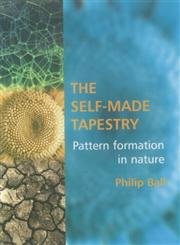
Why do similar patterns and forms appear in nature in settings that seem to bear no relation to one another? The windblown ripples of desert sand follow a sinuous course that resembles the stripes of a zebra or a marine fish. In the trellis-like shells of microscopic sea creatures we see the same angles and intersections as for bubble walls in a foam. The forks of lightning mirror the branches of a river or a tree. This book explains why these are no coincidences. Nature commonly weaves its tapestry by self-organization, employing no master plan or blueprint but by simple, local interactions between its component parts - be they grains of sand, diffusing molecules or living cells. And the products of self- organization are typically universal patterns: spirals, spots, and stripes, branches, honeycombs. This book explains, in non-technical language, and with profuse illustrations, how nature's patterns are made.
Le informazioni nella sezione "Riassunto" possono far riferimento a edizioni diverse di questo titolo.
Informazioni sull'autore
Philip Ball is an editor at Nature magazine.
Le informazioni nella sezione "Su questo libro" possono far riferimento a edizioni diverse di questo titolo.
Risultati della ricerca per The Self-Made Tapestry: Pattern Formation in Nature

Foto dell'editore
The Self-Made Tapestry: Pattern Formation in Nature
Editore:
Oxford University Press, 2001
ISBN 10: 0198502435
ISBN 13: 9780198502432
Antico o usato
Paperback
Da: World of Books (was SecondSale), Montgomery, IL, U.S.A.
Valutazione del venditore 5 su 5 stelle

Paperback. Condizione: Good. Why do similar patterns and forms appear in nature in settings that seem to bear no relation to one another? The windblown ripples of desert sand follow a sinuous course that resembles the stripes of a zebra or a marine fish. In the trellis-like shells of microscopic sea creatures we see the same angles and intersections as for bubble walls in a foam. The forks of lightning mirror the branches of a river or a tree. This book explains why these are no coincidences. Nature commonly weaves its tapestry by self-organization, employing no master plan or blueprint but by simple, local interactions between its component parts - be they grains of sand, diffusing molecules or living cells. And the products of self- organization are typically universal patterns: spirals, spots, and stripes, branches, honeycombs. This book explains, in non-technical language, and with profuse illustrations, how nature's patterns are made. Codice articolo 00109250801
Compra usato
EUR 12,03
Spedizione gratuita
Spedito in U.S.A.
Spedito in U.S.A.
Quantità: 2 disponibili
Foto dell'editore
The Self-Made Tapestry: Pattern Formation in Nature
Editore:
Oxford University Press, 2001
ISBN 10: 0198502435
ISBN 13: 9780198502432
Antico o usato
Paperback
Da: World of Books Inc, Montgomery, IL, U.S.A.
Valutazione del venditore 4 su 5 stelle

Paperback. Condizione: Good. Why do similar patterns and forms appear in nature in settings that seem to bear no relation to one another? The windblown ripples of desert sand follow a sinuous course that resembles the stripes of a zebra or a marine fish. In the trellis-like shells of microscopic sea creatures we see the same angles and intersections as for bubble walls in a foam. The forks of lightning mirror the branches of a river or a tree. This book explains why these are no coincidences. Nature commonly weaves its tapestry by self-organization, employing no master plan or blueprint but by simple, local interactions between its component parts - be they grains of sand, diffusing molecules or living cells. And the products of self- organization are typically universal patterns: spirals, spots, and stripes, branches, honeycombs. This book explains, in non-technical language, and with profuse illustrations, how nature's patterns are made. Codice articolo CIN0198502435G
Compra usato
EUR 13,87
Spedizione gratuita
Spedito in U.S.A.
Spedito in U.S.A.
Quantità: 2 disponibili
Immagini fornite dal venditore
The Self-Made Tapestry: Pattern Formation in Nature
Editore:
Oxford University Press, 2001
ISBN 10: 0198502435
ISBN 13: 9780198502432
Antico o usato
Brossura
Da: -OnTimeBooks-, Phoenix, AZ, U.S.A.
Valutazione del venditore 5 su 5 stelle
Condizione: good. A copy that has been read, remains in good condition. All pages are intact, and the cover is intact. The spine and cover show signs of wear. Pages can include notes and highlighting and show signs of wear, and the copy can include "From the library of" labels or previous owner inscriptions. 100% GUARANTEE! Shipped with delivery confirmation, if you're not satisfied with purchase please return item! Ships via media mail. Codice articolo OTV.0198502435.G
Compra usato
EUR 15,02
Spedizione gratuita
Spedito in U.S.A.
Spedito in U.S.A.
Quantità: 1 disponibili
Foto dell'editore
The Self-Made Tapestry: Pattern Formation in Nature
Editore:
Oxford University Press, 2001
ISBN 10: 0198502435
ISBN 13: 9780198502432
Antico o usato
Paperback
Da: HPB-Red, Dallas, TX, U.S.A.
Valutazione del venditore 5 su 5 stelle
Paperback. Condizione: Good. Connecting readers with great books since 1972! Used textbooks may not include companion materials such as access codes, etc. May have some wear or writing/highlighting. We ship orders daily and Customer Service is our top priority! Codice articolo S_473051030
Compra usato
EUR 12,58
Spedizione EUR 3,35
Spedito in U.S.A.
Spedito in U.S.A.
Quantità: 1 disponibili
Foto dell'editore
The Self-Made Tapestry: Pattern Formation in Nature
Editore:
Oxford University Press, 2001
ISBN 10: 0198502435
ISBN 13: 9780198502432
Antico o usato
Paperback
Da: HPB Inc., Dallas, TX, U.S.A.
Valutazione del venditore 5 su 5 stelle
Paperback. Condizione: Very Good. Connecting readers with great books since 1972! Used books may not include companion materials, and may have some shelf wear or limited writing. We ship orders daily and Customer Service is our top priority! Codice articolo S_472519852
Compra usato
EUR 19,31
Spedizione EUR 3,35
Spedito in U.S.A.
Spedito in U.S.A.
Quantità: 1 disponibili
Foto dell'editore
The Self-Made Tapestry: Pattern Formation in Nature
Editore:
Oxford University Press, 2001
ISBN 10: 0198502435
ISBN 13: 9780198502432
Antico o usato
paperback
Da: Textbooks_Source, Columbia, MO, U.S.A.
Valutazione del venditore 5 su 5 stelle
paperback. Condizione: Good. Ships in a BOX from Central Missouri! May not include working access code. Will not include dust jacket. Has used sticker(s) and some writing or highlighting. UPS shipping for most packages, (Priority Mail for AK/HI/APO/PO Boxes). Codice articolo 000506987U
Compra usato
EUR 27,31
Spedizione EUR 3,56
Spedito in U.S.A.
Spedito in U.S.A.
Quantità: 4 disponibili
Foto dell'editore
The Self-Made Tapestry: Pattern Formation in Nature
Editore:
Cary, North Carolina, U.S.A.: Oxford Univ Pr on Demand, 2001
ISBN 10: 0198502435
ISBN 13: 9780198502432
Antico o usato
Soft cover
Da: Rob the Book Man, Vancouver, WA, U.S.A.
Valutazione del venditore 4 su 5 stelle
Soft cover. Condizione: Very Good. trade paperback in very good + condition. Codice articolo 7939
Compra usato
EUR 57,92
Spedizione EUR 6,24
Spedito in U.S.A.
Spedito in U.S.A.
Quantità: 1 disponibili
Foto dell'editore
The Self-Made Tapestry: Pattern Formation in Nature
Da: GoldBooks, Denver, CO, U.S.A.
Valutazione del venditore 5 su 5 stelle
Paperback. Condizione: new. New Copy. Customer Service Guaranteed. Codice articolo 52H65_47_0198502435
Compra nuovo
EUR 64,23
Spedizione EUR 4,91
Spedito in U.S.A.
Spedito in U.S.A.
Quantità: 1 disponibili
Immagini fornite dal venditore
Self-Made Tapestry : Pattern Formation in Nature
Editore:
Oxford University Press, 2001
ISBN 10: 0198502435
ISBN 13: 9780198502432
Antico o usato
Brossura
Da: GreatBookPrices, Columbia, MD, U.S.A.
Valutazione del venditore 5 su 5 stelle
Condizione: good. May show signs of wear, highlighting, writing, and previous use. This item may be a former library book with typical markings. No guarantee on products that contain supplements Your satisfaction is 100% guaranteed. Twenty-five year bookseller with shipments to over fifty million happy customers. Codice articolo 79525-5
Compra usato
EUR 72,93
Spedizione EUR 2,36
Spedito in U.S.A.
Spedito in U.S.A.
Quantità: 4 disponibili
Foto dell'editore
The Self-Made Tapestry: Pattern Formation in Nature
Da: BennettBooksLtd, Los Angeles, CA, U.S.A.
Valutazione del venditore 5 su 5 stelle
paperback. Condizione: New. In shrink wrap. Looks like an interesting title! Codice articolo Q-0198502435
Compra nuovo
EUR 79,19
Spedizione EUR 6,20
Spedito in U.S.A.
Spedito in U.S.A.
Quantità: 1 disponibili