
Articoli correlati a The Reader in the Book: A Study of Spaces and Traces
The Reader in the Book: A Study of Spaces and Traces - Rilegato
Libro 3 di 16: Oxford Textual Perspectives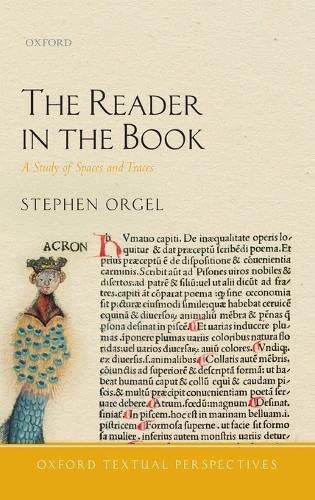
Sinossi
The Reader in the Book is concerned with a particular aspect of the history of the book, an archeology and sociology of the use of margins and other blank spaces. One of the most commonplace aspects of old books is the fact that people wrote in them, something that, until very recently, has infuriated modern collectors and librarians. But these inscriptions constitute a significant dimension of the book's history, and what readers did to books often added to their value. Sometimes marks in books have no relation to the subject of the book, merely names, dates, prices paid; blank spaces were used for pen trials and doing sums, and flyleaves are occasionally the repository of records of various kinds. The Reader in the Book deals with that special class of books in which the text and marginalia are in intense communication with each other, in which reading constitutes an active and sometimes adversarial engagement with the book. The major examples are works that are either classics or were classics in their own time; but they are seen here as contemporaries read them, without the benefit of centuries of commentary and critical guidance. The underlying question is at what point marginalia, the legible incorporation of the work of reading into the text of the book, became a way of defacing it rather than of increasing its value-why did we want books to lose their history?
Le informazioni nella sezione "Riassunto" possono far riferimento a edizioni diverse di questo titolo.
Informazioni sull'autore
Stephen Orgel is the Jackson Eli Reynolds Professor in the Humanities at Stanford. He has published widely on the political and historical aspects of Renaissance literature, theater, and art history. He has taught at Harvard, Berkeley and Johns Hopkins, and has been visiting professor at universities throughout the world. In addition to his eight books, he has edited Ben Jonson's masques, Christopher Marlowe's poems and translations, the Oxford Authors John Milton, The Tempest and The Winter's Tale in The Oxford Shakespeare, and several novels by Trollope and Edith Wharton in the Oxford World's Classics. He is a general editor of the New Pelican Shakespeare.
Le informazioni nella sezione "Su questo libro" possono far riferimento a edizioni diverse di questo titolo.
Risultati della ricerca per The Reader in the Book: A Study of Spaces and Traces

Foto dell'editore
The Reader in the Book: A Study of Spaces and Traces (Oxford Textual Perspectives)
Editore:
Oxford University Press, 2015
ISBN 10: 0198737564
ISBN 13: 9780198737568
Antico o usato
Rilegato
Da: Books From California, Simi Valley, CA, U.S.A.
Valutazione del venditore 4 su 5 stelle

hardcover. Condizione: Very Good. Codice articolo mon0003899527
Compra usato
EUR 30,49
Spedizione EUR 4,45
Spedito in U.S.A.
Spedito in U.S.A.
Quantità: 1 disponibili
Foto dell'editore
The Reader in the Book: A Study of Spaces and Traces (Oxford Textual Perspectives)
Da: Anybook.com, Lincoln, Regno Unito
Valutazione del venditore 5 su 5 stelle

Condizione: Good. This is an ex-library book and may have the usual library/used-book markings inside.This book has hardback covers. In good all round condition. No dust jacket. Please note the Image in this listing is a stock photo and may not match the covers of the actual item,400grams, ISBN:9780198737568. Codice articolo 5976607
Compra usato
EUR 38,02
Spedizione EUR 15,43
Spedito da Regno Unito a U.S.A.
Spedito da Regno Unito a U.S.A.
Quantità: 1 disponibili
Foto dell'editore
The Reader in the Book: A Study of Spaces and Traces (eng)
Print on DemandDa: Brook Bookstore On Demand, Napoli, NA, Italia
Valutazione del venditore 5 su 5 stelle
Condizione: new. Questo è un articolo print on demand. Codice articolo 48cbf4773a302fd054158b7bfef77d1d
Compra nuovo
EUR 53,29
Spedizione EUR 6,80
Spedito da Italia a U.S.A.
Spedito da Italia a U.S.A.
Quantità: Più di 20 disponibili
Immagini fornite dal venditore
Reader in the Book : A Study of Spaces and Traces
Da: GreatBookPrices, Columbia, MD, U.S.A.
Valutazione del venditore 5 su 5 stelle
Condizione: New. Codice articolo 23523009-n
Compra nuovo
EUR 60,88
Spedizione EUR 2,36
Spedito in U.S.A.
Spedito in U.S.A.
Quantità: Più di 20 disponibili
Foto dell'editore
The Reader in the Book
Editore:
Oxford University Press (UK), 2017
ISBN 10: 0198737564
ISBN 13: 9780198737568
Nuovo
Rilegato
Da: PBShop.store US, Wood Dale, IL, U.S.A.
Valutazione del venditore 5 su 5 stelle
HRD. Condizione: New. New Book. Shipped from UK. THIS BOOK IS PRINTED ON DEMAND. Established seller since 2000. Codice articolo L1-9780198737568
Compra nuovo
EUR 66,94
Spedizione gratuita
Spedito in U.S.A.
Spedito in U.S.A.
Quantità: Più di 20 disponibili
Immagini fornite dal venditore
The Reader in the Book
Editore:
Oxford University Press, GB, 2015
ISBN 10: 0198737564
ISBN 13: 9780198737568
Nuovo
Rilegato
Da: Rarewaves.com USA, London, LONDO, Regno Unito
Valutazione del venditore 5 su 5 stelle
Hardback. Condizione: New. The Reader in the Book is concerned with a particular aspect of the history of the book, an archeology and sociology of the use of margins and other blank spaces. One of the most commonplace aspects of old books is the fact that people wrote in them, something that, until very recently, has infuriated modern collectors and librarians. But these inscriptions constitute a significant dimension of the book's history, and what readers did to books often added to their value. Sometimes marks in books have no relation to the subject of the book, merely names, dates, prices paid; blank spaces were used for pen trials and doing sums, and flyleaves are occasionally the repository of records of various kinds. The Reader in the Book deals with that special class of books in which the text and marginalia are in intense communication with each other, in which reading constitutes an active and sometimes adversarial engagement with the book. The major examples are works that are either classics or were classics in their own time; but they are seen here as contemporaries read them, without the benefit of centuries of commentary and critical guidance. The underlying question is at what point marginalia, the legible incorporation of the work of reading into the text of the book, became a way of defacing it rather than of increasing its value-why did we want books to lose their history? Codice articolo LU-9780198737568
Compra nuovo
EUR 68,71
Spedizione gratuita
Spedito da Regno Unito a U.S.A.
Spedito da Regno Unito a U.S.A.
Quantità: Più di 20 disponibili
Foto dell'editore
The Reader in the Book
Editore:
Oxford University Press (UK), 2017
ISBN 10: 0198737564
ISBN 13: 9780198737568
Nuovo
Rilegato
Da: PBShop.store UK, Fairford, GLOS, Regno Unito
Valutazione del venditore 5 su 5 stelle
HRD. Condizione: New. New Book. Delivered from our UK warehouse in 4 to 14 business days. THIS BOOK IS PRINTED ON DEMAND. Established seller since 2000. Codice articolo L1-9780198737568
Compra nuovo
EUR 63,91
Spedizione EUR 4,92
Spedito da Regno Unito a U.S.A.
Spedito da Regno Unito a U.S.A.
Quantità: Più di 20 disponibili
Immagini fornite dal venditore
Reader in the Book : A Study of Spaces and Traces
Editore:
Oxford University Press, 2015
ISBN 10: 0198737564
ISBN 13: 9780198737568
Antico o usato
Rilegato
Da: GreatBookPrices, Columbia, MD, U.S.A.
Valutazione del venditore 5 su 5 stelle
Condizione: As New. Unread book in perfect condition. Codice articolo 23523009
Compra usato
EUR 66,83
Spedizione EUR 2,36
Spedito in U.S.A.
Spedito in U.S.A.
Quantità: Più di 20 disponibili
Foto dell'editore
The Reader in the Book (Hardcover)
Editore:
Oxford University Press, Oxford, 2015
ISBN 10: 0198737564
ISBN 13: 9780198737568
Nuovo
Rilegato
Da: Grand Eagle Retail, Bensenville, IL, U.S.A.
Valutazione del venditore 5 su 5 stelle
Hardcover. Condizione: new. Hardcover. The Reader in the Book is concerned with a particular aspect of the history of the book, an archeology and sociology of the use of margins and other blank spaces. One of the most commonplace aspects of old books is the fact that people wrote in them, something that, until very recently, has infuriated modern collectors and librarians. But these inscriptions constitute a significant dimension of the book's history, and what readers did to books often addedto their value. Sometimes marks in books have no relation to the subject of the book, merely names, dates, prices paid; blank spaces were used for pen trials and doing sums, and flyleaves are occasionally therepository of records of various kinds. The Reader in the Book deals with that special class of books in which the text and marginalia are in intense communication with each other, in which reading constitutes an active and sometimes adversarial engagement with the book. The major examples are works that are either classics or were classics in their own time; but they are seen here as contemporaries read them, without the benefit of centuries of commentary and critical guidance. Theunderlying question is at what point marginalia, the legible incorporation of the work of reading into the text of the book, became a way of defacing it rather than of increasing its value-why did we want booksto lose their history? The Reader in the Book examines the history, archaeology, and sociology of the use of margins and other blank spaces in early modern books to shed light on reading practices, how books were read, and what early modern readerse wanted texts to tell them. Shipping may be from multiple locations in the US or from the UK, depending on stock availability. Codice articolo 9780198737568
Compra nuovo
EUR 76,58
Spedizione gratuita
Spedito in U.S.A.
Spedito in U.S.A.
Quantità: 1 disponibili
Foto dell'editore
Reader in the Book : A Study of Spaces and Traces
Da: GreatBookPricesUK, Woodford Green, Regno Unito
Valutazione del venditore 5 su 5 stelle
Condizione: New. Codice articolo 23523009-n
Compra nuovo
EUR 59,34
Spedizione EUR 17,75
Spedito da Regno Unito a U.S.A.
Spedito da Regno Unito a U.S.A.
Quantità: Più di 20 disponibili