
Articoli correlati a Failure: Why Science Is so Successful
Sinossi
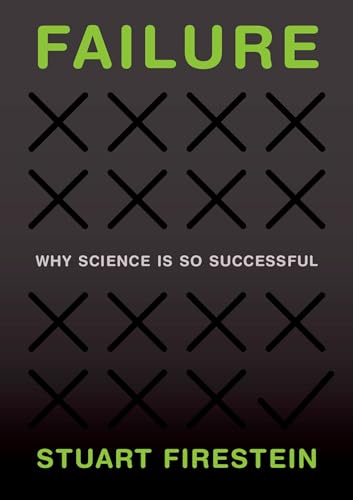
The pursuit of science by professional scientists every day bears less and less resemblance to the perception of science by the general public. It is not the rule-based, methodical system for accumulating facts that dominates the public view. Rather it is the idiosyncratic, often bumbling search for understanding in mostly uncharted places. It is full of wrong turns, cul-de-sacs, mistaken identities, false findings, errors of fact and judgment--and the occasional remarkable success.
The widespread but distorted view of science as infallible originates in an education system that teaches nothing but facts using very large, very frightening textbooks, and is spread by media that report on discoveries but almost never on process. It is further reinforced by politicians who "pay for it" and want to use it to determine policy and therefore want it "right" and, worst of all, sometimes by scientists who learn early on that talking too much about failures and not enough about successes can harm their careers. Failure, then, is a book that seeks to make science more appealing by exposing its faults. In this sequel to Ignorance, Stuart Firestein shows us that scientific enterprise is riddled with failures, and that this is not only necessary but good.
Failure reveals how science got its start, when humans began to use a process--trial and error--as a kind of recipe that includes a hefty dose of failure. It gives the non-scientifically trained public an insider's view of how science is actually done, with the aim of making it accessible, comprehensible, and entertaining.
Le informazioni nella sezione "Riassunto" possono far riferimento a edizioni diverse di questo titolo.
Informazioni sull'autore
Stuart Firestein is Professor and Chair of the Department of Biological Sciences at Columbia University, where his highly popular course on ignorance invites working scientists to come talk to students each week about what they don't know. Dedicated to promoting science to a public audience, he serves as an advisor for the Alfred P. Sloan Foundation's program for the Public Understanding of Science and was awarded the 2011 Lenfest Distinguished Columbia Faculty Award for excellence in scholarship and teaching. He was also recently named an AAAS Fellow.
Le informazioni nella sezione "Su questo libro" possono far riferimento a edizioni diverse di questo titolo.
Risultati della ricerca per Failure: Why Science Is so Successful

Foto dell'editore
Failure: Why Science Is so Successful
Editore:
Oxford University Press Inc, 2015
ISBN 10: 019939010X
ISBN 13: 9780199390106
Antico o usato
Rilegato
Da: World of Books (was SecondSale), Montgomery, IL, U.S.A.
Valutazione del venditore 5 su 5 stelle

Hardback. Condizione: Good. The general public has a glorified view of the pursuit of scientific research. However, the idealized perception of science as a rule-based, methodical system for accumulating facts could not be further from the truth. Modern science involves the idiosyncratic, often bumbling search for understanding in uncharted territories, full of wrong turns, false findings, and the occasional remarkable success. In his sequel to Ignorance (Oxford University Press, 2012), Stuart Firestein shows us that the scientific enterprise is riddled with mistakes and errors - and that this is a good thing! Failure: Why Science Is So Successful delves into the origins of scientific research as a process that relies upon trial and error, one which inevitably results in a hefty dose of failure. In fact, scientists throughout history have relied on failure to guide their research, viewing mistakes as a necessary part of the process. Citing both historical and contemporary examples, Firestein strips away the distorted view of science as infallible to provide the public with a rare, inside glimpse of the messy realities of the scientific process. An insider's view of how science is actually carried out, this book will delight anyone with an interest in science, from aspiring scientists to curious general readers. Accessible and entertaining, Failure illuminates the greatest and most productive adventure of human history, with all the missteps along the way. Codice articolo 00105753286
Compra usato
EUR 5,29
Spedizione gratuita
Spedito in U.S.A.
Spedito in U.S.A.
Quantità: 5 disponibili
Foto dell'editore
Failure: Why Science Is so Successful
Editore:
Oxford University Press Inc, 2015
ISBN 10: 019939010X
ISBN 13: 9780199390106
Antico o usato
Rilegato
Da: World of Books (was SecondSale), Montgomery, IL, U.S.A.
Valutazione del venditore 5 su 5 stelle
Hardback. Condizione: Very Good. The general public has a glorified view of the pursuit of scientific research. However, the idealized perception of science as a rule-based, methodical system for accumulating facts could not be further from the truth. Modern science involves the idiosyncratic, often bumbling search for understanding in uncharted territories, full of wrong turns, false findings, and the occasional remarkable success. In his sequel to Ignorance (Oxford University Press, 2012), Stuart Firestein shows us that the scientific enterprise is riddled with mistakes and errors - and that this is a good thing! Failure: Why Science Is So Successful delves into the origins of scientific research as a process that relies upon trial and error, one which inevitably results in a hefty dose of failure. In fact, scientists throughout history have relied on failure to guide their research, viewing mistakes as a necessary part of the process. Citing both historical and contemporary examples, Firestein strips away the distorted view of science as infallible to provide the public with a rare, inside glimpse of the messy realities of the scientific process. An insider's view of how science is actually carried out, this book will delight anyone with an interest in science, from aspiring scientists to curious general readers. Accessible and entertaining, Failure illuminates the greatest and most productive adventure of human history, with all the missteps along the way. Codice articolo 00102893027
Compra usato
EUR 5,29
Spedizione gratuita
Spedito in U.S.A.
Spedito in U.S.A.
Quantità: 1 disponibili
Immagini fornite dal venditore
Failure: Why Science Is So Successful
Editore:
Oxford University Press, 2015
ISBN 10: 019939010X
ISBN 13: 9780199390106
Antico o usato
Rilegato
Da: Greenworld Books, Arlington, TX, U.S.A.
Valutazione del venditore 5 su 5 stelle
Condizione: very_good. Fast Free Shipping â" Very Good condition book with a firm cover and clean pages. Shows normal use and some light wear or limited notes markings. A solid, nice copy to enjoy. Codice articolo GWV.019939010X.VG
Compra usato
EUR 5,30
Spedizione gratuita
Spedito in U.S.A.
Spedito in U.S.A.
Quantità: 1 disponibili
Immagini fornite dal venditore
Failure: Why Science Is So Successful
Editore:
Oxford University Press, 2015
ISBN 10: 019939010X
ISBN 13: 9780199390106
Antico o usato
Rilegato
Da: 2nd Life Books, Burlington, NJ, U.S.A.
Valutazione del venditore 5 su 5 stelle
Condizione: very_good. Used book in very good condition. May have some minor wear. May NOT include discs, or access code or other supplemental material. Ships directly from Amazon and is eligible for Prime or super saver FREE shipping. We ship Monday-Saturday and respond to inquiries within 24 hours. Codice articolo BXM.EU1X
Compra usato
EUR 1,76
Spedizione EUR 3,58
Spedito in U.S.A.
Spedito in U.S.A.
Quantità: 1 disponibili
Foto dell'editore
Failure: Why Science Is So Successful
Editore:
Oxford University Press, 2015
ISBN 10: 019939010X
ISBN 13: 9780199390106
Antico o usato
Rilegato
Da: Evergreen Goodwill, Seattle, WA, U.S.A.
Valutazione del venditore 5 su 5 stelle
hardcover. Condizione: Good. Codice articolo mon0000308681
Compra usato
EUR 2,21
Spedizione EUR 3,58
Spedito in U.S.A.
Spedito in U.S.A.
Quantità: 1 disponibili
Foto dell'editore
Failure: Why Science Is So Successful
Editore:
Oxford University Press, 2015
ISBN 10: 019939010X
ISBN 13: 9780199390106
Antico o usato
Rilegato
Da: ThriftBooks-Dallas, Dallas, TX, U.S.A.
Valutazione del venditore 5 su 5 stelle
Hardcover. Condizione: Very Good. No Jacket. May have limited writing in cover pages. Pages are unmarked. ~ ThriftBooks: Read More, Spend Less. Codice articolo G019939010XI4N00
Compra usato
EUR 5,99
Spedizione gratuita
Spedito in U.S.A.
Spedito in U.S.A.
Quantità: 1 disponibili
Foto dell'editore
Failure: Why Science Is So Successful
Editore:
Oxford University Press, 2015
ISBN 10: 019939010X
ISBN 13: 9780199390106
Antico o usato
Rilegato
Da: ThriftBooks-Phoenix, Phoenix, AZ, U.S.A.
Valutazione del venditore 5 su 5 stelle
Hardcover. Condizione: Very Good. No Jacket. May have limited writing in cover pages. Pages are unmarked. ~ ThriftBooks: Read More, Spend Less. Codice articolo G019939010XI4N00
Compra usato
EUR 5,99
Spedizione gratuita
Spedito in U.S.A.
Spedito in U.S.A.
Quantità: 1 disponibili
Foto dell'editore
Failure: Why Science Is So Successful
Editore:
Oxford University Press, 2015
ISBN 10: 019939010X
ISBN 13: 9780199390106
Antico o usato
Rilegato
Da: ThriftBooks-Dallas, Dallas, TX, U.S.A.
Valutazione del venditore 5 su 5 stelle
Hardcover. Condizione: Good. No Jacket. Pages can have notes/highlighting. Spine may show signs of wear. ~ ThriftBooks: Read More, Spend Less. Codice articolo G019939010XI3N00
Compra usato
EUR 5,99
Spedizione gratuita
Spedito in U.S.A.
Spedito in U.S.A.
Quantità: 1 disponibili
Immagini fornite dal venditore
Failure: Why Science Is So Successful
Editore:
Oxford University Press, 2015
ISBN 10: 019939010X
ISBN 13: 9780199390106
Antico o usato
Rilegato
Da: Goodwill, Brooklyn Park, MN, U.S.A.
Valutazione del venditore 4 su 5 stelle

Condizione: good. All pages and cover are intact including the dust cover, if applicable . Spine may show signs of wear. Pages may include limited notes and highlighting. May include "From the library of" labels. Shrink wrap, dust covers, or boxed set case may be missing. Item may be missing bundled media. Codice articolo MINV.019939010X.G
Compra usato
EUR 2,64
Spedizione EUR 3,58
Spedito in U.S.A.
Spedito in U.S.A.
Quantità: 1 disponibili
Foto dell'editore
Failure: Why Science Is So Successful
Editore:
Oxford University Press, 2015
ISBN 10: 019939010X
ISBN 13: 9780199390106
Antico o usato
Rilegato
Da: Open Books, Chicago, IL, U.S.A.
Valutazione del venditore 5 su 5 stelle
Hardcover. Condizione: Very Good. Open Books is a nonprofit social venture that provides literacy experiences for thousands of readers each year through inspiring programs and creative capitalization of books. Codice articolo mon0000243073
Compra usato
EUR 2,72
Spedizione EUR 3,58
Spedito in U.S.A.
Spedito in U.S.A.
Quantità: 1 disponibili