
Articoli correlati a Madness: A Very Short Introduction
Sinossi
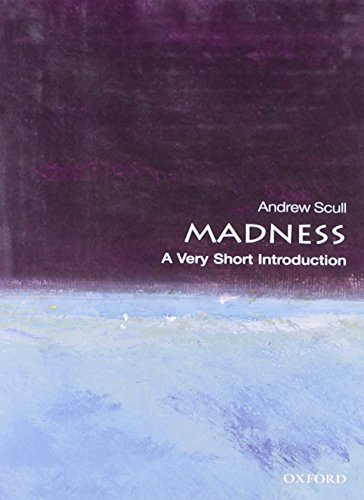
Madness is something that frightens and fascinates us all. It is a word with which we are universally familiar, and a condition that haunts the human imagination. Through the centuries, in poetry and in prose, in drama and in the visual arts, its depredations are on display for all to see. A whole industry has grown up, devoted to its management and suppression. Madness profoundly disturbs our common sense assumptions; threatens the social order, both symbolically and practically; creates almost unbearable disruptions in the texture of daily living; and turns our experience and our expectations upside down. Lunacy, insanity, psychosis, mental illness - whatever term we prefer, its referents are disturbances of reason, the passions, and human action that frighten, create chaos, and yet sometimes amuse; that mark a gulf between the common sense reality most of us embrace, and the discordant version some humans appear to experience.
Social responses to madness, our interpretations of what madness is, and our notions of what is to be done about it have varied remarkably over the centuries. In this Very Short Introduction, Andrew Scull provides a provocative and entertaining examination of the social, cultural, medical, and artistic responses to mental disturbance across more than two millennia, concluding with some observations on the contemporary accounts of mental illness.
ABOUT THE SERIES: The Very Short Introductions series from Oxford University Press contains hundreds of titles in almost every subject area. These pocket-sized books are the perfect way to get ahead in a new subject quickly. Our expert authors combine facts, analysis, perspective, new ideas, and enthusiasm to make interesting and challenging topics highly readable.
Le informazioni nella sezione "Riassunto" possono far riferimento a edizioni diverse di questo titolo.
Informazioni sull'autore
Andrew Scull has held faculty positions at the University of Pennsylvania, Princeton, and the University of California, where he is Distinguished Professor of Sociology and Science Studies. He is a past president of the Society for the Social History of Medicine, and has held fellowships from the Guggenheim Foundation and the American Council of Learned Societies. He is the author or editor of more than twenty books, many of them on the history of psychiatry in Britain and the United States. He has lectured on five continents, as well as making many media appearances on programmes dealing with mental health issues.
Le informazioni nella sezione "Su questo libro" possono far riferimento a edizioni diverse di questo titolo.
Risultati della ricerca per Madness: A Very Short Introduction

Immagini fornite dal venditore
Madness: A Very Short Introduction
Editore:
Oxford University Press, 2011
ISBN 10: 0199608032
ISBN 13: 9780199608034
Antico o usato
Brossura
Da: -OnTimeBooks-, Phoenix, AZ, U.S.A.
Valutazione del venditore 5 su 5 stelle

Condizione: good. A copy that has been read, remains in good condition. All pages are intact, and the cover is intact. The spine and cover show signs of wear. Pages can include notes and highlighting and show signs of wear, and the copy can include "From the library of" labels or previous owner inscriptions. 100% GUARANTEE! Shipped with delivery confirmation, if you're not satisfied with purchase please return item! Ships via media mail. Codice articolo OTV.0199608032.G
Compra usato
EUR 6,29
Spedizione gratuita
Spedito in U.S.A.
Spedito in U.S.A.
Quantità: 1 disponibili
Foto dell'editore
Madness : A Very Short Introduction
Editore:
Oxford University Press, Incorporated, 2011
ISBN 10: 0199608032
ISBN 13: 9780199608034
Antico o usato
Brossura
Da: Better World Books, Mishawaka, IN, U.S.A.
Valutazione del venditore 5 su 5 stelle
Condizione: Good. Pages intact with minimal writing/highlighting. The binding may be loose and creased. Dust jackets/supplements are not included. Stock photo provided. Product includes identifying sticker. Better World Books: Buy Books. Do Good. Codice articolo 9210095-20
Compra usato
EUR 8,34
Spedizione gratuita
Spedito in U.S.A.
Spedito in U.S.A.
Quantità: 1 disponibili
Foto dell'editore
Madness : A Very Short Introduction
Editore:
Oxford University Press, Incorporated, 2011
ISBN 10: 0199608032
ISBN 13: 9780199608034
Antico o usato
Brossura
Da: Better World Books, Mishawaka, IN, U.S.A.
Valutazione del venditore 5 su 5 stelle
Condizione: Good. Former library copy. Pages intact with minimal writing/highlighting. The binding may be loose and creased. Dust jackets/supplements are not included. Includes library markings. Stock photo provided. Product includes identifying sticker. Better World Books: Buy Books. Do Good. Codice articolo 10708009-20
Compra usato
EUR 8,34
Spedizione gratuita
Spedito in U.S.A.
Spedito in U.S.A.
Quantità: 2 disponibili
Foto dell'editore
Madness: A Very Short Introduction
Editore:
Oxford University Press, 2011
ISBN 10: 0199608032
ISBN 13: 9780199608034
Antico o usato
Paperback
Da: World of Books (was SecondSale), Montgomery, IL, U.S.A.
Valutazione del venditore 5 su 5 stelle
Paperback. Condizione: Good. Madness is something that frightens and fascinates us all. It is a word with which we are universally familiar, and a condition that haunts the human imagination. Through the centuries, in poetry and in prose, in drama and in the visual arts, its depredations are on display for all to see. A whole industry has grown up, devoted to its management and suppression. Madness profoundly disturbs our common sense assumptions; threatens the social order, both symbolically and practically; creates almost unbearable disruptions in the texture of daily living; and turns our experience and our expectations upside down. Lunacy, insanity, psychosis, mental illness - whatever term we prefer, its referents are disturbances of reason, the passions, and human action that frighten, create chaos, and yet sometimes amuse; that mark a gulf between the common sense reality most of us embrace, and the discordant version some humans appear to experience. Social responses to madness, our interpretations of what madness is, and our notions of what is to be done about it have varied remarkably over the centuries. In this Very Short Introduction, Andrew Scull provides a provocative and entertaining examination of the social, cultural, medical, and artistic responses to mental disturbance across more than two millennia, concluding with some observations on the contemporary accounts of mental illness. Codice articolo 00104572563
Compra usato
EUR 10,31
Spedizione gratuita
Spedito in U.S.A.
Spedito in U.S.A.
Quantità: 1 disponibili
Foto dell'editore
Madness: A Very Short Introduction
Editore:
Oxford University Press, 2011
ISBN 10: 0199608032
ISBN 13: 9780199608034
Antico o usato
Paperback
Da: WorldofBooks, Goring-By-Sea, WS, Regno Unito
Valutazione del venditore 5 su 5 stelle
Paperback. Condizione: Very Good. The book has been read, but is in excellent condition. Pages are intact and not marred by notes or highlighting. The spine remains undamaged. Codice articolo GOR006285024
Compra usato
EUR 3,91
Spedizione EUR 6,63
Spedito da Regno Unito a U.S.A.
Spedito da Regno Unito a U.S.A.
Quantità: 1 disponibili
Foto dell'editore
Madness: A Very Short Introduction
Editore:
Oxford University Press, 2011
ISBN 10: 0199608032
ISBN 13: 9780199608034
Antico o usato
paperback
Da: Lot O'Books, Norfolk, VA, U.S.A.
Valutazione del venditore 5 su 5 stelle
paperback. Condizione: Very Good. ***VERY GOOD CONDITION***CLEAN PAGES*** [Ex-library: call number, 2 stamps, 2 stickers.] Light cover wear. Light edge wear to cover. We specialize in non-fiction books. Follow us on Facebook and Instagram. Codice articolo mon0000056321
Compra usato
EUR 7,60
Spedizione EUR 4,45
Spedito in U.S.A.
Spedito in U.S.A.
Quantità: 1 disponibili
Immagini fornite dal venditore
Madness : A Very Short Introduction
Editore:
Oxford University Press, 2011
ISBN 10: 0199608032
ISBN 13: 9780199608034
Antico o usato
Brossura
Da: GreatBookPrices, Columbia, MD, U.S.A.
Valutazione del venditore 5 su 5 stelle
Condizione: As New. Unread book in perfect condition. Codice articolo 12375093
Compra usato
EUR 9,77
Spedizione EUR 2,35
Spedito in U.S.A.
Spedito in U.S.A.
Quantità: 4 disponibili
Immagini fornite dal venditore
Madness: A Very Short Introduction
Editore:
Oxford University Press, 2011
ISBN 10: 0199608032
ISBN 13: 9780199608034
Antico o usato
Brossura
Da: MERS Goodwill, Saint Louis, MO, U.S.A.
Valutazione del venditore 5 su 5 stelle
Condizione: good. Used - Good: All pages and cover are intact including the dust cover, if applicable . Spine may show signs of wear. Pages may include limited notes and highlighting. May include From the library of labels. Shrink wrap, dust covers, or boxed set case may be missing. Item may be missing bundled media. Any access codes or passwords originally included with the book may be expired, used or no longer valid. Image is stock photo and cover art edition may be different than pictured. Codice articolo MERV.0199608032.G
Compra usato
EUR 8,57
Spedizione EUR 3,57
Spedito in U.S.A.
Spedito in U.S.A.
Quantità: 1 disponibili
Foto dell'editore
Madness: A Very Short Introduction
Editore:
Oxford University Press, 2011
ISBN 10: 0199608032
ISBN 13: 9780199608034
Antico o usato
Paperback
Da: World of Books Inc, Montgomery, IL, U.S.A.
Valutazione del venditore 4 su 5 stelle

Paperback. Condizione: Good. Madness is something that frightens and fascinates us all. It is a word with which we are universally familiar, and a condition that haunts the human imagination. Through the centuries, in poetry and in prose, in drama and in the visual arts, its depredations are on display for all to see. A whole industry has grown up, devoted to its management and suppression. Madness profoundly disturbs our common sense assumptions; threatens the social order, both symbolically and practically; creates almost unbearable disruptions in the texture of daily living; and turns our experience and our expectations upside down. Lunacy, insanity, psychosis, mental illness - whatever term we prefer, its referents are disturbances of reason, the passions, and human action that frighten, create chaos, and yet sometimes amuse; that mark a gulf between the common sense reality most of us embrace, and the discordant version some humans appear to experience. Social responses to madness, our interpretations of what madness is, and our notions of what is to be done about it have varied remarkably over the centuries. In this Very Short Introduction, Andrew Scull provides a provocative and entertaining examination of the social, cultural, medical, and artistic responses to mental disturbance across more than two millennia, concluding with some observations on the contemporary accounts of mental illness. Codice articolo CIN0199608032G
Compra usato
EUR 12,15
Spedizione gratuita
Spedito in U.S.A.
Spedito in U.S.A.
Quantità: 1 disponibili
Foto dell'editore
Madness : A Very Short Introduction
Editore:
Oxford University Press, Incorporated, 2011
ISBN 10: 0199608032
ISBN 13: 9780199608034
Antico o usato
Brossura
Da: Better World Books Ltd, Dunfermline, Regno Unito
Valutazione del venditore 5 su 5 stelle
Condizione: Good. Pages intact with minimal writing/highlighting. The binding may be loose and creased. Dust jackets/supplements are not included. Stock photo provided. Product includes identifying sticker. Better World Books: Buy Books. Do Good. Codice articolo 9210095-20
Compra usato
EUR 6,30
Spedizione EUR 5,92
Spedito da Regno Unito a U.S.A.
Spedito da Regno Unito a U.S.A.
Quantità: 1 disponibili