
Articoli correlati a Light: A Very Short Introduction
Sinossi
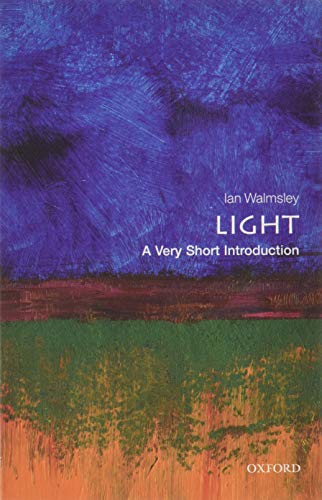
Light enables us to see the world around us. Our sense of sight provides us with direct information about space and time, the physical arrangement of the world, and how it changes. This almost universal shared sensation of vision has led to a fascination with the nature and properties of light across the ages. But the light we see is just a small part of the whole spectrum of electromagnetic radiation, ranging from radio waves to gamma rays.
In this Very Short Introduction Ian Walmsley discusses early attempts to explain light, and the development of apparently opposing particulate and wave theories by scientists such as Isaac Newton and Christiaan Huygens. He shows how light was recognized as an electromagnetic wave in the 19th century, and the development of the quantum mechanics view of wave-particle duality in the 20th century. He also describes the many applications of light, domestic and scientific, such as microwaves, DVDs, and lasers. We now use the whole range of electromagnetic radiation to peer both into the human body and deep into space. Turning to the future of optics, Walmsley concludes by looking at some of the most exciting new developments using quantum light sources in communications and computing.
ABOUT THE SERIES: The Very Short Introductions series from Oxford University Press contains hundreds of titles in almost every subject area. These pocket-sized books are the perfect way to get ahead in a new subject quickly. Our expert authors combine facts, analysis, perspective, new ideas, and enthusiasm to make interesting and challenging topics highly readable.
Le informazioni nella sezione "Riassunto" possono far riferimento a edizioni diverse di questo titolo.
Informazioni sull'autore
Ian Walmsley is the Hooke Professor of Experimental Physics at the University of Oxford, where he is also the Pro-Vice Chancellor for Research and University Collections and a Fellow of St. Hugh's College. He has engaged in research in optical science and engineering for more than thirty years, and has published over 200 papers in ultrafast laser science, quantum optics and information processing and optical coherent control of matter. Prior to joining the University of Oxford, he was on the faculty of the Institute of Optics at the University of Rochester, NY, USA, where he served also as the Chair of the Undergraduate Program, and as Director of the Institute.
Le informazioni nella sezione "Su questo libro" possono far riferimento a edizioni diverse di questo titolo.
Risultati della ricerca per Light: A Very Short Introduction

Foto dell'editore
Light: A Very Short Introduction
Editore:
Oxford University Press, 2015
ISBN 10: 0199682690
ISBN 13: 9780199682690
Antico o usato
Paperback
Da: World of Books (was SecondSale), Montgomery, IL, U.S.A.
Valutazione del venditore 5 su 5 stelle

Paperback. Condizione: Good. Light enables us to see the world around us. Our sense of sight provides us with direct information about space and time, the physical arrangement of the world, and how it changes. This almost universal shared sensation of vision has led to a fascination with the nature and properties of light across the ages. But the light we see is just a small part of the whole spectrum of electromagnetic radiation, ranging from radio waves to gamma rays.In this Very Short Introduction Ian Walmsley discusses early attempts to explain light, and the development of apparently opposing particulate and wave theories by scientists such as Isaac Newton and Christiaan Huygens. He shows how light was recognized as an electromagnetic wave in the 19th century, and the development of the quantum mechanics view of wave-particle duality in the 20th century. He also describes the many applications of light, domestic and scientific, such as microwaves, DVDs, and lasers. We now use the whole range of electromagnetic radiation to peer both into the human body and deep into space. Turning to the future of optics, Walmsley concludes by looking at some of the most exciting new developments using quantum light sources in communications and computing.ABOUT THE SERIES: The Very Short Introductions series from Oxford University Press contains hundreds of titles in almost every subject area. These pocket-sized books are the perfect way to get ahead in a new subject quickly. Our expert authors combine facts, analysis, perspective, new ideas, and enthusiasm to make interesting and challenging topics highly readable. Codice articolo CIN0199682690G
Compra usato
EUR 6,45
Spedizione gratuita
Spedito in U.S.A.
Spedito in U.S.A.
Quantità: 1 disponibili
Foto dell'editore
Light: A Very Short Introduction
Editore:
Oxford University Press, 2015
ISBN 10: 0199682690
ISBN 13: 9780199682690
Antico o usato
Paperback
Da: World of Books Inc, Montgomery, IL, U.S.A.
Valutazione del venditore 4 su 5 stelle

Paperback. Condizione: Good. Light enables us to see the world around us. Our sense of sight provides us with direct information about space and time, the physical arrangement of the world, and how it changes. This almost universal shared sensation of vision has led to a fascination with the nature and properties of light across the ages. But the light we see is just a small part of the whole spectrum of electromagnetic radiation, ranging from radio waves to gamma rays.In this Very Short Introduction Ian Walmsley discusses early attempts to explain light, and the development of apparently opposing particulate and wave theories by scientists such as Isaac Newton and Christiaan Huygens. He shows how light was recognized as an electromagnetic wave in the 19th century, and the development of the quantum mechanics view of wave-particle duality in the 20th century. He also describes the many applications of light, domestic and scientific, such as microwaves, DVDs, and lasers. We now use the whole range of electromagnetic radiation to peer both into the human body and deep into space. Turning to the future of optics, Walmsley concludes by looking at some of the most exciting new developments using quantum light sources in communications and computing.ABOUT THE SERIES: The Very Short Introductions series from Oxford University Press contains hundreds of titles in almost every subject area. These pocket-sized books are the perfect way to get ahead in a new subject quickly. Our expert authors combine facts, analysis, perspective, new ideas, and enthusiasm to make interesting and challenging topics highly readable. Codice articolo CIN0199682690G
Compra usato
EUR 8,29
Spedizione gratuita
Spedito in U.S.A.
Spedito in U.S.A.
Quantità: 1 disponibili
Immagini fornite dal venditore
Light A Very Short Introduction
Editore:
Oxford University Press, 2015
ISBN 10: 0199682690
ISBN 13: 9780199682690
Antico o usato
Brossura
Da: eCampus, Lexington, KY, U.S.A.
Valutazione del venditore 4 su 5 stelle
Condizione: Very Good. Codice articolo U:9780199682690:ONHAND
Compra usato
EUR 6,04
Spedizione EUR 3,55
Spedito in U.S.A.
Spedito in U.S.A.
Quantità: 1 disponibili
Foto dell'editore
Light: A Very Short Introduction (Very Short Introductions)
Da: Lakeside Books, Benton Harbor, MI, U.S.A.
Valutazione del venditore 5 su 5 stelle
Condizione: New. Brand New! Not Overstocks or Low Quality Book Club Editions! Direct From the Publisher! We're not a giant, faceless warehouse organization! We're a small town bookstore that loves books and loves it's customers! Buy from Lakeside Books! Codice articolo OTF-S-9780199682690
Compra nuovo
EUR 8,18
Spedizione EUR 3,55
Spedito in U.S.A.
Spedito in U.S.A.
Quantità: Più di 20 disponibili
Immagini fornite dal venditore
Light : A Very Short Introduction
Da: GreatBookPrices, Columbia, MD, U.S.A.
Valutazione del venditore 5 su 5 stelle
Condizione: New. Codice articolo 23290179-n
Compra nuovo
EUR 9,41
Spedizione EUR 2,35
Spedito in U.S.A.
Spedito in U.S.A.
Quantità: Più di 20 disponibili
Immagini fornite dal venditore
Light : A Very Short Introduction
Editore:
Oxford University Press, 2015
ISBN 10: 0199682690
ISBN 13: 9780199682690
Antico o usato
Brossura
Da: GreatBookPrices, Columbia, MD, U.S.A.
Valutazione del venditore 5 su 5 stelle
Condizione: As New. Unread book in perfect condition. Codice articolo 23290179
Compra usato
EUR 10,33
Spedizione EUR 2,35
Spedito in U.S.A.
Spedito in U.S.A.
Quantità: Più di 20 disponibili
Foto dell'editore
Light: A Very Short Introduction Format: Paperback
Da: INDOO, Avenel, NJ, U.S.A.
Valutazione del venditore 5 su 5 stelle
Condizione: New. Brand New. Codice articolo 9780199682690
Compra nuovo
EUR 13,38
Spedizione gratuita
Spedito in U.S.A.
Spedito in U.S.A.
Quantità: Più di 20 disponibili
Foto dell'editore
Light
Da: PBShop.store US, Wood Dale, IL, U.S.A.
Valutazione del venditore 5 su 5 stelle
PAP. Condizione: New. New Book. Shipped from UK. Established seller since 2000. Codice articolo FU-9780199682690
Compra nuovo
EUR 13,70
Spedizione gratuita
Spedito in U.S.A.
Spedito in U.S.A.
Quantità: 15 disponibili
Immagini fornite dal venditore
Light
Editore:
Oxford University Press, GB, 2015
ISBN 10: 0199682690
ISBN 13: 9780199682690
Nuovo
Paperback
Da: Rarewaves.com USA, London, LONDO, Regno Unito
Valutazione del venditore 5 su 5 stelle
Paperback. Condizione: New. Light enables us to see the world around us. Our sense of sight provides us with direct information about space and time, the physical arrangement of the world, and how it changes. This almost universal shared sensation of vision has led to a fascination with the nature and properties of light across the ages. But the light we see is just a small part of the whole spectrum of electromagnetic radiation, ranging from radio waves to gamma rays.In this Very Short Introduction Ian Walmsley discusses early attempts to explain light, and the development of apparently opposing particulate and wave theories by scientists such as Isaac Newton and Christiaan Huygens. He shows how light was recognized as an electromagnetic wave in the 19th century, and the development of the quantum mechanics view of wave-particle duality in the 20th century. He also describes the many applications of light, domestic and scientific, such as microwaves, DVDs, and lasers. We now use the whole range of electromagnetic radiation to peer both into the human body and deep into space. Turning to the future of optics, Walmsley concludes by looking at some of the most exciting new developments using quantum light sources in communications and computing.ABOUT THE SERIES: The Very Short Introductions series from Oxford University Press contains hundreds of titles in almost every subject area. These pocket-sized books are the perfect way to get ahead in a new subject quickly. Our expert authors combine facts, analysis, perspective, new ideas, and enthusiasm to make interesting and challenging topics highly readable. Codice articolo LU-9780199682690
Compra nuovo
EUR 13,80
Spedizione gratuita
Spedito da Regno Unito a U.S.A.
Spedito da Regno Unito a U.S.A.
Quantità: 3 disponibili
Foto dell'editore
Light: A Very Short Introduction
Editore:
Oxford University Press, 2015
ISBN 10: 0199682690
ISBN 13: 9780199682690
Antico o usato
Paperback
Da: WorldofBooks, Goring-By-Sea, WS, Regno Unito
Valutazione del venditore 5 su 5 stelle
Paperback. Condizione: Very Good. The book has been read, but is in excellent condition. Pages are intact and not marred by notes or highlighting. The spine remains undamaged. Codice articolo GOR007200543
Compra usato
EUR 7,23
Spedizione EUR 6,68
Spedito da Regno Unito a U.S.A.
Spedito da Regno Unito a U.S.A.
Quantità: 3 disponibili