
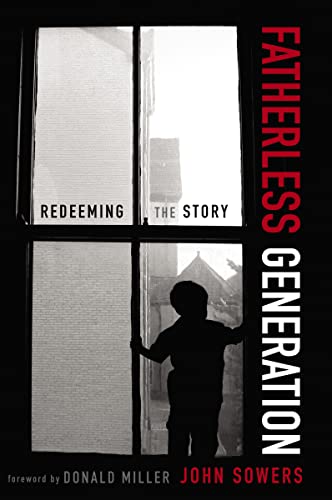
Sinossi
What happens when givers of life give a lifetime of tears? The story of fatherlessness is written into the heart of our generation. It is heard in our songs, seen in our movies, read in our blogs. It is a story of shame, loneliness, and rejection. A story of missed potential and wasted opportunity. A story that desperately needs to be heard. But fatherlessness is more than a personal tragedy. It is a growing epidemic. Fatherlessness is a driving force behind gangs, teenage pregnancy, drug abuse, and suicide. And all too often, the fatherless are either marginalized or ignored. In Fatherless Generation, Dr. John Sowers asks: How can the faith community begin rewriting this tragic story? Written for those who are fatherless themselves and those concerned with social justice, Fatherless Generation uses culture, statistics, and testimonies to remind us that it is possible for a generation to find healing.Drawing on years of research and personal experience, Dr. Sowers shows us that intentional, intergenerational mentoring is the key to a new story of hope. It is in relationship that this generation has been wounded and it is in relationship that healing must begin. Mentoring is the most strategic way to reconcile our generation with God.Weaving in his own experience of fatherlessness, Dr. Sowers eloquently presents the desperate reality of fatherlessness in our culture and how awareness and compassion offer a solution of hope—a hope that will write new stories for generations to come.
Le informazioni nella sezione "Riassunto" possono far riferimento a edizioni diverse di questo titolo.
Informazioni sull'autore
John Sowers is an author and speaker. His work and writings have been featured by Fox News, CNN, MSNBC, ESPN, Mariah Shriver, Oprah Radio, the Oregonian, the Oklahoman, and others. John received the President's Champion of Change award at the White House from President Obama.
John led a homeless shelter and has worked with youth and in prisons. He co-founded The Mentoring Project with Donald Miller and was multi-language director for the Billy Graham Association--working with twenty-six language groups in Los Angeles and New York.
He received his master's of divinity from Trinity Evangelical Divinity School and his doctorate from Gordon Conwell Theological Seminary. He is the author of Fatherless Generation: Redeeming the Story and Heroic Path: In Search of the Masculine Heart. John has written for the White House, Relevant magazine, Wilderness, and other publications. But his favorite accomplishment is being a dad to his three daughters, Rosie, Dass, and Eva. John lives in a cabin in the woods near Ozark, Missouri.
Dalla quarta di copertina
What happens when givers of life give a lifetime of tears? The story of fatherlessness is written into the heart of our generation. It is heard in our songs, seen in our movies, read in our blogs. It is a story of shame, loneliness, and rejection. A story of missed potential and wasted opportunity. A story that desperately needs to be heard. But fatherlessness is more than a personal tragedy. It is a growing epidemic. Fatherlessness is a driving force behind gangs, teenage pregnancy, drug abuse, and suicide. And all too often, the fatherless are either marginalized or ignored. In Fatherless Generation, Dr. John Sowers asks: How can the faith community begin rewriting this tragic story? Written for those who are fatherless themselves and those concerned with social justice, Fatherless Generation uses culture, statistics, and testimonies to remind us that it is possible for a generation to find healing.Drawing on years of research and personal experience, Dr. Sowers shows us that intentional, intergenerational mentoring is the key to a new story of hope. It is in relationship that this generation has been wounded and it is in relationship that healing must begin. Mentoring is the most strategic way to reconcile our generation with God.Weaving in his own experience of fatherlessness, Dr. Sowers eloquently presents the desperate reality of fatherlessness in our culture and how awareness and compassion offer a solution of hope---a hope that will write new stories for generations to come.
Estratto. © Ristampato con autorizzazione. Tutti i diritti riservati.
Fatherless Generation
Redeeming the StoryBy John A. SowersZONDERVAN
Copyright © 2010 John A. SowersAll right reserved.
ISBN: 978-0-310-32860-5
Contents
Foreword by Donald Miller.................................................9Author's Note.............................................................111. Somewhere I Belong.....................................................172. Haunted Houses.........................................................243. Midnight Sons and Daughters............................................334. The Fatherless Gang....................................................455. Forgotten Fairy Tales..................................................526. Running to Stand Still.................................................617. Returning the Favor....................................................738. Belonging to God.......................................................819. Father to the Fatherless...............................................8710. Of Musth Cycles and Mentoring.........................................9311. Anatomy of a Mentor...................................................10112. In Search of a Name...................................................11513. Sustainable Communities...............................................12314. Redeeming the Story...................................................130Appendix: Joining the Movement: The Mentoring Project.....................137Acknowledgments...........................................................139
Chapter One
SOMEWHERE I BELONGI wanna find something I've wanted all along Somewhere I belong, somewhere I belong from the song "Somewhere I Belong," by Linkin Park
THE EARLIEST MEMORIES OF MY FATHER are the few times he came to visit us during the Christmas season. About once a year, he would drive up from Austin to Little Rock for the weekend. My brother and I usually stayed with him at the Motel 6. Back then, Motel 6 had the big mechanical beds that, for only a quarter, would shake and make a low humming noise. Sleeping on them was like riding a giant, lumbering submarine.
My father usually smelled like an odd mixture of Old Spice and musky sweat. And for most of my childhood, I just thought that was how a man was supposed to smell. Sometimes he let me "drive" his burgundy Monte Carlo, which consisted of sitting in his lap and playing with the dark hair on his arms.
My brother Bill and I always ended up fighting for his attention. To us, his attention was a prize to be won. To be earned. It was as if we had one weekend to catch up on an entire year of absence. One chance to have him notice us, look at us, be proud of us, and love us. One brief moment to shine for this elusive man we called "Dad."
I remember the park swings. Swinging beside him, trying to keep up, to go as high as him. I wanted him to be close to him, to make him proud. My brother and I took our Polaroid camera with us to the park to capture these moments. I hoarded these pictures and placed them in a big red album, poring over them for countless hours.
These pictures represented seismic moments of acceptance. Moments of joy and belonging. Moments of life as it was supposed to be. Dad was here with us, with me, and everything was all right because of it.
Secretly, I hoped he might stay around this time. Just maybe. If we pleased him enough and were good enough, he just might stay. He might stay home with us, where he belonged. So I continued to live my little fantasy until it was time for his inevitable departure.
I remember once grabbing his ankles - hanging on for dear life - as he walked out the front door, dragging me as I pleaded with him to stay. I was fighting for his affection, literally. But it didn't work. It never worked.
Each time he left, my heart would break and I would die again.
Somewhere along the way, I grew callous. As his visits grew more infrequent, the promise of Dad became remote. He became a faceless voice on the phone. A signature on a birthday card. A fading image on an old, yellow Polaroid.
Eventually I let go of the hope that he would ever stay. It simply hurt too much to hope. So I buried it like some lost and forgotten treasure. I hid away my red picture album under piles of books and shoeboxes full of baseball cards, swearing to never look at it again. As the years passed, I began to accept the reality that he wasn't coming back. And nothing I could do would ever change that. So I stopped performing, stopped caring.
THE FATHERLESS STORY
Rejection is the defining characteristic of the fatherless generation.
In the United States alone, just over 33 percent of youth - over 25 million kids - are fatherless and searching for Dad. They are searching for his love and acceptance. But Dad is nowhere to be found. He has run off to Vegas with a younger woman. He is lost in an alcoholic fog. He is sitting in a jail cell in Memphis. He is gone.
Fatherlessness creates an appetite in the soul that demands fulfillment. Over time, the unmet needs created by Dad's absence turn into something that author Robert McGee calls "father hunger." And in America alone, millions are starving to death. McGee states, "People who grow up starved for a father's love become victims of an anonymous mugger or a faceless cancer."
To live with father hunger is to live with the sadness of what will never be. Perhaps the worst thing about this rejection is living with the knowledge that someone has chosen to turn his back on you. Someone has chosen to leave you. Someone has determined your value and decided you are not worth having around - or that he would be better off someplace else, without you.
I first met Shay when she posted a response on my "Tell Your Story" blog. Even though she was only five when her father moved out, she was convinced it was her fault that he left. She writes:
When I was five years old, my father left. I didn't understand what was happening. I can remember the day so well. My father gathered his things and walked outside to get into a cab. I was standing there confused, and he gave me a kiss and said that he loved me and he'd see me soon. It's been more than thirteen years, and I still don't know my father or really care to know him. The hardest part about growing up without him was feeling like it was somehow my fault. I felt like he hated me or didn't ever really love me at all.
Another fatherless blogger, Aron, wrestles with his father's rejection. His dad was his best friend. Now he wonders if that rejection is contagious. He shares:
Growing up, I was used to having my dad around. He was always there for me. He got me into the things I love today, like football and video games. He was my hero. When I was nine, my dad left my family. Not having any explanation for why my daddy left me had a great impact on me during my preteen years. The only reason I thought he left me was because he didn't love me. This caused me to run from family, friends, and God. I mean, if my own father couldn't love me, how could anyone else?
When Dad leaves, something dies.
PROPHETS OF OUR CULTURE
Pop culture captures the dying voice of this generation. In it, we hear poets and prophets crying out for hope in the midst of ruin. Pop culture is a warped mirror of our lives. And if we can just pause to listen, we hear a song of despair rising from the ashes.
(Continues...)
Excerpted from Fatherless Generationby John A. Sowers Copyright © 2010 by John A. Sowers. Excerpted by permission.
All rights reserved. No part of this excerpt may be reproduced or reprinted without permission in writing from the publisher.
Excerpts are provided by Dial-A-Book Inc. solely for the personal use of visitors to this web site.
Le informazioni nella sezione "Su questo libro" possono far riferimento a edizioni diverse di questo titolo.
Altre edizioni note dello stesso titolo

Risultati della ricerca per Fatherless Generation: Redeeming the Story

Immagini fornite dal venditore
Fatherless Generation: Redeeming the Story
Da: Greenworld Books, Arlington, TX, U.S.A.
Valutazione del venditore 5 su 5 stelle

Condizione: very_good. Fast Free Shipping â" Very Good condition book with a firm cover and clean pages. Shows normal use and some light wear or limited notes markings. A solid, nice copy to enjoy. Codice articolo GWV.0310328608.VG
Compra usato
EUR 5,63
Spedizione gratuita
Spedito in U.S.A.
Spedito in U.S.A.
Quantità: 1 disponibili
Immagini fornite dal venditore
Fatherless Generation: Redeeming the Story
Da: Greenworld Books, Arlington, TX, U.S.A.
Valutazione del venditore 5 su 5 stelle
Condizione: good. Fast Free Shipping â" Good condition. It may show normal signs of use, such as light writing, highlighting, or library markings, but all pages are intact and the book is fully readable. A solid, complete copy that's ready to enjoy. Codice articolo GWV.0310328608.G
Compra usato
EUR 5,64
Spedizione gratuita
Spedito in U.S.A.
Spedito in U.S.A.
Quantità: 3 disponibili
Foto dell'editore
Fatherless Generation : Redeeming the Story
Da: Better World Books, Mishawaka, IN, U.S.A.
Valutazione del venditore 5 su 5 stelle
Condizione: Good. Former library copy. Pages intact with minimal writing/highlighting. The binding may be loose and creased. Dust jackets/supplements are not included. Includes library markings. Stock photo provided. Product includes identifying sticker. Better World Books: Buy Books. Do Good. Codice articolo 7945235-6
Compra usato
EUR 5,91
Spedizione gratuita
Spedito in U.S.A.
Spedito in U.S.A.
Quantità: 1 disponibili
Foto dell'editore
Fatherless Generation: Redeeming the Story
Da: Redux Books, Grand Rapids, MI, U.S.A.
Valutazione del venditore 5 su 5 stelle
Paperback. Condizione: As New. Paperback. Cover shows very minor shelving wear, otherwise an unblemished copy.; 100% Satisfaction Guaranteed! Ships same or next business day! Codice articolo 132509250064
Compra usato
EUR 5,91
Spedizione gratuita
Spedito in U.S.A.
Spedito in U.S.A.
Quantità: 1 disponibili
Foto dell'editore
Fatherless Generation : Redeeming the Story
Da: Better World Books, Mishawaka, IN, U.S.A.
Valutazione del venditore 5 su 5 stelle
Condizione: Very Good. Pages intact with possible writing/highlighting. Binding strong with minor wear. Dust jackets/supplements may not be included. Stock photo provided. Product includes identifying sticker. Better World Books: Buy Books. Do Good. Codice articolo 9275105-6
Compra usato
EUR 5,91
Spedizione gratuita
Spedito in U.S.A.
Spedito in U.S.A.
Quantità: 1 disponibili
Foto dell'editore
Fatherless Generation : Redeeming the Story
Da: Better World Books: West, Reno, NV, U.S.A.
Valutazione del venditore 5 su 5 stelle
Condizione: Good. Former library copy. Pages intact with minimal writing/highlighting. The binding may be loose and creased. Dust jackets/supplements are not included. Includes library markings. Stock photo provided. Product includes identifying sticker. Better World Books: Buy Books. Do Good. Codice articolo 7945235-6
Compra usato
EUR 5,91
Spedizione gratuita
Spedito in U.S.A.
Spedito in U.S.A.
Quantità: 1 disponibili
Foto dell'editore
Fatherless Generation: Redeeming the Story
Da: ThriftBooks-Atlanta, AUSTELL, GA, U.S.A.
Valutazione del venditore 5 su 5 stelle
Paperback. Condizione: As New. No Jacket. Pages are clean and are not marred by notes or folds of any kind. ~ ThriftBooks: Read More, Spend Less. Codice articolo G0310328608I2N00
Compra usato
EUR 5,95
Spedizione gratuita
Spedito in U.S.A.
Spedito in U.S.A.
Quantità: 1 disponibili
Foto dell'editore
Fatherless Generation: Redeeming the Story
Da: ThriftBooks-Atlanta, AUSTELL, GA, U.S.A.
Valutazione del venditore 5 su 5 stelle
Paperback. Condizione: Very Good. No Jacket. May have limited writing in cover pages. Pages are unmarked. ~ ThriftBooks: Read More, Spend Less. Codice articolo G0310328608I4N00
Compra usato
EUR 5,95
Spedizione gratuita
Spedito in U.S.A.
Spedito in U.S.A.
Quantità: 1 disponibili
Foto dell'editore
Fatherless Generation: Redeeming the Story
Da: ThriftBooks-Dallas, Dallas, TX, U.S.A.
Valutazione del venditore 5 su 5 stelle
Paperback. Condizione: Very Good. No Jacket. May have limited writing in cover pages. Pages are unmarked. ~ ThriftBooks: Read More, Spend Less. Codice articolo G0310328608I4N00
Compra usato
EUR 5,95
Spedizione gratuita
Spedito in U.S.A.
Spedito in U.S.A.
Quantità: 1 disponibili
Foto dell'editore
Fatherless Generation: Redeeming the Story
Da: ThriftBooks-Reno, Reno, NV, U.S.A.
Valutazione del venditore 5 su 5 stelle
Paperback. Condizione: Very Good. No Jacket. May have limited writing in cover pages. Pages are unmarked. ~ ThriftBooks: Read More, Spend Less. Codice articolo G0310328608I4N00
Compra usato
EUR 5,95
Spedizione gratuita
Spedito in U.S.A.
Spedito in U.S.A.
Quantità: 1 disponibili