
Sinossi
IF YOU ARE ABOUT TO DO A RESEARCH PROJECT, THEN THIS IS THE IDEAL GUIDE FOR YOU.
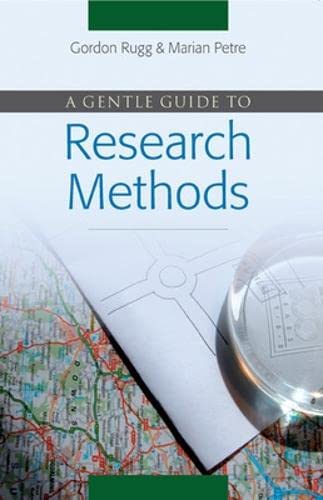
A Gentle Guide to Research Methods explains what research is, and guides you through choosing and using the method best suited to your needs, with detailed examples from a wide range of disciplines. It also gives you practical “nuts and bolts” advice about how to avoid classic problems and how to get the most out of your project.
Written in a down-to-earth and highly accessible style, this unique book provides an overview of the “big picture” of research and of how this links to practical details. It covers the whole process of conducting research, including:
- Choosing a research topic and research design
- Data collection methods
- Data analysis and statistics
- Writing up
Drawing on numerous examples from student projects, A Gentle Guide to Research Methods will guide you through your project towards a happy ending.
Le informazioni nella sezione "Riassunto" possono far riferimento a edizioni diverse di questo titolo.
Contenuti
Introduction
>The structure of this book: research design, data collection and data analysis
>Taught degree projects: what they are, things to watch out for, and practical points
>PhD second studies: what happens when your first study changes your plans
>Strategies and principles: demonstrating excellence, exploring territory rather than trying to prove a hunch, avoiding trouble, and learning from the wise
>Choosing a topic, or cups of coffee, easy pickings and blaming others
>Departments, systems and supervisors: how to behave like a professional, get a good reference, and avoid needless trouble
>‘How do I get a good mark?’ – things that can send out the wrong signal, and how to avoid these
>Academic writing: why it’s different from other writing, and how to do it well
>Doing a good project: summary
1. About research
>Research: introduction to the nature of research, and types of research
>Research questions, and the nature of evidence: deciding what type of question to ask, and how to handle the various types of answer
>Mud pits and how to avoid them: things that go wrong
>Isms: necessary assumptions, dubious assumptions, and being caught in crossfire
>Searching the literature: why, where, what for and how
>Research in society – agendas, context and the like: things we take for granted, and things that can cause you trouble
2. Research design
>Types of design: which to use and how to use them
>Surveys and sampling
>Field experiments: doing research in the world
>Controlled experiments: changing things systematically and seeing what happens
>Summary and technical terms
3. Generic advice
>Arranging a study: subjects, equipment, procedures, things to remember, things to beware
>Location and kit
>Handling subjects
>Recording
4. Data collection
>Data collection methods: the methods, and choosing and using the appropriate method
>Reports: getting respondents to talk about how things happen
>Observation: watching what happens
>Card sorts: getting respondents to categorise things
>Laddering: unpacking the respondents’ concepts systematically
>Repertory grids: a systematic representation for respondents’ knowledge
>Interviews: asking people questions
>Face-to-face interactions with respondents: the nuts and bolts of asking questions
>Questionnaires: when to use, when not to use, which questions to ask, what format to use
5. Data analysis
>Content analysis: what is said in a text, how it is said, and how often it’s said
>Discourse analysis: who says what, about what, to whom, in what format
>Knowledge representation: formats, structures and concepts for making sense of knowledge
>Statistics: describing things with numbers, and assessing the odds
>Descriptive statistics: giving a systematic description of the numbers you’ve found
>Measurement theory: types of measurement and their implications
>Inferential statistics: what are the odds against your findings being due to random chance?
Conclusion: the end game
>Writing up: demonstrating your excellence efficiently, and practical points to remember
>References and referencing: using and citing the right texts to demonstrate your excellence
>What next? thinking forward about what you really want your life to be
Le informazioni nella sezione "Su questo libro" possono far riferimento a edizioni diverse di questo titolo.

