
Articoli correlati a Universal Rights Down to Earth: 0
Sinossi
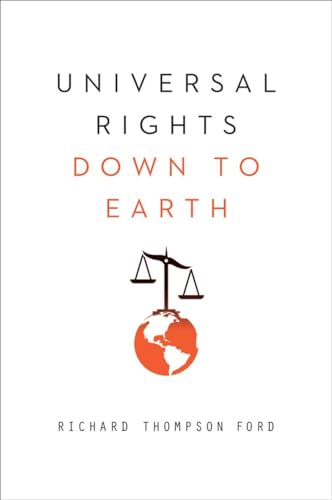
The idea of universal rights rights shared by all citizens, regardless of nationality, creed, wealth, or geography has a powerful grip on the way many people feel about justice and global politics. No one should be subjected to torture or disappearance, to starvation or sex trafficking, to economic exploitation or biased treatment under the law. But when it comes to actually enforcing these rights, the results rarely resemble the ideal.In Universal Rights Down to Earth, acclaimed author and legal expert Richard Thompson Ford reveals how attempts to apply universal human rights principles to specific cultures can hinder humanitarian causes and sometimes even worsen conditions for citizens. In certain regions, human rights ideals clash with the limits of institutional capabilities or civic culture; elsewhere, rights enforcement leads to further human rights violations. And in some countries, offending regimes use human rights commitments to distract attention from or justify their other abuses. Ford explores how our haste to identify every ideal as a universal right devalues rights as a whole, so that even the most important protections such as that against torture become negotiable.In clear, persuasive prose, Ford explores cases ranging from food distribution to the poor in India to sex work in Japan, illustrating how a rights-based approach to these problems often impedes more effective measures the pragmatic politics of cost weighing, compromise, and collective action. The bad news is that improving lives worldwide isn t as easy as making a declaration. But the good news, as Universal Rights Down to Earth powerfully demonstrates, is that if we are clear-eyed and culturally aware, it can be done.
Le informazioni nella sezione "Riassunto" possono far riferimento a edizioni diverse di questo titolo.
Informazioni sull'autore
Richard Thompson Ford is the George E. Osborne Professor of Law at Stanford Law School. He is the author of The Race Card, and has written for The New York Times, The Washington Post, San Francisco Chronicle and Slate.
Le informazioni nella sezione "Su questo libro" possono far riferimento a edizioni diverse di questo titolo.
Risultati della ricerca per Universal Rights Down to Earth: 0

Foto dell'editore
Universal Rights Down to Earth (Norton Global Ethics Series)
Editore:
W. W. Norton & Company (edition First Edition), 2012
ISBN 10: 0393343391
ISBN 13: 9780393343397
Antico o usato
Paperback
Prima edizione
Da: BooksRun, Philadelphia, PA, U.S.A.
Valutazione del venditore 5 su 5 stelle

Paperback. Condizione: Very Good. First Edition. It's a well-cared-for item that has seen limited use. The item may show minor signs of wear. All the text is legible, with all pages included. It may have slight markings and/or highlighting. Codice articolo 0393343391-11-1
Compra usato
EUR 4,25
Spedizione gratuita
Spedito in U.S.A.
Spedito in U.S.A.
Quantità: 1 disponibili
Foto dell'editore
Universal Rights Down to Earth (Norton Global Ethics Series)
Editore:
W. W. Norton & Company (edition First Edition), 2012
ISBN 10: 0393343391
ISBN 13: 9780393343397
Antico o usato
Paperback
Prima edizione
Da: BooksRun, Philadelphia, PA, U.S.A.
Valutazione del venditore 5 su 5 stelle
Paperback. Condizione: Fair. First Edition. The item might be beaten up but readable. May contain markings or highlighting, as well as stains, bent corners, or any other major defect, but the text is not obscured in any way. Codice articolo 0393343391-7-1
Compra usato
EUR 4,61
Spedizione gratuita
Spedito in U.S.A.
Spedito in U.S.A.
Quantità: 1 disponibili
Foto dell'editore
Universal Rights Down to Earth
Da: World of Books (was SecondSale), Montgomery, IL, U.S.A.
Valutazione del venditore 5 su 5 stelle
Paperback. Condizione: Good. A path-blazing lesson on how to reconcile lofty human rights ambitions with political and cultural realities. Codice articolo 00108034938
Compra usato
EUR 5,51
Spedizione gratuita
Spedito in U.S.A.
Spedito in U.S.A.
Quantità: 1 disponibili
Foto dell'editore
Universal Rights Down to Earth
Editore:
W. W. Norton & Company, 2012
ISBN 10: 0393343391
ISBN 13: 9780393343397
Antico o usato
Paperback
Da: ThriftBooks-Atlanta, AUSTELL, GA, U.S.A.
Valutazione del venditore 5 su 5 stelle
Paperback. Condizione: Good. No Jacket. Pages can have notes/highlighting. Spine may show signs of wear. ~ ThriftBooks: Read More, Spend Less. Codice articolo G0393343391I3N00
Compra usato
EUR 6,19
Spedizione gratuita
Spedito in U.S.A.
Spedito in U.S.A.
Quantità: 1 disponibili
Foto dell'editore
Universal Rights Down to Earth
Editore:
W. W. Norton & Company, 2012
ISBN 10: 0393343391
ISBN 13: 9780393343397
Antico o usato
Paperback
Da: ThriftBooks-Atlanta, AUSTELL, GA, U.S.A.
Valutazione del venditore 5 su 5 stelle
Paperback. Condizione: Fair. No Jacket. Readable copy. Pages may have considerable notes/highlighting. ~ ThriftBooks: Read More, Spend Less. Codice articolo G0393343391I5N00
Compra usato
EUR 6,19
Spedizione gratuita
Spedito in U.S.A.
Spedito in U.S.A.
Quantità: 1 disponibili
Foto dell'editore
Universal Rights Down to Earth
Editore:
W. W. Norton & Company, 2012
ISBN 10: 0393343391
ISBN 13: 9780393343397
Antico o usato
Paperback
Da: ThriftBooks-Dallas, Dallas, TX, U.S.A.
Valutazione del venditore 5 su 5 stelle
Paperback. Condizione: Fair. No Jacket. Readable copy. Pages may have considerable notes/highlighting. ~ ThriftBooks: Read More, Spend Less. Codice articolo G0393343391I5N00
Compra usato
EUR 6,19
Spedizione gratuita
Spedito in U.S.A.
Spedito in U.S.A.
Quantità: 1 disponibili
Foto dell'editore
Universal Rights down to Earth
Editore:
Norton & Company, Incorporated, W. W., 2012
ISBN 10: 0393343391
ISBN 13: 9780393343397
Antico o usato
Brossura
Prima edizione
Da: Better World Books, Mishawaka, IN, U.S.A.
Valutazione del venditore 5 su 5 stelle
Condizione: Very Good. 1st Edition. Pages intact with possible writing/highlighting. Binding strong with minor wear. Dust jackets/supplements may not be included. Stock photo provided. Product includes identifying sticker. Better World Books: Buy Books. Do Good. Codice articolo 17916220-6
Compra usato
EUR 6,57
Spedizione gratuita
Spedito in U.S.A.
Spedito in U.S.A.
Quantità: 2 disponibili
Foto dell'editore
Universal Rights down to Earth
Editore:
Norton & Company, Incorporated, W. W., 2012
ISBN 10: 0393343391
ISBN 13: 9780393343397
Antico o usato
Brossura
Prima edizione
Da: Better World Books, Mishawaka, IN, U.S.A.
Valutazione del venditore 5 su 5 stelle
Condizione: Good. 1st Edition. Pages intact with minimal writing/highlighting. The binding may be loose and creased. Dust jackets/supplements are not included. Stock photo provided. Product includes identifying sticker. Better World Books: Buy Books. Do Good. Codice articolo 9133506-6
Compra usato
EUR 6,57
Spedizione gratuita
Spedito in U.S.A.
Spedito in U.S.A.
Quantità: 1 disponibili
Foto dell'editore
Universal Rights Down to Earth
Da: World of Books Inc, Montgomery, IL, U.S.A.
Valutazione del venditore 4 su 5 stelle

Paperback. Condizione: Good. A path-blazing lesson on how to reconcile lofty human rights ambitions with political and cultural realities. Codice articolo CIN0393343391G
Compra usato
EUR 7,35
Spedizione gratuita
Spedito in U.S.A.
Spedito in U.S.A.
Quantità: 1 disponibili
Foto dell'editore
Universal Rights Down to Earth (Norton Global Ethics Series)
Editore:
W. W. Norton & Company, 2012
ISBN 10: 0393343391
ISBN 13: 9780393343397
Antico o usato
paperback
Da: HPB Inc., Dallas, TX, U.S.A.
Valutazione del venditore 5 su 5 stelle
paperback. Condizione: Very Good. Connecting readers with great books since 1972! Used books may not include companion materials, and may have some shelf wear or limited writing. We ship orders daily and Customer Service is our top priority! Codice articolo S_480750756
Compra usato
EUR 4,48
Spedizione EUR 3,35
Spedito in U.S.A.
Spedito in U.S.A.
Quantità: 1 disponibili