
Articoli correlati a Spread Trading: An Introductory Guide to Trading Options...
Sinossi
A proven,easy-to-understandmethod for makingmoney with options
"If you've never invested in the stock market,this is the book for you. If you've been investingfor years . . . this is still the book for you. A fantastic introduction to options."
—Jon "DOCTOR J" Najarian, Co-founder, OptionMonster.com
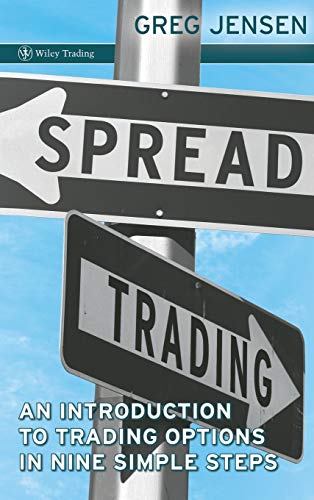
Spread trading-the practice of combining optiontrades and adjusting them over time-is being used successfullyby more and more professional traders. In this book, Greg Jensenshows nonprofessionals the tremendous advantages thissafe and profitable method offers.
In simple and precise terms, Spread Trading providesreaders with all the essential tools to begin trading options.It explains, in nine simple steps, the basics of puts, calls,strike prices, and spreads-assuming no prior knowledge onyour part-and tells how to profit no matter what the market does.The author has helped thousands of people achieve successimplementing this approach, and with Spread Trading, hecontinues to educate individuals on the benefits of trading thisway, showing you how to make money while reducing risk.
Building his lessons around the entertaining story oftwo ordinary guys figuring out how to trade options with each other,Jensen offers more than dry formulas-he relates the sense andthe intuition of trading options in a way that is simple,methodical, and easy to follow.
Le informazioni nella sezione "Riassunto" possono far riferimento a edizioni diverse di questo titolo.
Informazioni sull'autore
Greg Jensen is cofounder of Spread Trade Systems, an industry leader in investment education, with students from all corners of the world. Specializing in the techniques of option trading, Spread Trade Systems has developed cutting-edge, innovative educational tools such as weekly Adjust Trade Chat Sessions with STS advisors and MarketWatch Newsletters. A Registered Investment Advisor, Jensen earned his degree in business management, with an emphasis in finance, from Utah State University.
Dalla quarta di copertina
Though there are many variations and nuances, the basic concept of option trading is simple-an investor can purchase an option to buy stock without actually buying the stock itself. Then, as the value of the stock rises, the value of the option rises as well. The investor can then sell that option to someone else for a profit without ever having owned the underlying stock. But trying to learn option trading from most experts, says author Greg Jensen, is like trying to learn the tax code from an accountant: they'll toss around big words that you've never heard of, and if you ever actually muster up the courage to ask what a particular term means, they'll explain it to you using other terms you don't understand. In contrast, this engaging book provides the basics of making money with options in a way that anyone can easily learn-even using a little humor to help you along the way.
In nine simple steps, Jensen teaches how you ought to approach the market. It's called spread trading, the safest and best way to make money in the stock market while reducing risk. He uses the story of two regular guys figuring out how to trade options with each other to reveal-in small, logical, bite-size pieces-all you need to know to safely earn remarkable profits in today's market.
Spread Trading begins with the fundamentals, explaining just how put and call options work, before moving on to reveal the secrets of the experts-such as how to combine option instruments to reduce risk and make money regardless of whether the market is trending up or down. The author details, in straightforward terms, the fundamentals of spread trading in short steps, showing you how to get phenomenal results and yet not be ruled by fear or greed along the way.
Most people invest in the stock market hoping that good things will happen-and hoping that bad things won't. With the approach revealed in Spread Trading, you won't have to "hope" that things will turn out well, because you'll actually have control of the situation. By simply managing the spread, you'll be able to make money without fear and actually sleep at night.
Dal risvolto di copertina interno
Though there are many variations and nuances, the basic concept of option trading is simple-an investor can purchase an option to buy stock without actually buying the stock itself. Then, as the value of the stock rises, the value of the option rises as well. The investor can then sell that option to someone else for a profit without ever having owned the underlying stock. But trying to learn option trading from most experts, says author Greg Jensen, is like trying to learn the tax code from an accountant: they'll toss around big words that you've never heard of, and if you ever actually muster up the courage to ask what a particular term means, they'll explain it to you using other terms you don't understand. In contrast, this engaging book provides the basics of making money with options in a way that anyone can easily learn-even using a little humor to help you along the way.
In nine simple steps, Jensen teaches how you ought to approach the market. It's called spread trading, the safest and best way to make money in the stock market while reducing risk. He uses the story of two regular guys figuring out how to trade options with each other to reveal-in small, logical, bite-size pieces-all you need to know to safely earn remarkable profits in today's market.
Spread Trading begins with the fundamentals, explaining just how put and call options work, before moving on to reveal the secrets of the experts-such as how to combine option instruments to reduce risk and make money regardless of whether the market is trending up or down. The author details, in straightforward terms, the fundamentals of spread trading in short steps, showing you how to get phenomenal results and yet not be ruled by fear or greed along the way.
Most people invest in the stock market hoping that good things will happen-and hoping that bad things won't. With the approach revealed in Spread Trading, you won't have to "hope" that things will turn out well, because you'll actually have control of the situation. By simply managing the spread, you'll be able to make money without fear and actually sleep at night.
Estratto. © Ristampato con autorizzazione. Tutti i diritti riservati.
Spread Trading
An Introduction to Trading Options in Nine Simple StepsBy Greg JensenJohn Wiley & Sons
Copyright © 2009 John Wiley & Sons, LtdAll right reserved.
ISBN: 978-0-470-44368-2
Chapter One
Lon and Shorty
Lon was tall, prematurely graying, a creative thinker with interesting hobbies and intelligent children, and he was starting to feel like a real dope.
He was trying to secure his family's financial future, looking for this investment and that, the way a good father and forward-thinking man should, but he was starting to doubt his intelligence. Lon had started playing the stock market.
Well, of course, first he'd had to convince his wife he wouldn't lose everything they had on wild chances. That took some doing. Lon liked to think of himself as a pretty smart guy, but Cass had taken a pretty dim view of his creative enthusiasms ever since they took that trip to China without using a tour guide and spent the better part of a week trying to find a bathroom. And then there was that time he'd bought a time-share in London ... Nebraska. He could never win an argument once she mentioned that.
But invest they must if they wanted to retire well, and Cass knew it as well as he did. They wanted to travel; spoil grandchildren; wear big, high-priced hats-Retire with a capital R. No 401(k) was going to do that for them. And even she knew he wasn't as big a dope as Bruce.
Bruce was the reason Lon and his wife didn't use a fund manager or financial adviser of their own. Bruce was Lon's fat, loudmouthed brother-in-law, and the biggest oaf on the planet. Lon's sister would start a family crisis if they used any other money manager, so he had to handle his investments himself. For a while he'd asked Bruce for stock tips just so he could do the exact opposite. That strategy was pretty satisfying on a personal level, but it didn't last long. Even Bruce, who last year had accidentally set his boat on fire before he'd insured it, could make the right guesses often enough to stay ahead of the market. Barely.
So Lon was feeling a little dumb. He, too, performed about as well as the market as a whole, which meant that all his thorough studying, clear thinking, and careful diversifying put him in league with his oafish brother-in-law. Stocks sometimes rose, sometimes fell, and no matter how careful or sure he was, sometimes they surprised him and cost him money. Surely, surely, there was a way for an intelligent person to do better than simply hope his luck balanced out.
And without all the stress! What if this happens, or that? he would ceaselessly ask himself. Before he started investing he used to spend his free time chatting with his wife or dreaming up contraptions to make with his son; now he was spending half his free time checking financial reports and the rest of it worrying about what he would find the next time he checked.
Tonight, Lon was in his study, thinking about his most recent investment, and fiddling dejectedly with the model spaceship he'd made with his son last summer. He had just bought 100 shares of Plum stock (PLUM) at $40 per share, and, based on his study of the company, he believed the stock price would grow to $55 per share over the next six months. That would be a nearly 38 percent increase, and meant his investment would then be worth $5,500. That kind of increase would be terrific-if it happened.
What would really be best, Lon mused, would be if he could travel through time-go six months into the future. Then he'd know if the price really had grown to $55. And-even better-if he could bring, say, a coupon that promised he could buy Plum for only $40. Then he could buy for $40 and sell for $55 on the very same day, and make $15 almost instantly.
Time travel was pure science fiction, of course. But he couldn't help wondering. Wouldn't it be great if there were a way I could buy 100 additional Plum shares in six months and still buy them at today's price of $40, rather than the $55 I think they will be selling at by then?
Lost in thought, Lon swiveled back and forth in his hand-me-down and worn-out office chair. At work, he often completed projects that had started out as no more than an interesting but impossible idea. Maybe there was a way to actually make that happen. Maybe he could make some sort of deal with someone ... but who? And what kind of deal?
Lon's imagination failed him. Anyway, it was late. He turned to cable news for a financial update and went to bed. "How's the money, honey?" Cass asked him drowsily when he leaned over to kiss her.
"Just call me Bruce," he replied. She chuckled and returned to sleep.
Sleep came to Lon eventually, too. But not rest.
* * *
Fifteen miles away, on the opposite side of Wichita, Shorty sat at the maple desk in his cramped bedroom, poring over the day's mail. He was a small but muscular man, a steady, clear-thinking accountant in the same firm that employed Lon. Shorty was one of those friends Lon had been talking to about investing. Little known to Lon, their most recent conversation had really gotten Shorty thinking. Surely there must be some way to make money in the stock market that was more certain than just hoping for the best.
Shorty rather enjoyed following the market; its ins and outs and near-unpredictability fascinated him. Sharon, his wife of four years, teased him that he would check financial news even if he didn't invest. But he never risked very much or bought too much of any one stock; he'd worked diligently for his money and didn't like the thought of losing it all on a gamble. Still, he'd had one stretch where every stock he bought immediately went down. In disgust, he'd decided that the best way to make money would be to go around the country, demonstrating his track record to CEOs, and threatening to buy their stock if they didn't pay him a sizeable fee. Extortion? Sure. But what was a person to do?
Still, he knew that investing was his only real chance at the future he envisioned. He dreamed of retiring to someplace warm, maybe by the ocean. He fantasized sitting on a porch with Sharon, worry free, sipping cold soft drinks even in the winter ... maybe writing a nice book. If he wanted that to happen, he simply had to plan ahead. And he was too well-informed to be satisfied with his 401(k). Playing the stock market was the only way he knew to secure that blissfully quiet dream.
Finishing the mail, Shorty turned his attention to his stock picks. He, too, had just purchased 100 shares of Plum at $40 per share. He believed that the price of Plum would grow over the next 18 months, but he had just gotten some news that made him think it might actually go down in the near term-maybe as low as $25 per share, or even lower.
Shorty pondered the situation. He was probably going to lose money on those shares, but he wouldn't sell them because he was pretty sure the price would go back up and above the $40 he had spent. But he wished there was some way he could turn the situation to his advantage in the short term. That was the problem with the stock market. You couldn't know for sure what it was going to do, and now he would have to sit on his $40 shares while the price dropped. Of course he could always sell Plum now and buy again later when the price was lower, but that just required more guesswork, and after all, he wasn't that sure that the price was going to drop.
Shorty sighed. What he wanted was a sure thing. Some way to make sure he could make money, or at least not lose money, no matter what happened to the market. Oh well, he thought. Nothing to do about it. That's just not how it works.
When he finally climbed into bed at 11:30, Sharon asked about his investments. He had to confess he thought his most recent investment would take a hit. "But I'm pretty confident it'll go back up again."
"Then I'm sure it will," she soothed. Sharon was an encouraging, supportive wife, and a pretty good liar.
(Continues...)
Excerpted from Spread Tradingby Greg Jensen Copyright © 2009 by John Wiley & Sons, Ltd. Excerpted by permission.
All rights reserved. No part of this excerpt may be reproduced or reprinted without permission in writing from the publisher.
Excerpts are provided by Dial-A-Book Inc. solely for the personal use of visitors to this web site.
Le informazioni nella sezione "Su questo libro" possono far riferimento a edizioni diverse di questo titolo.
Risultati della ricerca per Spread Trading: An Introductory Guide to Trading Options...

Foto dell'editore
Spread Trading: An Introduction to Trading Options in Nine Simple Steps (Wiley Trading)
Da: BooksRun, Philadelphia, PA, U.S.A.
Valutazione del venditore 5 su 5 stelle

Hardcover. Condizione: Very Good. 1. With dust jacket. It's a well-cared-for item that has seen limited use. The item may show minor signs of wear. All the text is legible, with all pages included. It may have slight markings and/or highlighting. Codice articolo 0470443685-11-1-29
Compra usato
EUR 6,74
Spedizione gratuita
Spedito in U.S.A.
Spedito in U.S.A.
Quantità: 1 disponibili
Immagini fornite dal venditore
Spread Trading: An Introduction to Trading Options in Nine Simple Steps (Wiley Trading)
Da: Goodwill of Silicon Valley, SAN JOSE, CA, U.S.A.
Valutazione del venditore 4 su 5 stelle

Condizione: good. Supports Goodwill of Silicon Valley job training programs. The cover and pages are in Good condition! Any other included accessories are also in Good condition showing use. Use can include some highlighting and writing, page and cover creases as well as other types visible wear. Codice articolo GWSVV.0470443685.G
Compra usato
EUR 8,76
Spedizione EUR 3,55
Spedito in U.S.A.
Spedito in U.S.A.
Quantità: 1 disponibili
Foto dell'editore
Spread Trading: An Introduction to Trading Options in Nine Simple Steps: 415 (Wiley Trading)
Da: WorldofBooks, Goring-By-Sea, WS, Regno Unito
Valutazione del venditore 5 su 5 stelle
Hardback. Condizione: Very Good. The book has been read, but is in excellent condition. Pages are intact and not marred by notes or highlighting. The spine remains undamaged. Codice articolo GOR009403397
Compra usato
EUR 7,60
Spedizione EUR 6,64
Spedito da Regno Unito a U.S.A.
Spedito da Regno Unito a U.S.A.
Quantità: 1 disponibili
Foto dell'editore
Spread Trading
Da: PBShop.store UK, Fairford, GLOS, Regno Unito
Valutazione del venditore 5 su 5 stelle
HRD. Condizione: Used - Very Good. Used - Like New Book. Shipped from UK. Established seller since 2000. Codice articolo P1-9780470443682
Compra usato
EUR 25,12
Spedizione EUR 5,95
Spedito da Regno Unito a U.S.A.
Spedito da Regno Unito a U.S.A.
Quantità: 1 disponibili
Foto dell'editore
Spread Trading: An Introduction to Trading Options in Nine Simple Steps
Da: Lakeside Books, Benton Harbor, MI, U.S.A.
Valutazione del venditore 5 su 5 stelle
Condizione: New. Brand New! Not Overstocks or Low Quality Book Club Editions! Direct From the Publisher! We're not a giant, faceless warehouse organization! We're a small town bookstore that loves books and loves it's customers! Buy from Lakeside Books! Codice articolo OTF-S-9780470443682
Compra nuovo
EUR 40,45
Spedizione EUR 3,55
Spedito in U.S.A.
Spedito in U.S.A.
Quantità: Più di 20 disponibili
Immagini fornite dal venditore
Spread Trading : An Introductory Guide to Trading Options in Nine Simple Steps
Da: GreatBookPrices, Columbia, MD, U.S.A.
Valutazione del venditore 5 su 5 stelle
Condizione: New. Codice articolo 5744359-n
Compra nuovo
EUR 41,68
Spedizione EUR 2,35
Spedito in U.S.A.
Spedito in U.S.A.
Quantità: Più di 20 disponibili
Immagini fornite dal venditore
Spread Trading (Hardback or Cased Book)
Da: BargainBookStores, Grand Rapids, MI, U.S.A.
Valutazione del venditore 5 su 5 stelle
Hardback or Cased Book. Condizione: New. Spread Trading. Book. Codice articolo BBS-9780470443682
Compra nuovo
EUR 45,39
Spedizione gratuita
Spedito in U.S.A.
Spedito in U.S.A.
Quantità: 5 disponibili
Immagini fornite dal venditore
Spread Trading : An Introductory Guide to Trading Options in Nine Simple Steps
Da: GreatBookPrices, Columbia, MD, U.S.A.
Valutazione del venditore 5 su 5 stelle
Condizione: As New. Unread book in perfect condition. Codice articolo 5744359
Compra usato
EUR 43,46
Spedizione EUR 2,35
Spedito in U.S.A.
Spedito in U.S.A.
Quantità: Più di 20 disponibili
Foto dell'editore
Spread Trading: An Introduction to Trading Options in Nine Simple Steps (eng)
Da: Brook Bookstore On Demand, Napoli, NA, Italia
Valutazione del venditore 5 su 5 stelle
Condizione: new. Codice articolo ffa68914a072614a1027660fc21e1eb5
Compra nuovo
EUR 41,17
Spedizione EUR 6,80
Spedito da Italia a U.S.A.
Spedito da Italia a U.S.A.
Quantità: Più di 20 disponibili
Foto dell'editore
Spread Trading: An Introductory Guide to Trading Options in Nine Simple Steps (Wiley Trading)
Editore:
John Wiley & Sons 2009-05-07, 2009
ISBN 10: 0470443685
ISBN 13: 9780470443682
Nuovo
Rilegato
Da: Chiron Media, Wallingford, Regno Unito
Valutazione del venditore 5 su 5 stelle
Hardcover. Condizione: New. Brand new book, sourced directly from publisher. Dispatch time is 3-4 days from our warehouse. Book will be sent in robust, secure packaging to ensure it reaches you securely. Codice articolo 6666-WLY-9780470443682
Compra nuovo
EUR 48,92
Spedizione EUR 7,70
Spedito da Regno Unito a U.S.A.
Spedito da Regno Unito a U.S.A.
Quantità: 20 disponibili