
Articoli correlati a Patterns in the Dark: Understanding Risk and Financial...
Sinossi
A groundbreaking look at complexity theory and its implications in the world of finance
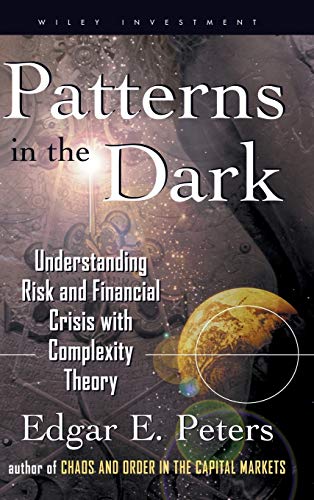
Complexity theory tells us that processes with a large number of seemingly independent agents-such as free markets-can spontaneously organize themselves into a coherent system. In this fascinating book, Edgar Peters brings together scientific theory, the artistic process, and economics to show how the randomness and uncertainty of complexity theory can be applied to financial markets. Written in an engaging and accessible style, this is a thoughtful, conceptual look at the way free markets are, by their nature, continually evolving complex systems. Expanding on previous explorations of chaos theory, Peters draws on real-life examples ranging from the Asian crisis to America's love of conspiracy to show that complexity and randomness are necessary for the free markets to operate in a competitive manner.
Le informazioni nella sezione "Riassunto" possono far riferimento a edizioni diverse di questo titolo.
Informazioni sull'autore
EDGAR E. PETERS is Chief Investment Strategist for PanAgora Asset Management. He is the author of Chaos and Order in the Capital Markets: A New View of Cycles, Prices, and Market Volatility and Fractal Market Analysis: Applying Chaos Theory to Investment and Economics, both published by Wiley.
Dalla quarta di copertina
Patterns in the Dark is that rare book that offers an entirely new perspective on an issue of ongoing concern to investors: the unpredictability of financial markets. In this groundbreaking work, leading investment strategist and authority on chaos theory Edgar
Peters makes accessible ways of understanding market behavior that--until now--were
known only to specialists. In a lucid and engaging style, Peters explains how processes
with a large number of independent agents, such as free markets, can spontaneously
organize themselves into a coherent system. He draws on the work of the Austrian school
of economics and complexity theory to show how free markets are by their nature
continually evolving complex systems that require uncertainty to operate successfully.
Using everyday examples, Peters shows how complex systems use uncertainty to adapt to
changes in their environment and to absorb unexpected shocks. As proof, he cites
instructive examples of how rash or heavy-handed attempts to eliminate uncertainty in
markets have invariably led to disaster. Patterns in the Dark draws on a broad range of
human knowledge and experience to clarify the behavior of a system that now operates on
a global, 24-hour, and thoroughly interconnected basis. Peters illuminates the complex
operation of the marketplace by including keen observations drawn from science,
mathematics, and artistic creation as well as economics. His models include the social
vision of the Austrian economists, Darwinian ideas of evolution, the laws of physics, and
the creative risks of the artist. His meditations on financial markets weigh the effects of
limitations vs. rules, risk vs. uncertainty, and order vs. chaos. As a guide to a world
marketplace that has become increasingly complex anti uncertain, Patterns in the Dark
offers the investor a rich source of insight, illumination, and wisdom.
Dal risvolto di copertina interno
Patterns in the Dark is that rare book that offers an entirely new perspective on an issue of ongoing concern to investors: the unpredictability of financial markets. In this groundbreaking work, leading investment strategist and authority on chaos theory Edgar
Peters makes accessible ways of understanding market behavior that--until now--were
known only to specialists. In a lucid and engaging style, Peters explains how processes
with a large number of independent agents, such as free markets, can spontaneously
organize themselves into a coherent system. He draws on the work of the Austrian school
of economics and complexity theory to show how free markets are by their nature
continually evolving complex systems that require uncertainty to operate successfully.
Using everyday examples, Peters shows how complex systems use uncertainty to adapt to
changes in their environment and to absorb unexpected shocks. As proof, he cites
instructive examples of how rash or heavy-handed attempts to eliminate uncertainty in
markets have invariably led to disaster. Patterns in the Dark draws on a broad range of
human knowledge and experience to clarify the behavior of a system that now operates on
a global, 24-hour, and thoroughly interconnected basis. Peters illuminates the complex
operation of the marketplace by including keen observations drawn from science,
mathematics, and artistic creation as well as economics. His models include the social
vision of the Austrian economists, Darwinian ideas of evolution, the laws of physics, and
the creative risks of the artist. His meditations on financial markets weigh the effects of
limitations vs. rules, risk vs. uncertainty, and order vs. chaos. As a guide to a world
marketplace that has become increasingly complex anti uncertain, Patterns in the Dark
offers the investor a rich source of insight, illumination, and wisdom.
Le informazioni nella sezione "Su questo libro" possono far riferimento a edizioni diverse di questo titolo.
Risultati della ricerca per Patterns in the Dark: Understanding Risk and Financial...

Immagini fornite dal venditore
Patterns in the Dark: Understanding Risk and Financial Crisis with Complexity Theory
Da: -OnTimeBooks-, Phoenix, AZ, U.S.A.
Valutazione del venditore 5 su 5 stelle

Condizione: very_good. Gently read. May have name of previous ownership, or ex-library edition. Binding tight; spine straight and smooth, with no creasing; covers clean and crisp. Minimal signs of handling or shelving. 100% GUARANTEE! Shipped with delivery confirmation, if you're not satisfied with purchase please return item! Ships USPS Media Mail. Codice articolo OTV.047123947X.VG
Compra usato
EUR 6,20
Spedizione gratuita
Spedito in U.S.A.
Spedito in U.S.A.
Quantità: 1 disponibili
Foto dell'editore
Patterns in the Dark: Understanding Risk and Financial Crisis with Complexity Theory
Da: GoldBooks, Denver, CO, U.S.A.
Valutazione del venditore 5 su 5 stelle
Hardcover. Condizione: new. New Copy. Customer Service Guaranteed. Codice articolo 51Q34_34_047123947X
Compra nuovo
EUR 30,75
Spedizione EUR 4,84
Spedito in U.S.A.
Spedito in U.S.A.
Quantità: 1 disponibili
Immagini fornite dal venditore
Patterns in the Dark : Understanding Risk and Financial Crisis With Complexity Theory
Da: GreatBookPrices, Columbia, MD, U.S.A.
Valutazione del venditore 5 su 5 stelle
Condizione: New. Codice articolo 10512-n
Compra nuovo
EUR 34,75
Spedizione EUR 2,32
Spedito in U.S.A.
Spedito in U.S.A.
Quantità: Più di 20 disponibili
Foto dell'editore
Patterns in the Dark: Understanding Risk and Financial Crisis with Complexity Theory
Da: Lakeside Books, Benton Harbor, MI, U.S.A.
Valutazione del venditore 5 su 5 stelle
Condizione: New. Brand New! Not Overstocks or Low Quality Book Club Editions! Direct From the Publisher! We're not a giant, faceless warehouse organization! We're a small town bookstore that loves books and loves it's customers! Buy from Lakeside Books! Codice articolo OTF-S-9780471239475
Compra nuovo
EUR 35,68
Spedizione EUR 3,51
Spedito in U.S.A.
Spedito in U.S.A.
Quantità: Più di 20 disponibili
Immagini fornite dal venditore
Patterns in the Dark : Understanding Risk and Financial Crisis With Complexity Theory
Da: GreatBookPrices, Columbia, MD, U.S.A.
Valutazione del venditore 5 su 5 stelle
Condizione: As New. Unread book in perfect condition. Codice articolo 10512
Compra usato
EUR 37,67
Spedizione EUR 2,32
Spedito in U.S.A.
Spedito in U.S.A.
Quantità: Più di 20 disponibili
Immagini fornite dal venditore
Complexity, Risk, and Financial Markets (Hardback or Cased Book)
Da: BargainBookStores, Grand Rapids, MI, U.S.A.
Valutazione del venditore 5 su 5 stelle
Hardback or Cased Book. Condizione: New. Complexity, Risk, and Financial Markets. Book. Codice articolo BBS-9780471239475
Compra nuovo
EUR 40,45
Spedizione gratuita
Spedito in U.S.A.
Spedito in U.S.A.
Quantità: 5 disponibili
Foto dell'editore
Complexity, Risk, and Financial Markets
Da: PBShop.store UK, Fairford, GLOS, Regno Unito
Valutazione del venditore 5 su 5 stelle
HRD. Condizione: New. New Book. Shipped from UK. Established seller since 2000. Codice articolo FW-9780471239475
Compra nuovo
EUR 37,91
Spedizione EUR 5,85
Spedito da Regno Unito a U.S.A.
Spedito da Regno Unito a U.S.A.
Quantità: 15 disponibili
Foto dell'editore
Complexity, Risk, and Financial Markets (eng)
Da: Brook Bookstore On Demand, Napoli, NA, Italia
Valutazione del venditore 5 su 5 stelle
Condizione: new. Codice articolo c5e1fc394d99759d53b549f5408bebbd
Compra nuovo
EUR 37,71
Spedizione EUR 6,80
Spedito da Italia a U.S.A.
Spedito da Italia a U.S.A.
Quantità: Più di 20 disponibili
Foto dell'editore
Patterns in the Dark: Understanding Risk and Financial Crisis with Complexity Theory
Da: California Books, Miami, FL, U.S.A.
Valutazione del venditore 5 su 5 stelle
Condizione: New. Codice articolo I-9780471239475
Compra nuovo
EUR 47,10
Spedizione gratuita
Spedito in U.S.A.
Spedito in U.S.A.
Quantità: Più di 20 disponibili
Immagini fornite dal venditore
Patterns in the Dark : Understanding Risk and Financial Crisis With Complexity Theory
Da: GreatBookPricesUK, Woodford Green, Regno Unito
Valutazione del venditore 5 su 5 stelle
Condizione: New. Codice articolo 10512-n
Compra nuovo
EUR 37,89
Spedizione EUR 17,48
Spedito da Regno Unito a U.S.A.
Spedito da Regno Unito a U.S.A.
Quantità: Più di 20 disponibili