
Articoli correlati a Vibration Testing: Theory and Practice
Sinossi
A new, comprehensive field and laboratory guide for vibration testing
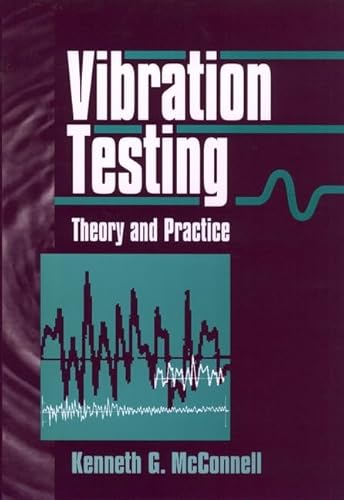
Here, for the first time, is a complete and self-contained volume that shows how to perform vibration tests and experiments with confidence. Because so many factors--environmental and structural, instrument-related and human--come into play in the vibration-testing environment, obtaining meaningful measurements by means of transducers can be challenging for engineers, researchers, and graduate students alike.
Vibration Testing: Theory and Practice not only shows how to avoid the pitfalls inherent in using modern instruments and methods but also covers all the important elements involved in conducting vibration tests, and builds an understanding of the theory through practical applications in laboratory and field environments.
Based on the author's 30 years of experience in vibration testing and research, this clearly written, logically presented book:
* Provides a review of the fundamentals of vibration theory
* Brings the theory and practice of vibration testing up to date with all current instrumentation and research data
* Covers transducers, their calibration as well as their limitations
* Includes a complete chapter on vibration test specifications
* Helps develop a sense of how instruments work individually as well as how they function as part of a testing environment
* Includes practical examples that can be used for personnel training purposes
Addressing concerns of both experimental researchers and product testers, and covering a wide range of field and laboratory situations, Vibration Testing: Theory and Practice is an extremely useful book for anyone striving to achieve meaningful results in vibration testing.
Vibration testing is used to analyze the integrity of systems in a variety of applications that range from circuit boards and aircraft to steam turbines and home appliances. Conducting these tests in either the field or laboratory involves the use of data analyzers, instruments, and vibration exciters. The use of equipment and interpretation of test results require considerable understanding of vibration phenomena as well as analysis and experimental concepts. Consequently, the user of this equipment can be the dominant influence on the quality of test results.
Vibration Testing: Theory and Practice is a step-by-step guide that shows how to obtain meaningful experimental results via the proper use of modern instrumentation, vibration exciters, and signal-processing equipment, with particular emphasis on how different types of signals are processed with a frequency analyzer. Also included are techniques for reading test results effectively and a discussion of how the test system's own dynamics can influence test results.
Using practical lessons to introduce the theoretical aspects of vibration testing, the book covers all basic concepts and principles underlying dynamic testing, explains how current instruments and methods operate within the dynamic environment, and describes their behavior in a number of commonly encountered field and laboratory test situations.
Vibration Testing: Theory and Practice deals with a wide range of product and production testing involving vibration, acoustics, and noise problems in the vibration-testing environment, whether relating to industrial applications or experimental work. It is an invaluable resource for graduate students, research-ers, and practicing engineers in aerospace, mechanical, and civil engineering.
Le informazioni nella sezione "Riassunto" possono far riferimento a edizioni diverse di questo titolo.
Informazioni sull'autore
KENNETH G. McCONNELL is Professor of Aerospace Engineering and Engineering Mechanics at Iowa State University of Science and Technology. He has been involved in vibration testing and research for over 30 years. In 1994 the Society for Experimental Mechanics named Dr. McConnell the recipient of its William M. Murray Lecture Award, the Society's highest honor, "in recognition of his outstanding contributions to SEM in the fields of dynamic instrumentation, vibration testing techniques, and fluid structure inter-action." Among his recent publications is Instrumentation for Engineering Measurements, Second Edition, coauthored with J.W. Dalley and W.F. Riley, and published by Wiley.
Dalla quarta di copertina
A new, comprehensive field and laboratory guide for vibration testing
Here, for the first time, is a complete and self-contained volume that shows how to perform vibration tests and experiments with confidence. Because so many factors—environmental and structural, instrument-related and human—come into play in the vibration-testing environment, obtaining meaningful measurements by means of transducers can be challenging for engineers, researchers, and graduate students alike.
Vibration Testing: Theory and Practice not only shows how to avoid the pitfalls inherent in using modern instruments and methods but also covers all the important elements involved in conducting vibration tests, and builds an understanding of the theory through practical applications in laboratory and field environments.
Based on the author's 30 years of experience in vibration testing and research, this clearly written, logically presented book:
- Provides a review of the fundamentals of vibration theory
- Brings the theory and practice of vibration testing up to date with all current instrumentation and research data
- Covers transducers, their calibration as well as their limitations
- Includes a complete chapter on vibration test specifications
- Helps develop a sense of how instruments work individually as well as how they function as part of a testing environment
- Includes practical examples that can be used for personnel training purposes
Addressing concerns of both experimental researchers and product testers, and covering a wide range of field and laboratory situations, Vibration Testing: Theory and Practice is an extremely useful book for anyone striving to achieve meaningful results in vibration testing.
Vibration testing is used to analyze the integrity of systems in a variety of applications that range from circuit boards and aircraft to steam turbines and home appliances. Conducting these tests in either the field or laboratory involves the use of data analyzers, instruments, and vibration exciters. The use of equipment and interpretation of test results require considerable understanding of vibration phenomena as well as analysis and experimental concepts. Consequently, the user of this equipment can be the dominant influence on the quality of test results.
Vibration Testing: Theory and Practice is a step-by-step guide that shows how to obtain meaningful experimental results via the proper use of modern instrumentation, vibration exciters, and signal-processing equipment, with particular emphasis on how different types of signals are processed with a frequency analyzer. Also included are techniques for reading test results effectively and a discussion of how the test system's own dynamics can influence test results.
Using practical lessons to introduce the theoretical aspects of vibration testing, the book covers all basic concepts and principles underlying dynamic testing, explains how current instruments and methods operate within the dynamic environment, and describes their behavior in a number of commonly encountered field and laboratory test situations.
Vibration Testing: Theory and Practice deals with a wide range of product and production testing involving vibration, acoustics, and noise problems in the vibration-testing environment, whether relating to industrial applications or experimental work. It is an invaluable resource for graduate students, research-ers, and practicing engineers in aerospace, mechanical, and civil engineering.
Dal risvolto di copertina interno
Vibration testing is used to analyze the integrity of systems in a variety of applications that range from circuit boards and aircraft to steam turbines and home appliances. Conducting these tests in either the field or laboratory involves the use of data analyzers, instruments, and vibration exciters. The use of equipment and interpretation of test results require considerable understanding of vibration phenomena as well as analysis and experimental concepts. Consequently, the user of this equipment can be the dominant influence on the quality of test results. Vibration Testing: Theory and Practice is a step-by-step guide that shows how to obtain meaningful experimental results via the proper use of modern instrumentation, vibration exciters, and signal-processing equipment, with particular emphasis on how different types of signals are processed with a frequency analyzer. Also included are techniques for reading test results effectively and a discussion of how the test system?s own dynamics can influence test results. Using practical lessons to introduce the theoretical aspects of vibration testing, the book covers all basic concepts and principles underlying dynamic testing, explains how current instruments and methods operate within the dynamic environment, and describes their behavior in a number of commonly encountered field and laboratory test situations. Vibration Testing: Theory and Practice deals with a wide range of product and production testing involving vibration, acoustics, and noise problems in the vibration-testing environment, whether relating to industrial applications or experimental work. It is an invaluable resource for graduate students, researchers, and practicing engineers in aerospace, mechanical, and civil engineering.
Le informazioni nella sezione "Su questo libro" possono far riferimento a edizioni diverse di questo titolo.
Risultati della ricerca per Vibration Testing: Theory and Practice

Foto dell'editore
Vibration Testing: Theory and Practice
Editore:
Wiley-Interscience, 1995
ISBN 10: 0471304352
ISBN 13: 9780471304357
Antico o usato
Rilegato
Da: Isle Books, Layton, UT, U.S.A.
Valutazione del venditore 3 su 5 stelle

hardcover. Condizione: Good. good condition, name on title page or inside cover, about 10 pages has highlighting, light wear to corners and edges, has dust jacket, ships same or next business day. Codice articolo 144082225007
Compra usato
EUR 32,17
Spedizione EUR 3,56
Spedito in U.S.A.
Spedito in U.S.A.
Quantità: 1 disponibili
Immagini fornite dal venditore
Vibration Testing: Theory and Practice
Editore:
Wiley-Interscience, 1995
ISBN 10: 0471304352
ISBN 13: 9780471304357
Antico o usato
Rilegato
Da: Shakespeare Book House, Rockford, IL, U.S.A.
Valutazione del venditore 5 su 5 stelle

Condizione: like_new. The cover shows no damage or marks! Ship within 24 hours!! Codice articolo EBBV.0471304352.LN
Compra usato
EUR 66,10
Spedizione EUR 3,56
Spedito in U.S.A.
Spedito in U.S.A.
Quantità: 1 disponibili
Foto dell'editore
Vibration Testing: Theory and Practice
Editore:
Wiley-Interscience, 1995
ISBN 10: 0471304352
ISBN 13: 9780471304357
Antico o usato
Rilegato
Da: ThriftBooks-Dallas, Dallas, TX, U.S.A.
Valutazione del venditore 5 su 5 stelle
Hardcover. Condizione: Good. No Jacket. Pages can have notes/highlighting. Spine may show signs of wear. ~ ThriftBooks: Read More, Spend Less. Codice articolo G0471304352I3N00
Compra usato
EUR 69,75
Spedizione gratuita
Spedito in U.S.A.
Spedito in U.S.A.
Quantità: 1 disponibili
Immagini fornite dal venditore
Vibration Testing: Theory and Practice
Editore:
Wiley-Interscience, 1995
ISBN 10: 0471304352
ISBN 13: 9780471304357
Antico o usato
Rilegato
Prima edizione
Da: Little Moon Books, San Francisco, CA, U.S.A.
Valutazione del venditore 5 su 5 stelle
Hardcover. Condizione: Very Good. Condizione sovraccoperta: Very Good. 1st Edition. Hardcover with dust jacket, 606 pages. Book & DJ have moderate shelf wear. Bookplate inside cover otherwise Interior clean. DJ is neatly taped to boards with clear tape. Codice articolo ABE-1786340584649
Compra usato
EUR 64,32
Spedizione EUR 5,79
Spedito in U.S.A.
Spedito in U.S.A.
Quantità: 1 disponibili
Immagini fornite dal venditore
Vibration Testing: Theory and Practice
Editore:
Wiley-Interscience, 1995
ISBN 10: 0471304352
ISBN 13: 9780471304357
Antico o usato
Rilegato
Da: Best Peddler LLC, Huntsville, AL, U.S.A.
Valutazione del venditore 5 su 5 stelle
Condizione: very_good. Excellent condition with just a hint of character. Minor signs of love, but the pages are still clean and ready to be enjoyed! May have limited writing in cover pages. 100% Satisfaction Guarantee!! **Ships SWIFTLY!**. Codice articolo PEDV.0471304352.VG
Compra usato
EUR 66,11
Spedizione EUR 4,01
Spedito in U.S.A.
Spedito in U.S.A.
Quantità: 1 disponibili