
Sinossi
"I had the impression that here painting itself comes to the foreground; I wondered if it would not be possible to go further in this direction."
Thus did the young Russian painter Wassily Kandinsky (1866–1944) react to his first viewing of Monet's Haystack, included in an 1895 Moscow exhibit of French Impressionists. It was his first perception of the dematerialization of an object and presaged the later development of his influential theories of non-objective art.
During study and travel in Europe, the young artist breathed the heady atmosphere of artistic experimentation. Fauvism, Cubism, Symbolism, and other movements played an important role in the development of his own revolutionary approach to painting. Decrying literal representation, Kandinsky emphasized instead the importance of form, color, rhythm, and the artist's inner need in expressing reality.
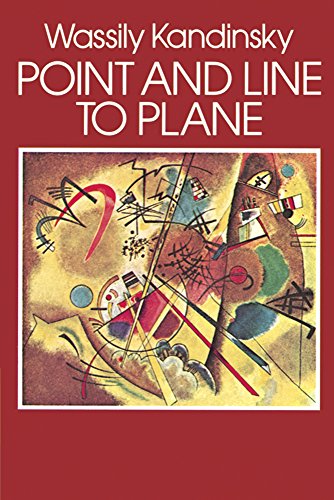
In Point and Line to Plane, one of the most influential books in 20th-century art, Kandinsky presents a detailed exposition of the inner dynamics of non-objective painting. Relying on his own unique terminology, he develops the idea of point as the "proto-element" of painting, the role of point in nature, music, and other art, and the combination of point and line that results in a unique visual language. He then turns to an absorbing discussion of line — the influence of force on line, lyric and dramatic qualities, and the translation of various phenomena into forms of linear expression. With profound artistic insight, Kandinsky points out the organic relationship of the elements of painting, touching on the role of texture, the element of time, and the relationship of all these elements to the basic material plane called upon to receive the content of a work of art.
Originally published in 1926, this essay represents the mature flowering of ideas first expressed in Kandinsky's earlier seminal book, Concerning the Spiritual in Art. As an influential member of the Bauhaus school and a leading theoretician of abstract expressionism, Kandinsky helped formulate the modern artistic temperament. This book amply demonstrates the importance of his contribution and its profound effect on 20th-century art.
Le informazioni nella sezione "Riassunto" possono far riferimento a edizioni diverse di questo titolo.
Dalla quarta di copertina
"I had the impression that here painting itself comes to the foreground; I wondered if it would not be possible to go further in this direction."
Thus did the young Russian painter Wassily Kandinsky (1866–1944) react to his first viewing of Monet's Haystack, included in an 1895 Moscow exhibit of French Impressionists. It was his first perception of the dematerialization of an object and presaged the later development of his influential theories of non-objective art.
During study and travel in Europe, the young artist breathed the heady atmosphere of artistic experimentation. Fauvism, Cubism, Symbolism, and other movements played an important role in the development of his own revolutionary approach to painting. Decrying literal representation, Kandinsky emphasized instead the importance of form, color, rhythm, and the artist's inner need in expressing reality.
In Point and Line to Plane, one of the most influential books in 20th-century art, Kandinsky presents a detailed exposition of the inner dynamics of non-objective painting. Relying on his own unique terminology, he develops the idea of point as the "proto-element" of painting, the role of point in nature, music, and other art, and the combination of point and line that results in a unique visual language. He then turns to an absorbing discussion of line—the influence of force on line, lyric and dramatic qualities, and the translation of various phenomena into forms of linear expression. With profound artistic insight, Kandinsky points out the organic relationship of the elements of painting, touching on the role of texture, the element of time, and the relationship of all these elements to the basic material plane called upon to receive the content of a work of art.
Originally published in 1926, this essay represents the mature flowering of ideas first expressed in Kandinsky's earlier seminal book, Concerning the Spiritual in Art. As an influential member of the Bauhaus school and a leading theoretician of abstract expressionism, Kandinsky helped formulate the modern artistic temperament. This book amply demonstrates the importance of his contribution and its profound effect on 20th-century art.
Le informazioni nella sezione "Su questo libro" possono far riferimento a edizioni diverse di questo titolo.
Altre edizioni note dello stesso titolo

Risultati della ricerca per Point and Line to Plane

Foto dell'editore
Point and Line to Plane (Dover Fine Art, History of Art)
Editore:
Dover Publications (edition Edition and Printing Not Stated), 1979
ISBN 10: 0486238083
ISBN 13: 9780486238081
Antico o usato
Paperback
Da: BooksRun, Philadelphia, PA, U.S.A.
Valutazione del venditore 5 su 5 stelle

Paperback. Condizione: Fair. Edition and Printing Not Stated. The item might be beaten up but readable. May contain markings or highlighting, as well as stains, bent corners, or any other major defect, but the text is not obscured in any way. Codice articolo 0486238083-7-1
Compra usato
EUR 5,57
Spedizione gratuita
Spedito in U.S.A.
Spedito in U.S.A.
Quantità: 1 disponibili
Foto dell'editore
Point and Line to Plane (Dover Fine Art, History of Art)
Editore:
Dover Publications, 1979
ISBN 10: 0486238083
ISBN 13: 9780486238081
Antico o usato
paperback
Da: Tangled Web Mysteries and Oddities, Kennebuunkport, ME, U.S.A.
Valutazione del venditore 5 su 5 stelle
paperback. Condizione: Good. All the important parts have already been neatly marked for you with helpful notations. Providing superior service since 2001. Dropshippers heartily welcomed. Codice articolo 123948
Compra usato
EUR 1,34
Spedizione EUR 4,83
Spedito in U.S.A.
Spedito in U.S.A.
Quantità: 1 disponibili
Foto dell'editore
Point and Line to Plane (Dover Fine Art, History of Art)
Editore:
Dover Publications, 1979
ISBN 10: 0486238083
ISBN 13: 9780486238081
Antico o usato
Brossura
Da: Wonder Book, Frederick, MD, U.S.A.
Valutazione del venditore 5 su 5 stelle
Condizione: Good. Good condition. A copy that has been read but remains intact. May contain markings such as bookplates, stamps, limited notes and highlighting, or a few light stains. Codice articolo Y03L-00904
Compra usato
EUR 6,33
Spedizione gratuita
Spedito in U.S.A.
Spedito in U.S.A.
Quantità: 1 disponibili
Foto dell'editore
Point and Line to Plane (Dover Fine Art, History of Art)
Editore:
Dover Publications, 1979
ISBN 10: 0486238083
ISBN 13: 9780486238081
Antico o usato
Paperback
Da: HPB Inc., Dallas, TX, U.S.A.
Valutazione del venditore 5 su 5 stelle
Paperback. Condizione: Very Good. Connecting readers with great books since 1972! Used books may not include companion materials, and may have some shelf wear or limited writing. We ship orders daily and Customer Service is our top priority! Codice articolo S_469264958
Compra usato
EUR 3,34
Spedizione EUR 3,30
Spedito in U.S.A.
Spedito in U.S.A.
Quantità: 1 disponibili
Foto dell'editore
Point and Line to Plane (Dover Fine Art, History of Art)
Editore:
Dover Publications, 1979
ISBN 10: 0486238083
ISBN 13: 9780486238081
Antico o usato
Paperback
Da: HPB-Ruby, Dallas, TX, U.S.A.
Valutazione del venditore 5 su 5 stelle
Paperback. Condizione: Very Good. Connecting readers with great books since 1972! Used books may not include companion materials, and may have some shelf wear or limited writing. We ship orders daily and Customer Service is our top priority! Codice articolo S_475023355
Compra usato
EUR 3,34
Spedizione EUR 3,30
Spedito in U.S.A.
Spedito in U.S.A.
Quantità: 1 disponibili
Foto dell'editore
Point and Line to Plane (Dover Fine Art, History of Art)
Editore:
Dover Publications, 1979
ISBN 10: 0486238083
ISBN 13: 9780486238081
Antico o usato
Paperback
Da: HPB-Emerald, Dallas, TX, U.S.A.
Valutazione del venditore 5 su 5 stelle
Paperback. Condizione: Very Good. Connecting readers with great books since 1972! Used books may not include companion materials, and may have some shelf wear or limited writing. We ship orders daily and Customer Service is our top priority! Codice articolo S_463237956
Compra usato
EUR 3,34
Spedizione EUR 3,30
Spedito in U.S.A.
Spedito in U.S.A.
Quantità: 1 disponibili
Foto dell'editore
Point and Line to Plane (Dover Fine Art, History of Art)
Editore:
Dover Publications, 1979
ISBN 10: 0486238083
ISBN 13: 9780486238081
Antico o usato
Paperback
Da: HPB-Diamond, Dallas, TX, U.S.A.
Valutazione del venditore 5 su 5 stelle
Paperback. Condizione: Very Good. Connecting readers with great books since 1972! Used books may not include companion materials, and may have some shelf wear or limited writing. We ship orders daily and Customer Service is our top priority! Codice articolo S_472962740
Compra usato
EUR 3,34
Spedizione EUR 3,30
Spedito in U.S.A.
Spedito in U.S.A.
Quantità: 1 disponibili
Immagini fornite dal venditore
Point and Line to Plane (Dover Fine Art, History of Art)
Editore:
Dover Publications, 1979
ISBN 10: 0486238083
ISBN 13: 9780486238081
Antico o usato
Brossura
Da: Goodwill Books, Hillsboro, OR, U.S.A.
Valutazione del venditore 5 su 5 stelle
Condizione: acceptable. Fairly worn, but readable and intact. If applicable: Dust jacket, disc or access code may not be included. Codice articolo GICWV.0486238083.A
Compra usato
EUR 3,34
Spedizione EUR 3,51
Spedito in U.S.A.
Spedito in U.S.A.
Quantità: 1 disponibili
Foto dell'editore
Point and Line to Plane
Editore:
Dover Publications, 1979
ISBN 10: 0486238083
ISBN 13: 9780486238081
Antico o usato
Paperback
Da: ThriftBooks-Atlanta, AUSTELL, GA, U.S.A.
Valutazione del venditore 5 su 5 stelle
Paperback. Condizione: Good. No Jacket. Pages can have notes/highlighting. Spine may show signs of wear. ~ ThriftBooks: Read More, Spend Less. Codice articolo G0486238083I3N00
Compra usato
EUR 6,94
Spedizione gratuita
Spedito in U.S.A.
Spedito in U.S.A.
Quantità: 1 disponibili
Foto dell'editore
Point and Line to Plane
Editore:
Dover Publications, Incorporated, 1979
ISBN 10: 0486238083
ISBN 13: 9780486238081
Antico o usato
Brossura
Da: Better World Books, Mishawaka, IN, U.S.A.
Valutazione del venditore 5 su 5 stelle
Condizione: Good. 1 Edition. Pages intact with minimal writing/highlighting. The binding may be loose and creased. Dust jackets/supplements are not included. Stock photo provided. Product includes identifying sticker. Better World Books: Buy Books. Do Good. Codice articolo GRP98776038
Compra usato
EUR 7,10
Spedizione gratuita
Spedito in U.S.A.
Spedito in U.S.A.
Quantità: 4 disponibili