
Articoli correlati a Medieval Number Symbolism: Its Sources, Meaning, and...
Sinossi
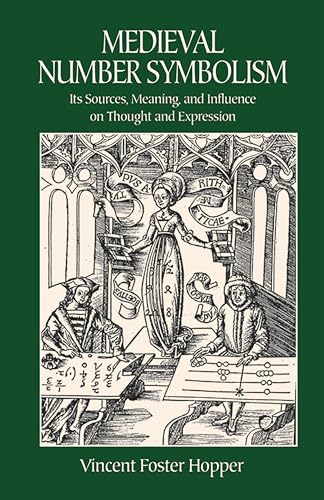
For Dante and other people in the Middle Ages, numbers had a different set of connotations than they do for moderns. The symbolism of numbers was both widespread and profoundly ingrained in the culture. In this classic study, a noted scholar reveals &;how deeply rooted in medieval thought was the consciousness of numbers, not as mathematical tools, nor yet as the counters in a game, but as fundamental realities, alive with memories and eloquent with meaning.&;
For example, the number three &; linked to the Trinity &; was of special significance, and &;endowed every repetition of the number three with a richness of meaning which can be but dimly grasped by the modern reader.&; Numbers derived from constellations, planets, stellar revolutions, and other astronomical phenomena were also thought to have divine associations. These and many other aspects of the topic are illuminated here. In the first three chapters, the author examines the three main sources of number symbolism; basic, elementary symbols derived from man&;s struggles to count and identify such natural groupings as fingers and toes; the ancient Babylonian science of astrology; and Pythagorean number theory, which fixed the relationship of the numbers to one another. The fourth and fifth chapters deal with the Gnostics&; elaborate combination of these elements, and the adoption and elaboration of number philosophy by the early Church Fathers. The last two sections examine medieval number philosophy and Dante&;s use of number symbolism, particularly in The Divine Comedy.
Of special interest to medievalists, numerologists, and students of literature, this volume will also fascinate anyone interested in symbology or cultural aspects of the Middle Ages.
For example, the number three &; linked to the Trinity &; was of special significance, and &;endowed every repetition of the number three with a richness of meaning which can be but dimly grasped by the modern reader.&; Numbers derived from constellations, planets, stellar revolutions, and other astronomical phenomena were also thought to have divine associations. These and many other aspects of the topic are illuminated here. In the first three chapters, the author examines the three main sources of number symbolism; basic, elementary symbols derived from man&;s struggles to count and identify such natural groupings as fingers and toes; the ancient Babylonian science of astrology; and Pythagorean number theory, which fixed the relationship of the numbers to one another. The fourth and fifth chapters deal with the Gnostics&; elaborate combination of these elements, and the adoption and elaboration of number philosophy by the early Church Fathers. The last two sections examine medieval number philosophy and Dante&;s use of number symbolism, particularly in The Divine Comedy.
Of special interest to medievalists, numerologists, and students of literature, this volume will also fascinate anyone interested in symbology or cultural aspects of the Middle Ages.
Le informazioni nella sezione "Riassunto" possono far riferimento a edizioni diverse di questo titolo.
Product Description
Thoughtful examination of the symbolism attached to numbers during the Middle Ages and the extent to which it was rooted in medieval culture. Detailed study of number symbolism's derivation from elementary roots and astrological sources, the adoption and elaboration of number philosophy by the early Church Fathers, Dante's use of number symbolism, and more.
Contenuti
I. ELEMENTARY NUMBER SYMBOLISM II. THE ASTROLOGICAL NUMBERS III. PYTHAGOREAN NUMBER THEORY IV. THE GNOSTICS V. THE EARLY CHRISTIAN WRITERS VI. MEDIEVAL NUMBER PHILOSOPHY VII. THE BEAUTY OF ORDER-DANTE APPENDIX: NUMBER SYMBOLS OF NORTHERN PAGANISM BIBLIOGRAPHY INDEX
Le informazioni nella sezione "Su questo libro" possono far riferimento a edizioni diverse di questo titolo.
Risultati della ricerca per Medieval Number Symbolism: Its Sources, Meaning, and...

Foto dell'editore
Medieval Number Symbolism Format: Paperback
Da: INDOO, Avenel, NJ, U.S.A.
Valutazione del venditore 5 su 5 stelle

Condizione: New. Brand New. Codice articolo 9780486414300
Compra nuovo
EUR 13,74
Spedizione gratuita
Spedito in U.S.A.
Spedito in U.S.A.
Quantità: Più di 20 disponibili
Foto dell'editore
Medieval Number Symbolism (Paperback)
Editore:
Dover Publications Inc., New York, 2011
ISBN 10: 0486414302
ISBN 13: 9780486414300
Nuovo
Paperback
Da: Grand Eagle Retail, Bensenville, IL, U.S.A.
Valutazione del venditore 5 su 5 stelle
Paperback. Condizione: new. Paperback. Detailed examination of number symbolism's derivation from elementary roots and astrological sources, the adoption and elaboration of number philosophy by the early Church Fathers, Dante's use of number symbolism, and more. For Dante and other people in the Middle Ages, numbers had a different set of connotations than they do for moderns. The symbolism of numbers was both widespread and profoundly ingrained in the culture. In this classic study, a noted scholar reveals "how deeply rooted in medieval thought was the consciousness of numbers, not as mathematical tools, nor yet as the counters in a game, but as fundamental realities, alive with memories and eloquent with meaning." For example, the number three - linked to the Trinity - was of special significance, and "endowed every repetition of the number three with a richness of meaning which can be but dimly grasped by the modern reader." Numbers derived from constellations, planets, stellar revolutions, and other astronomical phenomena were also thought to have divine associations. These and many other aspects of the topic are illuminated here. In the first three chapters, the author examines the three main sources of number symbolism; basic, elementary symbols derived from man's struggles to count and identify such natural groupings as fingers and toes; the ancient Babylonian science of astrology; and Pythagorean number theory, which fixed the relationship of the numbers to one another. The fourth and fifth chapters deal with the Gnostics' elaborate combination of these elements, and the adoption and elaboration of number philosophy by the early Church Fathers. The last two sections examine medieval number philosophy and Dante's use of number symbolism, particularly in The Divine Comedy. Of special interest to medievalists, numerologists, and students of literature, this volume will also fascinate anyone interested in symbology or cultural aspects of the Middle Ages. Detailed examination of number symbolism's derivation from elementary roots and astrological sources, the adoption and elaboration of number philosophy by the early Church Fathers, Dante's use of number symbolism, and more. Shipping may be from multiple locations in the US or from the UK, depending on stock availability. Codice articolo 9780486414300
Compra nuovo
EUR 16,34
Spedizione gratuita
Spedito in U.S.A.
Spedito in U.S.A.
Quantità: 1 disponibili
Foto dell'editore
Medieval Number Symbolism: Its Sources, Meaning, and Influence on Thought and Expression (Dover Occult)
Editore:
Dover Publications, 2011
ISBN 10: 0486414302
ISBN 13: 9780486414300
Antico o usato
Brossura
Da: Wonder Book, Frederick, MD, U.S.A.
Valutazione del venditore 5 su 5 stelle
Condizione: Very Good. Very Good condition. A copy that may have a few cosmetic defects. May also contain light spine creasing or a few markings such as an owner's name, short gifter's inscription or light stamp. Codice articolo K05R-00450
Compra usato
EUR 16,39
Spedizione gratuita
Spedito in U.S.A.
Spedito in U.S.A.
Quantità: 1 disponibili
Foto dell'editore
Medieval Number Symbolism: Its Sources, Meaning, and Influence on Thought and Expression (Dover Occult)
Da: Revaluation Books, Exeter, Regno Unito
Valutazione del venditore 5 su 5 stelle
Paperback. Condizione: Brand New. reprint edition. 241 pages. 8.25x5.25x0.75 inches. In Stock. Codice articolo __0486414302
Compra nuovo
EUR 15,34
Spedizione EUR 11,61
Spedito da Regno Unito a U.S.A.
Spedito da Regno Unito a U.S.A.
Quantità: 1 disponibili
Foto dell'editore
Medieval Number Symbolism: Its Sources, Meaning, and Influence on Thought and Expression (Dover Occult)
Da: Revaluation Books, Exeter, Regno Unito
Valutazione del venditore 5 su 5 stelle
Paperback. Condizione: Brand New. reprint edition. 241 pages. 8.25x5.25x0.75 inches. In Stock. Codice articolo x-0486414302
Compra nuovo
EUR 16,89
Spedizione EUR 11,61
Spedito da Regno Unito a U.S.A.
Spedito da Regno Unito a U.S.A.
Quantità: 2 disponibili
Foto dell'editore
Medieval Number Symbolism: Its Sources, Meaning, and Influence on Thought and Expression (Dover Occult)
Da: Russell Books, Victoria, BC, Canada
Valutazione del venditore 5 su 5 stelle
Paperback. Condizione: New. Special order direct from the distributor. Codice articolo ING9780486414300
Compra nuovo
EUR 13,54
Spedizione EUR 17,58
Spedito da Canada a U.S.A.
Spedito da Canada a U.S.A.
Quantità: 2 disponibili
Foto dell'editore
Medieval Number Symbolism: Its Sources, Meaning, and Influence on Thought and Expression (Dover Occult)
Da: Revaluation Books, Exeter, Regno Unito
Valutazione del venditore 5 su 5 stelle
Paperback. Condizione: Brand New. reprint edition. 241 pages. 8.25x5.25x0.75 inches. In Stock. Codice articolo 0486414302
Compra nuovo
EUR 28,97
Spedizione EUR 11,61
Spedito da Regno Unito a U.S.A.
Spedito da Regno Unito a U.S.A.
Quantità: 1 disponibili
Foto dell'editore
Medieval Number Symbolism: Its Sources, Meaning, and Influence on Thought and Expression (Dover Occult)
Editore:
Dover Publications, 2011
ISBN 10: 0486414302
ISBN 13: 9780486414300
Antico o usato
Soft cover
Da: MostlyAcademic, Berrima, NSW, Australia
Valutazione del venditore 5 su 5 stelle
Soft cover. Condizione: As New. Codice articolo ABE-1738107544739
Compra usato
EUR 19,03
Spedizione EUR 30,73
Spedito da Australia a U.S.A.
Spedito da Australia a U.S.A.
Quantità: 1 disponibili
Foto dell'editore
Medieval Number Symbolism (Paperback)
Editore:
Dover Publications Inc., New York, 2011
ISBN 10: 0486414302
ISBN 13: 9780486414300
Nuovo
Paperback
Da: AussieBookSeller, Truganina, VIC, Australia
Valutazione del venditore 5 su 5 stelle
Paperback. Condizione: new. Paperback. Detailed examination of number symbolism's derivation from elementary roots and astrological sources, the adoption and elaboration of number philosophy by the early Church Fathers, Dante's use of number symbolism, and more. For Dante and other people in the Middle Ages, numbers had a different set of connotations than they do for moderns. The symbolism of numbers was both widespread and profoundly ingrained in the culture. In this classic study, a noted scholar reveals "how deeply rooted in medieval thought was the consciousness of numbers, not as mathematical tools, nor yet as the counters in a game, but as fundamental realities, alive with memories and eloquent with meaning." For example, the number three - linked to the Trinity - was of special significance, and "endowed every repetition of the number three with a richness of meaning which can be but dimly grasped by the modern reader." Numbers derived from constellations, planets, stellar revolutions, and other astronomical phenomena were also thought to have divine associations. These and many other aspects of the topic are illuminated here. In the first three chapters, the author examines the three main sources of number symbolism; basic, elementary symbols derived from man's struggles to count and identify such natural groupings as fingers and toes; the ancient Babylonian science of astrology; and Pythagorean number theory, which fixed the relationship of the numbers to one another. The fourth and fifth chapters deal with the Gnostics' elaborate combination of these elements, and the adoption and elaboration of number philosophy by the early Church Fathers. The last two sections examine medieval number philosophy and Dante's use of number symbolism, particularly in The Divine Comedy. Of special interest to medievalists, numerologists, and students of literature, this volume will also fascinate anyone interested in symbology or cultural aspects of the Middle Ages. Detailed examination of number symbolism's derivation from elementary roots and astrological sources, the adoption and elaboration of number philosophy by the early Church Fathers, Dante's use of number symbolism, and more. Shipping may be from our Sydney, NSW warehouse or from our UK or US warehouse, depending on stock availability. Codice articolo 9780486414300
Compra nuovo
EUR 30,62
Spedizione EUR 32,53
Spedito da Australia a U.S.A.
Spedito da Australia a U.S.A.
Quantità: 1 disponibili
Foto dell'editore
Medieval Number Symbolism (Paperback)
Editore:
Dover Publications Inc., New York, 2011
ISBN 10: 0486414302
ISBN 13: 9780486414300
Nuovo
Paperback
Da: CitiRetail, Stevenage, Regno Unito
Valutazione del venditore 5 su 5 stelle
Paperback. Condizione: new. Paperback. Detailed examination of number symbolism's derivation from elementary roots and astrological sources, the adoption and elaboration of number philosophy by the early Church Fathers, Dante's use of number symbolism, and more. For Dante and other people in the Middle Ages, numbers had a different set of connotations than they do for moderns. The symbolism of numbers was both widespread and profoundly ingrained in the culture. In this classic study, a noted scholar reveals "how deeply rooted in medieval thought was the consciousness of numbers, not as mathematical tools, nor yet as the counters in a game, but as fundamental realities, alive with memories and eloquent with meaning." For example, the number three - linked to the Trinity - was of special significance, and "endowed every repetition of the number three with a richness of meaning which can be but dimly grasped by the modern reader." Numbers derived from constellations, planets, stellar revolutions, and other astronomical phenomena were also thought to have divine associations. These and many other aspects of the topic are illuminated here. In the first three chapters, the author examines the three main sources of number symbolism; basic, elementary symbols derived from man's struggles to count and identify such natural groupings as fingers and toes; the ancient Babylonian science of astrology; and Pythagorean number theory, which fixed the relationship of the numbers to one another. The fourth and fifth chapters deal with the Gnostics' elaborate combination of these elements, and the adoption and elaboration of number philosophy by the early Church Fathers. The last two sections examine medieval number philosophy and Dante's use of number symbolism, particularly in The Divine Comedy. Of special interest to medievalists, numerologists, and students of literature, this volume will also fascinate anyone interested in symbology or cultural aspects of the Middle Ages. Detailed examination of number symbolism's derivation from elementary roots and astrological sources, the adoption and elaboration of number philosophy by the early Church Fathers, Dante's use of number symbolism, and more. Shipping may be from our UK warehouse or from our Australian or US warehouses, depending on stock availability. Codice articolo 9780486414300
Compra nuovo
EUR 21,52
Spedizione EUR 42,97
Spedito da Regno Unito a U.S.A.
Spedito da Regno Unito a U.S.A.
Quantità: 1 disponibili