
Articoli correlati a Mathematical Modelling Techniques
Sinossi
"Engaging, elegantly written." — Applied Mathematical Modelling
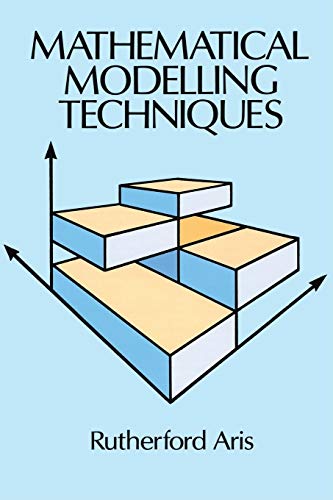
Mathematical modelling is a highly useful methodology designed to enable mathematicians, physicists and other scientists to formulate equations from a given nonmathematical situation. In this elegantly written volume, a distinguished theoretical chemist and engineer sets down helpful rules not only for setting up models but also for solving the mathematical problems they pose and for evaluating models.
The author begins with a discussion of the term "model," followed by clearly presented examples of the different types of models (finite, statistical, stochastic, etc.). He then goes on to discuss the formulation of a model and how to manipulate it into its most responsive form. Along the way Dr. Aris develops a delightful list of useful maxims for would-be modellers. In the final chapter he deals not only with the empirical validation of models but also with the comparison of models among themselves, as well as with the extension of a model beyond its original "domain of validity."
Filled with numerous examples, this book includes three appendices offering further examples treated in more detail. These concern longitudinal diffusion in a packed bed, the coated tube chromatograph with Taylor diffusion and the stirred tank reactor. Six journal articles, a useful list of references and subject and name indexes complete this indispensable, well-written guide.
"A most useful, readable-and stimulating-book, to be read both for pleasure and for enlightenment." — Bulletin of the Institute of Mathematics and Its Applications
Le informazioni nella sezione "Riassunto" possono far riferimento a edizioni diverse di questo titolo.
Contenuti
1. What is a model? 1.1 The idea of a mathematical model and its relation to other uses of the word 1.2 Relations between models with respect to origins 1.3 Relations between models with respect to purpose and conditions 1.4 How should a model be judged? 2. The Different types of model 2.1 Verbal models and mechanical analogies 2.2 Finite models 2.3 Fuzzy subsets 2.4 Statistical models 2.5 Difference and differential equations 2.6 Stochastic models 3. How to formulate a model 3.1 Laws and conservation principles 3.2 Constitutive relations 3.3 Discrete and continuous models 4. How should a model be manipulated into its most responsive form? 4.1 Introductory suggestions 4.2 Natural languages and notations 4.3 Rendering the variables and parameters dismensionless 4.4 Reducing the number of equations and simplifying them 4.5 Getting partial insights into the form of the solution 4.5.1 The phase plane and competing populations 4.5.2 Coarse numerical methods and their uses 4.5.3 The interaction of easier and more difficult problems 5. How should a model be evaluated? 5.1 Effective presentation of a model 5.2 Extension of models 5.3 Observable quantities 5.4 Comparison of models and prototypes and of models among themselves Appendices A. Longitudinal diffusion in a packed bed B. The coated tube chromatograph and Taylor diffusion C. The stirred tank reactor References Subject index Name idex Appendices to the Dover Edition I. "Re, k and p: A Conversation on Some Aspects of Mathematical Modelling" II. The Jail of Shape III. The Mere Notion of a Model IV. "Ut Simulacrum, Poesis" V. Manners Makyth Modellers VI. How to Get the Most Out of an Equation without Really Trying
Le informazioni nella sezione "Su questo libro" possono far riferimento a edizioni diverse di questo titolo.
Risultati della ricerca per Mathematical Modelling Techniques

Foto dell'editore
Mathematical Modelling Techniques
Editore:
Dover Publications Inc., 2003
ISBN 10: 0486681319
ISBN 13: 9780486681313
Antico o usato
Paperback
Da: World of Books (was SecondSale), Montgomery, IL, U.S.A.
Valutazione del venditore 5 su 5 stelle

Paperback. Condizione: Good. Engaging, elegantly written. -- Applied Mathematical ModellingMathematical modelling is a highly useful methodology designed to enable mathematicians, physicists and other scientists to formulate equations from a given nonmathematical situation. In this elegantly written volume, a distinguished theoretical chemist and engineer sets down helpful rules not only for setting up models but also for solving the mathematical problems they pose and for evaluating models.The author begins with a discussion of the term model, followed by clearly presented examples of the different types of models (finite, statistical, stochastic, etc.). He then goes on to discuss the formulation of a model and how to manipulate it into its most responsive form. Along the way Dr. Aris develops a delightful list of useful maxims for would-be modellers. In the final chapter he deals not only with the empirical validation of models but also with the comparison of models among themselves, as well as with the extension of a model beyond its original domain of validity.Filled with numerous examples, this book includes three appendices offering further examples treated in more detail. These concern longitudinal diffusion in a packed bed, the coated tube chromatograph with Taylor diffusion and the stirred tank reactor. Six journal articles, a useful list of references and subject and name indexes complete this indispensable, well-written guide.A most useful, readable-and stimulating-book, to be read both for pleasure and for enlightenment. -- Bulletin of the Institute of Mathematics and Its Applications. Codice articolo 00110305849
Compra usato
EUR 7,34
Spedizione gratuita
Spedito in U.S.A.
Spedito in U.S.A.
Quantità: 1 disponibili
Foto dell'editore
Mathematical Modelling Techniques
Editore:
Dover Publications Inc., 2003
ISBN 10: 0486681319
ISBN 13: 9780486681313
Antico o usato
Paperback
Da: World of Books (was SecondSale), Montgomery, IL, U.S.A.
Valutazione del venditore 5 su 5 stelle
Paperback. Condizione: Very Good. Engaging, elegantly written. -- Applied Mathematical ModellingMathematical modelling is a highly useful methodology designed to enable mathematicians, physicists and other scientists to formulate equations from a given nonmathematical situation. In this elegantly written volume, a distinguished theoretical chemist and engineer sets down helpful rules not only for setting up models but also for solving the mathematical problems they pose and for evaluating models.The author begins with a discussion of the term model, followed by clearly presented examples of the different types of models (finite, statistical, stochastic, etc.). He then goes on to discuss the formulation of a model and how to manipulate it into its most responsive form. Along the way Dr. Aris develops a delightful list of useful maxims for would-be modellers. In the final chapter he deals not only with the empirical validation of models but also with the comparison of models among themselves, as well as with the extension of a model beyond its original domain of validity.Filled with numerous examples, this book includes three appendices offering further examples treated in more detail. These concern longitudinal diffusion in a packed bed, the coated tube chromatograph with Taylor diffusion and the stirred tank reactor. Six journal articles, a useful list of references and subject and name indexes complete this indispensable, well-written guide.A most useful, readable-and stimulating-book, to be read both for pleasure and for enlightenment. -- Bulletin of the Institute of Mathematics and Its Applications. Codice articolo CIN0486681319VG
Compra usato
EUR 7,34
Spedizione gratuita
Spedito in U.S.A.
Spedito in U.S.A.
Quantità: 1 disponibili
Foto dell'editore
Mathematical Modelling Techniques (Dover Books on Computer Science)
Editore:
Dover Publications, 1995
ISBN 10: 0486681319
ISBN 13: 9780486681313
Antico o usato
Brossura
Da: Wonder Book, Frederick, MD, U.S.A.
Valutazione del venditore 5 su 5 stelle
Condizione: Good. Good condition. A copy that has been read but remains intact. May contain markings such as bookplates, stamps, limited notes and highlighting, or a few light stains. Codice articolo R10O-00398
Compra usato
EUR 7,35
Spedizione gratuita
Spedito in U.S.A.
Spedito in U.S.A.
Quantità: 1 disponibili
Foto dell'editore
Mathematical Modelling Techniques (Dover Books on Computer Science)
Editore:
Dover Publications, 1995
ISBN 10: 0486681319
ISBN 13: 9780486681313
Antico o usato
paperback
Da: HPB Inc., Dallas, TX, U.S.A.
Valutazione del venditore 5 su 5 stelle
paperback. Condizione: Very Good. Connecting readers with great books since 1972! Used books may not include companion materials, and may have some shelf wear or limited writing. We ship orders daily and Customer Service is our top priority! Codice articolo S_480697325
Compra usato
EUR 4,18
Spedizione EUR 3,35
Spedito in U.S.A.
Spedito in U.S.A.
Quantità: 1 disponibili
Foto dell'editore
Mathematical Modelling Techniques (Dover Books on Computer Science)
Editore:
Dover Publications, 1995
ISBN 10: 0486681319
ISBN 13: 9780486681313
Antico o usato
Paperback
Da: HPB-Emerald, Dallas, TX, U.S.A.
Valutazione del venditore 5 su 5 stelle
Paperback. Condizione: Very Good. Connecting readers with great books since 1972! Used books may not include companion materials, and may have some shelf wear or limited writing. We ship orders daily and Customer Service is our top priority! Codice articolo S_482225483
Compra usato
EUR 4,18
Spedizione EUR 3,35
Spedito in U.S.A.
Spedito in U.S.A.
Quantità: 1 disponibili
Foto dell'editore
Mathematical Modelling Techniques
Editore:
Dover Publications Inc., 2003
ISBN 10: 0486681319
ISBN 13: 9780486681313
Antico o usato
Paperback
Da: World of Books Inc, Montgomery, IL, U.S.A.
Valutazione del venditore 4 su 5 stelle

Paperback. Condizione: Good. Engaging, elegantly written. -- Applied Mathematical ModellingMathematical modelling is a highly useful methodology designed to enable mathematicians, physicists and other scientists to formulate equations from a given nonmathematical situation. In this elegantly written volume, a distinguished theoretical chemist and engineer sets down helpful rules not only for setting up models but also for solving the mathematical problems they pose and for evaluating models.The author begins with a discussion of the term model, followed by clearly presented examples of the different types of models (finite, statistical, stochastic, etc.). He then goes on to discuss the formulation of a model and how to manipulate it into its most responsive form. Along the way Dr. Aris develops a delightful list of useful maxims for would-be modellers. In the final chapter he deals not only with the empirical validation of models but also with the comparison of models among themselves, as well as with the extension of a model beyond its original domain of validity.Filled with numerous examples, this book includes three appendices offering further examples treated in more detail. These concern longitudinal diffusion in a packed bed, the coated tube chromatograph with Taylor diffusion and the stirred tank reactor. Six journal articles, a useful list of references and subject and name indexes complete this indispensable, well-written guide.A most useful, readable-and stimulating-book, to be read both for pleasure and for enlightenment. -- Bulletin of the Institute of Mathematics and Its Applications. Codice articolo CIN0486681319G
Compra usato
EUR 9,18
Spedizione gratuita
Spedito in U.S.A.
Spedito in U.S.A.
Quantità: 1 disponibili
Foto dell'editore
Mathematical Modelling Techniques
Editore:
Dover Publications Inc., 2003
ISBN 10: 0486681319
ISBN 13: 9780486681313
Antico o usato
Paperback
Da: World of Books Inc, Montgomery, IL, U.S.A.
Valutazione del venditore 4 su 5 stelle
Paperback. Condizione: Very Good. Engaging, elegantly written. -- Applied Mathematical ModellingMathematical modelling is a highly useful methodology designed to enable mathematicians, physicists and other scientists to formulate equations from a given nonmathematical situation. In this elegantly written volume, a distinguished theoretical chemist and engineer sets down helpful rules not only for setting up models but also for solving the mathematical problems they pose and for evaluating models.The author begins with a discussion of the term model, followed by clearly presented examples of the different types of models (finite, statistical, stochastic, etc.). He then goes on to discuss the formulation of a model and how to manipulate it into its most responsive form. Along the way Dr. Aris develops a delightful list of useful maxims for would-be modellers. In the final chapter he deals not only with the empirical validation of models but also with the comparison of models among themselves, as well as with the extension of a model beyond its original domain of validity.Filled with numerous examples, this book includes three appendices offering further examples treated in more detail. These concern longitudinal diffusion in a packed bed, the coated tube chromatograph with Taylor diffusion and the stirred tank reactor. Six journal articles, a useful list of references and subject and name indexes complete this indispensable, well-written guide.A most useful, readable-and stimulating-book, to be read both for pleasure and for enlightenment. -- Bulletin of the Institute of Mathematics and Its Applications. Codice articolo CIN0486681319VG
Compra usato
EUR 9,18
Spedizione gratuita
Spedito in U.S.A.
Spedito in U.S.A.
Quantità: 1 disponibili
Foto dell'editore
Mathematical Modelling Techniques (Dover Books on Computer Science)
Da: AwesomeBooks, Wallingford, Regno Unito
Valutazione del venditore 5 su 5 stelle
Paperback. Condizione: Very Good. Mathematical Modelling Techniques (Dover Books on Computer Science) This book is in very good condition and will be shipped within 24 hours of ordering. The cover may have some limited signs of wear but the pages are clean, intact and the spine remains undamaged. This book has clearly been well maintained and looked after thus far. Money back guarantee if you are not satisfied. See all our books here, order more than 1 book and get discounted shipping. Codice articolo 7719-9780486681313
Compra usato
EUR 6,17
Spedizione EUR 4,92
Spedito da Regno Unito a U.S.A.
Spedito da Regno Unito a U.S.A.
Quantità: 2 disponibili
Immagini fornite dal venditore
Mathematical Modelling Techniques (Dover Books on Computer Science)
Editore:
Dover Publications Inc, 2003
ISBN 10: 0486681319
ISBN 13: 9780486681313
Antico o usato
paperback
Da: WeBuyBooks, Rossendale, LANCS, Regno Unito
Valutazione del venditore 5 su 5 stelle
paperback. Condizione: Like New. Most items will be dispatched the same or the next working day. An apparently unread copy in perfect condition. Dust cover is intact with no nicks or tears. Spine has no signs of creasing. Pages are clean and not marred by notes or folds of any kind. Codice articolo rev8951558123
Compra usato
EUR 5,48
Spedizione EUR 6,56
Spedito da Regno Unito a U.S.A.
Spedito da Regno Unito a U.S.A.
Quantità: 1 disponibili
Foto dell'editore
Mathematical Modelling Techniques (Dover Books on Computer Science)
Da: Lakeside Books, Benton Harbor, MI, U.S.A.
Valutazione del venditore 5 su 5 stelle
Condizione: New. Brand New! Not Overstocks or Low Quality Book Club Editions! Direct From the Publisher! We're not a giant, faceless warehouse organization! We're a small town bookstore that loves books and loves it's customers! Buy from Lakeside Books! Codice articolo OTF-S-9780486681313
Compra nuovo
EUR 9,97
Spedizione EUR 3,56
Spedito in U.S.A.
Spedito in U.S.A.
Quantità: Più di 20 disponibili