
Articoli correlati a The Invaders: How Humans and Their Dogs Drove Neanderthals...
Sinossi
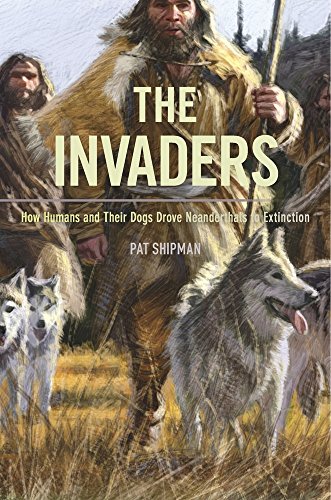
<p>A <i>Times Higher Education</i> Book of the Week<br><br>Approximately 200,000 years ago, as modern humans began to radiate out from their evolutionary birthplace in Africa, Neanderthals were already thriving in Europe—descendants of a much earlier migration of the African genus <i>Homo</i>. But when modern humans eventually made their way to Europe 45,000 years ago, Neanderthals suddenly vanished. Ever since the first Neanderthal bones were identified in 1856, scientists have been vexed by the question, why did modern humans survive while their closest known relatives went extinct?<br><br>“Shipman admits that scientists have yet to find genetic evidence that would prove her theory. Time will tell if she’s right. For now, read this book for an engagingly comprehensive overview of the rapidly evolving understanding of our own origins.”<br>—Toby Lester, <i>Wall Street Journal</i><br><br>“Are humans the ultimate invasive species? So contends anthropologist Pat Shipman—and Neanderthals, she opines, were among our first victims. The relationship between <i>Homo sapiens</i> and <i>Homo neanderthalensis</i> is laid out cleanly, along with genetic and other evidence. Shipman posits provocatively that the deciding factor in the triumph of our ancestors was the domestication of wolves.”<br>—Daniel Cressey, <i>Nature</i></p>
Le informazioni nella sezione "Riassunto" possono far riferimento a edizioni diverse di questo titolo.
Informazioni sull'autore
Pat Shipman is retired Adjunct Professor of Anthropology at Pennsylvania State University.
Le informazioni nella sezione "Su questo libro" possono far riferimento a edizioni diverse di questo titolo.
Altre edizioni note dello stesso titolo

Risultati della ricerca per The Invaders: How Humans and Their Dogs Drove Neanderthals...

Foto dell'editore
The Invaders: How Humans and Their Dogs Drove Neanderthals to Extinction
Editore:
Belknap Press: An Imprint of Harvard University Press, 2017
ISBN 10: 0674975413
ISBN 13: 9780674975415
Antico o usato
Brossura
Da: World of Books (was SecondSale), Montgomery, IL, U.S.A.
Valutazione del venditore 5 su 5 stelle

Condizione: Good. Item in good condition. Textbooks may not include supplemental items i.e. CDs, access codes etc. Codice articolo 00107123710
Compra usato
EUR 5,35
Spedizione gratuita
Spedito in U.S.A.
Spedito in U.S.A.
Quantità: 1 disponibili
Foto dell'editore
The Invaders: How Humans and Their Dogs Drove Neanderthals to Extinction
Editore:
Belknap Press: An Imprint of Har, 2017
ISBN 10: 0674975413
ISBN 13: 9780674975415
Antico o usato
paperback
Da: HPB-Red, Dallas, TX, U.S.A.
Valutazione del venditore 5 su 5 stelle
paperback. Condizione: Good. Connecting readers with great books since 1972! Used textbooks may not include companion materials such as access codes, etc. May have some wear or writing/highlighting. We ship orders daily and Customer Service is our top priority! Codice articolo S_472808963
Compra usato
EUR 5,35
Spedizione EUR 3,25
Spedito in U.S.A.
Spedito in U.S.A.
Quantità: 1 disponibili
Foto dell'editore
Invaders : How Humans and Their Dogs Drove Neanderthals to Extinction
Editore:
Harvard University Press, 2017
ISBN 10: 0674975413
ISBN 13: 9780674975415
Antico o usato
Brossura
Da: Better World Books: West, Reno, NV, U.S.A.
Valutazione del venditore 5 su 5 stelle
Condizione: Very Good. Former library copy. Pages intact with possible writing/highlighting. Binding strong with minor wear. Dust jackets/supplements may not be included. Includes library markings. Stock photo provided. Product includes identifying sticker. Better World Books: Buy Books. Do Good. Codice articolo 57656888-75
Compra usato
EUR 9,83
Spedizione gratuita
Spedito in U.S.A.
Spedito in U.S.A.
Quantità: 1 disponibili
Foto dell'editore
Invaders: How Humans and Their Dogs Drove Neanderthals to Extinction
Editore:
Belknap Press May 2017, 2017
ISBN 10: 0674975413
ISBN 13: 9780674975415
Antico o usato
Paper Back
Da: Isle of Books, Bozeman, MT, U.S.A.
Valutazione del venditore 4 su 5 stelle

Paper Back. Condizione: Good. Codice articolo 631974
Compra usato
EUR 13,41
Spedizione gratuita
Spedito in U.S.A.
Spedito in U.S.A.
Quantità: 1 disponibili
Foto dell'editore
The Invaders: How Humans and Their Dogs Drove Neanderthals to Extinction
Editore:
Belknap Press: An Imprint of Harvard University Press, 2017
ISBN 10: 0674975413
ISBN 13: 9780674975415
Antico o usato
Soft cover
Da: Regent College Bookstore, Vancouver, BC, Canada
Valutazione del venditore 5 su 5 stelle
Soft cover. Condizione: Near Fine. Unread. Crease on the cover due to shelf wear. Great condition. Binding tight and text block clear. Check photo for further reference. Codice articolo ABE-1626289267447
Compra usato
EUR 5,74
Spedizione EUR 8,46
Spedito da Canada a U.S.A.
Spedito da Canada a U.S.A.
Quantità: 1 disponibili
Foto dell'editore
The Invaders How Humans and Their Dogs Drove Neanderthals to Extinction
Editore:
Belknap Press, Cambridge, MA, 2015
ISBN 10: 0674975413
ISBN 13: 9780674975415
Antico o usato
Paperback
Da: Chequamegon Books, Washburn, WI, U.S.A.
Valutazione del venditore 5 su 5 stelle
Paperback. Condizione: Near Fine. 266pp. 5 1/2 x 8 1/4" Light wear to cover edges and corners. Codice articolo 116224
Compra usato
EUR 10,73
Spedizione EUR 5,64
Spedito in U.S.A.
Spedito in U.S.A.
Quantità: 1 disponibili
Immagini fornite dal venditore
The Invaders
Editore:
Harvard University Press, US, 2017
ISBN 10: 0674975413
ISBN 13: 9780674975415
Nuovo
Paperback
Da: Rarewaves.com USA, London, LONDO, Regno Unito
Valutazione del venditore 5 su 5 stelle
Paperback. Condizione: New. A Times Higher Education Book of the WeekApproximately 200,000 years ago, as modern humans began to radiate out from their evolutionary birthplace in Africa, Neanderthals were already thriving in Europe-descendants of a much earlier migration of the African genus Homo. But when modern humans eventually made their way to Europe 45,000 years ago, Neanderthals suddenly vanished. Ever since the first Neanderthal bones were identified in 1856, scientists have been vexed by the question, why did modern humans survive while their closest known relatives went extinct?"Shipman admits that scientists have yet to find genetic evidence that would prove her theory. Time will tell if she's right. For now, read this book for an engagingly comprehensive overview of the rapidly evolving understanding of our own origins."-Toby Lester, Wall Street Journal"Are humans the ultimate invasive species? So contends anthropologist Pat Shipman-and Neanderthals, she opines, were among our first victims. The relationship between Homo sapiens and Homo neanderthalensis is laid out cleanly, along with genetic and other evidence. Shipman posits provocatively that the deciding factor in the triumph of our ancestors was the domestication of wolves."-Daniel Cressey, Nature. Codice articolo LU-9780674975415
Compra nuovo
EUR 22,61
Spedizione gratuita
Spedito da Regno Unito a U.S.A.
Spedito da Regno Unito a U.S.A.
Quantità: 13 disponibili
Foto dell'editore
The Invaders
Da: PBShop.store US, Wood Dale, IL, U.S.A.
Valutazione del venditore 5 su 5 stelle
PAP. Condizione: New. New Book. Shipped from UK. Established seller since 2000. Codice articolo WH-9780674975415
Compra nuovo
EUR 24,90
Spedizione gratuita
Spedito in U.S.A.
Spedito in U.S.A.
Quantità: 15 disponibili
Foto dell'editore
The Invaders
Da: PBShop.store UK, Fairford, GLOS, Regno Unito
Valutazione del venditore 5 su 5 stelle
PAP. Condizione: New. New Book. Shipped from UK. Established seller since 2000. Codice articolo WH-9780674975415
Compra nuovo
EUR 22,18
Spedizione EUR 4,86
Spedito da Regno Unito a U.S.A.
Spedito da Regno Unito a U.S.A.
Quantità: 15 disponibili
Foto dell'editore
The Invaders (Paperback)
Editore:
Harvard University Press, Cambridge, Mass., 2017
ISBN 10: 0674975413
ISBN 13: 9780674975415
Nuovo
Paperback
Da: Grand Eagle Retail, Bensenville, IL, U.S.A.
Valutazione del venditore 5 su 5 stelle
Paperback. Condizione: new. Paperback. A Times Higher Education Book of the WeekApproximately 200,000 years ago, as modern humans began to radiate out from their evolutionary birthplace in Africa, Neanderthals were already thriving in Europe-descendants of a much earlier migration of the African genus Homo. But when modern humans eventually made their way to Europe 45,000 years ago, Neanderthals suddenly vanished. Ever since the first Neanderthal bones were identified in 1856, scientists have been vexed by the question, why did modern humans survive while their closest known relatives went extinct?"Shipman admits that scientists have yet to find genetic evidence that would prove her theory. Time will tell if she's right. For now, read this book for an engagingly comprehensive overview of the rapidly evolving understanding of our own origins."-Toby Lester, Wall Street Journal"Are humans the ultimate invasive species? So contends anthropologist Pat Shipman-and Neanderthals, she opines, were among our first victims. The relationship between Homo sapiens and Homo neanderthalensis is laid out cleanly, along with genetic and other evidence. Shipman posits provocatively that the deciding factor in the triumph of our ancestors was the domestication of wolves."-Daniel Cressey, Nature Shipping may be from multiple locations in the US or from the UK, depending on stock availability. Codice articolo 9780674975415
Compra nuovo
EUR 28,99
Spedizione gratuita
Spedito in U.S.A.
Spedito in U.S.A.
Quantità: 1 disponibili