
Articoli correlati a Isocrates: Evagoras. Helen. Busiris. Plataicus. Concerning...
Isocrates: Evagoras. Helen. Busiris. Plataicus. Concerning the Team of Horses. Trapeziticus. Against Callimachus. Aegineticus. Against Lochites. Against Euthynus. Letters: Volume III - Rilegato
Libro 3 di 3: Loeb Classical Library: Isocrates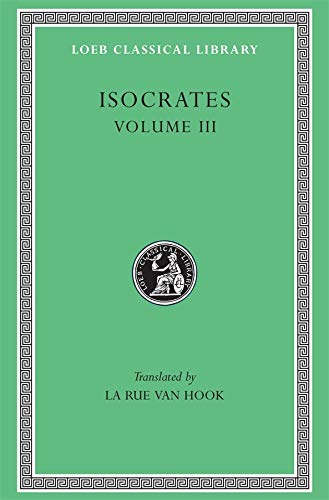
Sinossi
The importance of Isocrates for the study of Greek civilisation of the fourth century BCE is indisputable. From 403 to 393 he wrote speeches for Athenian law courts, and then became a teacher of composition for would-be orators. After setting up a school of rhetoric in Chios he returned to Athens and established there a free school of 'philosophia' involving a practical education of the whole mind, character, judgment, and mastery of language. This school had famous pupils from all over the Greek world, such as the historians Ephorus and Theopompus and orators Isaeus, Lycurgus, and Hypereides. Isocrates also wrote in gifted style essays on political questions, his main idea being a united Greece to conquer the Persian empire. Thus in his fine Panegyricus (written for the 100th Olympiad gathering in 380) he urged that the leadership should be granted to Athens, possibly in conjunction with Sparta. In the end he looked to Philip of Macedon, but died just as Philip's supremacy in Greece began.
Twenty-one discourses by Isocrates survive; these include political essays, treatises on education and on ethics, and speeches for legal cases. Nine letters are also extant; they are concerned more with public than with private matters. The Loeb Classical Library edition of Isocrates is in three volumes. Volume I contains six discourses: To Demonicus, To Nicocles, Nicocles or The Cyprians, Panegyricus, To Philip, and Archidamus. Five are in Volume II: Areopagiticus, On the Peace, Panathenaicus, Against the Sophists, Antidosis. Volume III contains Evagoras, Helen, Busiris, Plataicus, Concerning the Team of Horses, Trapeziticus, Against Callimachus, Aegineticus, Against Lochites, and Against Euthynus, as well as the nine extant letters and a comprehensive index.
Le informazioni nella sezione "Riassunto" possono far riferimento a edizioni diverse di questo titolo.
Product Description
Book by Isocrates
Le informazioni nella sezione "Su questo libro" possono far riferimento a edizioni diverse di questo titolo.
Risultati della ricerca per Isocrates: Evagoras. Helen. Busiris. Plataicus. Concerning...

Foto dell'editore
Isocrates: Evagoras. Helen. Busiris. Plataicus. Concerning the Team of Horses. Trapeziticus. Against Callimachus. Aegineticus. Against Lochites. Against Euthynus. (Loeb Classical Library No. 373)
Editore:
Harvard University Press, 1945
ISBN 10: 0674994116
ISBN 13: 9780674994119
Antico o usato
Rilegato
Da: HPB-Red, Dallas, TX, U.S.A.
Valutazione del venditore 5 su 5 stelle

Hardcover. Condizione: Good. Connecting readers with great books since 1972! Used textbooks may not include companion materials such as access codes, etc. May have some wear or writing/highlighting. We ship orders daily and Customer Service is our top priority! Codice articolo S_473490160
Compra usato
EUR 22,06
Spedizione EUR 3,28
Spedito in U.S.A.
Spedito in U.S.A.
Quantità: 1 disponibili
Foto dell'editore
Isocrates: Evagoras. Helen. Busiris. Plataicus. Concerning the Team of Horses. Trapeziticus. Against Callimachus. Aegineticus. Against Lochites. Against Euthynus. (Loeb Classical Library No. 373)
Editore:
Harvard University Press, 1945
ISBN 10: 0674994116
ISBN 13: 9780674994119
Antico o usato
Rilegato
Da: Picky Books, Akron, OH, U.S.A.
Valutazione del venditore 5 su 5 stelle
Hardcover. Condizione: Very Good. Condizione sovraccoperta: Very Good. Owner wrote their name and date/location of purchase in ink on the first white page. The jacket has some rubbing and there's a little shelfwear but it's nice and square with a clean interior.Volume III of the Loeb Classic Library Isocrates collection and number 373 of the LCL overall. This printing is from 2006. Codice articolo 250706001
Compra usato
EUR 19,79
Spedizione EUR 6,99
Spedito in U.S.A.
Spedito in U.S.A.
Quantità: 1 disponibili
Foto dell'editore
ISOCRATES; Volume III: Evagoras. Helen. Busiris. Plataicus. Concerning the Team of Horses. Trapeziticus. Against Callimachus. Aegineticus. Against Lochites. Against Euthynus. Letters
Editore:
Loeb Classical Library, 1961
ISBN 10: 0674994116
ISBN 13: 9780674994119
Antico o usato
Rilegato
Da: Ancient World Books, Toronto, ON, Canada
Valutazione del venditore 5 su 5 stelle
Hardcover. Condizione: Very Good+. Condizione sovraccoperta: No Dust Jacket. Very Minor shelfwear to book.; Loeb Classical Library No. 373; 3; 544 pages. Codice articolo 45620
Compra usato
EUR 22,49
Spedizione EUR 6,55
Spedito da Canada a U.S.A.
Spedito da Canada a U.S.A.
Quantità: 1 disponibili
Foto dell'editore
Isocrates: Evagoras. Helen. Busiris. Plataicus. Concerning the Team of Horses. Trapeziticus. Against Callimachus. Aegineticus. Against Lochites. Against Euthynus. (Loeb Classical Library No. 373)
Editore:
Loeb Classical Library January 1945, 1945
ISBN 10: 0674994116
ISBN 13: 9780674994119
Nuovo
Rilegato
Da: Eighth Day Books, LLC, Wichita, KS, U.S.A.
Valutazione del venditore 4 su 5 stelle

Hardcover. Condizione: New. Codice articolo 103132
Compra nuovo
EUR 26,99
Spedizione EUR 5,20
Spedito in U.S.A.
Spedito in U.S.A.
Quantità: 1 disponibili
Immagini fornite dal venditore
Isocrates
Da: GreatBookPrices, Columbia, MD, U.S.A.
Valutazione del venditore 5 su 5 stelle
Condizione: New. Codice articolo 623715-n
Compra nuovo
EUR 29,96
Spedizione EUR 2,31
Spedito in U.S.A.
Spedito in U.S.A.
Quantità: 10 disponibili
Immagini fornite dal venditore
Isocrates, Volume III
Editore:
Harvard University Press, US, 1945
ISBN 10: 0674994116
ISBN 13: 9780674994119
Nuovo
Rilegato
Da: Rarewaves.com USA, London, LONDO, Regno Unito
Valutazione del venditore 5 su 5 stelle
Hardback. Condizione: New. The sophisticated schoolmaster.The importance of Isocrates for the study of Greek civilization of the fourth century BC is indisputable. From 403 to 393 he wrote speeches for Athenian law courts, and then became a teacher of composition for would-be orators. After setting up a school of rhetoric in Chios he returned to Athens and established there a free school of "philosophia" involving a practical education of the whole mind, character, judgment, and mastery of language. This school had famous pupils from all over the Greek world, such as the historians Ephorus and Theopompus and orators Isaeus, Lycurgus, and Hypereides. Isocrates also wrote in gifted style essays on political questions, his main idea being a united Greece to conquer the Persian empire. Thus in his fine Panegyricus (written for the 100th Olympiad gathering in 380) he urged that the leadership should be granted to Athens, possibly in conjunction with Sparta. In the end he looked to Philip of Macedon, but died just as Philip's supremacy in Greece began. Twenty-one discourses by Isocrates survive; these include political essays, treatises on education and on ethics, and speeches for legal cases. Nine letters are also extant; they are concerned more with public than with private matters. The Loeb Classical Library edition of Isocrates is in three volumes. Volume I contains six discourses: To Demonicus, To Nicocles, Nicocles or The Cyprians, Panegyricus, To Philip, and Archidamus. Five are in Volume II: Areopagiticus, On the Peace, Panathenaicus, Against the Sophists, Antidosis. Volume III contains Evagoras, Helen, Busiris, Plataicus, Concerning the Team of Horses, Trapeziticus, Against Callimachus, Aegineticus, Against Lochites, and Against Euthynus, as well as the nine extant letters and a comprehensive index. Codice articolo LU-9780674994119
Compra nuovo
EUR 32,55
Spedizione gratuita
Spedito da Regno Unito a U.S.A.
Spedito da Regno Unito a U.S.A.
Quantità: 5 disponibili
Immagini fornite dal venditore
Isocrates
Editore:
Harvard University Press, 1945
ISBN 10: 0674994116
ISBN 13: 9780674994119
Antico o usato
Rilegato
Da: GreatBookPrices, Columbia, MD, U.S.A.
Valutazione del venditore 5 su 5 stelle
Condizione: As New. Unread book in perfect condition. Codice articolo 623715
Compra usato
EUR 34,19
Spedizione EUR 2,31
Spedito in U.S.A.
Spedito in U.S.A.
Quantità: 10 disponibili
Foto dell'editore
Isocrates Volume III: Evagoras. Helen. Busiris. Plataicus. Concerning the Team of Horses. Trapeziticus. Against Callimachus. Aegineticus. Against Lochites. Against Euthynus. Loeb Classical Library No. 373
Editore:
Harvard University Press, 1989
ISBN 10: 0674994116
ISBN 13: 9780674994119
Antico o usato
Rilegato
Da: The Bookseller, Edmonton, AB, Canada
Valutazione del venditore 5 su 5 stelle
Hardcover. Condizione: Near Fine. Condizione sovraccoperta: Near Fine. Near fine unmarked book in dust jacket. Codice articolo 066929
Compra usato
EUR 23,03
Spedizione EUR 16,59
Spedito da Canada a U.S.A.
Spedito da Canada a U.S.A.
Quantità: 1 disponibili
Immagini fornite dal venditore
Isocrates, Volume III (Hardcover)
Editore:
Harvard University Press, Cambridge, Mass, 1945
ISBN 10: 0674994116
ISBN 13: 9780674994119
Nuovo
Rilegato
Da: Grand Eagle Retail, Bensenville, IL, U.S.A.
Valutazione del venditore 5 su 5 stelle
Hardcover. Condizione: new. Hardcover. The importance of Isocrates for the study of Greek civilisation of the fourth century BCE is indisputable. From 403 to 393 he wrote speeches for Athenian law courts, and then became a teacher of composition for would-be orators. After setting up a school of rhetoric in Chios he returned to Athens and established there a free school of 'philosophia' involving a practical education of the whole mind, character, judgment, and mastery of language. This school had famous pupils from all over the Greek world, such as the historians Ephorus and Theopompus and orators Isaeus, Lycurgus, and Hypereides. Isocrates also wrote in gifted style essays on political questions, his main idea being a united Greece to conquer the Persian empire. Thus in his fine Panegyricus (written for the 100th Olympiad gathering in 380) he urged that the leadership should be granted to Athens, possibly in conjunction with Sparta. In the end he looked to Philip of Macedon, but died just as Philip's supremacy in Greece began.Twenty-one discourses by Isocrates survive; these include political essays, treatises on education and on ethics, and speeches for legal cases. Nine letters are also extant; they are concerned more with public than with private matters. The Loeb Classical Library edition of Isocrates is in three volumes. Volume I contains six discourses: To Demonicus, To Nicocles, Nicocles or The Cyprians, Panegyricus, To Philip, and Archidamus. Five are in Volume II: Areopagiticus, On the Peace, Panathenaicus, Against the Sophists, Antidosis. Volume III contains Evagoras, Helen, Busiris, Plataicus, Concerning the Team of Horses, Trapeziticus, Against Callimachus, Aegineticus, Against Lochites, and Against Euthynus, as well as the nine extant letters and a comprehensive index. The importance of Isocrates (436 338 BCE) for the study of Greek civilization of the fourth century BCE is indisputable. Twenty-one discourses by Isocrates survive; these include political essays, treatises on education and on ethics, and speeches for legal cases. Nine letters, more on public than private matters, are also extant. Shipping may be from multiple locations in the US or from the UK, depending on stock availability. Codice articolo 9780674994119
Compra nuovo
EUR 40,58
Spedizione gratuita
Spedito in U.S.A.
Spedito in U.S.A.
Quantità: 1 disponibili
Foto dell'editore
Isocrates: Evagoras. Helen. Busiris. Plataicus. Concerning the Team of Horses. Trapeziticus. Against Callimachus. Aegineticus. Against Lochites. Against Euthynus. (Loeb Classical Library No. 373)
Da: Kennys Bookshop and Art Galleries Ltd., Galway, GY, Irlanda
Valutazione del venditore 5 su 5 stelle
Condizione: New. 1945. Hardcover. . . . . . Codice articolo V9780674994119
Compra nuovo
EUR 33,10
Spedizione EUR 9,50
Spedito da Irlanda a U.S.A.
Spedito da Irlanda a U.S.A.
Quantità: 1 disponibili