Sinossi
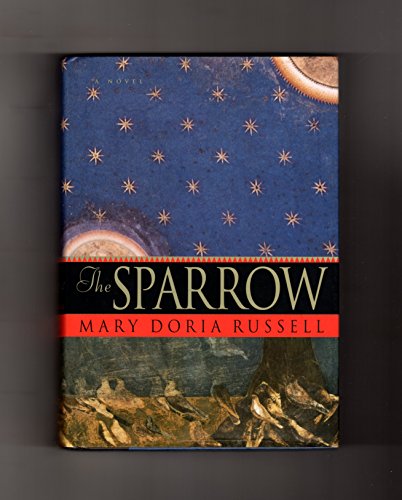
The Sparrow is a novel about a remarkable man, a living saint, a life-long celibate and Jesuit priest, who undergoes an experience so harrowing and profound that it makes him question the existence of God. This experience--the first contact between human beings and intelligent extraterrestrial life--begins with a small mistake and ends in a horrible catastrophe.
Le informazioni nella sezione "Riassunto" possono far riferimento a edizioni diverse di questo titolo.
Informazioni sull?autore
Trained as a paleoanthropologist, and the author of scientific articles on subjects ranging from bone biology to cannibalism, Mary Doria Russell received her B.A. in cultural anthropology from the University of Illinois, her M.A. in social anthropology from Northeastern University and her doctorate in biological anthropology from the University of Michigan. After quitting academia and writing computer manuals, she began work on The Sparrow. She lives with her husband and son in Cleveland, Ohio.
Dalla quarta di copertina
is a novel about a remarkable man, a living saint, a life-long celibate and Jesuit priest, who undergoes an experience so harrowing and profound that it makes him question the existence of God. This experience--the first contact between human beings and intelligent extraterrestrial life--begins with a small mistake and ends in a horrible catastrophe.
Dal risvolto di copertina interno
is a novel about a remarkable man, a living saint, a life-long celibate and Jesuit priest, who undergoes an experience so harrowing and profound that it makes him question the existence of God. This experience--the first contact between human beings and intelligent extraterrestrial life--begins with a small mistake and ends in a horrible catastrophe.
Estratto. © Ristampato con autorizzazione. Tutti i diritti riservati.
ROME: DECEMBER 2059
On December 7, 2059, Emilio Sandoz was released from the isolation ward of Salvator Mundi Hospital in the middle of the night and transported in a bread van to the Jesuit Residence at Number 5 Borgo Santo Spìrito, a few minutes' walk across St. Peter's Square from the Vatican. The next day, ignoring shouted questions and howls of journalistic outrage as he read, a Jesuit spokesman issued a short statement to the frustrated and angry media mob that had gathered outside Number 5's massive front door.
"To the best of our knowledge, Father Emilio Sandoz is the sole survivor of the Jesuit mission to Rakhat. Once again, we extend our thanks to the U.N., to the Contact Consortium and to the Asteroid Mining Division of Ohbayashi Corporation for making the return of Father Sandoz possible. We have no additional information regarding the fate of the Contact Consortium's crew members; they are in our prayers. Father Sandoz is too ill to question at this time and his recovery is expected to take months. Until then, there can be no further comment on the Jesuit mission or on the Contact Consortium's allegations regarding Father Sandoz's conduct on Rakhat."
This was simply to buy time.
It was true, of course, that Sandoz was ill. The man's whole body was bruised by the blooms of spontaneous hemorrhages where tiny blood vessel walls had breached and spilled their contents under his skin. His gums had stopped bleeding, but it would be a long while before he could eat normally. Eventually, something would have to be done about his hands.
Now, however, the combined effects of scurvy, anemia and exhaustion kept him asleep twenty hours out of the day. When awake, he lay motionless, coiled like a fetus and almost as helpless.
The door to his small room was nearly always left open in those early weeks. One afternoon, thinking to prevent Father Sandoz from being disturbed while the hallway floor was polished, Brother Edward Behr closed it, despite warnings about this from the Salvator Mundi staff. Sandoz happened to wake up and found himself shut in. Brother Edward did not repeat the mistake.
Vincenzo Giuliani, the Father General of the Society of Jesus, went each morning to look in on the man. He had no idea if Sandoz was aware of being observed; it was a familiar feeling. When very young, when the Father General was just plain Vince Giuliani, he had been fascinated by Emilio Sandoz, who was a year ahead of Giuliani during the decade-long process of priestly formation. A strange boy, Sandoz. A puzzling man. Vincenzo Giuliani had made a statesman's career of understanding other men, but he had never understood this one.
Gazing at Emilio, sick now and almost mute, Giuliani knew that Sandoz was unlikely to give up his secrets any time soon. This did not distress him. Vincenzo Giuliani was a patient man. One had to be patient to thrive in Rome, where time is measured not in centuries but in millennia, where patience and the long view have always distinguished political life. The city gave its name to the power of patience--Romanità. Romanità excludes emotion, hurry, doubt. Romanità waits, sees the moment and moves ruthlessly when the time is right. Romanità rests on an absolute conviction of ultimate success and arises from a single principle, Cunctando regitur mundis: Waiting, one conquers all.
So, even after sixty years, Vincenzo Giuliani felt no sense of impatience with his inability to understand Emilio Sandoz, only a sense of how satisfying it would be when the wait paid off.
The Father General's private secretary contacted Father John Candotti on the Feast of the Holy Innocents, three weeks after Emilio's arrival at Number 5. "Sandoz is well enough to see you now," Johannes Voelker informed Candotti. "Be here by two."
Be here by two! John thought irritably, marching along toward Vatican City from the retreat house where he'd just been assigned a stuffy little room with a view of Roman walls--the stone only inches from his pointless window. Candotti had dealt with Voelker a couple of times since arriving and had taken a dislike to the Austrian from the start. In fact, John Candotti disliked everything about his present situation.
For one thing, he didn't understand why he'd been brought into this business. Neither a lawyer nor an academic, John Candotti was content to have come out on the less prestigious end of the Jesuit dictum, Publish or parish, and he was hip-deep in preparations for the grammar school Christmas program when his superior contacted him and told him to fly to Rome at the end of the week. "The Father General wishes you to assist Emilio Sandoz." That was the extent of his briefing. John had heard of Sandoz, of course. Everyone had heard of Sandoz. But John had no idea how he could be of any use to the man. When he asked for an explanation, he couldn't seem to pry a straight answer out of anyone. He had no practice at this kind of thing; subtlety and indirection were not indoor sports in Chicago.
And then there was Rome itself. At the impromptu farewell party, everyone was so excited for him. "Rome, Johnny!" All that history, those beautiful churches, the art. He'd been excited too, dumb shit. What did he know?
John Candotti was born to flat land, straight lines, square city blocks; nothing in Chicago had prepared him for the reality of Rome. The worst was when he could actually see the building he wanted to get to but found the street he was on curving away from it, leading him to yet another lovely piazza with yet another beautiful fountain, dumping him into another alley going nowhere. Another hour, trapped and frustrated by the hills, the curves, the rat's nest of streets smelling of cat piss and tomato sauce. He hated being lost, and he was always lost. He hated being late, and he was late all the time. The first five minutes of every conversation was John apologizing for being late and his Roman acquaintances assuring him it was no problem.
He hated it all the same, so he walked faster and faster, trying to get to the Jesuit Residence on time for a change, and collected an escort of small children, noisy with derision and obnoxious with delight at this bony, big-nosed, half-bald man with his flapping soutane and pumping arms.
"I'm sorry to keep you waiting." John Candotti had repeated the apology to each person along the way to Sandoz's room and finally to Sandoz himself as Brother Edward Behr ushered him in and left him alone with the man. "The crowd outside is still huge. Do they ever go away? I'm John Candotti. The Father General asked me to help you at the hearings. Happy to meet you." He held out his hand without thinking, withdrawing it awkwardly when he remembered.
Sandoz did not rise from his chair by the window and at first, he either wouldn't or couldn't look in Candotti's direction. John had seen archive images of him, naturally, but Sandoz was a lot smaller than he expected, much thinner; older but not as old as he should have been. What was the calculation? Seventeen years out, almost four years on Rakhat, seventeen years back, but then there were the relativity effects of traveling near light speed. Born a year before the Father General, who was in his late seventies, Sandoz was estimated by the physicists to be about forty-five, give or take a little. Hard years, by the look of him, but not very many of them.
The silence went on a long time. Trying not to stare at the man's hands, John debated whether he should just go. It's way too soon, he thought, Voelker must be crazy. Then, finally, he heard Sandoz ask, "English?"
"American, Father. Brother Edward is English but I'm American."
"No," Sandoz said after a while. "La lengua. English."
Startled, John realized that he'd misunderstood. "Yes. I speak a little Spanish, if you'd prefer that."
"It was Italian, creo. Antes--before, I mean. In the hospital. Sipaj--si yo..." He stopped, close to tears, but got a hold of himself and spoke deliberately. "It would help ... if I could hear ... just one language for a while. English is okay."
"Sure. No problem. We'll stick to English," John said, shaken. Nobody had told him Sandoz was this far gone. "I'll make this a short visit, Father. I just wanted to introduce myself and see how you're doing. There's no rush about preparing for the hearings. I'm sure they can be postponed until you're well enough to..."
"To do what?" Sandoz asked, looking directly at Candotti for the first time. A deeply lined face, Indian ancestry plain in the high-bridged nose, the wide cheekbones, the stoicism. John Candotti could not imagine this man laughing.
To defend yourself, John was going to say, but it seemed mean. "To explain what happened."
The silence inside the Residence was noticeable, especially by the window, where the endless carnival noise of the city could be heard. A woman was scolding a child in Greek. Tourists and reporters milled around, shouting over the constant roar of the usual Vatican crowds and the taxi traffic. Repairs went on incessantly to keep the Eternal City from falling to pieces, the construction workers yelling, machinery grinding.
"I have nothing to say." Sandoz turned away again. "I shall withdraw from the Society."
"Father Sandoz--Father, you can't expect the Society to let you walk away without understanding what happened out there. You may not want to face a hearing but whatever happens in here is nothing compared to what they'll put you through outside, the moment you walk out the door," John told him. "If we understood, we could help you. Make it easier for you, maybe?" There was no reply, only a slight hardening of the face profiled at the window. "Okay, look. I'll come back in a few days. When you're feeling better, right? Is there anything I can bring you? Someone I could contact for you?"
"No." There was no force behind the voice. "Thank you."
John suppressed a sigh and turned toward the door. His eyes swept past a sketch, lying on top of the small plain bureau. On something like paper, drawn in something like ink. A group of VaRakhati. Faces of great dignity and considerable charm. Extraordinary eyes, frilled with lashes to guard against the brilliant sunlight. Funny how you could tell that these were unusually handsome individuals, even when unfamiliar with their standards of beauty. John Candotti lifted the drawing to look at it more closely. Sandoz stood and took two swift steps toward him.
Sandoz was probably half his size and sicker than hell but John Candotti, veteran of Chicago streets, was startled into retreating. Feeling the wall against his back, he covered his embarrassment with a smile and put the drawing back on the bureau. "They're a handsome race, aren't they," he offered, trying to defuse whatever emotion was working on the man in front of him. "The ... folks in the picture--friends of yours, I guess?"
Sandoz backed away and looked at John for a few moments, as though calculating the other man's response. The daylight behind his hair lit it up, and the contrast hid his expression. If the room had been brighter or if John Candotti had known him better, he might have recognized a freakish solemnity that preceded any statement Sandoz expected to induce hilarity, or outrage. Sandoz hesitated and then found the precise word he wanted.
"Colleagues," he said at last.
Le informazioni nella sezione "Su questo libro" possono far riferimento a edizioni diverse di questo titolo.
Altre edizioni note dello stesso titolo

Risultati della ricerca per Sparrow

Foto dell'editore
The Sparrow
Editore:
Random House Publishing Group, 1996
ISBN 10: 0679451501
ISBN 13: 9780679451501
Antico o usato
Rilegato
Da: Better World Books: West, Reno, NV, U.S.A.
Valutazione del venditore 5 su 5 stelle

Condizione: Good. Used book that is in clean, average condition without any missing pages. Codice articolo 4350555-6
Compra usato
EUR 21,64
Spedizione gratuita
Spedito in U.S.A.
Spedito in U.S.A.
Quantità: 1 disponibili
Foto dell'editore
The Sparrow
Editore:
Random House Publishing Group, 1996
ISBN 10: 0679451501
ISBN 13: 9780679451501
Antico o usato
Rilegato
Da: Better World Books, Mishawaka, IN, U.S.A.
Valutazione del venditore 5 su 5 stelle
Condizione: Good. Former library book; may include library markings. Used book that is in clean, average condition without any missing pages. Codice articolo 4458431-6
Compra usato
EUR 21,64
Spedizione gratuita
Spedito in U.S.A.
Spedito in U.S.A.
Quantità: 1 disponibili
Foto dell'editore
The Sparrow
Editore:
Random House Publishing Group, 1996
ISBN 10: 0679451501
ISBN 13: 9780679451501
Antico o usato
Rilegato
Da: Better World Books: West, Reno, NV, U.S.A.
Valutazione del venditore 5 su 5 stelle
Condizione: Good. Former library book; may include library markings. Used book that is in clean, average condition without any missing pages. Codice articolo 4458431-6
Compra usato
EUR 21,64
Spedizione gratuita
Spedito in U.S.A.
Spedito in U.S.A.
Quantità: 1 disponibili
Immagini fornite dal venditore
The Sparrow
Da: Ziesings, Shingletown, CA, U.S.A.
Valutazione del venditore 4 su 5 stelle

New York: Villard:, 1996. Trade paperback, Uncorrected proof, Near Fine, 380 pp. Trade paperback, Uncorrected proof, Near Fine, Codice articolo 2122
Compra usato
EUR 21,94
EUR 3,19 shipping
Spedito in U.S.A.
Spedito in U.S.A.
Quantità: 1 disponibili
Foto dell'editore
The Sparrow: A Novel
Editore:
Villard Books, New York, 1996
ISBN 10: 0679451501
ISBN 13: 9780679451501
Antico o usato
Rilegato
Prima edizione
Da: Smith Family Bookstore Downtown, Eugene, OR, U.S.A.
Valutazione del venditore 4 su 5 stelle
Hardcover. Condizione: Good. Condizione sovraccoperta: Very Good. 1st Edition. 1st Villard edition, 1st printing. Text clean and unmarked. Binding tight. Boards have some light wear and very light fading along edges. Head and foot of spine have some light wear. Surface of boards has some light rubbing. Edges of pages have light wear. Mylar-covered dust jacket has light wear. Codice articolo 5052194
Compra usato
EUR 35,10
EUR 5,07 shipping
Spedito in U.S.A.
Spedito in U.S.A.
Quantità: 1 disponibili
Foto dell'editore
The Sparrow
Editore:
Villard Books, Westminster, Maryland, U.S.A., 1996
ISBN 10: 0679451501
ISBN 13: 9780679451501
Antico o usato
Rilegato
Prima edizione
Da: Nothing Like a Good Book, Miller Place, NY, U.S.A.
Valutazione del venditore 5 su 5 stelle
Hardcover. Condizione: Fine. Condizione sovraccoperta: Fine. First Edition, First Issue. With all correct points. Review copy with publisher's material laid-in. LTiny nick to tail of dj spine, a hiunt of wear at head of dj spine. The author's dazzling debut novel tells the story of linguist Emilio Sandoz, a Jesuit priest, the only surviving member of a team sent to another galaxy to explore the source of extarordinary singing detected by a radio telescope and his first contact with an intelligent extraterrestial life.ight bumping to spine ends. Book. Codice articolo 1002997
Compra usato
EUR 43,88
EUR 4,26 shipping
Spedito in U.S.A.
Spedito in U.S.A.
Quantità: 1 disponibili
Immagini fornite dal venditore
The Sparrow: A Novel
Editore:
Villard, 1996
ISBN 10: 0679451501
ISBN 13: 9780679451501
Antico o usato
Rilegato
Prima edizione
Da: Prairie Home Books, Crosby, ND, U.S.A.
Valutazione del venditore 3 su 5 stelle

Hardcover. Condizione: Fine. Condizione sovraccoperta: Fine. 1st Edition. First Edition,Fine / Fine. Dust jacket has NO chips, tears, or flws. Price is on the flap. A very collectible copy of a fine book, in protective covers. Codice articolo 001736
Compra usato
EUR 43,88
EUR 5,11 shipping
Spedito in U.S.A.
Spedito in U.S.A.
Quantità: 1 disponibili
Immagini fornite dal venditore
The Sparrow
Da: Nooks Of Books , Elkins Park, PA, U.S.A.
Valutazione del venditore 1 su 5 stelle

Hardcover. First Edition, First Printing. Near Fine in a Near Fine dustjacket. Blue and black paper-covered boards. Both the spine and the front panel are stamped in gilt. Gold endpapers. 408pp. This copy is first issue and meets all points: page 16, line 12, reads 'karstic' instead of 'karst.' and page 95, second paragraph, has 'thirty two feet per second' instead of the corrected 'thirty two feet per second per second.' There is mild bumping to the heel of the spine and the book has a small remainder dot. Otherwise: clean, tight, square, and bright. All tips are sharp. The text is immaculate; no reading wear and no previous ownership markings. The dustjacket, glossy in a mylar sleeve, is lightly rubbed and has a few faint scratchings; no chips, soiling, or tears. The original price is intact. ".'The Sparrow', an astonishing literary debut, takes you on a journey to a distant planet and to the center of the human soul. It is the story of a charismatic Jesuit priest and linguist, Emilio Sandoz, who leads a twenty-first-century scientific mission to a newly discovered extraterrestrial culture. Sandoz and his companions are prepared to endure isolation, hardship and death, but nothing can prepare them for the civilization they encounter, or the tragic misunderstanding that brings the mission to a catastrophic end." Purchase with confidence: all books, gradings, and descriptions are rendered the care of a genuine bibliophile. Satisfaction guaranteed or all costs you've incurred will be promptly refunded. Thanks for your interest in Nooks Of Books. Codice articolo 403-3357
Compra usato
EUR 43,88
EUR 5,96 shipping
Spedito in U.S.A.
Spedito in U.S.A.
Quantità: 1 disponibili
Foto dell'editore
The Sparrow: A Novel
Da: Toscana Books, AUSTIN, TX, U.S.A.
Valutazione del venditore 5 su 5 stelle
Hardcover. Condizione: new. Excellent Condition.Excels in customer satisfaction, prompt replies, and quality checks. Codice articolo Scanned0679451501
Compra nuovo
EUR 47,28
EUR 3,66 shipping
Spedito in U.S.A.
Spedito in U.S.A.
Quantità: 1 disponibili
Immagini fornite dal venditore
The Sparrow
Editore:
Villard Books, New York, 1996
ISBN 10: 0679451501
ISBN 13: 9780679451501
Antico o usato
Rilegato
Prima edizione
Da: Bren-Books, Rockville, MD, U.S.A.
Valutazione del venditore 5 su 5 stelle
Hardcover. Condizione: Fine. Condizione sovraccoperta: Fine. 1st Edition. 1st Edition/1st Printing with the Random House number line. In Fine/Fine condition, almost new with spots of foxing on uneven cut vertical paper edges. A beautiful copy. Warner Bros had the rights in 2006 for Brad Pitt to film but the author then revoked all film rights. She then wrote her screenplay to be faithful to the work but got no takers. AMC tried again in 2014, then in 2021 FX and the screen writer Scott Frank announced plans with Director Johan Renck (Chernobyl, Breaking Bad). The book has won the Arthur C. Clarke, James Tiptree Jr., Kurd-Laßwitz-Pries, and British Science Fiction Awards. *Brenbooks specializes in hard-to-find books into film.*. Book. Codice articolo 010546
Compra usato
EUR 57,04
EUR 5,24 shipping
Spedito in U.S.A.
Spedito in U.S.A.
Quantità: 1 disponibili