
Articoli correlati a Prehistoric Textiles: The Development Of Cloth In The...
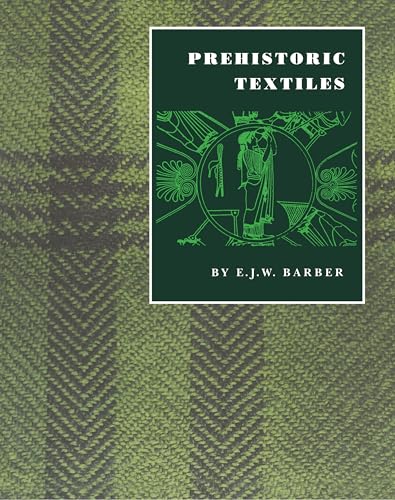
Prehistoric Textiles: The Development Of Cloth In The Neolithic And Bronze Ages With Special Reference To The Aegean - Brossura
Sinossi
This pioneering work revises our notions of the origins and early development of textiles in Europe and the Near East. Using innovative linguistic techniques, along with methods from palaeobiology and other fields, it shows that spinning and pattern weaving began far earlier than has been supposed.
Prehistoric Textiles made an unsurpassed leap in the social and cultural understanding of textiles in humankind's early history. Cloth making was an industry that consumed more time and effort, and was more culturally significant to prehistoric cultures, than anyone assumed before the book's publication. The textile industry is in fact older than pottery--and perhaps even older than agriculture and stockbreeding. It probably consumed far more hours of labor per year, in temperate climates, than did pottery and food production put together. And this work was done primarily by women. Up until the Industrial Revolution, and into this century in many peasant societies, women spent every available moment spinning, weaving, and sewing.
The author, Elizabeth Wayland Barber, demonstrates command of an almost unbelievably disparate array of disciplines--from historical linguistics to archaeology and paleobiology, from art history to the practical art of weaving. Her passionate interest in the subject matter leaps out on every page. Barber, a professor of linguistics and archaeology, developed expert sewing and weaving skills as a small girl under her mother's tutelage. One could say she had been born and raised to write this book.
Because modern textiles are almost entirely made by machines, we have difficulty appreciating how time-consuming and important the premodern textile industry was. This book opens our eyes to this crucial area of prehistoric human culture.
Le informazioni nella sezione "Riassunto" possono far riferimento a edizioni diverse di questo titolo.
Informazioni sull'autore
E.J.W. Barber is Professor of Linguistics and Archaeology at Occidental College and is a handweaver. Prehistoric Textiles won the Millia Davenport Publication Award of the Costume Society of America.
Le informazioni nella sezione "Su questo libro" possono far riferimento a edizioni diverse di questo titolo.
Risultati della ricerca per Prehistoric Textiles: The Development Of Cloth In The...

Foto dell'editore
Prehistoric Textiles: The Development of Cloth in the Neolithic and Bronze Ages with Special Reference to the Aegean
Editore:
Princeton University Press, 1993
ISBN 10: 069100224X
ISBN 13: 9780691002248
Antico o usato
Paperback
Da: World of Books (was SecondSale), Montgomery, IL, U.S.A.
Valutazione del venditore 5 su 5 stelle

Paperback. Condizione: Good. Provides information on the origins and early development of textiles in Europe and the Near East. Using linguistic techniques, along with methods from palaeobiology and other fields, this book shows that spinning and pattern weaving began far earlier than has been supposed. It tells how it was more culturally significant to prehistoric cultures. Codice articolo CIN069100224XG
Compra usato
EUR 38,25
Spedizione gratuita
Spedito in U.S.A.
Spedito in U.S.A.
Quantità: 1 disponibili
Foto dell'editore
Prehistoric Textiles: The Development of Cloth in the Neolithic and Bronze Ages with Special Reference to the Aegean
Editore:
Princeton University Press, 1993
ISBN 10: 069100224X
ISBN 13: 9780691002248
Antico o usato
Paperback
Da: World of Books Inc, Montgomery, IL, U.S.A.
Valutazione del venditore 4 su 5 stelle

Paperback. Condizione: Good. Provides information on the origins and early development of textiles in Europe and the Near East. Using linguistic techniques, along with methods from palaeobiology and other fields, this book shows that spinning and pattern weaving began far earlier than has been supposed. It tells how it was more culturally significant to prehistoric cultures. Codice articolo CIN069100224XG
Compra usato
EUR 40,16
Spedizione gratuita
Spedito in U.S.A.
Spedito in U.S.A.
Quantità: 1 disponibili
Immagini fornite dal venditore
Prehistoric Textiles: The Development of Cloth in the Neolithic and Bronze Ages with Special Reference to the Aegean
Editore:
Princeton University Press, 1992
ISBN 10: 069100224X
ISBN 13: 9780691002248
Antico o usato
Brossura
Da: Greenworld Books, Arlington, TX, U.S.A.
Valutazione del venditore 5 su 5 stelle
Condizione: very_good. Fast Free Shipping â" Very Good condition book with a firm cover and clean pages. Shows normal use and some light wear or limited notes markings. A solid, nice copy to enjoy. Codice articolo GWV.069100224X.VG
Compra usato
EUR 51,79
Spedizione gratuita
Spedito in U.S.A.
Spedito in U.S.A.
Quantità: 1 disponibili
Foto dell'editore
Prehistoric Textiles: The Development of Cloth in the Neolithic and Bronze Ages with Special Reference to the Aegean
Editore:
Princeton University Press (edition Reprint), 1992
ISBN 10: 069100224X
ISBN 13: 9780691002248
Nuovo
Paperback
Da: BooksRun, Philadelphia, PA, U.S.A.
Valutazione del venditore 5 su 5 stelle
Paperback. Condizione: New. Reprint. The item is brand new, never used or read. It's in perfect condition and may include supplements and/or access codes or come shrink-wrapped. Codice articolo 069100224X-10-1
Compra nuovo
EUR 52,04
Spedizione gratuita
Spedito in U.S.A.
Spedito in U.S.A.
Quantità: 1 disponibili
Foto dell'editore
Prehistoric Textiles: The Development of Cloth in the Neolithic and Bronze Ages with Special Reference to the Aegean
Editore:
Princeton University Press (edition Reprint), 1992
ISBN 10: 069100224X
ISBN 13: 9780691002248
Antico o usato
Paperback
Da: BooksRun, Philadelphia, PA, U.S.A.
Valutazione del venditore 5 su 5 stelle
Paperback. Condizione: Very Good. Reprint. It's a well-cared-for item that has seen limited use. The item may show minor signs of wear. All the text is legible, with all pages included. It may have slight markings and/or highlighting. Codice articolo 069100224X-10-1-NAU
Compra usato
EUR 52,04
Spedizione gratuita
Spedito in U.S.A.
Spedito in U.S.A.
Quantità: 1 disponibili
Immagini fornite dal venditore
Prehistoric Textiles : The Development of Cloth in the Neolithic and Bronze Ages With Special Reference to the Aegean
Editore:
Princeton University Press, 1992
ISBN 10: 069100224X
ISBN 13: 9780691002248
Antico o usato
Brossura
Da: GreatBookPrices, Columbia, MD, U.S.A.
Valutazione del venditore 5 su 5 stelle
Condizione: As New. Unread book in perfect condition. Codice articolo 402959
Compra usato
EUR 69,60
Spedizione EUR 2,36
Spedito in U.S.A.
Spedito in U.S.A.
Quantità: 1 disponibili
Immagini fornite dal venditore
Prehistoric Textiles : The Development of Cloth in the Neolithic and Bronze Ages With Special Reference to the Aegean
Da: GreatBookPrices, Columbia, MD, U.S.A.
Valutazione del venditore 5 su 5 stelle
Condizione: New. Codice articolo 402959-n
Compra nuovo
EUR 75,51
Spedizione EUR 2,36
Spedito in U.S.A.
Spedito in U.S.A.
Quantità: 1 disponibili
Foto dell'editore
Prehistoric Textiles
Da: PBShop.store US, Wood Dale, IL, U.S.A.
Valutazione del venditore 5 su 5 stelle
PAP. Condizione: New. New Book. Shipped from UK. Established seller since 2000. Codice articolo WP-9780691002248
Compra nuovo
EUR 77,95
Spedizione gratuita
Spedito in U.S.A.
Spedito in U.S.A.
Quantità: 15 disponibili
Foto dell'editore
Prehistoric Textiles
Da: PBShop.store UK, Fairford, GLOS, Regno Unito
Valutazione del venditore 5 su 5 stelle
PAP. Condizione: New. New Book. Shipped from UK. Established seller since 2000. Codice articolo WP-9780691002248
Compra nuovo
EUR 71,76
Spedizione EUR 7,01
Spedito da Regno Unito a U.S.A.
Spedito da Regno Unito a U.S.A.
Quantità: 15 disponibili
Immagini fornite dal venditore
Prehistoric Textiles
Editore:
Princeton University Press, US, 1993
ISBN 10: 069100224X
ISBN 13: 9780691002248
Nuovo
Paperback
Da: Rarewaves USA, HEBRON, KY, U.S.A.
Valutazione del venditore 5 su 5 stelle
Paperback. Condizione: New. This pioneering work revises our notions of the origins and early development of textiles in Europe and the Near East. Using innovative linguistic techniques, along with methods from palaeobiology and other fields, it shows that spinning and pattern weaving began far earlier than has been supposed. Prehistoric Textiles made an unsurpassed leap in the social and cultural understanding of textiles in humankind's early history. Cloth making was an industry that consumed more time and effort, and was more culturally significant to prehistoric cultures, than anyone assumed before the book's publication. The textile industry is in fact older than pottery--and perhaps even older than agriculture and stockbreeding. It probably consumed far more hours of labor per year, in temperate climates, than did pottery and food production put together. And this work was done primarily by women. Up until the Industrial Revolution, and into this century in many peasant societies, women spent every available moment spinning, weaving, and sewing.The author, Elizabeth Wayland Barber, demonstrates command of an almost unbelievably disparate array of disciplines--from historical linguistics to archaeology and paleobiology, from art history to the practical art of weaving. Her passionate interest in the subject matter leaps out on every page. Barber, a professor of linguistics and archaeology, developed expert sewing and weaving skills as a small girl under her mother's tutelage. One could say she had been born and raised to write this book. Because modern textiles are almost entirely made by machines, we have difficulty appreciating how time-consuming and important the premodern textile industry was. This book opens our eyes to this crucial area of prehistoric human culture. Codice articolo LU-9780691002248
Compra nuovo
EUR 79,44
Spedizione gratuita
Spedito in U.S.A.
Spedito in U.S.A.
Quantità: Più di 20 disponibili