
Articoli correlati a Structuring Poverty in the Windy City: Autonomy, Virtue,...
Structuring Poverty in the Windy City: Autonomy, Virtue, and Isolation in Post-Fire Chicago - Brossura
Sinossi
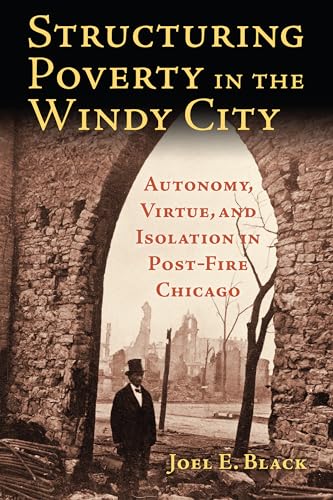
The Great Chicago Fire in October 1871 destroyed 2,600 acres and left tens of thousands without housing, food, fuel, or clothing. In the aftermath the mayor handed all relief duties to the commercial elite at the Chicago Relief and Aid Society. This was, as Joel E. Black’s provocative study shows, a critical decision—one that ensured that Chicago’s physical rebuilding would be coupled with an equally ambitious rebuilding of the city’s poor, as reformers, social scientists, and journalists set out to interpret and define Chicago’s jobless, wayward, and migrating populations. What emerged from this effort was a new form of social and quasi-governmental authority based on poverty—a web of political and legal theories and practices rooted in the conditions of the poor. This authority is the subject of Structuring Poverty in the Windy City.
In the decades after the Chicago Fire, the process begun by the Relief and Aid Society would expand outward—from jobless men to workingwomen to southern African American migrants, each defined by, and defining, poverty. Drawing on local newspapers, magazines, commissions, and legal decisions and documents from archives in Chicago, Black tells the stories of “tramps,” sex workers, and migrants caught within the structures of poverty; he also describes the legal and social order compelling their reform to the strictures of that selfsame order. As it reveals the central role of the impoverished in the creation of a legal order, Black's book stresses the effect of social ideas on legal thinking, which was reflected in the policies of the New Deal and, even now, in the politics of poverty and social engineering.
Le informazioni nella sezione "Riassunto" possono far riferimento a edizioni diverse di questo titolo.
Informazioni sull'autore
Joel E. Black is lecturer in the Department of Urban and Regional Planning and the Levin College of Law Liaison at the University of Florida.
Le informazioni nella sezione "Su questo libro" possono far riferimento a edizioni diverse di questo titolo.
Risultati della ricerca per Structuring Poverty in the Windy City: Autonomy, Virtue,...

Foto dell'editore
Structuring Poverty in the Windy City Autonomy, Virtue, and Isolation in Post-Fire Chicago
Editore:
University Press of Kansas, 2019
ISBN 10: 0700628010
ISBN 13: 9780700628018
Antico o usato
Paperback
Da: Michener & Rutledge Booksellers, Inc., Baldwin City, KS, U.S.A.
Valutazione del venditore 5 su 5 stelle

Paperback. Condizione: As New. Still shrinkwrapped; 8vo 8" - 9" tall; 256 pages. Codice articolo 251716
Compra usato
EUR 22,94
Spedizione EUR 5,34
Spedito in U.S.A.
Spedito in U.S.A.
Quantità: 1 disponibili
Immagini fornite dal venditore
Structuring Poverty in the Windy City : Autonomy, Virtue, and Isolation in Post-Fire Chicago
Da: GreatBookPrices, Columbia, MD, U.S.A.
Valutazione del venditore 5 su 5 stelle
Condizione: New. Codice articolo 34750383-n
Compra nuovo
EUR 28,18
Spedizione EUR 2,35
Spedito in U.S.A.
Spedito in U.S.A.
Quantità: Più di 20 disponibili
Foto dell'editore
STRUCTURING POVERTY IN THE WINDY CITY
Editore:
University of Nebraska Press, 2019
ISBN 10: 0700628010
ISBN 13: 9780700628018
Nuovo
Brossura
Da: INDOO, Avenel, NJ, U.S.A.
Valutazione del venditore 5 su 5 stelle
Condizione: New. Brand New. Codice articolo 9780700628018
Compra nuovo
EUR 30,61
Spedizione gratuita
Spedito in U.S.A.
Spedito in U.S.A.
Quantità: Più di 20 disponibili
Immagini fornite dal venditore
Structuring Poverty in the Windy City : Autonomy, Virtue, and Isolation in Post-Fire Chicago
Editore:
University Press of Kansas, 2019
ISBN 10: 0700628010
ISBN 13: 9780700628018
Antico o usato
Brossura
Da: GreatBookPrices, Columbia, MD, U.S.A.
Valutazione del venditore 5 su 5 stelle
Condizione: As New. Unread book in perfect condition. Codice articolo 34750383
Compra usato
EUR 33,07
Spedizione EUR 2,35
Spedito in U.S.A.
Spedito in U.S.A.
Quantità: Più di 20 disponibili
Immagini fornite dal venditore
Structuring Poverty in the Windy City
Editore:
University Press of Kansas, US, 2019
ISBN 10: 0700628010
ISBN 13: 9780700628018
Nuovo
Paperback
Da: Rarewaves.com USA, London, LONDO, Regno Unito
Valutazione del venditore 5 su 5 stelle
Paperback. Condizione: New. The Great Chicago Fire in October 1871 destroyed 2,600 acres and left tens of thousands without housing, food, fuel, or clothing. In the aftermath the mayor handed all relief duties to the commercial elite at the Chicago Relief and Aid Society. This was, as Joel E. Black's provocative study shows, a critical decision-one that ensured that Chicago's physical rebuilding would be coupled with an equally ambitious rebuilding of the city's poor, as reformers, social scientists, and journalists set out to interpret and define Chicago's jobless, wayward, and migrating populations. What emerged from this effort was a new form of social and quasi-governmental authority based on poverty-a web of political and legal theories and practices rooted in the conditions of the poor. This authority is the subject of Structuring Poverty in the Windy City.In the decades after the Chicago Fire, the process begun by the Relief and Aid Society would expand outward-from jobless men to workingwomen to southern African American migrants, each defined by, and defining, poverty. Drawing on local newspapers, magazines, commissions, and legal decisions and documents from archives in Chicago, Black tells the stories of "tramps," sex workers, and migrants caught within the structures of poverty; he also describes the legal and social order compelling their reform to the strictures of that selfsame order. As it reveals the central role of the impoverished in the creation of a legal order, Black's book stresses the effect of social ideas on legal thinking, which was reflected in the policies of the New Deal and, even now, in the politics of poverty and social engineering. Codice articolo LU-9780700628018
Compra nuovo
EUR 35,48
Spedizione gratuita
Spedito da Regno Unito a U.S.A.
Spedito da Regno Unito a U.S.A.
Quantità: Più di 20 disponibili
Foto dell'editore
Structuring Poverty in the Windy City: Autonomy, Virtue, and Isolation in Post-Fire Chicago
Editore:
University Press of Kansas 2019-06-30, 2019
ISBN 10: 0700628010
ISBN 13: 9780700628018
Nuovo
Paperback
Da: Chiron Media, Wallingford, Regno Unito
Valutazione del venditore 5 su 5 stelle
Paperback. Condizione: New. Brand new book, sourced directly from publisher. Dispatch time is 24-48 hours from our warehouse. Book will be sent in robust, secure packaging to ensure it reaches you securely. Codice articolo 6666-GRD-9780700628018
Compra nuovo
EUR 40,41
Spedizione EUR 5,94
Spedito da Regno Unito a U.S.A.
Spedito da Regno Unito a U.S.A.
Quantità: 2 disponibili
Foto dell'editore
Structuring Poverty in the Windy City
Da: PBShop.store UK, Fairford, GLOS, Regno Unito
Valutazione del venditore 5 su 5 stelle
PAP. Condizione: New. New Book. Shipped from UK. Established seller since 2000. Codice articolo GB-9780700628018
Compra nuovo
EUR 44,97
Spedizione EUR 4,96
Spedito da Regno Unito a U.S.A.
Spedito da Regno Unito a U.S.A.
Quantità: 2 disponibili
Foto dell'editore
Structuring Poverty in the Windy City: Autonomy, Virtue, and Isolation in Post-Fire Chicago
Da: Ria Christie Collections, Uxbridge, Regno Unito
Valutazione del venditore 5 su 5 stelle
Condizione: New. In English. Codice articolo ria9780700628018_new
Compra nuovo
EUR 36,81
Spedizione EUR 13,45
Spedito da Regno Unito a U.S.A.
Spedito da Regno Unito a U.S.A.
Quantità: Più di 20 disponibili
Foto dell'editore
Structuring Poverty in the Windy City (Paperback)
Editore:
University Press of Kansas, Kansas, 2019
ISBN 10: 0700628010
ISBN 13: 9780700628018
Nuovo
Paperback
Da: Grand Eagle Retail, Bensenville, IL, U.S.A.
Valutazione del venditore 5 su 5 stelle
Paperback. Condizione: new. Paperback. The Great Chicago Fire in October 1871 destroyed 2,600 acres and left tens of thousands without housing, food, fuel, or clothing. In the aftermath the mayor handed all relief duties to the commercial elite at the Chicago Relief and Aid Society. This was, as Joel E. Black's provocative study shows, a critical decisionone that ensured that Chicago's physical rebuilding would be coupled with an equally ambitious rebuilding of the city's poor, as reformers, social scientists, and journalists set out to interpret and define Chicago's jobless, wayward, and migrating populations. What emerged from this effort was a new form of social and quasi-governmental authority based on povertya web of political and legal theories and practices rooted in the conditions of the poor. This authority is the subject of Structuring Poverty in the Windy City.In the decades after the Chicago Fire, the process begun by the Relief and Aid Society would expand outwardfrom jobless men to workingwomen to southern African American migrants, each defined by, and defining, poverty. Drawing on local newspapers, magazines, commissions, and legal decisions and documents from archives in Chicago, Black tells the stories of tramps, sex workers, and migrants caught within the structures of poverty; he also describes the legal and social order compelling their reform to the strictures of that selfsame order. As it reveals the central role of the impoverished in the creation of a legal order, Black's book stresses the effect of social ideas on legal thinking, which was reflected in the policies of the New Deal and, even now, in the politics of poverty and social engineering. The Great Chicago Fire in 1871 left tens of thousands without housing, food, fuel, or clothing. In the aftermath the mayor handed all relief duties to the commercial elite at the Chicago Relief and Aid Society. This was, as this study shows, a decision that ensured Chicago's physical rebuilding would be coupled with a rebuilding of the city's poor. Shipping may be from multiple locations in the US or from the UK, depending on stock availability. Codice articolo 9780700628018
Compra nuovo
EUR 51,41
Spedizione gratuita
Spedito in U.S.A.
Spedito in U.S.A.
Quantità: 1 disponibili
Immagini fornite dal venditore
Structuring Poverty in the Windy City : Autonomy, Virtue, and Isolation in Post-Fire Chicago
Da: GreatBookPricesUK, Woodford Green, Regno Unito
Valutazione del venditore 5 su 5 stelle
Condizione: New. Codice articolo 34750383-n
Compra nuovo
EUR 33,77
Spedizione EUR 17,87
Spedito da Regno Unito a U.S.A.
Spedito da Regno Unito a U.S.A.
Quantità: Più di 20 disponibili