
Articoli correlati a Gay Men and the Left in Post-War Britain: How the Personal...
Gay Men and the Left in Post-War Britain: How the Personal Got Political - Brossura
Libro 8 di 10: Critical Labour Movement Studies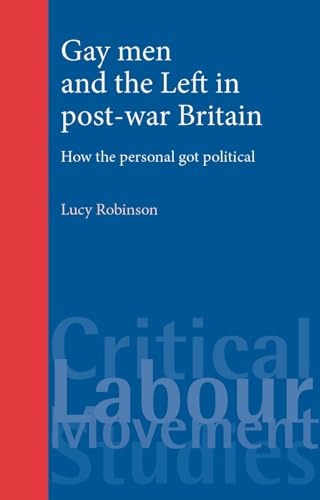
Sinossi
Available in paperback for the first time, his book demonstrates how the personal became political in post-war Britain, and argues that attention to gay activism can help us to fundamentally rethink the nature of post-war politics. While the Left were fighting among themselves and the reformists were struggling with the limits of law reform, gay men started organising for themselves, first individually within existing organisations and later rejecting formal political structures altogether.
Culture, performance and identity took over from economics and class struggle, as gay men worked to change the world through the politics of sexuality. Throughout the post-war years, the new cult of the teenager in the 1950s, CND and the counter-culture of the 1960s, gay liberation, feminism, the Punk movement and the miners' strike of 1984 all helped to build a politics of identity.
There is an assumption among many of today's politicians that young people are apathetic and disengaged. This book argues that these politicians are looking in the wrong place. People now feel that they can impact the world through the way in which they live, shop, have sex and organise their private lives. Robinson shows that gay men and their politics have been central to this change in the post-war world.
Le informazioni nella sezione "Riassunto" possono far riferimento a edizioni diverse di questo titolo.
Informazioni sugli autori
Lucy Robinson is Lecturer in Modern British History at the University of Sussex
Lucy Robinson is Lecturer in Modern British History at the University of Sussex.
Lucy Robinson is Lecturer in Modern British History at the University of Sussex
Dalla quarta di copertina
Available in paperback for the first time, this book demonstrates how the personal became political in post-war Britain, and argues that attention to gay activism can help us to fundamentally rethink the nature of post-war politics. While the Left were fighting among themselves and the reformists were struggling with the limits of law reform, gay men started organising for themselves, first individually within existing organisations and later rejecting formal political structures altogether.
Culture, performance and identity took over from economics and class struggle, as gay men worked to change the world through the politics of sexuality. Throughout the post-war years, the new cult of the teenager in the 1950s, CND and the counter-culture of the 1960s, gay liberation, feminism, the Punk movement and the miners' strike of 1984 all helped to build a politics of identity.
There is an assumption among many of today's politicians that young people are apathetic and disengaged. This book argues that these politicians are looking in the wrong place. People now feel that they can impact the world through the way in which they live, shop, have sex and organise their private lives. Robinson shows that gay men and their politics have been central to this change in the post-war world.
Dal risvolto di copertina interno
Available in paperback for the first time, this book demonstrates how the personal became political in post-war Britain, and argues that attention to gay activism can help us to fundamentally rethink the nature of post-war politics. While the Left were fighting among themselves and the reformists were struggling with the limits of law reform, gay men started organising for themselves, first individually within existing organisations and later rejecting formal political structures altogether. Culture, performance and identity took over from economics and class struggle, as gay men worked to change the world through the politics of sexuality. Throughout the post-war years, the new cult of the teenager in the 1950s, CND and the counter-culture of the 1960s, gay liberation, feminism, the Punk movement and the miners' strike of 1984 all helped to build a politics of identity. There is an assumption among many of today's politicians that young people are apathetic and disengaged. This book argues that these politicians are looking in the wrong place. People now feel that they can impact the world through the way in which they live, shop, have sex and organise their private lives. Robinson shows that gay men and their politics have been central to this change in the post-war world.
Le informazioni nella sezione "Su questo libro" possono far riferimento a edizioni diverse di questo titolo.
Risultati della ricerca per Gay Men and the Left in Post-War Britain: How the Personal...

Immagini fornite dal venditore
Gay Men and the Left in Post-War Britain
Editore:
Manchester University Press, GB, 2011
ISBN 10: 0719086396
ISBN 13: 9780719086397
Nuovo
Paperback
Da: Rarewaves.com USA, London, LONDO, Regno Unito
Valutazione del venditore 5 su 5 stelle

Paperback. Condizione: New. Available in paperback for the first time, his book demonstrates how the personal became political in post-war Britain, and argues that attention to gay activism can help us to fundamentally rethink the nature of post-war politics. While the Left were fighting among themselves and the reformists were struggling with the limits of law reform, gay men started organising for themselves, first individually within existing organisations and later rejecting formal political structures altogether. Culture, performance and identity took over from economics and class struggle, as gay men worked to change the world through the politics of sexuality. Throughout the post-war years, the new cult of the teenager in the 1950s, CND and the counter-culture of the 1960s, gay liberation, feminism, the Punk movement and the miners' strike of 1984 all helped to build a politics of identity. There is an assumption among many of today's politicians that young people are apathetic and disengaged. This book argues that these politicians are looking in the wrong place. People now feel that they can impact the world through the way in which they live, shop, have sex and organise their private lives. Robinson shows that gay men and their politics have been central to this change in the post-war world. Codice articolo LU-9780719086397
Compra nuovo
EUR 35,82
Spedizione gratuita
Spedito da Regno Unito a U.S.A.
Spedito da Regno Unito a U.S.A.
Quantità: Più di 20 disponibili
Foto dell'editore
Gay Men and the Left in Post-War Britain
Da: PBShop.store US, Wood Dale, IL, U.S.A.
Valutazione del venditore 5 su 5 stelle
PAP. Condizione: New. New Book. Shipped from UK. Established seller since 2000. Codice articolo CX-9780719086397
Compra nuovo
EUR 35,83
Spedizione gratuita
Spedito in U.S.A.
Spedito in U.S.A.
Quantità: 15 disponibili
Foto dell'editore
Gay men and the Left in post-war Britain
Da: PBShop.store UK, Fairford, GLOS, Regno Unito
Valutazione del venditore 5 su 5 stelle
PAP. Condizione: New. New Book. Shipped from UK. Established seller since 2000. Codice articolo CX-9780719086397
Compra nuovo
EUR 31,21
Spedizione EUR 4,92
Spedito da Regno Unito a U.S.A.
Spedito da Regno Unito a U.S.A.
Quantità: 15 disponibili
Immagini fornite dal venditore
Gay Men and the Left in Post-War Britain
Editore:
Manchester University Press, GB, 2011
ISBN 10: 0719086396
ISBN 13: 9780719086397
Nuovo
Paperback
Da: Rarewaves USA, HEBRON, KY, U.S.A.
Valutazione del venditore 5 su 5 stelle
Paperback. Condizione: New. Available in paperback for the first time, his book demonstrates how the personal became political in post-war Britain, and argues that attention to gay activism can help us to fundamentally rethink the nature of post-war politics. While the Left were fighting among themselves and the reformists were struggling with the limits of law reform, gay men started organising for themselves, first individually within existing organisations and later rejecting formal political structures altogether. Culture, performance and identity took over from economics and class struggle, as gay men worked to change the world through the politics of sexuality. Throughout the post-war years, the new cult of the teenager in the 1950s, CND and the counter-culture of the 1960s, gay liberation, feminism, the Punk movement and the miners' strike of 1984 all helped to build a politics of identity. There is an assumption among many of today's politicians that young people are apathetic and disengaged. This book argues that these politicians are looking in the wrong place. People now feel that they can impact the world through the way in which they live, shop, have sex and organise their private lives. Robinson shows that gay men and their politics have been central to this change in the post-war world. Codice articolo LU-9780719086397
Compra nuovo
EUR 36,17
Spedizione gratuita
Spedito in U.S.A.
Spedito in U.S.A.
Quantità: Più di 20 disponibili
Foto dell'editore
Gay Men and the Left in Post-War Britain: How the Personal Got Political (Critical Labour Movement Studies)
Editore:
Manchester University Press, 2011
ISBN 10: 0719086396
ISBN 13: 9780719086397
Antico o usato
Brossura
Da: Anybook.com, Lincoln, Regno Unito
Valutazione del venditore 5 su 5 stelle
Condizione: Fair. This is an ex-library book and may have the usual library/used-book markings inside.This book has soft covers. In fair condition, suitable as a study copy. Please note the Image in this listing is a stock photo and may not match the covers of the actual item,450grams, ISBN:9780719086397. Codice articolo 5975815
Compra usato
EUR 23,84
Spedizione EUR 15,43
Spedito da Regno Unito a U.S.A.
Spedito da Regno Unito a U.S.A.
Quantità: 1 disponibili
Foto dell'editore
Gay Men and the Left in Post-War Britain
Editore:
Manchester University Press, 2011
ISBN 10: 0719086396
ISBN 13: 9780719086397
Nuovo
Brossura
Da: Majestic Books, Hounslow, Regno Unito
Valutazione del venditore 4 su 5 stelle

Condizione: New. Print on Demand pp. 232 49:B&W 6.14 x 9.21 in or 234 x 156 mm (Royal 8vo) Perfect Bound on White w/Gloss Lam. Codice articolo 3668053
Compra nuovo
EUR 38,25
Spedizione EUR 7,69
Spedito da Regno Unito a U.S.A.
Spedito da Regno Unito a U.S.A.
Quantità: 4 disponibili
Foto dell'editore
Gay Men and the Left in Post-War Britain: How the Personal Got Political
Editore:
Manchester University Press, 2011
ISBN 10: 0719086396
ISBN 13: 9780719086397
Nuovo
Brossura
Da: Kennys Bookshop and Art Galleries Ltd., Galway, GY, Irlanda
Valutazione del venditore 5 su 5 stelle
Condizione: New. 2011. Reprint. Paperback. When the personal became political it changed British politics for ever. Gay men and the left, available in paperback for the first time, explores the enormous impact that gay politics had on the landscape of post-war Britain. Series: Critical Labour Movement Studies. Num Pages: 232 pages, black & white illustrations. BIC Classification: 1DBK; 3JJP; JFSK2; JPFF. Category: (UF) Further/Higher Education. Dimension: 158 x 234 x 12. Weight in Grams: 350. . . . . . Codice articolo V9780719086397
Compra nuovo
EUR 36,81
Spedizione EUR 9,50
Spedito da Irlanda a U.S.A.
Spedito da Irlanda a U.S.A.
Quantità: Più di 20 disponibili
Foto dell'editore
Gay men and the Left in post-war Britain: How the personal got political (Critical Labour Movement Studies)
Editore:
Manchester University Press, 2011
ISBN 10: 0719086396
ISBN 13: 9780719086397
Nuovo
Brossura
Da: Ria Christie Collections, Uxbridge, Regno Unito
Valutazione del venditore 5 su 5 stelle
Condizione: New. In English. Codice articolo ria9780719086397_new
Compra nuovo
EUR 36,43
Spedizione EUR 11,09
Spedito da Regno Unito a U.S.A.
Spedito da Regno Unito a U.S.A.
Quantità: Più di 20 disponibili
Foto dell'editore
Gay Men and the Left in Post-War Britain
Editore:
Manchester University Press, 2011
ISBN 10: 0719086396
ISBN 13: 9780719086397
Nuovo
Brossura
Da: Books Puddle, Woodside, NY, U.S.A.
Valutazione del venditore 4 su 5 stelle
Condizione: New. Print on Demand pp. 232 Index. Codice articolo 264212618
Compra nuovo
EUR 44,02
Spedizione EUR 3,56
Spedito in U.S.A.
Spedito in U.S.A.
Quantità: 4 disponibili
Foto dell'editore
Gay Men and the Left in Post-War Britain
Editore:
Manchester University Press, 2011
ISBN 10: 0719086396
ISBN 13: 9780719086397
Nuovo
Brossura
Da: Biblios, Frankfurt am main, HESSE, Germania
Valutazione del venditore 4 su 5 stelle
Condizione: New. PRINT ON DEMAND pp. 232 Acknowledgements. Codice articolo 184212608
Compra nuovo
EUR 38,55
Spedizione EUR 9,95
Spedito da Germania a U.S.A.
Spedito da Germania a U.S.A.
Quantità: 4 disponibili