
Articoli correlati a The Geometry of Creation: Architectural Drawing and...
Sinossi
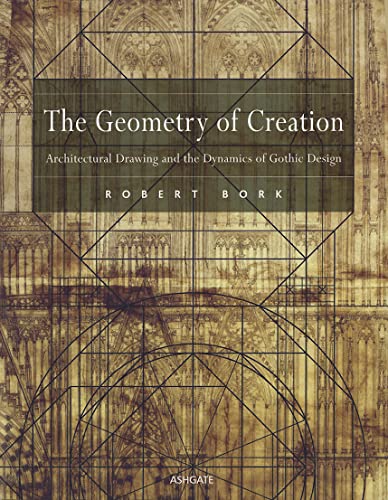
The flowering of Gothic architecture depended to a striking extent on the use of drawing as a tool of design. By drawing precise "blueprints" with simple tools such as the compass and straightedge, Gothic draftsmen were able to develop a linearized architecture of unprecedented complexity and sophistication. Examination of their surviving drawings can provide valuable and remarkably intimate information about the Gothic design process. Gothic drawings include compass pricks, uninked construction lines, and other telltale traces of the draftsman's geometrically based working method. The proportions of the drawings, moreover, are those actually intended by the designer, uncompromised by errors introduced in the construction process. All of these features make these drawings ideal subjects for the study of Gothic design practice, but their geometry has to date received little systematic attention. This book offers a new perspective on Gothic architectural creativity. It shows, in a series of rigorous geometrical case studies, how Gothic design evolved over time, in two senses: in the hours of the draftsman's labor, and across the centuries of the late Middle Ages. In each case study, a series of computer graphics show in unprecedented detail how a medieval designer could have developed his architectural concept step by step, using only basic geometrical operations. Taken together, these analyses demonstrate both remarkable methodological continuity across the Gothic era, and the progressive development of new and sophisticated permutations on venerable design themes. This rich tradition ultimately gave way in the Renaissance not because of any inherent problem with Gothic architecture, but because the visual language of Classicism appealed more directly to the pretensions of Humanist princes than the more abstract geometrical order of Gothic design, as the book's final chapter demonstrates.
Le informazioni nella sezione "Riassunto" possono far riferimento a edizioni diverse di questo titolo.
Informazioni sull'autore
Robert Bork is Associate Professor of Art History, University of Iowa, USA.
Le informazioni nella sezione "Su questo libro" possono far riferimento a edizioni diverse di questo titolo.
Risultati della ricerca per The Geometry of Creation: Architectural Drawing and...

Immagini fornite dal venditore
The Geometry of Creation: Architectural Drawing and the Dynamics of Gothic Design
Da: Lacey Books Ltd, Cirencester, Regno Unito
Valutazione del venditore 5 su 5 stelle

Hardcover. Condizione: Very Good. Condizione sovraccoperta: Very Good. 2011 Ashgate large format hardcover edition. Light reading wear else very good condition. From the cover: The book examines Gothic architectural creativity and evolution through detailed geometrical case studies and computer graphics, highlighting methodological continuity and progressive design development. It concludes that the Gothic tradition was eventually superseded by Renaissance Classicism due to the shifting aesthetic preferences of Humanist princes. You can read the full concluding paragraph in the referenced source. Contents: Introduction: Geometry and the Gothic Design Process Explaining the Roots of the Gothic Aesthetic Methodological Problems in the Study of Gothic Geometry Konrad Hecht's problematic critique of geometrical research A New Approach to the Geometry of Gothic Drawings The Origins of Gothic Architectural Drawing Villard de Honnecourt The Reims Palimpsest The Flowering of Rayonnant Drawing in the Rhineland Strasbourg Cologne Freiburg Italian Drawings up to 1350 Orvieto Siena Germanic Tower Drawings and the Elaboration of Tradition Prague Vienna Ulm Regensburg Frankfurt Strasbourg Wider Horizons Two Germanic Tabernacles Building Groundplans Augsburg Steyr The Cloisters Drawing Clermont-Ferrand Leuven The Italian Challenge to the Gothic Design System The Design Debates at Milan Cathedral The Emergence of Classical Architecture in the Italian Renaissance Hermann Vischer and the Hybridization of Tradition How Renaissance Design Won the Communication War Conclusion: Gothic Drawings as Traces of the Creative Process. Codice articolo GK-3CCU-D6KA
Compra usato
EUR 67,29
Spedizione EUR 29,70
Spedito da Regno Unito a U.S.A.
Spedito da Regno Unito a U.S.A.
Quantità: 1 disponibili
Immagini fornite dal venditore
Geometry of Creation : Architectural Drawing and the Dynamics of Gothic Design
Da: GreatBookPrices, Columbia, MD, U.S.A.
Valutazione del venditore 5 su 5 stelle
Condizione: New. Codice articolo 12325275-n
Compra nuovo
EUR 247,14
Spedizione EUR 2,35
Spedito in U.S.A.
Spedito in U.S.A.
Quantità: Più di 20 disponibili
Foto dell'editore
The Geometry of Creation (Hardcover)
Editore:
Taylor & Francis Ltd, London, 2011
ISBN 10: 0754660621
ISBN 13: 9780754660620
Nuovo
Rilegato
Da: Grand Eagle Retail, Bensenville, IL, U.S.A.
Valutazione del venditore 5 su 5 stelle
Hardcover. Condizione: new. Hardcover. The flowering of Gothic architecture depended to a striking extent on the use of drawing as a tool of design. By drawing precise "blueprints" with simple tools such as the compass and straightedge, Gothic draftsmen were able to develop a linearized architecture of unprecedented complexity and sophistication. Examination of their surviving drawings can provide valuable and remarkably intimate information about the Gothic design process. Gothic drawings include compass pricks, uninked construction lines, and other telltale traces of the draftsman's geometrically based working method. The proportions of the drawings, moreover, are those actually intended by the designer, uncompromised by errors introduced in the construction process. All of these features make these drawings ideal subjects for the study of Gothic design practice, but their geometry has to date received little systematic attention. This book offers a new perspective on Gothic architectural creativity. It shows, in a series of rigorous geometrical case studies, how Gothic design evolved over time, in two senses: in the hours of the draftsman's labor, and across the centuries of the late Middle Ages. In each case study, a series of computer graphics show in unprecedented detail how a medieval designer could have developed his architectural concept step by step, using only basic geometrical operations. Taken together, these analyses demonstrate both remarkable methodological continuity across the Gothic era, and the progressive development of new and sophisticated permutations on venerable design themes. This rich tradition ultimately gave way in the Renaissance not because of any inherent problem with Gothic architecture, but because the visual language of Classicism appealed more directly to the pretensions of Humanist princes than the more abstract geometrical order of Gothic design, as the book's final chapter demonstrates. Offers a fresh perspective on Gothic architectural creativity. This book shows, in a series of geometrical case studies, how Gothic design evolved over time, in two senses: in the hours of the draftsman's labor, and across the centuries of the late Middle Ages. This item is printed on demand. Shipping may be from multiple locations in the US or from the UK, depending on stock availability. Codice articolo 9780754660620
Compra nuovo
EUR 249,57
Spedizione gratuita
Spedito in U.S.A.
Spedito in U.S.A.
Quantità: 1 disponibili
Foto dell'editore
The Geometry of Creation
Print on DemandDa: PBShop.store UK, Fairford, GLOS, Regno Unito
Valutazione del venditore 5 su 5 stelle
HRD. Condizione: New. New Book. Delivered from our UK warehouse in 4 to 14 business days. THIS BOOK IS PRINTED ON DEMAND. Established seller since 2000. Codice articolo L1-9780754660620
Compra nuovo
EUR 252,38
Spedizione EUR 11,12
Spedito da Regno Unito a U.S.A.
Spedito da Regno Unito a U.S.A.
Quantità: Più di 20 disponibili
Foto dell'editore
The Geometry of Creation (Hardcover)
Editore:
Taylor & Francis Ltd, London, 2011
ISBN 10: 0754660621
ISBN 13: 9780754660620
Nuovo
Rilegato
Da: AussieBookSeller, Truganina, VIC, Australia
Valutazione del venditore 5 su 5 stelle
Hardcover. Condizione: new. Hardcover. The flowering of Gothic architecture depended to a striking extent on the use of drawing as a tool of design. By drawing precise "blueprints" with simple tools such as the compass and straightedge, Gothic draftsmen were able to develop a linearized architecture of unprecedented complexity and sophistication. Examination of their surviving drawings can provide valuable and remarkably intimate information about the Gothic design process. Gothic drawings include compass pricks, uninked construction lines, and other telltale traces of the draftsman's geometrically based working method. The proportions of the drawings, moreover, are those actually intended by the designer, uncompromised by errors introduced in the construction process. All of these features make these drawings ideal subjects for the study of Gothic design practice, but their geometry has to date received little systematic attention. This book offers a new perspective on Gothic architectural creativity. It shows, in a series of rigorous geometrical case studies, how Gothic design evolved over time, in two senses: in the hours of the draftsman's labor, and across the centuries of the late Middle Ages. In each case study, a series of computer graphics show in unprecedented detail how a medieval designer could have developed his architectural concept step by step, using only basic geometrical operations. Taken together, these analyses demonstrate both remarkable methodological continuity across the Gothic era, and the progressive development of new and sophisticated permutations on venerable design themes. This rich tradition ultimately gave way in the Renaissance not because of any inherent problem with Gothic architecture, but because the visual language of Classicism appealed more directly to the pretensions of Humanist princes than the more abstract geometrical order of Gothic design, as the book's final chapter demonstrates. Offers a fresh perspective on Gothic architectural creativity. This book shows, in a series of geometrical case studies, how Gothic design evolved over time, in two senses: in the hours of the draftsman's labor, and across the centuries of the late Middle Ages. This item is printed on demand. Shipping may be from our Sydney, NSW warehouse or from our UK or US warehouse, depending on stock availability. Codice articolo 9780754660620
Compra nuovo
EUR 231,55
Spedizione EUR 32,96
Spedito da Australia a U.S.A.
Spedito da Australia a U.S.A.
Quantità: 1 disponibili
Foto dell'editore
The Geometry of Creation
Da: Books Puddle, Woodside, NY, U.S.A.
Valutazione del venditore 4 su 5 stelle

Condizione: New. pp. xxi + 462. Codice articolo 263151840
Compra nuovo
EUR 261,18
Spedizione EUR 3,55
Spedito in U.S.A.
Spedito in U.S.A.
Quantità: 4 disponibili
Foto dell'editore
The Geometry of Creation
Print on DemandDa: PBShop.store US, Wood Dale, IL, U.S.A.
Valutazione del venditore 5 su 5 stelle
HRD. Condizione: New. New Book. Shipped from UK. THIS BOOK IS PRINTED ON DEMAND. Established seller since 2000. Codice articolo L1-9780754660620
Compra nuovo
EUR 267,53
Spedizione gratuita
Spedito in U.S.A.
Spedito in U.S.A.
Quantità: Più di 20 disponibili
Immagini fornite dal venditore
Geometry of Creation : Architectural Drawing and the Dynamics of Gothic Design
Da: GreatBookPricesUK, Woodford Green, Regno Unito
Valutazione del venditore 5 su 5 stelle
Condizione: New. Codice articolo 12325275-n
Compra nuovo
EUR 252,37
Spedizione EUR 17,82
Spedito da Regno Unito a U.S.A.
Spedito da Regno Unito a U.S.A.
Quantità: Più di 20 disponibili
Foto dell'editore
The Geometry of Creation: Architectural Drawing and the Dynamics of Gothic Design
Da: California Books, Miami, FL, U.S.A.
Valutazione del venditore 5 su 5 stelle
Condizione: New. Codice articolo I-9780754660620
Compra nuovo
EUR 270,66
Spedizione gratuita
Spedito in U.S.A.
Spedito in U.S.A.
Quantità: Più di 20 disponibili
Foto dell'editore
The Geometry of Creation
Print on DemandDa: Majestic Books, Hounslow, Regno Unito
Valutazione del venditore 4 su 5 stelle
Condizione: New. Print on Demand pp. xxi + 462 240 Illus. Codice articolo 4696127
Compra nuovo
EUR 270,04
Spedizione EUR 7,72
Spedito da Regno Unito a U.S.A.
Spedito da Regno Unito a U.S.A.
Quantità: 4 disponibili