
Articoli correlati a Remaking U.S. Trade Policy: From Protectionism to Globalizat...
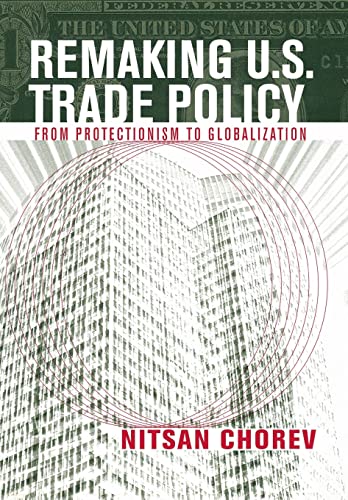
Sinossi
The emergence of globalization was neither accidental nor inevitable. To make the "free flow" of commodities, capital, and money possible, governments first had to introduce a new political infrastructure. In Remaking U.S. Trade Policy, Nitsan Chorev focuses on trade liberalization in the United States from the 1930s to the present as she explores the political origins of today's global economy.
The ability of the U.S. government to impose its preferences on other governments is an important part of the story of globalization, but what is central to Chorev's analysis is understanding why the nation's leaders supported trade liberalization in the first place. For Chorev, the explanation lies in domestic political struggles. Advocates of free trade prevailed in the struggle with protectionists by working to change the institutions governing trade policy, replacing institutional arrangements that favored protectionism with new ones that favored a free-market approach.
The new institutional arrangements shifted authority from a protectionist Congress to liberal agencies at the executive branch and to the World Trade Organization. These transformations entailed a move from a politicized location, in which direct negotiations and debates dominate the process of decision-making, to bureaucratic and judicial arenas where a legal logic dominates and the citizens have little voice.
The emergence of globalization was neither accidental nor inevitable. To make the "free flow" of commodities, capital, and money possible, governments first had to introduce a new political infrastructure. In Remaking U.S. Trade Policy, Nitsan Chorev focuses on trade liberalization in the United States from the 1930s to the present as she explores the political origins of today's global economy.
The ability of the U.S. government to impose its preferences on other governments is an important part of the story of globalization, but what is central to Chorev's analysis is understanding why the nation's leaders supported trade liberalization in the first place. For Chorev, the explanation lies in domestic political struggles. Advocates of free trade prevailed in the struggle with protectionists by working to change the institutions governing trade policy, replacing institutional arrangements that favored protectionism with new ones that favored a free-market approach.
The new institutional arrangements shifted authority from a protectionist Congress to liberal agencies at the executive branch and to the World Trade Organization. These transformations entailed a move from a politicized location, in which direct negotiations and debates dominate the process of decision-making, to bureaucratic and judicial arenas where a legal logic dominates and the citizens have little voice.
Le informazioni nella sezione "Riassunto" possono far riferimento a edizioni diverse di questo titolo.
Informazioni sull'autore
Nitsan Chorev is Assistant Professor of Sociology at Brown University.
Le informazioni nella sezione "Su questo libro" possono far riferimento a edizioni diverse di questo titolo.
Risultati della ricerca per Remaking U.S. Trade Policy: From Protectionism to Globalizat...

Immagini fornite dal venditore
Remaking U.S. Trade Policy: From Protectionism to Globalization
Editore:
Cornell University Press, 2007
ISBN 10: 0801445752
ISBN 13: 9780801445750
Antico o usato
Rilegato
Da: -OnTimeBooks-, Phoenix, AZ, U.S.A.
Valutazione del venditore 5 su 5 stelle

Condizione: good. A copy that has been read, remains in good condition. All pages are intact, and the cover is intact. The spine and cover show signs of wear. Pages can include notes and highlighting and show signs of wear, and the copy can include "From the library of" labels or previous owner inscriptions. 100% GUARANTEE! Shipped with delivery confirmation, if you're not satisfied with purchase please return item! Ships via media mail. Codice articolo OTV.0801445752.G
Compra usato
EUR 39,43
Spedizione gratuita
Spedito in U.S.A.
Spedito in U.S.A.
Quantità: 1 disponibili
Immagini fornite dal venditore
Remaking U.S. Trade Policy: From Protectionism to Globalization
Editore:
Cornell University Press, 2007
ISBN 10: 0801445752
ISBN 13: 9780801445750
Antico o usato
Rilegato
Da: ZBK Books, Carlstadt, NJ, U.S.A.
Valutazione del venditore 5 su 5 stelle
Condizione: good. Fast & Free Shipping â" Good condition. It may show normal signs of use, such as light writing, highlighting, or library markings, but all pages are intact and the book is fully readable. A solid, complete copy that's ready to enjoy. Codice articolo ZWV.0801445752.G
Compra usato
EUR 39,70
Spedizione gratuita
Spedito in U.S.A.
Spedito in U.S.A.
Quantità: 1 disponibili
Foto dell'editore
Remaking U.S. Trade Policy: From Protectionism to Globalization
Editore:
Cornell University Press, 2007
ISBN 10: 0801445752
ISBN 13: 9780801445750
Antico o usato
Rilegato
Da: HPB-Red, Dallas, TX, U.S.A.
Valutazione del venditore 5 su 5 stelle
Hardcover. Condizione: Good. Connecting readers with great books since 1972! Used textbooks may not include companion materials such as access codes, etc. May have some wear or writing/highlighting. We ship orders daily and Customer Service is our top priority! Codice articolo S_406155680
Compra usato
EUR 36,73
Spedizione EUR 3,34
Spedito in U.S.A.
Spedito in U.S.A.
Quantità: 1 disponibili
Foto dell'editore
Remaking U. S. Trade Policy : From Protectionism to Globalization
Editore:
Cornell University Press, 2007
ISBN 10: 0801445752
ISBN 13: 9780801445750
Antico o usato
Rilegato
Prima edizione
Da: Better World Books, Mishawaka, IN, U.S.A.
Valutazione del venditore 5 su 5 stelle
Condizione: Very Good. 1st Edition. Former library copy. Pages intact with possible writing/highlighting. Binding strong with minor wear. Dust jackets/supplements may not be included. Includes library markings. Stock photo provided. Product includes identifying sticker. Better World Books: Buy Books. Do Good. Codice articolo 10340246-6
Compra usato
EUR 45,80
Spedizione gratuita
Spedito in U.S.A.
Spedito in U.S.A.
Quantità: 1 disponibili
Foto dell'editore
Remaking U.S. Trade Policy: From Protectionism to Globalization (eng)
Da: Brook Bookstore On Demand, Napoli, NA, Italia
Valutazione del venditore 5 su 5 stelle
Condizione: new. Codice articolo 5f01858d3eaf043535486ad6bdeb3365
Compra nuovo
EUR 62,23
Spedizione EUR 5,50
Spedito da Italia a U.S.A.
Spedito da Italia a U.S.A.
Quantità: 10 disponibili
Immagini fornite dal venditore
Remaking U.S. Trade Policy : From Protectionism to Globalization
Da: GreatBookPrices, Columbia, MD, U.S.A.
Valutazione del venditore 5 su 5 stelle
Condizione: New. Codice articolo 5236269-n
Compra nuovo
EUR 68,88
Spedizione EUR 2,35
Spedito in U.S.A.
Spedito in U.S.A.
Quantità: Più di 20 disponibili
Immagini fornite dal venditore
Remaking U.S. Trade Policy
Editore:
Cornell University Press, US, 2007
ISBN 10: 0801445752
ISBN 13: 9780801445750
Nuovo
Rilegato
Da: Rarewaves.com USA, London, LONDO, Regno Unito
Valutazione del venditore 5 su 5 stelle
Hardback. Condizione: New. The emergence of globalization was neither accidental nor inevitable. To make the "free flow" of commodities, capital, and money possible, governments first had to introduce a new political infrastructure. In Remaking U.S. Trade Policy, Nitsan Chorev focuses on trade liberalization in the United States from the 1930s to the present as she explores the political origins of today's global economy. The ability of the U.S. government to impose its preferences on other governments is an important part of the story of globalization, but what is central to Chorev's analysis is understanding why the nation's leaders supported trade liberalization in the first place. For Chorev, the explanation lies in domestic political struggles. Advocates of free trade prevailed in the struggle with protectionists by working to change the institutions governing trade policy, replacing institutional arrangements that favored protectionism with new ones that favored a free-market approach. The new institutional arrangements shifted authority from a protectionist Congress to liberal agencies at the executive branch and to the World Trade Organization. These transformations entailed a move from a politicized location, in which direct negotiations and debates dominate the process of decision-making, to bureaucratic and judicial arenas where a legal logic dominates and the citizens have little voice. Codice articolo LU-9780801445750
Compra nuovo
EUR 71,31
Spedizione gratuita
Spedito da Regno Unito a U.S.A.
Spedito da Regno Unito a U.S.A.
Quantità: 10 disponibili
Foto dell'editore
Remaking U.S. Trade Policy
Editore:
MB - Cornell University Press, 2007
ISBN 10: 0801445752
ISBN 13: 9780801445750
Nuovo
Rilegato
Da: PBShop.store UK, Fairford, GLOS, Regno Unito
Valutazione del venditore 5 su 5 stelle
HRD. Condizione: New. New Book. Shipped from UK. Established seller since 2000. Codice articolo FW-9780801445750
Compra nuovo
EUR 67,81
Spedizione EUR 5,94
Spedito da Regno Unito a U.S.A.
Spedito da Regno Unito a U.S.A.
Quantità: 15 disponibili
Foto dell'editore
Remaking U.S. Trade Policy (Hardcover)
Editore:
Cornell University Press, Ithaca, 2007
ISBN 10: 0801445752
ISBN 13: 9780801445750
Nuovo
Rilegato
Da: Grand Eagle Retail, Bensenville, IL, U.S.A.
Valutazione del venditore 5 su 5 stelle
Hardcover. Condizione: new. Hardcover. The emergence of globalization was neither accidental nor inevitable. To make the "free flow" of commodities, capital, and money possible, governments first had to introduce a new political infrastructure. In Remaking U.S. Trade Policy, Nitsan Chorev focuses on trade liberalization in the United States from the 1930s to the present as she explores the political origins of today's global economy. The ability of the U.S. government to impose its preferences on other governments is an important part of the story of globalization, but what is central to Chorev's analysis is understanding why the nation's leaders supported trade liberalization in the first place. For Chorev, the explanation lies in domestic political struggles. Advocates of free trade prevailed in the struggle with protectionists by working to change the institutions governing trade policy, replacing institutional arrangements that favored protectionism with new ones that favored a free-market approach. The new institutional arrangements shifted authority from a protectionist Congress to liberal agencies at the executive branch and to the World Trade Organization.These transformations entailed a move from a politicized location, in which direct negotiations and debates dominate the process of decision-making, to bureaucratic and judicial arenas where a legal logic dominates and the citizens have little voice. Chorev focuses on trade liberalization in the United States from the 1930s to the present as she explores the political origins of today's global economy. Shipping may be from multiple locations in the US or from the UK, depending on stock availability. Codice articolo 9780801445750
Compra nuovo
EUR 75,32
Spedizione gratuita
Spedito in U.S.A.
Spedito in U.S.A.
Quantità: 1 disponibili
Immagini fornite dal venditore
Remaking U.S. Trade Policy : From Protectionism to Globalization
Editore:
Cornell University Press, 2007
ISBN 10: 0801445752
ISBN 13: 9780801445750
Antico o usato
Rilegato
Da: GreatBookPrices, Columbia, MD, U.S.A.
Valutazione del venditore 5 su 5 stelle
Condizione: As New. Unread book in perfect condition. Codice articolo 5236269
Compra usato
EUR 77,49
Spedizione EUR 2,35
Spedito in U.S.A.
Spedito in U.S.A.
Quantità: Più di 20 disponibili