
Articoli correlati a Why Intelligence Fails: Lessons from the Iranian Revolution...
Sinossi
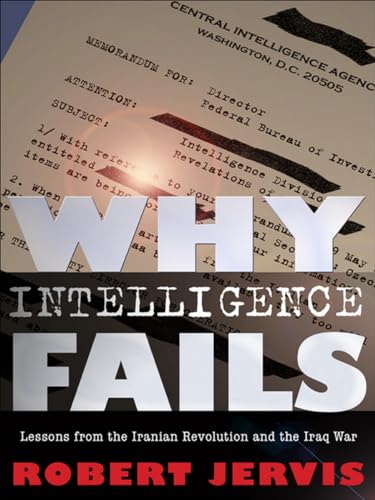
The U.S. government spends enormous resources each year on the gathering and analysis of intelligence, yet the history of American foreign policy is littered with missteps and misunderstandings that have resulted from intelligence failures.
In Why Intelligence Fails, Robert Jervis examines the politics and psychology of two of the more spectacular intelligence failures in recent memory: the mistaken belief that the regime of the Shah in Iran was secure and stable in 1978, and the claim that Iraq had active WMD programs in 2002.
The Iran case is based on a recently declassified report Jervis was commissioned to undertake by CIA thirty years ago and includes memoranda written by CIA officials in response to Jervis's findings. The Iraq case, also grounded in a review of the intelligence community's performance, is based on close readings of both classified and declassified documents, though Jervis's conclusions are entirely supported by evidence that has been declassified.
In both cases, Jervis finds not only that intelligence was badly flawed but also that later explanations—analysts were bowing to political pressure and telling the White House what it wanted to hear or were willfully blind—were also incorrect. Proponents of these explanations claimed that initial errors were compounded by groupthink, lack of coordination within the government, and failure to share information. Policy prescriptions, including the recent establishment of a Director of National Intelligence, were supposed to remedy the situation.
In Jervis's estimation, neither the explanations nor the prescriptions are adequate. The inferences that intelligence drew were actually quite plausible given the information available. Errors arose, he concludes, from insufficient attention to the ways in which information should be gathered and interpreted, a lack of self-awareness about the factors that led to the judgments, and an organizational culture that failed to probe for weaknesses and explore alternatives. Evaluating the inherent tensions between the methods and aims of intelligence personnel and policymakers from a unique insider's perspective, Jervis forcefully criticizes recent proposals for improving the performance of the intelligence community and discusses ways in which future analysis can be improved.
Le informazioni nella sezione "Riassunto" possono far riferimento a edizioni diverse di questo titolo.
Informazioni sull'autore
Robert Jervis is Adlai E. Stevenson Professor of International Politics at Columbia University. He is the author of many books, including The Meaning of the Nuclear Revolution, also from Cornell, and, most recently, American Foreign Policy in a New Era.
Le informazioni nella sezione "Su questo libro" possono far riferimento a edizioni diverse di questo titolo.
Risultati della ricerca per Why Intelligence Fails: Lessons from the Iranian Revolution...

Foto dell'editore
Why Intelligence Fails: Lessons from the Iranian Revolution and the Iraq War (Cornell Studies in Security Affairs)
Editore:
Cornell University Press, 2010
ISBN 10: 0801447852
ISBN 13: 9780801447853
Antico o usato
Rilegato
Da: World of Books (was SecondSale), Montgomery, IL, U.S.A.
Valutazione del venditore 5 su 5 stelle

Condizione: Good. Item in good condition. Textbooks may not include supplemental items i.e. CDs, access codes etc. Codice articolo 00108309303
Compra usato
EUR 4,49
Spedizione gratuita
Spedito in U.S.A.
Spedito in U.S.A.
Quantità: 1 disponibili
Foto dell'editore
Why Intelligence Fails: Lessons from the Iranian Revolution and the Iraq War (Cornell Studies in Security Affairs)
Editore:
Cornell University Press (edition First Edition), 2010
ISBN 10: 0801447852
ISBN 13: 9780801447853
Antico o usato
Rilegato
Prima edizione
Da: BooksRun, Philadelphia, PA, U.S.A.
Valutazione del venditore 5 su 5 stelle
Hardcover. Condizione: Very Good. First Edition. With dust jacket. It's a well-cared-for item that has seen limited use. The item may show minor signs of wear. All the text is legible, with all pages included. It may have slight markings and/or highlighting. Codice articolo 0801447852-11-1-29
Compra usato
EUR 6,18
Spedizione gratuita
Spedito in U.S.A.
Spedito in U.S.A.
Quantità: 2 disponibili
Foto dell'editore
Why Intelligence Fails : Lessons from the Iranian Revolution and the Iraq War
Editore:
Cornell University Press, 2010
ISBN 10: 0801447852
ISBN 13: 9780801447853
Antico o usato
Rilegato
Da: Better World Books, Mishawaka, IN, U.S.A.
Valutazione del venditore 5 su 5 stelle
Condizione: Good. Former library copy. Pages intact with minimal writing/highlighting. The binding may be loose and creased. Dust jackets/supplements are not included. Includes library markings. Stock photo provided. Product includes identifying sticker. Better World Books: Buy Books. Do Good. Codice articolo GRP65125180
Compra usato
EUR 6,78
Spedizione gratuita
Spedito in U.S.A.
Spedito in U.S.A.
Quantità: 2 disponibili
Foto dell'editore
Why Intelligence Fails : Lessons from the Iranian Revolution and the Iraq War
Editore:
Cornell University Press, 2010
ISBN 10: 0801447852
ISBN 13: 9780801447853
Antico o usato
Rilegato
Da: Better World Books, Mishawaka, IN, U.S.A.
Valutazione del venditore 5 su 5 stelle
Condizione: Very Good. Former library copy. Pages intact with possible writing/highlighting. Binding strong with minor wear. Dust jackets/supplements may not be included. Includes library markings. Stock photo provided. Product includes identifying sticker. Better World Books: Buy Books. Do Good. Codice articolo 5532229-6
Compra usato
EUR 6,78
Spedizione gratuita
Spedito in U.S.A.
Spedito in U.S.A.
Quantità: 1 disponibili
Foto dell'editore
Why Intelligence Fails : Lessons from the Iranian Revolution and the Iraq War
Editore:
Cornell University Press, 2010
ISBN 10: 0801447852
ISBN 13: 9780801447853
Antico o usato
Rilegato
Da: Better World Books: West, Reno, NV, U.S.A.
Valutazione del venditore 5 su 5 stelle
Condizione: Good. Former library copy. Pages intact with minimal writing/highlighting. The binding may be loose and creased. Dust jackets/supplements are not included. Includes library markings. Stock photo provided. Product includes identifying sticker. Better World Books: Buy Books. Do Good. Codice articolo GRP65125180
Compra usato
EUR 6,78
Spedizione gratuita
Spedito in U.S.A.
Spedito in U.S.A.
Quantità: 2 disponibili
Foto dell'editore
Why Intelligence Fails
Editore:
Cornell University Press, 2010
ISBN 10: 0801447852
ISBN 13: 9780801447853
Antico o usato
Rilegato
Da: ThriftBooks-Dallas, Dallas, TX, U.S.A.
Valutazione del venditore 5 su 5 stelle
Hardcover. Condizione: Very Good. No Jacket. May have limited writing in cover pages. Pages are unmarked. ~ ThriftBooks: Read More, Spend Less. Codice articolo G0801447852I4N00
Compra usato
EUR 7,34
Spedizione gratuita
Spedito in U.S.A.
Spedito in U.S.A.
Quantità: 1 disponibili
Foto dell'editore
Why Intelligence Fails: Lessons from the Iranian Revolution and the Iraq War (Cornell Studies in Security Affairs)
Editore:
Cornell University Press, 2010
ISBN 10: 0801447852
ISBN 13: 9780801447853
Antico o usato
Rilegato
Da: HPB-Emerald, Dallas, TX, U.S.A.
Valutazione del venditore 5 su 5 stelle
Hardcover. Condizione: Very Good. Connecting readers with great books since 1972! Used books may not include companion materials, and may have some shelf wear or limited writing. We ship orders daily and Customer Service is our top priority! Codice articolo S_443251168
Compra usato
EUR 4,50
Spedizione EUR 3,28
Spedito in U.S.A.
Spedito in U.S.A.
Quantità: 1 disponibili
Foto dell'editore
Why Intelligence Fails: Lessons from the Iranian Revolution and the Iraq War (Cornell Studies in Security Affairs)
Editore:
Cornell University Press, 2010
ISBN 10: 0801447852
ISBN 13: 9780801447853
Antico o usato
Rilegato
Prima edizione
Da: The Maryland Book Bank, Baltimore, MD, U.S.A.
Valutazione del venditore 5 su 5 stelle
hardcover. Condizione: Very Good. First Edition. Used - Very Good. Codice articolo 12-O-4-0187
Compra usato
EUR 3,76
Spedizione EUR 4,10
Spedito in U.S.A.
Spedito in U.S.A.
Quantità: 1 disponibili
Foto dell'editore
Why Intelligence Fails: Lessons from the Iranian Revolution and the Iraq War (Cornell Studies in Security Affairs)
Editore:
Cornell University Press, 2010
ISBN 10: 0801447852
ISBN 13: 9780801447853
Antico o usato
Rilegato
Da: Midtown Scholar Bookstore, Harrisburg, PA, U.S.A.
Valutazione del venditore 5 su 5 stelle
hardcover. Condizione: Acceptable. HARDCOVER Acceptable - This is a significantly damaged book. It should be considered a reading copy only. Please order this book only if you are interested in the content and not the condition. May be ex-library. Standard-sized. Codice articolo M0801447852Z4
Compra usato
EUR 3,10
Spedizione EUR 5,24
Spedito in U.S.A.
Spedito in U.S.A.
Quantità: 6 disponibili
Immagini fornite dal venditore
Why Intelligence Fails: Lessons from the Iranian Revolution and the Iraq War (Cornell Studies in Security Affairs)
Editore:
Cornell University Press, 2010
ISBN 10: 0801447852
ISBN 13: 9780801447853
Antico o usato
Rilegato
Prima edizione
Da: Elam's Books, Winona, MN, U.S.A.
Valutazione del venditore 4 su 5 stelle

Hardcover. Condizione: As New. 1st Edition. Photo is the book you will receive. In excellent condition with nominal wear, a tight binding and pristine text. Suitable as a gift. Codice articolo 007556
Compra usato
EUR 11,70
Spedizione EUR 3,93
Spedito in U.S.A.
Spedito in U.S.A.
Quantità: 1 disponibili