
Articoli correlati a Locating Migration: Rescaling Cities and Migrants
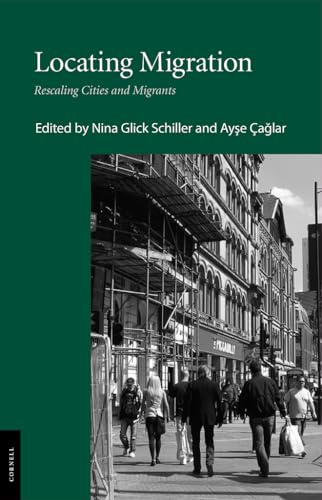
Sinossi
In this book Nina Glick Schiller and Ayse Çaglar, along with a stellar group of contributing authors, examine the relationship between migrants and cities in a time of massive urban restructuring. They find that locality matters in migration research and migrants matter in the reconfiguration of contemporary cities. This book provides a new approach to the study of migrant settlement and transnational connection in which cities rather than nation-states, ethnic groups, or transnational communities serve as the starting point for comparative analysis. Neither negating nor privileging the nation-state, Locating Migration provides ethnographic insights into the various ways in which migrants and specific cities together mutually constitute and contest the local, national, and global. Cities are approached not as containers but as fluid and historically differentiated analytical entry points. Chapters explore migrants' relationship to the neoliberal rebranding, redevelopment, and rescaling of down-and-out, aspiring, and global cities in the United States and Europe.
The various chapters document the pathways of incorporation and transnational connection of migrants from Asia, Africa, Latin America, and Europe. Migrants are approached not as a homogenous category but in terms of their range of experiences of class, racialization, gender, history, politics, and religion.
Setting aside the migrant/native divide that haunts most migration studies, the authors of this book view migrants as residents of cities and actors within them, understanding that to be a resident of a city is to live within, contribute to, and contest globe-spanning processes that shape urban economy, politics, and culture.
In this book Nina Glick Schiller and Ayse Çaglar, along with a stellar group of contributing authors, examine the relationship between migrants and cities in a time of massive urban restructuring. They find that locality matters in migration research and migrants matter in the reconfiguration of contemporary cities. This book provides a new approach to the study of migrant settlement and transnational connection in which cities rather than nation-states, ethnic groups, or transnational communities serve as the starting point for comparative analysis.
Neither negating nor privileging the nation-state, Locating Migration provides ethnographic insights into the various ways in which migrants and specific cities together mutually constitute and contest the local, national, and global. Cities are approached not as containers but as fluid and historically differentiated analytical entry points. Chapters explore migrants' relationship to the neoliberal rebranding, redevelopment, and rescaling of down-and-out, aspiring, and global cities in the United States and Europe. The various chapters document the pathways of incorporation and transnational connection of migrants from Asia, Africa, Latin America, and Europe.
Migrants are approached not as a homogenous category but in terms of their range of experiences of class, racialization, gender, history, politics, and religion. Setting aside the migrant/native divide that haunts most migration studies, the authors of this book view migrants as residents of cities and actors within them, understanding that to be a resident of a city is to live within, contribute to, and contest globe-spanning processes that shape urban economy, politics, and culture.
Contributors: Neil Brenner, New York University; Caroline B. Brettell, Southern Methodist University; Ayse Çaglar, Central European University and Max Planck Institute for the Study of Religious and Ethnic Diversity, Göttingen; Bela Feldman-Bianco, State University of Campinas; Nina Glick Schiller, University of Manchester; Judith Goode, Temple University; Bruno Riccio, University of Bologna; Ruba Salih, University of Exeter; Monika Salzbrunn, Lausanne University and Ecole des Hautes Etudes en Sceinces Sociales, Paris; Michael Samers, University of Kentucky; Gunther Schlee, Max Planck Institute for the Social Anthropology, Halle; Rijk van Dijk, Leiden University
Le informazioni nella sezione "Riassunto" possono far riferimento a edizioni diverse di questo titolo.
Informazioni sull'autore
Nina Glick Schiller is Professor of Social Anthropology and Director of the Research Institute for Cosmopolitan Cultures at the University of Manchester. She is coauthor of Nations Unbound and Georges Woke up Laughing and founding editor of Identities: Global Studies in Culture and Power. Ayse Çaglar is Professor of Sociology and Social Anthropology at the Central European University and a Research Group Leader at the Max Planck Institute for the Study of Religious and Ethnic Diversity.
Le informazioni nella sezione "Su questo libro" possono far riferimento a edizioni diverse di questo titolo.
Risultati della ricerca per Locating Migration: Rescaling Cities and Migrants

Immagini fornite dal venditore
Locating Migration
Da: moluna, Greven, Germania
Valutazione del venditore 5 su 5 stelle

Condizione: New. This books examines the relationship between migrants and cities in a time of massive urban restructuring, finding that locality matters in migration research and migrants matter in the reconfiguration of contemporary cities.KlappentextrnrnT. Codice articolo 898714826
Compra nuovo
EUR 166,54
Spedizione EUR 48,99
Spedito da Germania a U.S.A.
Spedito da Germania a U.S.A.
Quantità: Più di 20 disponibili
Foto dell'editore
Locating Migration: Rescaling Cities and Migrants
Da: Revaluation Books, Exeter, Regno Unito
Valutazione del venditore 5 su 5 stelle
Hardcover. Condizione: Brand New. 296 pages. 9.50x6.50x1.00 inches. In Stock. Codice articolo x-0801449529
Compra nuovo
EUR 231,02
Spedizione EUR 14,79
Spedito da Regno Unito a U.S.A.
Spedito da Regno Unito a U.S.A.
Quantità: 2 disponibili
Foto dell'editore
Locating Migration: Rescaling Cities and Migrants
Editore:
Cornell University Press, 2010
ISBN 10: 0801449529
ISBN 13: 9780801449529
Antico o usato
Rilegato
Da: Mispah books, Redhill, SURRE, Regno Unito
Valutazione del venditore 4 su 5 stelle

Hardcover. Condizione: Like New. LIKE NEW. SHIPS FROM MULTIPLE LOCATIONS. book. Codice articolo ERICA77308014495296
Compra usato
EUR 304,77
Spedizione EUR 29,59
Spedito da Regno Unito a U.S.A.
Spedito da Regno Unito a U.S.A.
Quantità: 1 disponibili