
Articoli correlati a Making Enemies: War And State Building in Burma
Sinossi
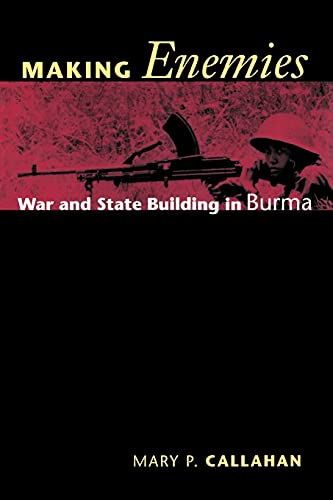
The Burmese army took political power in Burma in 1962 and has ruled the country ever since. The persistence of this government—even in the face of long-term nonviolent opposition led by activist Aung San Suu Kyi, who was awarded the Nobel Peace Prize in 1991—has puzzled scholars. In a book relevant to current debates about democratization, Mary P. Callahan seeks to explain the extraordinary durability of the Burmese military regime. In her view, the origins of army rule are to be found in the relationship between war and state formation.
Burma's colonial past had seen a large imbalance between the military and civil sectors. That imbalance was accentuated soon after formal independence by one of the earliest and most persistent covert Cold War conflicts, involving CIA-funded Kuomintang incursions across the Burmese border into the People's Republic of China. Because this raised concerns in Rangoon about the possibility of a showdown with Communist China, the Burmese Army received even more autonomy and funding to protect the integrity of the new nation-state.
The military transformed itself during the late 1940s and the 1950s from a group of anticolonial guerrilla bands into the professional force that seized power in 1962. The army edged out all other state and social institutions in the competition for national power. Making Enemies draws upon Callahan's interviews with former military officers and her archival work in Burmese libraries and halls of power. Callahan's unparalleled access allows her to correct existing explanations of Burmese authoritarianism and to supply new information about the coups of 1958 and 1962.
The Burmese army took political power in Burma in 1962 and has ruled the country ever since. The persistence of this government—even in the face of long-term nonviolent opposition led by activist Aung San Suu Kyi, who was awarded the Nobel Peace Prize in 1991—has puzzled scholars. In a book relevant to current debates about democratization, Mary P. Callahan seeks to explain the extraordinary durability of the Burmese military regime. In her view, the origins of army rule are to be found in the relationship between war and state formation.Burma's colonial past had seen a large imbalance between the military and civil sectors. That imbalance was accentuated soon after formal independence by one of the earliest and most persistent covert Cold War conflicts, involving CIA-funded Kuomintang incursions across the Burmese border into the People's Republic of China. Because this raised concerns in Rangoon about the possibility of a showdown with Communist China, the Burmese Army received even more autonomy and funding to protect the integrity of the new nation-state.The military transformed itself during the late 1940s and the 1950s from a group of anticolonial guerrilla bands into the professional force that seized power in 1962. The army edged out all other state and social institutions in the competition for national power. Making Enemies draws upon Callahan's interviews with former military officers and her archival work in Burmese libraries and halls of power. Callahan's unparalleled access allows her to correct existing explanations of Burmese authoritarianism and to supply new information about the coups of 1958 and 1962.
Le informazioni nella sezione "Riassunto" possono far riferimento a edizioni diverse di questo titolo.
Informazioni sull'autore
Mary P. Callahan is Associate Professor and Director of the International Studies Program at the Jackson School of International Studies, University of Washington.
Le informazioni nella sezione "Su questo libro" possono far riferimento a edizioni diverse di questo titolo.
Risultati della ricerca per Making Enemies: War And State Building in Burma

Foto dell'editore
Making Enemies: War and State Building in Burma
Editore:
Cornell University Press, 2005
ISBN 10: 0801472679
ISBN 13: 9780801472671
Antico o usato
Paperback
Da: ThriftBooks-Dallas, Dallas, TX, U.S.A.
Valutazione del venditore 5 su 5 stelle

Paperback. Condizione: Very Good. No Jacket. Former library book; May have limited writing in cover pages. Pages are unmarked. ~ ThriftBooks: Read More, Spend Less. Codice articolo G0801472679I4N10
Compra usato
EUR 17,35
Spedizione gratuita
Spedito in U.S.A.
Spedito in U.S.A.
Quantità: 1 disponibili
Foto dell'editore
Making Enemies: War and State Building in Burma
Editore:
Cornell University Press, 2005
ISBN 10: 0801472679
ISBN 13: 9780801472671
Antico o usato
paperback
Da: The Maryland Book Bank, Baltimore, MD, U.S.A.
Valutazione del venditore 5 su 5 stelle
paperback. Condizione: Very Good. Used - Very Good. Codice articolo 13-B-1-0257
Compra usato
EUR 13,69
Spedizione EUR 4,17
Spedito in U.S.A.
Spedito in U.S.A.
Quantità: 1 disponibili
Foto dell'editore
Making Enemies : War and State Building in Burma
Editore:
Cornell University Press, 2005
ISBN 10: 0801472679
ISBN 13: 9780801472671
Antico o usato
Brossura
Da: Better World Books, Mishawaka, IN, U.S.A.
Valutazione del venditore 5 su 5 stelle
Condizione: Good. Former library copy. Pages intact with minimal writing/highlighting. The binding may be loose and creased. Dust jackets/supplements are not included. Includes library markings. Stock photo provided. Product includes identifying sticker. Better World Books: Buy Books. Do Good. Codice articolo 15260212-6
Compra usato
EUR 20,41
Spedizione gratuita
Spedito in U.S.A.
Spedito in U.S.A.
Quantità: 1 disponibili
Foto dell'editore
Making Enemies: War and State Building in Burma
Editore:
Cornell University Press, 2005
ISBN 10: 0801472679
ISBN 13: 9780801472671
Antico o usato
Paperback
Da: WorldofBooks, Goring-By-Sea, WS, Regno Unito
Valutazione del venditore 5 su 5 stelle
Paperback. Condizione: Very Good. The book has been read, but is in excellent condition. Pages are intact and not marred by notes or highlighting. The spine remains undamaged. Codice articolo GOR008395963
Compra usato
EUR 20,77
Spedizione EUR 6,64
Spedito da Regno Unito a U.S.A.
Spedito da Regno Unito a U.S.A.
Quantità: 3 disponibili
Foto dell'editore
Making Enemies: War and State Building in Burma
Editore:
Cornell University Press 2005-12-21, 2005
ISBN 10: 0801472679
ISBN 13: 9780801472671
Nuovo
Paperback
Da: Chiron Media, Wallingford, Regno Unito
Valutazione del venditore 5 su 5 stelle
Paperback. Condizione: New. Brand new book, sourced directly from publisher. Dispatch time is 24-48 hours from our warehouse. Book will be sent in robust, secure packaging to ensure it reaches you securely. Codice articolo 6666-GRD-9780801472671
Compra nuovo
EUR 22,17
Spedizione EUR 5,92
Spedito da Regno Unito a U.S.A.
Spedito da Regno Unito a U.S.A.
Quantità: 1 disponibili
Immagini fornite dal venditore
Making Enemies
Editore:
Cornell University Press, US, 2005
ISBN 10: 0801472679
ISBN 13: 9780801472671
Nuovo
Paperback
Da: Rarewaves.com USA, London, LONDO, Regno Unito
Valutazione del venditore 5 su 5 stelle
Paperback. Condizione: New. The Burmese army took political power in Burma in 1962 and has ruled the country ever since. The persistence of this government-even in the face of long-term nonviolent opposition led by activist Aung San Suu Kyi, who was awarded the Nobel Peace Prize in 1991-has puzzled scholars. In a book relevant to current debates about democratization, Mary P. Callahan seeks to explain the extraordinary durability of the Burmese military regime. In her view, the origins of army rule are to be found in the relationship between war and state formation. Burma's colonial past had seen a large imbalance between the military and civil sectors. That imbalance was accentuated soon after formal independence by one of the earliest and most persistent covert Cold War conflicts, involving CIA-funded Kuomintang incursions across the Burmese border into the People's Republic of China. Because this raised concerns in Rangoon about the possibility of a showdown with Communist China, the Burmese Army received even more autonomy and funding to protect the integrity of the new nation-state. The military transformed itself during the late 1940s and the 1950s from a group of anticolonial guerrilla bands into the professional force that seized power in 1962. The army edged out all other state and social institutions in the competition for national power. Making Enemies draws upon Callahan's interviews with former military officers and her archival work in Burmese libraries and halls of power. Callahan's unparalleled access allows her to correct existing explanations of Burmese authoritarianism and to supply new information about the coups of 1958 and 1962. Codice articolo LU-9780801472671
Compra nuovo
EUR 30,22
Spedizione gratuita
Spedito da Regno Unito a U.S.A.
Spedito da Regno Unito a U.S.A.
Quantità: 1 disponibili
Foto dell'editore
Making Enemies: War and State Building in Burma
Editore:
Cornell University Press, 2005
ISBN 10: 0801472679
ISBN 13: 9780801472671
Nuovo
Brossura
Prima edizione
Da: Kennys Bookshop and Art Galleries Ltd., Galway, GY, Irlanda
Valutazione del venditore 5 su 5 stelle
Condizione: New. Num Pages: 296 pages, 28. BIC Classification: 1FMB; 3JJP; JPV; JW. Category: (P) Professional & Vocational; (U) Tertiary Education (US: College); (UP) Postgraduate, Research & Scholarly; (UU) Undergraduate. Dimension: 229 x 153 x 18. Weight in Grams: 404. . 2005. 1st Edition. Paperback. . . . . Codice articolo V9780801472671
Compra nuovo
EUR 29,06
Spedizione EUR 9,50
Spedito da Irlanda a U.S.A.
Spedito da Irlanda a U.S.A.
Quantità: 1 disponibili
Foto dell'editore
Making Enemies
Da: PBShop.store UK, Fairford, GLOS, Regno Unito
Valutazione del venditore 5 su 5 stelle
PAP. Condizione: New. New Book. Shipped from UK. Established seller since 2000. Codice articolo GB-9780801472671
Compra nuovo
EUR 33,76
Spedizione EUR 4,93
Spedito da Regno Unito a U.S.A.
Spedito da Regno Unito a U.S.A.
Quantità: 1 disponibili
Foto dell'editore
Making Enemies War and State Building in Burma
Print on DemandDa: Revaluation Books, Exeter, Regno Unito
Valutazione del venditore 5 su 5 stelle
Paperback. Condizione: Brand New. 296 pages. 9.25x6.25x0.75 inches. In Stock. This item is printed on demand. Codice articolo __0801472679
Compra nuovo
EUR 27,05
Spedizione EUR 11,86
Spedito da Regno Unito a U.S.A.
Spedito da Regno Unito a U.S.A.
Quantità: 1 disponibili
Immagini fornite dal venditore
Making Enemies : War And State Building in Burma
Da: GreatBookPrices, Columbia, MD, U.S.A.
Valutazione del venditore 5 su 5 stelle
Condizione: New. Codice articolo 3475860-n
Compra nuovo
EUR 37,26
Spedizione EUR 2,35
Spedito in U.S.A.
Spedito in U.S.A.
Quantità: 1 disponibili