
Articoli correlati a Anatomy of Mistrust: U.S.-Soviet Relations During the...
Sinossi
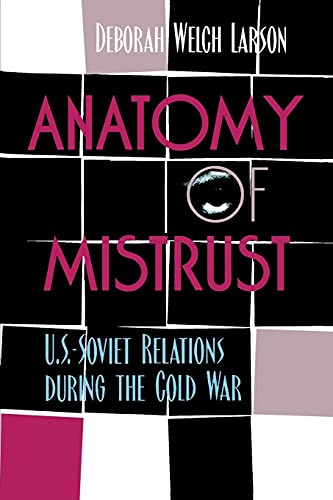
The United States and the Soviet Union missed numerous diplomatic opportunities to resolve differences and control the arms race because neither state trusted the other, according to Deborah Welch Larson. In Anatomy of Mistrust, she shows that the goals of Soviet and U.S. leaders were frequently complementary, and an agreement should have been attainable. Lost opportunities contributed to bankruptcy for the Soviet Union, serious damage to the economy of the United States, decreased public support for internationalist policies, and a proliferation of nuclear weapons.
Synthesizing different understandings of trust and mistrust from the theoretical traditions of economics, psychology, and game theory, Larson analyzes five cases that might have been turning points in U.S.-Soviet relations: the two-year period following Stalin's death in 1953; Khrushchev's peace offensive from the launching of Sputnik until the U-2 incident; the Kennedy administration; the Nixon-Brezhnev detente; and the Gorbachev period. Larson concludes that leaders in the United States often refused to accept Soviet offers to negotiate because they feared a trap. Mutual trust is necessary, she concludes, although it may not be sufficient, for states to cooperate in managing their security.
The United States and the Soviet Union missed numerous diplomatic opportunities to resolve differences and control the arms race because neither state trusted the other, according to Deborah Welch Larson. In Anatomy of Mistrust, She shows that the goals of Soviet and U.S. leaders were frequently complementary, and an agreement should have been attainable. Lost opportunities contributed to bankruptcy for the Soviet Union, serious damage to the economy of the United States, decreased public support for internationalist policies, and a proliferation of nuclear weapons.
Synthesizing different understandings of trust and mistrust from the theoretical traditions of economics, psychology, and game theory, Larson analyzes five cases that might have been turning points in U.S.-Soviet relations: the two-year period following Stalin's death in 1953; Khrushchev's peace offensive from the launching of Sputnik until the U-2 incident; the Kennedy administration; the Nixon-Brezhnev detente; and the Gorbachev period. Larson concludes that leaders in the United States often refused to accept Soviet offers to negotiate because they feared a trap. Mutual trust is necessary, she concludes, although it may not be sufficient, for states to cooperate in managing their security.
Le informazioni nella sezione "Riassunto" possono far riferimento a edizioni diverse di questo titolo.
Informazioni sull'autore
Deborah Welch Larson is professor of political science at the University of California, Los Angeles.
Le informazioni nella sezione "Su questo libro" possono far riferimento a edizioni diverse di questo titolo.
Risultati della ricerca per Anatomy of Mistrust: U.S.-Soviet Relations During the...

Foto dell'editore
Anatomy of Mistrust: U.S.-Soviet Relations during the Cold War (Cornell Studies in Security Affairs)
Editore:
Cornell University Press, 2000
ISBN 10: 0801486823
ISBN 13: 9780801486821
Antico o usato
Paperback
Da: Midtown Scholar Bookstore, Harrisburg, PA, U.S.A.
Valutazione del venditore 5 su 5 stelle

Paperback. Condizione: Good. Good - Bumped and creased book with tears to the extremities, but not affecting the text block, may have remainder mark or previous owner's name - GOOD Standard-sized. Codice articolo M0801486823Z3
Compra usato
EUR 2,22
Spedizione EUR 5,36
Spedito in U.S.A.
Spedito in U.S.A.
Quantità: 1 disponibili
Foto dell'editore
Anatomy of Mistrust: U.S.-Soviet Relations During the Cold War
Editore:
Cornell University Press, 2000
ISBN 10: 0801486823
ISBN 13: 9780801486821
Antico o usato
Paperback
Da: World of Books (was SecondSale), Montgomery, IL, U.S.A.
Valutazione del venditore 5 su 5 stelle
Paperback. Condizione: Very Good. Synthesizing different understandings of trust and mistrust from the theoretical traditions of economics, psychology, and game theory, Larson analyzes five cases that might have been turning points in U.S.-Soviet relations. Codice articolo 00095418430
Compra usato
EUR 7,73
Spedizione gratuita
Spedito in U.S.A.
Spedito in U.S.A.
Quantità: 1 disponibili
Foto dell'editore
Anatomy of Mistrust: U.S.-Soviet Relations During the Cold War
Editore:
Cornell University Press, 2000
ISBN 10: 0801486823
ISBN 13: 9780801486821
Antico o usato
Paperback
Da: World of Books (was SecondSale), Montgomery, IL, U.S.A.
Valutazione del venditore 5 su 5 stelle
Paperback. Condizione: Good. Synthesizing different understandings of trust and mistrust from the theoretical traditions of economics, psychology, and game theory, Larson analyzes five cases that might have been turning points in U.S.-Soviet relations. Codice articolo 00092748464
Compra usato
EUR 7,73
Spedizione gratuita
Spedito in U.S.A.
Spedito in U.S.A.
Quantità: 1 disponibili
Foto dell'editore
Anatomy of Mistrust: U.S.-Soviet Relations during the Cold War
Editore:
Cornell University Press, 2000
ISBN 10: 0801486823
ISBN 13: 9780801486821
Antico o usato
Paperback
Da: ThriftBooks-Atlanta, AUSTELL, GA, U.S.A.
Valutazione del venditore 5 su 5 stelle
Paperback. Condizione: Good. No Jacket. Pages can have notes/highlighting. Spine may show signs of wear. ~ ThriftBooks: Read More, Spend Less. Codice articolo G0801486823I3N00
Compra usato
EUR 7,78
Spedizione gratuita
Spedito in U.S.A.
Spedito in U.S.A.
Quantità: 1 disponibili
Foto dell'editore
Anatomy of Mistrust: U.S.-Soviet Relations during the Cold War
Editore:
Cornell University Press, 2000
ISBN 10: 0801486823
ISBN 13: 9780801486821
Antico o usato
Paperback
Da: ThriftBooks-Dallas, Dallas, TX, U.S.A.
Valutazione del venditore 5 su 5 stelle
Paperback. Condizione: Good. No Jacket. Pages can have notes/highlighting. Spine may show signs of wear. ~ ThriftBooks: Read More, Spend Less. Codice articolo G0801486823I3N00
Compra usato
EUR 7,78
Spedizione gratuita
Spedito in U.S.A.
Spedito in U.S.A.
Quantità: 1 disponibili
Foto dell'editore
Anatomy of Mistrust: U.S.-Soviet Relations during the Cold War (Cornell Studies in Security Affairs)
Editore:
Cornell University Press, 2000
ISBN 10: 0801486823
ISBN 13: 9780801486821
Antico o usato
paperback
Da: Books From California, Simi Valley, CA, U.S.A.
Valutazione del venditore 4 su 5 stelle

paperback. Condizione: Good. some markings and underlining throughout the pages. Codice articolo mon0003535564
Compra usato
EUR 3,69
Spedizione EUR 4,45
Spedito in U.S.A.
Spedito in U.S.A.
Quantità: 1 disponibili
Foto dell'editore
Anatomy of Mistrust : U. S. -Soviet Relations During the Cold War
Editore:
Cornell University Press, 2000
ISBN 10: 0801486823
ISBN 13: 9780801486821
Antico o usato
Brossura
Da: Better World Books: West, Reno, NV, U.S.A.
Valutazione del venditore 5 su 5 stelle
Condizione: Good. Former library copy. Pages intact with minimal writing/highlighting. The binding may be loose and creased. Dust jackets/supplements are not included. Includes library markings. Stock photo provided. Product includes identifying sticker. Better World Books: Buy Books. Do Good. Codice articolo 10063837-75
Compra usato
EUR 8,57
Spedizione gratuita
Spedito in U.S.A.
Spedito in U.S.A.
Quantità: 1 disponibili
Foto dell'editore
Anatomy of Mistrust : U. S. -Soviet Relations During the Cold War
Editore:
Cornell University Press, 2000
ISBN 10: 0801486823
ISBN 13: 9780801486821
Antico o usato
Brossura
Da: Better World Books: West, Reno, NV, U.S.A.
Valutazione del venditore 5 su 5 stelle
Condizione: Good. Pages intact with minimal writing/highlighting. The binding may be loose and creased. Dust jackets/supplements are not included. Stock photo provided. Product includes identifying sticker. Better World Books: Buy Books. Do Good. Codice articolo 4794261-6
Compra usato
EUR 8,57
Spedizione gratuita
Spedito in U.S.A.
Spedito in U.S.A.
Quantità: 1 disponibili
Foto dell'editore
Anatomy of Mistrust: U.S.-Soviet Relations During the Cold War
Editore:
Cornell University Press, 2000
ISBN 10: 0801486823
ISBN 13: 9780801486821
Antico o usato
Paperback
Da: World of Books Inc, Montgomery, IL, U.S.A.
Valutazione del venditore 4 su 5 stelle
Paperback. Condizione: Good. Synthesizing different understandings of trust and mistrust from the theoretical traditions of economics, psychology, and game theory, Larson analyzes five cases that might have been turning points in U.S.-Soviet relations. Codice articolo CIN0801486823G
Compra usato
EUR 9,57
Spedizione gratuita
Spedito in U.S.A.
Spedito in U.S.A.
Quantità: 1 disponibili
Foto dell'editore
Anatomy of Mistrust: U.S.-Soviet Relations During the Cold War
Editore:
Cornell University Press, 2000
ISBN 10: 0801486823
ISBN 13: 9780801486821
Antico o usato
Paperback
Da: World of Books Inc, Montgomery, IL, U.S.A.
Valutazione del venditore 4 su 5 stelle
Paperback. Condizione: Very Good. Synthesizing different understandings of trust and mistrust from the theoretical traditions of economics, psychology, and game theory, Larson analyzes five cases that might have been turning points in U.S.-Soviet relations. Codice articolo CIN0801486823VG
Compra usato
EUR 9,57
Spedizione gratuita
Spedito in U.S.A.
Spedito in U.S.A.
Quantità: 1 disponibili