
Sinossi
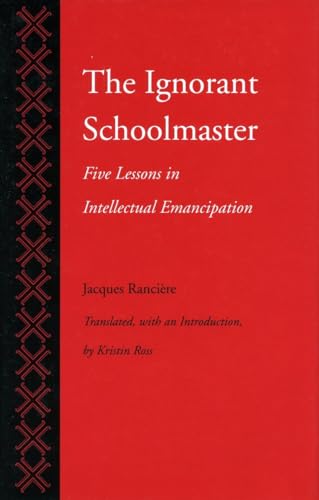
This extraordinary book can be read on several levels. Primarily, it is the story of Joseph Jacotot, an exiles French schoolteacher who discovered in 1818 an unconventional teaching method that spread panic throughout the learned community of Europe.
Knowing no Flemish, Jacotot found himself able to teach in French to Flemish students who knew no French; knowledge, Jacotot concluded, was not necessary to teach, nor explication necessary to learn. The results of this unusual experiment in pedagogy led him to announce that all people were equally intelligent. From this postulate, Jacotot devised a philosophy and a method for what he called "intellectual emancipation"—a method that would allow, for instance, illiterate parents to themselves teach their children how to read. The greater part of the book is devoted to a description and analysis of Jacotot's method, its premises, and (perhaps most important) its implications for understanding both the learning process and the emancipation that results when that most subtle of hierarchies, intelligence, is overturned.
The book, as Kristin Ross argues in her introduction, has profound implications for the ongoing debate about education and class in France that has raged since the student riots of 1968, and it affords Rancière an opportunity (albeit indirectly) to attack the influential educational and sociological theories of Pierre Bourdieu (and others) that Rancière sees as perpetuating inequality.
Le informazioni nella sezione "Riassunto" possono far riferimento a edizioni diverse di questo titolo.
Dalla quarta di copertina
“An extremely provocative, original, and engaging book, it raises questions of great relevance and urgency about the process of cultural selection and canonization.”–Denis Hollier, Yale University
Le informazioni nella sezione "Su questo libro" possono far riferimento a edizioni diverse di questo titolo.
Altre edizioni note dello stesso titolo

Risultati della ricerca per The Ignorant Schoolmaster: Five Lessons in Intellectual...

Foto dell'editore
The Ignorant Schoolmaster : Five Lessons in Intellectual Emancipation
Editore:
Stanford University Press, 1991
ISBN 10: 0804719691
ISBN 13: 9780804719698
Antico o usato
Brossura
Da: Better World Books, Mishawaka, IN, U.S.A.
Valutazione del venditore 5 su 5 stelle

Condizione: Good. Former library copy. Pages intact with minimal writing/highlighting. The binding may be loose and creased. Dust jackets/supplements are not included. Includes library markings. Stock photo provided. Product includes identifying sticker. Better World Books: Buy Books. Do Good. Codice articolo 39260035-6
Compra usato
EUR 21,64
Spedizione gratuita
Spedito in U.S.A.
Spedito in U.S.A.
Quantità: 1 disponibili
Foto dell'editore
The Ignorant Schoolmaster : Five Lessons in Intellectual Emancipation
Editore:
Stanford University Press, 1991
ISBN 10: 0804719691
ISBN 13: 9780804719698
Antico o usato
Brossura
Da: Better World Books, Mishawaka, IN, U.S.A.
Valutazione del venditore 5 su 5 stelle
Condizione: Good. Pages intact with minimal writing/highlighting. The binding may be loose and creased. Dust jackets/supplements are not included. Stock photo provided. Product includes identifying sticker. Better World Books: Buy Books. Do Good. Codice articolo 5636300-6
Compra usato
EUR 21,64
Spedizione gratuita
Spedito in U.S.A.
Spedito in U.S.A.
Quantità: 1 disponibili
Immagini fornite dal venditore
The Ignorant Schoolmaster: Five Lessons in Intellectual Emancipation
Editore:
Stanford University Press, 1991
ISBN 10: 0804719691
ISBN 13: 9780804719698
Antico o usato
Brossura
Da: Zoom Books East, Glendale Heights, IL, U.S.A.
Valutazione del venditore 5 su 5 stelle
Condizione: very_good. Book is in very good condition and may include minimal underlining highlighting. The book can also include "From the library of" labels. May not contain miscellaneous items toys, dvds, etc. . We offer 100% money back guarantee and 24 7 customer service. Codice articolo ZEV.0804719691.VG
Compra usato
EUR 22,50
Spedizione gratuita
Spedito in U.S.A.
Spedito in U.S.A.
Quantità: 1 disponibili
Foto dell'editore
The Ignorant Schoolmaster
Da: PBShop.store UK, Fairford, GLOS, Regno Unito
Valutazione del venditore 4 su 5 stelle

PAP. Condizione: New. New Book. Shipped from UK. Established seller since 2000. Codice articolo FW-9780804719698
Compra nuovo
EUR 25,44
Spedizione EUR 4,77
Spedito da Regno Unito a U.S.A.
Spedito da Regno Unito a U.S.A.
Quantità: 15 disponibili
Immagini fornite dal venditore
Ignorant Schoolmaster : Five Lessons in Intellectual Emancipation
Da: GreatBookPrices, Columbia, MD, U.S.A.
Valutazione del venditore 5 su 5 stelle
Condizione: New. Codice articolo 252948-n
Compra nuovo
EUR 28,73
Spedizione EUR 2,29
Spedito in U.S.A.
Spedito in U.S.A.
Quantità: Più di 20 disponibili
Immagini fornite dal venditore
The Ignorant Schoolmaster
Editore:
Stanford University Press, US, 1991
ISBN 10: 0804719691
ISBN 13: 9780804719698
Nuovo
Paperback
Da: Rarewaves.com USA, London, LONDO, Regno Unito
Valutazione del venditore 5 su 5 stelle
Paperback. Condizione: New. This extraordinary book can be read on several levels. Primarily, it is the story of Joseph Jacotot, an exiles French schoolteacher who discovered in 1818 an unconventional teaching method that spread panic throughout the learned community of Europe. Knowing no Flemish, Jacotot found himself able to teach in French to Flemish students who knew no French; knowledge, Jacotot concluded, was not necessary to teach, nor explication necessary to learn. The results of this unusual experiment in pedagogy led him to announce that all people were equally intelligent. From this postulate, Jacotot devised a philosophy and a method for what he called "intellectual emancipation"-a method that would allow, for instance, illiterate parents to themselves teach their children how to read. The greater part of the book is devoted to a description and analysis of Jacotot's method, its premises, and (perhaps most important) its implications for understanding both the learning process and the emancipation that results when that most subtle of hierarchies, intelligence, is overturned. The book, as Kristin Ross argues in her introduction, has profound implications for the ongoing debate about education and class in France that has raged since the student riots of 1968, and it affords Rancière an opportunity (albeit indirectly) to attack the influential educational and sociological theories of Pierre Bourdieu (and others) that Rancière sees as perpetuating inequality. Codice articolo LU-9780804719698
Compra nuovo
EUR 31,10
Spedizione gratuita
Spedito da Regno Unito a U.S.A.
Spedito da Regno Unito a U.S.A.
Quantità: 1 disponibili
Immagini fornite dal venditore
Ignorant Schoolmaster : Five Lessons in Intellectual Emancipation
Editore:
Stanford University Press, 1991
ISBN 10: 0804719691
ISBN 13: 9780804719698
Antico o usato
Brossura
Da: GreatBookPrices, Columbia, MD, U.S.A.
Valutazione del venditore 5 su 5 stelle
Condizione: As New. Unread book in perfect condition. Codice articolo 252948
Compra usato
EUR 28,95
Spedizione EUR 2,29
Spedito in U.S.A.
Spedito in U.S.A.
Quantità: Più di 20 disponibili
Immagini fornite dal venditore
The Ignorant Schoolmaster
Da: eCampus, Lexington, KY, U.S.A.
Valutazione del venditore 5 su 5 stelle
Condizione: New. Codice articolo N:9780804719698:ONHAND
Compra nuovo
EUR 28,32
Spedizione EUR 3,47
Spedito in U.S.A.
Spedito in U.S.A.
Quantità: 1 disponibili
Immagini fornite dal venditore
The Ignorant Schoolmaster: Five Lessons in Intellectual Emancipation (Paperback or Softback)
Editore:
Stanford University Press 7/1/1991, 1991
ISBN 10: 0804719691
ISBN 13: 9780804719698
Nuovo
Paperback or Softback
Da: BargainBookStores, Grand Rapids, MI, U.S.A.
Valutazione del venditore 5 su 5 stelle
Paperback or Softback. Condizione: New. The Ignorant Schoolmaster: Five Lessons in Intellectual Emancipation. Book. Codice articolo BBS-9780804719698
Compra nuovo
EUR 32,60
Spedizione gratuita
Spedito in U.S.A.
Spedito in U.S.A.
Quantità: 5 disponibili
Immagini fornite dal venditore
The Ignorant Schoolmaster
Editore:
Stanford University Press, US, 1991
ISBN 10: 0804719691
ISBN 13: 9780804719698
Nuovo
Paperback
Da: Rarewaves USA, OSWEGO, IL, U.S.A.
Valutazione del venditore 5 su 5 stelle
Paperback. Condizione: New. This extraordinary book can be read on several levels. Primarily, it is the story of Joseph Jacotot, an exiles French schoolteacher who discovered in 1818 an unconventional teaching method that spread panic throughout the learned community of Europe. Knowing no Flemish, Jacotot found himself able to teach in French to Flemish students who knew no French; knowledge, Jacotot concluded, was not necessary to teach, nor explication necessary to learn. The results of this unusual experiment in pedagogy led him to announce that all people were equally intelligent. From this postulate, Jacotot devised a philosophy and a method for what he called "intellectual emancipation"-a method that would allow, for instance, illiterate parents to themselves teach their children how to read. The greater part of the book is devoted to a description and analysis of Jacotot's method, its premises, and (perhaps most important) its implications for understanding both the learning process and the emancipation that results when that most subtle of hierarchies, intelligence, is overturned. The book, as Kristin Ross argues in her introduction, has profound implications for the ongoing debate about education and class in France that has raged since the student riots of 1968, and it affords Rancière an opportunity (albeit indirectly) to attack the influential educational and sociological theories of Pierre Bourdieu (and others) that Rancière sees as perpetuating inequality. Codice articolo LU-9780804719698
Compra nuovo
EUR 35,40
Spedizione gratuita
Spedito in U.S.A.
Spedito in U.S.A.
Quantità: Più di 20 disponibili