
Articoli correlati a The Forgotten People: Cane River's Creoles of Color:...
The Forgotten People: Cane River's Creoles of Color: Cane River's Creoles of Color (Revised) - Brossura
Sinossi
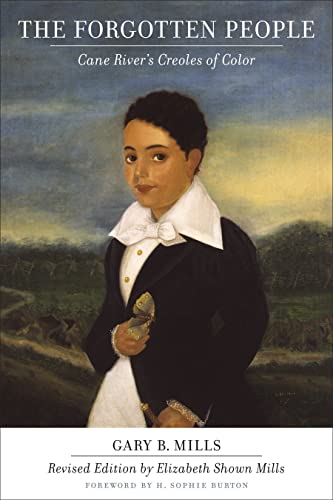
Out of colonial Natchitoches, in northwestern Louisiana, emerged a sophisticated and affluent community founded by a family of freed slaves. Their plantations eventually encompassed 18,000 fertile acres, which they tilled alongside hundreds of their own bondsmen. Furnishings of quality and taste graced their homes, and private tutors educated their children. Cultured, deeply religious, and highly capable, Cane River’s Creoles of color enjoyed economic privileges but led politically constricted lives. Like their white neighbors, they publicly supported the Confederacy and suffered the same depredations of war and political and social uncertainties of Reconstruction. Unlike white Creoles, however, they did not recover amid cycles of Redeemer and Jim Crow politics.
First published in 1977, The Forgotten People offers a socioeconomic history of this widely publicized but also highly romanticized community—a minority group that fit no stereotypes, refused all outside labels, and still struggles to explain its identity in a world mystified by Creolism.
Now revised and significantly expanded, this time-honored work revisits Cane River’s “forgotten people” and incorporates new findings and insight gleaned across thirty-five years of further research. This new edition provides a nuanced portrayal of the lives of Creole slaves and the roles allowed to freed people of color, tackling issues of race, gender, and slave holding by former slaves. The Forgotten People corrects misassumptions about the origin of key properties in the Cane River National Heritage Area and demonstrates how historians reconstruct the lives of the enslaved, the impoverished, and the disenfranchised.
Le informazioni nella sezione "Riassunto" possono far riferimento a edizioni diverse di questo titolo.
Informazioni sull'autore
Gary B. Mills (1944–2002) grew up on a rice plantation in the Mississippi Delta but visited Cane River often in his youth and adopted it personally and professionally in adulthood. From 1976 until his death, he was a professor of history at the University of Alabama.
Elizabeth Shown Mills is an independent scholar and the author of numerous works on Louisiana history and research methodology, including Isle of Canes and Evidence Explained, named by Library Journal as a 2007 Best Reference book.
Le informazioni nella sezione "Su questo libro" possono far riferimento a edizioni diverse di questo titolo.
Risultati della ricerca per The Forgotten People: Cane River's Creoles of Color:...

Foto dell'editore
The Forgotten People: Cane River's Creoles of Color
Editore:
Louisiana State University Press, 2013
ISBN 10: 0807137138
ISBN 13: 9780807137130
Antico o usato
Paperback
Da: World of Books (was SecondSale), Montgomery, IL, U.S.A.
Valutazione del venditore 5 su 5 stelle

Paperback. Condizione: Good. Now revised and expanded, this work revisits Cane River's 'forgotten people' and incorporates new findings and insight gleaned across thirty-five years of further research to provide a nuanced portrayal of the lives of Creole slaves and the roles allowed to freed people of colour, tackling race, gender, and slave holding by former slaves. Codice articolo CIN0807137138G
Compra usato
EUR 9,40
Spedizione gratuita
Spedito in U.S.A.
Spedito in U.S.A.
Quantità: 1 disponibili
Foto dell'editore
The Forgotten People: Cane River's Creoles of Color
Editore:
Louisiana State University Press, 2013
ISBN 10: 0807137138
ISBN 13: 9780807137130
Antico o usato
Paperback
Da: World of Books Inc, Montgomery, IL, U.S.A.
Valutazione del venditore 4 su 5 stelle

Paperback. Condizione: Good. Now revised and expanded, this work revisits Cane River's 'forgotten people' and incorporates new findings and insight gleaned across thirty-five years of further research to provide a nuanced portrayal of the lives of Creole slaves and the roles allowed to freed people of colour, tackling race, gender, and slave holding by former slaves. Codice articolo CIN0807137138G
Compra usato
EUR 11,24
Spedizione gratuita
Spedito in U.S.A.
Spedito in U.S.A.
Quantità: 1 disponibili
Foto dell'editore
The Forgotten People: Cane River's Creoles of Color (Library of Southern Civilization)
Da: McCord Books, NORWALK, IA, U.S.A.
Valutazione del venditore 5 su 5 stelle
paperback. Condizione: Good. Light cover wear, text is unmarked. Codice articolo 241103085
Compra usato
EUR 12,83
Spedizione EUR 4,46
Spedito in U.S.A.
Spedito in U.S.A.
Quantità: 1 disponibili
Foto dell'editore
The Forgotten People: Cane River's Creoles of Color (Library of Southern Civilization)
Da: Lakeside Books, Benton Harbor, MI, U.S.A.
Valutazione del venditore 5 su 5 stelle
Condizione: New. Brand New! Not Overstocks or Low Quality Book Club Editions! Direct From the Publisher! We're not a giant, faceless warehouse organization! We're a small town bookstore that loves books and loves it's customers! Buy from Lakeside Books! Codice articolo OTF-Y-9780807137130
Compra nuovo
EUR 18,74
Spedizione EUR 3,56
Spedito in U.S.A.
Spedito in U.S.A.
Quantità: Più di 20 disponibili
Immagini fornite dal venditore
Forgotten People : Cane River's Creoles of Color
Da: GreatBookPrices, Columbia, MD, U.S.A.
Valutazione del venditore 5 su 5 stelle
Condizione: New. Codice articolo 19779645-n
Compra nuovo
EUR 21,03
Spedizione EUR 2,36
Spedito in U.S.A.
Spedito in U.S.A.
Quantità: Più di 20 disponibili
Immagini fornite dal venditore
The Forgotten People: Cane River's Creoles of Color (Paperback or Softback)
Editore:
LSU Press 11/13/2013, 2013
ISBN 10: 0807137138
ISBN 13: 9780807137130
Nuovo
Paperback or Softback
Da: BargainBookStores, Grand Rapids, MI, U.S.A.
Valutazione del venditore 5 su 5 stelle
Paperback or Softback. Condizione: New. The Forgotten People: Cane River's Creoles of Color. Book. Codice articolo BBS-9780807137130
Compra nuovo
EUR 23,47
Spedizione gratuita
Spedito in U.S.A.
Spedito in U.S.A.
Quantità: 5 disponibili
Immagini fornite dal venditore
Forgotten People : Cane River's Creoles of Color
Da: GreatBookPrices, Columbia, MD, U.S.A.
Valutazione del venditore 5 su 5 stelle
Condizione: As New. Unread book in perfect condition. Codice articolo 19779645
Compra usato
EUR 24,14
Spedizione EUR 2,36
Spedito in U.S.A.
Spedito in U.S.A.
Quantità: Più di 20 disponibili
Foto dell'editore
The Forgotten People: Cane River's Creoles of Color (Library of Southern Civilization)
Da: California Books, Miami, FL, U.S.A.
Valutazione del venditore 5 su 5 stelle
Condizione: New. Codice articolo I-9780807137130
Compra nuovo
EUR 25,74
Spedizione EUR 2,68
Spedito in U.S.A.
Spedito in U.S.A.
Quantità: Più di 20 disponibili
Foto dell'editore
The Forgotten People
Da: PBShop.store UK, Fairford, GLOS, Regno Unito
Valutazione del venditore 5 su 5 stelle
PAP. Condizione: New. New Book. Shipped from UK. Established seller since 2000. Codice articolo FW-9780807137130
Compra nuovo
EUR 26,63
Spedizione EUR 5,99
Spedito da Regno Unito a U.S.A.
Spedito da Regno Unito a U.S.A.
Quantità: 1 disponibili
Foto dell'editore
Forgotten People: Cane River's Creoles of Color (Revised)
Editore:
Louisiana State University Press 2013-11, 2013
ISBN 10: 0807137138
ISBN 13: 9780807137130
Nuovo
PF
Da: Chiron Media, Wallingford, Regno Unito
Valutazione del venditore 5 su 5 stelle
PF. Condizione: New. This item is printed on demand. Brand new book, sourced directly from publisher. Dispatch time is 6-7 days from our warehouse. Book will be sent in robust, secure packaging to ensure it reaches you securely. Codice articolo 6666-IUK-9780807137130
Compra nuovo
EUR 29,92
Spedizione EUR 7,75
Spedito da Regno Unito a U.S.A.
Spedito da Regno Unito a U.S.A.
Quantità: 20 disponibili