
Articoli correlati a Rereading the Sophists: Classical Rhetoric Refigured
Sinossi
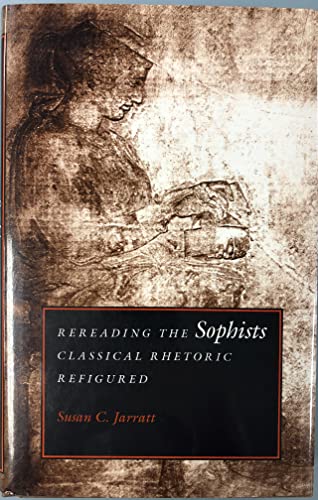
This book is a critically informed challenge to the traditional histories of rhetoric and to the current emphasis on Aristotle and Plato as the most significant classical voices in rhetoric. In it, Susan C. Jarratt argues that the first sophists—a diverse group of traveling intellectuals in the fifth century B.C.—should be given a more prominent place in the study of rhetoric and composition. Rereading the ancient sophists, she creates a new lens through which to see contemporary social issues, including the orality/literacy debate, feminist writing, deconstruction, and writing pedagogy.
The sophists’ pleasure in the play of language, their focus on historical contin-gency, and the centrality of their teaching for democratic practice were sufficiently threatening to their successors Plato and Aristotle that both sought to bury the sophists under philosophical theories of language. The censure of Plato and Aris-totle set a pattern for historical views of the sophists for centuries. Following Hegel and Nietzsche, Jarratt breaks the pattern, finding in the sophists a more progressive charter for teachers and scholars of reading and writing, as well as for those in the adjacent disciplines of literary criticism and theory, education, speech communication, and ancient history.
In tracing the historical interpretations of sophistic rhetoric, Jarratt suggests that the sophists themselves provide the outlines of an alternative to history-writing as the discovery and recounting of a set of stable facts. She sees sophistic use of narrative in argument as a challenge to a simple division between orality and literacy, current discussions of which virtually ignore the sophists. Outlining similarities betweenécriture féminine and sophistic style, Jarratt shows that contemporary feminisms have more in common with sophists than just a style; they share a rhetorical basis for deployment of theory in political action. In her final chapter, Jarratt takes issue with accounts of sophistic pedagogy focusing on technique and the development of the individual. She argues that, despite its employment by powerful demagogues, sophistic pedagogy offers a resource for today’s teachers interested in encouraging minority voices of resistance through language study as the practice of democracy.
Le informazioni nella sezione "Riassunto" possono far riferimento a edizioni diverse di questo titolo.
Informazioni sull'autore
Susan C. Jarratt is associate professor of English at Miami University and is the recipient of several research awards.
Le informazioni nella sezione "Su questo libro" possono far riferimento a edizioni diverse di questo titolo.
Risultati della ricerca per Rereading the Sophists: Classical Rhetoric Refigured

Foto dell'editore
Rereading the Sophists: Classical Rhetoric Refigured
Editore:
Southern Illinois University Pre, 1991
ISBN 10: 0809316161
ISBN 13: 9780809316168
Antico o usato
Rilegato
Da: HPB-Red, Dallas, TX, U.S.A.
Valutazione del venditore 5 su 5 stelle

Hardcover. Condizione: Good. Connecting readers with great books since 1972! Used textbooks may not include companion materials such as access codes, etc. May have some wear or writing/highlighting. We ship orders daily and Customer Service is our top priority! Codice articolo S_481423511
Compra usato
EUR 18,61
Spedizione EUR 3,23
Spedito in U.S.A.
Spedito in U.S.A.
Quantità: 1 disponibili
Foto dell'editore
Rereading the Sophists: classical rhetoric refigured.
Editore:
Southern Illinois University Press, 1991
ISBN 10: 0809316161
ISBN 13: 9780809316168
Antico o usato
Rilegato
Da: William H. Allen Bookseller, Shillington, PA, U.S.A.
Valutazione del venditore 5 su 5 stelle
Hardcover. Condizione: Very Good. Condizione sovraccoperta: Good. 154 pages. Codice articolo 42991
Compra usato
EUR 17,76
Spedizione EUR 4,74
Spedito in U.S.A.
Spedito in U.S.A.
Quantità: 1 disponibili
Foto dell'editore
Rereading the Sophists: Classical Rhetoric Refigured.
Editore:
Southern Illinois Univ. Pr., (1991)., Carbondale, 1991
ISBN 10: 0809316161
ISBN 13: 9780809316168
Antico o usato
Rilegato
Prima edizione
Da: Pride and Prejudice-Books, Ballston Lake, NY, U.S.A.
Valutazione del venditore 5 su 5 stelle
Hardcover. Condizione: Near Fine. Condizione sovraccoperta: Near Fine. First Edition. Original brown cloth. Near Fine in Near Fine Dust Jacket. Codice articolo 016523
Compra usato
EUR 28,42
Spedizione EUR 4,31
Spedito in U.S.A.
Spedito in U.S.A.
Quantità: 1 disponibili
Foto dell'editore
Rereading the Sophists: Classical Rhetoric Refigured
Editore:
Southern Illinois University Press, 1991
ISBN 10: 0809316161
ISBN 13: 9780809316168
Antico o usato
Rilegato
Da: Powell's Bookstores Chicago, ABAA, Chicago, IL, U.S.A.
Valutazione del venditore 5 su 5 stelle
Hardcover. Condizione: Good. Condizione sovraccoperta: Good. Cloth, dj. 8vo. xxiv, 154 pp. Minor shelf wear. Former owner's signature on ffep. Ink annotations on pp. xi-xxiv. Else clean. This book is a critically informed challenge to the traditional histories of rhetoric and to the current emphasis on Aristotle and Plato as the most significant classical voices in rhetoric. In it, Susan C. Jarratt argues that the first sophists?a diverse group of traveling intellectuals in the fifth century B.C.?should be given a more prominent place in the study of rhetoric and composition. Rereading the ancient sophists, she creates a new lens through which to see contemporary social issues, including the orality/literacy debate, feminist writing, deconstruction, and writing pedagogy. The sophists' pleasure in the play of language, their focus on historical contin-gency, and the centrality of their teaching for democratic practice were sufficiently threatening to their successors Plato and Aristotle that both sought to bury the sophists under philosophical theories of language. The censure of Plato and Aris-totle set a pattern for historical views of the sophists for centuries. Following Hegel and Nietzsche, Jarratt breaks the pattern, finding in the sophists a more progressive charter for teachers and scholars of reading and writing, as well as for those in the adjacent disciplines of literary criticism and theory, education, speech communication, and ancient history. In tracing the historical interpretations of sophistic rhetoric, Jarratt suggests that the sophists themselves provide the outlines of an alternative to history-writing as the discovery and recounting of a set of stable facts. She sees sophistic use of narrative in argument as a challenge to a simple division between orality and literacy, current discussions of which virtually ignore the sophists. Outlining similarities between écriture féminine and sophistic style, Jarratt shows that contemporary feminisms have more in common with sophists than just a style; they share a rhetorical basis for deployment of theory in political action. In her final chapter, Jarratt takes issue with accounts of sophistic pedagogy focusing on technique and the development of the individual. She argues that, despite its employment by powerful demagogues, sophistic pedagogy offers a resource for today's teachers interested in encouraging minority voices of resistance through language study as the practice of democracy. Codice articolo 2042989
Compra usato
EUR 29,30
Spedizione EUR 6,47
Spedito in U.S.A.
Spedito in U.S.A.
Quantità: 1 disponibili