
Articoli correlati a Pawn Structure Chess
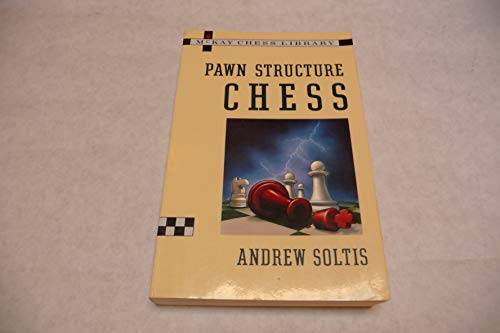
Sinossi
Some 250 years ago, the great Philidor wrote, "The pawns are the soul of chess." Although that statement is perhaps the most common cliche in the literature of the game, it is too often misunderstood.
Pawns are usually considered weak because of their limited range of movement. But the pawns' restricted mobility is precisely what makes them so important strategically: they form a semi-permanent structure -- often called a "pawn skeleton" -- that establishes the territorial lines of the coming battle and thus the nature of the battle itself. Understanding how pawns affect strategy is the subject of this important book. In it you will learn:
-- how to handle the characteristic pawn structure of each opening "family" and each major variation
-- how to recognize the strengths and weaknesses of pawn chains
-- when to exchange pawns in the center -- and when not to
-- how to cramp your opponent's position and what to do if your opponent cramps yours
-- how to create and exploit pawn "holes"...and much, much more, all copiously illustrated by complete games from actual play.
Le informazioni nella sezione "Riassunto" possono far riferimento a edizioni diverse di questo titolo.
Informazioni sull'autore
Andrew Soltis is a grandmaster and a chess columnist for New York Post and Chess Life. In 1988, he was named chess journalist of the year by the Chess Journalists of America.
Dal risvolto di copertina interno
rs ago, the great Philidor wrote, "The pawns are the soul of chess." Although that statement is perhaps the most common cliche in the literature of the game, it is too often misunderstood.<br><br>Pawns are usually considered weak because of their limited range of movement. But the pawns' restricted mobility is precisely what makes them so important strategically: they form a semi-permanent structure -- often called a "pawn skeleton" -- that establishes the territorial lines of the coming battle and thus the nature of the battle itself. Understanding how pawns affect strategy is the subject of this important book. In it you will learn:<br>-- how to handle the characteristic pawn structure of each opening "family" and each major variation<br>-- how to recognize the strengths and weaknesses of pawn chains<br>-- when to exchange pawns in the center -- and when not to<br>-- how to cramp your opponent's position and what to do if your opponent cramps yours<
Le informazioni nella sezione "Su questo libro" possono far riferimento a edizioni diverse di questo titolo.
Risultati della ricerca per Pawn Structure Chess

Immagini fornite dal venditore
Pawn Structure Chess
Editore:
Random House Puzzles & Games, 1995
ISBN 10: 0812925297
ISBN 13: 9780812925296
Antico o usato
Brossura
Da: ICTBooks, Wichita, KS, U.S.A.
Valutazione del venditore 5 su 5 stelle

Condizione: good. Book shows wear from use but remains a usable copy. May include writing highlighting underlining library markings. LISTING USES STOCK PHOTOS AND COVER MAY VARY. Ships via USPS and typically arrives within 10-12 business days. Codice articolo ICV.0812925297.G
Compra usato
EUR 31,24
Spedizione gratuita
Spedito in U.S.A.
Spedito in U.S.A.
Quantità: 1 disponibili
Foto dell'editore
Pawn Structure Chess
Editore:
Random House Puzzles & Games, 1995
ISBN 10: 0812925297
ISBN 13: 9780812925296
Antico o usato
Paperback
Da: Affordable Collectibles, Columbia, MO, U.S.A.
Valutazione del venditore 5 su 5 stelle
Paperback. Condizione: Very Good. No marks. Minimal use. Later, 4th printing number line. Codice articolo 26070316
Compra usato
EUR 43,70
Spedizione EUR 3,47
Spedito in U.S.A.
Spedito in U.S.A.
Quantità: 1 disponibili
Immagini fornite dal venditore
Pawn Structure Chess
Editore:
Random House Puzzles & Games, 1995
ISBN 10: 0812925297
ISBN 13: 9780812925296
Nuovo
Brossura
Da: Cycle Books LA, South el monte, CA, U.S.A.
Valutazione del venditore 5 su 5 stelle
Condizione: new. Codice articolo AMTV.0812925297.N
Compra nuovo
EUR 45,49
Spedizione EUR 2,59
Spedito in U.S.A.
Spedito in U.S.A.
Quantità: 1 disponibili
Foto dell'editore
Pawn Structure Chess
Editore:
Random House Puzzles & Games, 1995
ISBN 10: 0812925297
ISBN 13: 9780812925296
Nuovo
Paperback
Da: GoldBooks, Denver, CO, U.S.A.
Valutazione del venditore 5 su 5 stelle
Paperback. Condizione: new. New Copy. Customer Service Guaranteed. Codice articolo 49U29_47_0812925297
Compra nuovo
EUR 70,06
Spedizione EUR 4,77
Spedito in U.S.A.
Spedito in U.S.A.
Quantità: 1 disponibili
Foto dell'editore
Pawn Structure Chess
Editore:
Random House Puzzles & Games, 1995
ISBN 10: 0812925297
ISBN 13: 9780812925296
Nuovo
paperback
Da: BennettBooksLtd, Los Angeles, CA, U.S.A.
Valutazione del venditore 5 su 5 stelle
paperback. Condizione: New. In shrink wrap. Looks like an interesting title! Codice articolo Q-0812925297
Compra nuovo
EUR 141,04
Spedizione EUR 6,02
Spedito in U.S.A.
Spedito in U.S.A.
Quantità: 1 disponibili
Foto dell'editore
Pawn Structure Chess
Editore:
Random House Puzzles & Games, 1995
ISBN 10: 0812925297
ISBN 13: 9780812925296
Nuovo
Brossura
Da: SHIMEDIA, Brooklyn, NY, U.S.A.
Valutazione del venditore 4 su 5 stelle

Condizione: New. Satisfaction Guaranteed or your money back. Codice articolo 0812925297
Compra nuovo
EUR 178,55
Spedizione gratuita
Spedito in U.S.A.
Spedito in U.S.A.
Quantità: 1 disponibili