
Articoli correlati a Praeambula Fidei: Thomism And the God of the Philosophers
Sinossi
WINNER OF THE 2007 CHARLES CARDINAL JOURNET PRIZE awarded by The Aquinas Center for Theological Renewal at Ave Maria University
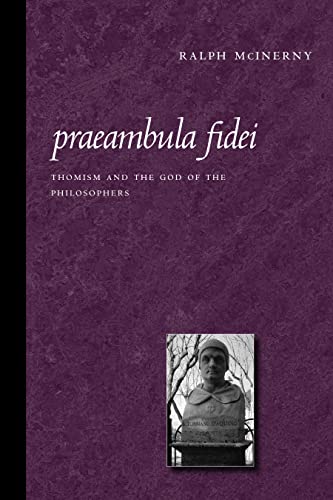
The praeambula fidei ("preambles of faith") are regarded by Thomas Aquinas as the culmination of philosophy: natural theology, the highest knowledge of God that is possible on philosophical grounds alone. The natural home for such considerations is the Metaphysics of Aristotle and Thomas's commentary on that work. Yet Thomas's view has been cast into doubt, with philosophers and theologians alike attempting to drive a wedge between Aquinas and Aristotle. In this book, renowned philosopher Ralph McInerny sets out to review what Thomas meant by the phrase and to defend a robust understanding of Thomas's teaching on the subject.
After setting forth different attitudes toward proofs of God's existence and outlining the difference between belief and knowledge, McInerny examines the texts in which Thomas uses and explains the phrase "preambles of faith." He then turns his attention to the work of eminent twentieth-century Thomists and chronicles their abandonment of the preambles. He draws a contrast between this form of Thomism and that of the classical Dominican commentators, notably Cajetan, arguing that part of the abandonment of the notion of the preambles as philosophical involves a misreading and misrepresentation of Cajetan.
McInerny concludes with a positive rereading of Aristotle's Metaphysics and Aquinas's use thereof. In the end, the book argues for a return to the notion of Aristotelico-Thomism—Thomistic philosophy as the organic development of the thought of Aristotle.
ABOUT THE AUTHOR:
Ralph McInerny is Michael P. Grace Professor of Medieval Studies in the department of philosophy at the University of Notre Dame. He is cofounder of Crisis magazine and author of several books published by CUA Press, namely, the bestselling Ethica Thomistica, The Question of Christian Ethics, Aquinas on Human Action, and
Boethius and Aquinas.
PRAISE FOR THE BOOK:
"When it comes to defending Thomism, McInerny, long-time distinguished professor of philosophy at the University of Notre Dame, is without peer. . . . [McInerny] provides a keen exposition of the most contentious discussions that, during the twentieth century, pitted students of Thomas Aquinas one against the other. Ralph McInerny writes with both precision and the novelist's flair. . . . The book should be required reading for all Catholic seminarians, graduate students of theology, and anyone who wants to understand better the merits of Thomism, both Renaissance and contemporary."—Romanus Cessario,
First Things
"Both believers and non-believers who think that modernity needs to be tempered by antiquity's wisdom will sympathize."—Douglas Kries,
Claremont Review of Books
"McInerny's book is a powerful and controversial restatement of a classical Thomistic doctrine concerning the relations between faith and reason, philosophy and theology. . . . In our metaphysical tone-deaf age, the book reopens important discussions on the topic of fundamental theology, and ought to be read by all those seriously interested in the renewal of genuine ontological reflection within Christian theology."—Thomas Joseph White, O.P.,
The Thomist
"[McInerny] provides a full review, with supporting documentation, of Aristotle's vital contribution to the Thomistic development of natural theology, and with it, a respectful demonstration why scholars who have held an opposing view are mistaken."—The Maritain Notebook
"McInerny has produced a work that rightly clarifies the obligation of Christian theologians and philosophers to reflect on the natural truths that are preambles to the faith. It further reminds us of the all too human foibles that can taint otherwise precious cont
Le informazioni nella sezione "Riassunto" possono far riferimento a edizioni diverse di questo titolo.
Product Description
"The Praeambula Fidei" ("preambles of faith") are regarded by Thomas Aquinas as the culmination of philosophy: natural theology, the highest knowledge of God that is possible on philosophical grounds alone. The natural home for such considerations is the "Metaphysics" of Aristotle and Thomas's commentary on that work. Yet Thomas's view has been cast into doubt, with philosophers and theologians alike attempting to drive a wedge between Aquinas and Aristotle. In this book, renowned philosopher Ralph McInerny sets out to review what Thomas meant by the phrase and to defend a robust understanding of Thomas's teaching on the subject. After setting forth different attitudes toward proofs of God's existence and outlining the difference between belief and knowledge, McInerny examines the texts in which Thomas uses and explains the phrase "preambles of faith." He then turns his attention to the work of eminent twentieth-century Thomists and chronicles their abandonment of the preambles. He draws a contrast between this form of Thomism and that of the classical Dominican commentators, notably Cajetan, arguing that part of the abandonment of the notion of the preambles as philosophical involves a misreading and misrepresentation of Cajetan. McInerny concludes with a positive rereading of Aristotle's "Metaphysics" and Aquinas's use thereof. In the end, the book argues for a return to the notion of Aristotelico - Thomism - Thomistic philosophy as the organic development of the thought of Aristotle.
Le informazioni nella sezione "Su questo libro" possono far riferimento a edizioni diverse di questo titolo.
Risultati della ricerca per Praeambula Fidei: Thomism And the God of the Philosophers

Foto dell'editore
Praeambula Fidei Thomism and the God of the Philosophers
Da: Red's Corner LLC, Tucker, GA, U.S.A.
Valutazione del venditore 5 su 5 stelle

paperback. Condizione: Fine. Grade 4 out of 5 points. This is a used book. Book may have wear due to handling. Has no markings on pages. May not include extra materials like access codes, CDs, accessories, etc. All orders ship by next business day! We are a small company and very thankful for your business! Codice articolo REDWE7TB2SJE
Compra usato
EUR 16,18
Spedizione EUR 3,51
Spedito in U.S.A.
Spedito in U.S.A.
Quantità: 1 disponibili
Foto dell'editore
Praeambula Fidei: Thomism and the God of the Philosophers
Editore:
The Catholic University of America Press, 2006
ISBN 10: 0813214580
ISBN 13: 9780813214580
Antico o usato
Paperback
Da: World of Books (was SecondSale), Montgomery, IL, U.S.A.
Valutazione del venditore 5 su 5 stelle
Paperback. Condizione: Good. After setting forth different attitudes toward proofs of God's existence and outlining the difference between belief and knowledge, this work examines the texts in which Thomas Aquinas uses and explains the phrase preambles of faith. It then focusses on the work of twentieth-century Thomists and chronicles their abandonment of the preambles. Codice articolo 00105981489
Compra usato
EUR 19,79
Spedizione gratuita
Spedito in U.S.A.
Spedito in U.S.A.
Quantità: 2 disponibili
Foto dell'editore
Praeambula Fidei: Thomism and the God of the Philosophers
Editore:
The Catholic University of America Press, 2006
ISBN 10: 0813214580
ISBN 13: 9780813214580
Antico o usato
Paperback
Da: World of Books Inc, Montgomery, IL, U.S.A.
Valutazione del venditore 4 su 5 stelle

Paperback. Condizione: Good. After setting forth different attitudes toward proofs of God's existence and outlining the difference between belief and knowledge, this work examines the texts in which Thomas Aquinas uses and explains the phrase preambles of faith. It then focusses on the work of twentieth-century Thomists and chronicles their abandonment of the preambles. Codice articolo CIN0813214580G
Compra usato
EUR 21,60
Spedizione gratuita
Spedito in U.S.A.
Spedito in U.S.A.
Quantità: 2 disponibili
Immagini fornite dal venditore
Praeambula Fidei: Thomism and the God of the Philosophers
Editore:
Catholic University of America Press, 2006
ISBN 10: 0813214580
ISBN 13: 9780813214580
Antico o usato
Trade Paperback
Da: Arches Bookhouse, Portland, OR, U.S.A.
Valutazione del venditore 5 su 5 stelle
Trade Paperback. Condizione: VERY GOOD. ix, 313pp. Rip to front cover and FFEP, otherwise a clean and crisp copy. Codice articolo 506297
Compra usato
EUR 19,89
Spedizione EUR 6,15
Spedito in U.S.A.
Spedito in U.S.A.
Quantità: 1 disponibili
Foto dell'editore
Praeambula Fidei: Thomism And the God of the Philosophers
Editore:
Catholic Univ of Amer Pr, Baltimore, Maryland, U.S.A., 2006
ISBN 10: 0813214580
ISBN 13: 9780813214580
Antico o usato
Paperback
Prima edizione
Da: Vashon Island Books, Vashon, WA, U.S.A.
Valutazione del venditore 5 su 5 stelle
Paperback. Condizione: Very Good+. First Thus. In wraps, 8vo, 313pp. Size: 8vo - over 7 3/4" - 9 3/4" Tall. Book. Codice articolo 0781656
Compra usato
EUR 31,60
Spedizione EUR 4,83
Spedito in U.S.A.
Spedito in U.S.A.
Quantità: 1 disponibili
Immagini fornite dal venditore
Praeambula Fidei : Thomism And the God of the Philosophers
Editore:
The Catholic University of America Press, 2006
ISBN 10: 0813214580
ISBN 13: 9780813214580
Antico o usato
Brossura
Da: GreatBookPrices, Columbia, MD, U.S.A.
Valutazione del venditore 5 su 5 stelle
Condizione: As New. Unread book in perfect condition. Codice articolo 4388857
Compra usato
EUR 35,20
Spedizione EUR 2,32
Spedito in U.S.A.
Spedito in U.S.A.
Quantità: Più di 20 disponibili
Foto dell'editore
Praeambula Fidei: Thomism and the God of the Philosophers
Editore:
The Catholic University of America Press, 2006
ISBN 10: 0813214580
ISBN 13: 9780813214580
Nuovo
Paperback / softback
Da: THE SAINT BOOKSTORE, Southport, Regno Unito
Valutazione del venditore 5 su 5 stelle
Paperback / softback. Condizione: New. New copy - Usually dispatched within 4 working days. Codice articolo B9780813214580
Compra nuovo
EUR 33,49
Spedizione EUR 12,94
Spedito da Regno Unito a U.S.A.
Spedito da Regno Unito a U.S.A.
Quantità: 1 disponibili
Foto dell'editore
Praeambula Fidei
Editore:
The Catholic University of America Press, 2006
ISBN 10: 0813214580
ISBN 13: 9780813214580
Nuovo
Brossura
Da: Kennys Bookshop and Art Galleries Ltd., Galway, GY, Irlanda
Valutazione del venditore 5 su 5 stelle
Condizione: New. After setting forth different attitudes toward proofs of God's existence and outlining the difference between belief and knowledge, this work examines the texts in which Thomas Aquinas uses and explains the phrase "preambles of faith." It then focusses on the work of twentieth-century Thomists and chronicles their abandonment of the preambles. Num Pages: 328 pages, black & white illustrations. BIC Classification: HP. Category: (UP) Postgraduate, Research & Scholarly; (UU) Undergraduate. Dimension: 229 x 152 x 22. Weight in Grams: 530. . 2006. Paperback. . . . . Codice articolo V9780813214580
Compra nuovo
EUR 37,23
Spedizione EUR 9,50
Spedito da Irlanda a U.S.A.
Spedito da Irlanda a U.S.A.
Quantità: 1 disponibili
Foto dell'editore
Praeambula Fidei : Thomism And the God of the Philosophers
Editore:
The Catholic University of America Press, 2006
ISBN 10: 0813214580
ISBN 13: 9780813214580
Nuovo
Brossura
Da: GreatBookPrices, Columbia, MD, U.S.A.
Valutazione del venditore 5 su 5 stelle
Condizione: New. Codice articolo 4388857-n
Compra nuovo
EUR 45,43
Spedizione EUR 2,32
Spedito in U.S.A.
Spedito in U.S.A.
Quantità: Più di 20 disponibili
Foto dell'editore
Praeambula Fidei Thomism and the God of the Philosophers
Print on DemandDa: Revaluation Books, Exeter, Regno Unito
Valutazione del venditore 5 su 5 stelle
Paperback. Condizione: Brand New. 313 pages. 9.00x5.75x1.00 inches. In Stock. This item is printed on demand. Codice articolo __0813214580
Compra nuovo
EUR 35,60
Spedizione EUR 14,53
Spedito da Regno Unito a U.S.A.
Spedito da Regno Unito a U.S.A.
Quantità: 1 disponibili