
Articoli correlati a Traumatic Realism: The Demands of Holocaust Representation
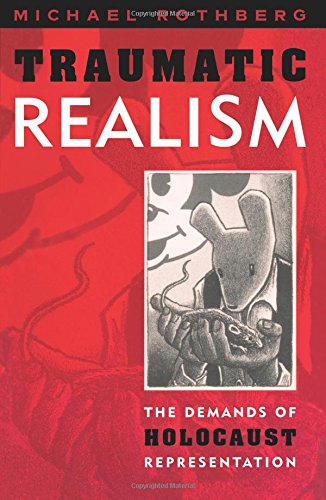
Sinossi
Analyzes the impact of historical trauma on contemporary culture.
How to approach the Holocaust and its relationship to late twentieth-century society? While some stress the impossibility of comprehending this event, others attempt representations in forms as different as the nonfiction novel (and Hollywood blockbuster) Schindler’s List, the documentary Shoah, and the comic book Maus. This problem is at the center of Michael Rothberg’s book, a focused account of the psychic, intellectual, and cultural aftermath of the Holocaust.
Drawing on a wide range of texts, Michael Rothberg puts forth an overarching framework for understanding representations of the Holocaust. Through close readings of such writers and thinkers as Theodor Adorno, Maurice Blanchot, Ruth KlÜger, Charlotte Delbo, Art Spiegelman, and Philip Roth and an examination of films by Steven Spielberg and Claude Lanzmann, Rothberg demonstrates how the Holocaust as a traumatic event makes three fundamental demands on representation: a demand for documentation, a demand for reflection on the limits of representation, and a demand for engagement with the public sphere and commodity culture. As it establishes new grounding for Holocaust studies, his book provides a new understanding of realism, modernism, and postmodernism as responses to the demands of history.Le informazioni nella sezione "Riassunto" possono far riferimento a edizioni diverse di questo titolo.
Risultati della ricerca per Traumatic Realism: The Demands of Holocaust Representation

Foto dell'editore
Traumatic Realism: The Demands of Holocaust Representation
Editore:
University of Minnesota Press, 2000
ISBN 10: 0816634599
ISBN 13: 9780816634590
Antico o usato
Paperback
Da: ThriftBooks-Atlanta, AUSTELL, GA, U.S.A.
Valutazione del venditore 5 su 5 stelle

Paperback. Condizione: Good. No Jacket. Pages can have notes/highlighting. Spine may show signs of wear. ~ ThriftBooks: Read More, Spend Less. Codice articolo G0816634599I3N00
Compra usato
EUR 13,19
Spedizione gratuita
Spedito in U.S.A.
Spedito in U.S.A.
Quantità: 1 disponibili
Foto dell'editore
Traumatic Realism The Demands of Holocaust Representation
Editore:
Univ of Minnesota Press, 2000
ISBN 10: 0816634599
ISBN 13: 9780816634590
Antico o usato
paperback
Da: Early Republic Books, Hopatcong, NJ, U.S.A.
Valutazione del venditore 4 su 5 stelle

paperback. Condizione: Good. Some underlining mostly light pencil and in 1st 15 pages with a few lines in red ink. Top outer corner bumped slightly. Inscribed by "Michael" likely the author.; 5.875 X 0.8 X 9 inches; 336 pages. Codice articolo 000216
Compra usato
EUR 8,61
Spedizione EUR 5,09
Spedito in U.S.A.
Spedito in U.S.A.
Quantità: 1 disponibili
Foto dell'editore
Traumatic Realism : The Demands of Holocaust Representation
Editore:
University of Minnesota Press, 2000
ISBN 10: 0816634599
ISBN 13: 9780816634590
Antico o usato
Brossura
Da: Better World Books, Mishawaka, IN, U.S.A.
Valutazione del venditore 5 su 5 stelle
Condizione: Good. Pages intact with minimal writing/highlighting. The binding may be loose and creased. Dust jackets/supplements are not included. Stock photo provided. Product includes identifying sticker. Better World Books: Buy Books. Do Good. Codice articolo 7525405-6
Compra usato
EUR 18,48
Spedizione gratuita
Spedito in U.S.A.
Spedito in U.S.A.
Quantità: 1 disponibili
Foto dell'editore
Traumatic Realism : The Demands of Holocaust Representation
Editore:
University of Minnesota Press, 2000
ISBN 10: 0816634599
ISBN 13: 9780816634590
Antico o usato
Brossura
Da: Better World Books Ltd, Dunfermline, Regno Unito
Valutazione del venditore 5 su 5 stelle
Condizione: Very Good. Former library copy. Pages intact with possible writing/highlighting. Binding strong with minor wear. Dust jackets/supplements may not be included. Includes library markings. Stock photo provided. Product includes identifying sticker. Better World Books: Buy Books. Do Good. Codice articolo 17163439-6
Compra usato
EUR 13,19
Spedizione EUR 5,83
Spedito da Regno Unito a U.S.A.
Spedito da Regno Unito a U.S.A.
Quantità: 1 disponibili
Immagini fornite dal venditore
Traumatic Realism: The Demands of Holocaust Representation
Editore:
Univ Of Minnesota Press, 2000
ISBN 10: 0816634599
ISBN 13: 9780816634590
Antico o usato
paperback
Da: Orca Knowledge Systems, Inc., Novato, CA, U.S.A.
Valutazione del venditore 5 su 5 stelle
paperback. Condizione: Very Good. First Edition. Lightly read. Finding no markings in book. Binding is fine. Codice articolo mon0000028972
Compra usato
EUR 17,72
Spedizione EUR 5,13
Spedito in U.S.A.
Spedito in U.S.A.
Quantità: 1 disponibili
Foto dell'editore
Traumatic Realism Format: Paperback
Editore:
University of Chicago press, 2000
ISBN 10: 0816634599
ISBN 13: 9780816634590
Nuovo
Brossura
Da: INDOO, Avenel, NJ, U.S.A.
Valutazione del venditore 5 su 5 stelle
Condizione: New. Brand New. Codice articolo 9780816634590
Compra nuovo
EUR 23,99
Spedizione gratuita
Spedito in U.S.A.
Spedito in U.S.A.
Quantità: Più di 20 disponibili
Foto dell'editore
Traumatic Realism: The Demands of Holocaust Representation
Editore:
Univ Of Minnesota Press, 2000
ISBN 10: 0816634599
ISBN 13: 9780816634590
Antico o usato
Paperback
Da: WorldofBooks, Goring-By-Sea, WS, Regno Unito
Valutazione del venditore 5 su 5 stelle
Paperback. Condizione: Very Good. The book has been read, but is in excellent condition. Pages are intact and not marred by notes or highlighting. The spine remains undamaged. Codice articolo GOR006552391
Compra usato
EUR 21,71
Spedizione EUR 6,53
Spedito da Regno Unito a U.S.A.
Spedito da Regno Unito a U.S.A.
Quantità: 1 disponibili
Foto dell'editore
Traumatic Realism: The Demands of Holocaust Representation
Editore:
Univ Of Minnesota Press, 2000
ISBN 10: 0816634599
ISBN 13: 9780816634590
Antico o usato
Brossura
Da: Phatpocket Limited, Waltham Abbey, HERTS, Regno Unito
Valutazione del venditore 5 su 5 stelle
Condizione: Good. Your purchase helps support Sri Lankan Children's Charity 'The Rainbow Centre'. Ex-library, so some stamps and wear, but in good overall condition. Our donations to The Rainbow Centre have helped provide an education and a safe haven to hundreds of children who live in appalling conditions. Codice articolo Z1-R-024-02176
Compra usato
EUR 16,65
Spedizione EUR 12,41
Spedito da Regno Unito a U.S.A.
Spedito da Regno Unito a U.S.A.
Quantità: 1 disponibili
Foto dell'editore
Traumatic Realism
Da: PBShop.store UK, Fairford, GLOS, Regno Unito
Valutazione del venditore 5 su 5 stelle
PAP. Condizione: New. New Book. Shipped from UK. Established seller since 2000. Codice articolo FW-9780816634590
Compra nuovo
EUR 24,68
Spedizione EUR 4,85
Spedito da Regno Unito a U.S.A.
Spedito da Regno Unito a U.S.A.
Quantità: 15 disponibili
Foto dell'editore
Traumatic Realism - The Demands of Holocaust Representation (eng)
Da: Brook Bookstore On Demand, Napoli, NA, Italia
Valutazione del venditore 5 su 5 stelle
Condizione: new. Codice articolo a08232b982c772ceac7f4ba475b1c32d
Compra nuovo
EUR 29,04
Spedizione EUR 5,50
Spedito da Italia a U.S.A.
Spedito da Italia a U.S.A.
Quantità: Più di 20 disponibili