
Articoli correlati a Time and Language: New Sinology and Chinese History
Sinossi
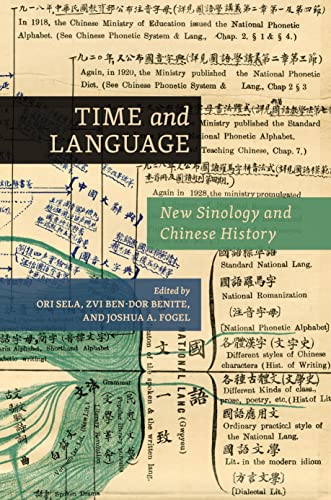
China’s past and present have been in a continuous dialogue throughout history, one that is heavily influenced by time and language: the temporal orientation and the linguistic apparatus used to express and solidify identity, ideas, and practices. Presenting a host of in-depth case studies, Time and Language: New Sinology and Chinese History argues for and demonstrates the significance of “New Sinology” by restoring the role of language/philology in the research and understanding of how modern China emerged. Reading the modern as a careful and ongoing conversation with the past renders the “new” in a different perspective. This volume is a significant step toward a new historical narrative of China’s modern history, one wherein “ruptures” can exist in tandem with continuities. The collection accentuates the deep connection between language and power—one that spans well across China’s long past—and hence the immense consequences of linguistic-related methodology to the comprehension of power structures and identity in China.
Each of the essays in this volume tackles these issues, the methodological and the thematic, from a different angle but they all share the Sinological prism of analysis and the basic understanding that a much longer timeframe is required to make sense of Chinese modernity. The languages examined are diverse, including modern and classical Chinese, as well as Manchu and Japanese. Taken together they bring a spectrum of linguistic perspectives and hence a spectrum of power relations and identities to the forefront. While the essays focus on late Qing and early twentieth-century eras, they refer often to earlier periods, which are necessary to making real sense of later eras. The methodological and the thematic do not only converge, but also generate a plea for fostering and expanding this approach in current and future studies.
Le informazioni nella sezione "Riassunto" possono far riferimento a edizioni diverse di questo titolo.
Informazioni sull'autore
Ori Sela (Editor)
Ori Sela is senior lecturer of East Asian studies at Tel Aviv University and currently serving as chair.
Zvi Ben-Dor Benite (Editor)
Zvi Ben-Dor Benite is professor in the Departments of History and Middle Eastern and Islamic Studies at New York University.
Joshua A. Fogel (Editor)
Joshua A. Fogel is professor of history at York University in Toronto.
Le informazioni nella sezione "Su questo libro" possono far riferimento a edizioni diverse di questo titolo.
Risultati della ricerca per Time and Language: New Sinology and Chinese History

Foto dell'editore
Time and Language : New Sinology and Chinese History
Editore:
University of Hawaii Press, 2024
ISBN 10: 0824895096
ISBN 13: 9780824895099
Antico o usato
Brossura
Da: GreatBookPrices, Columbia, MD, U.S.A.
Valutazione del venditore 5 su 5 stelle

Condizione: As New. Unread book in perfect condition. Codice articolo 46358427
Compra usato
EUR 28,13
Spedizione EUR 2,35
Spedito in U.S.A.
Spedito in U.S.A.
Quantità: 3 disponibili
Foto dell'editore
Time and Language : New Sinology and Chinese History
Da: GreatBookPrices, Columbia, MD, U.S.A.
Valutazione del venditore 5 su 5 stelle
Condizione: New. Codice articolo 46358427-n
Compra nuovo
EUR 28,33
Spedizione EUR 2,35
Spedito in U.S.A.
Spedito in U.S.A.
Quantità: 3 disponibili
Immagini fornite dal venditore
Time and Language
Editore:
University of Hawai'i Press, US, 2024
ISBN 10: 0824895096
ISBN 13: 9780824895099
Nuovo
Paperback
Da: Rarewaves.com USA, London, LONDO, Regno Unito
Valutazione del venditore 5 su 5 stelle
Paperback. Condizione: New. China's past and present have been in a continuous dialogue throughout history, one that is heavily influenced by time and language: the temporal orientation and the linguistic apparatus used to express and solidify identity, ideas, and practices. Presenting a host of in-depth case studies, Time and Language: New Sinology and Chinese History argues for and demonstrates the significance of "New Sinology" by restoring the role of language/philology in the research and understanding of how modern China emerged. Reading the modern as a careful and ongoing conversation with the past renders the "new" in a different perspective. This volume is a significant step toward a new historical narrative of China's modern history, one wherein "ruptures" can exist in tandem with continuities. The collection accentuates the deep connection between language and power-one that spans well across China's long past-and hence the immense consequences of linguistic-related methodology to the comprehension of power structures and identity in China.Each of the essays in this volume tackles these issues, the methodological and the thematic, from a different angle but they all share the Sinological prism of analysis and the basic understanding that a much longer timeframe is required to make sense of Chinese modernity. The languages examined are diverse, including modern and classical Chinese, as well as Manchu and Japanese. Taken together they bring a spectrum of linguistic perspectives and hence a spectrum of power relations and identities to the forefront. While the essays focus on late Qing and early twentieth-century eras, they refer often to earlier periods, which are necessary to making real sense of later eras. The methodological and the thematic do not only converge, but also generate a plea for fostering and expanding this approach in current and future studies. Codice articolo LU-9780824895099
Compra nuovo
EUR 30,76
Spedizione gratuita
Spedito da Regno Unito a U.S.A.
Spedito da Regno Unito a U.S.A.
Quantità: 2 disponibili
Foto dell'editore
Time and Language
Da: PBShop.store UK, Fairford, GLOS, Regno Unito
Valutazione del venditore 5 su 5 stelle
PAP. Condizione: New. New Book. Shipped from UK. Established seller since 2000. Codice articolo FW-9780824895099
Compra nuovo
EUR 28,33
Spedizione EUR 4,90
Spedito da Regno Unito a U.S.A.
Spedito da Regno Unito a U.S.A.
Quantità: 1 disponibili
Foto dell'editore
Time and Language - New Sinology and Chinese History (eng)
Da: Brook Bookstore On Demand, Napoli, NA, Italia
Valutazione del venditore 5 su 5 stelle
Condizione: new. Codice articolo 18LIXHEPJ6
Compra nuovo
EUR 29,04
Spedizione EUR 5,50
Spedito da Italia a U.S.A.
Spedito da Italia a U.S.A.
Quantità: 3 disponibili
Foto dell'editore
Time and Language New Sinology and Chinese History
Da: Revaluation Books, Exeter, Regno Unito
Valutazione del venditore 5 su 5 stelle
Paperback. Condizione: Brand New. 290 pages. 9.25x6.25x1.00 inches. In Stock. Codice articolo __0824895096
Compra nuovo
EUR 27,30
Spedizione EUR 11,79
Spedito da Regno Unito a U.S.A.
Spedito da Regno Unito a U.S.A.
Quantità: 2 disponibili
Foto dell'editore
Time and Language: New Sinology and Chinese History
Da: Majestic Books, Hounslow, Regno Unito
Valutazione del venditore 4 su 5 stelle

Condizione: New. Codice articolo 399879585
Compra nuovo
EUR 34,29
Spedizione EUR 7,66
Spedito da Regno Unito a U.S.A.
Spedito da Regno Unito a U.S.A.
Quantità: 3 disponibili
Foto dell'editore
Time and Language : New Sinology and Chinese History
Da: GreatBookPricesUK, Woodford Green, Regno Unito
Valutazione del venditore 5 su 5 stelle
Condizione: New. Codice articolo 46358427-n
Compra nuovo
EUR 25,51
Spedizione EUR 17,68
Spedito da Regno Unito a U.S.A.
Spedito da Regno Unito a U.S.A.
Quantità: 3 disponibili
Foto dell'editore
Time and Language (Paperback)
Editore:
University of Hawai'i Press, Honolulu, HI, 2024
ISBN 10: 0824895096
ISBN 13: 9780824895099
Nuovo
Paperback
Da: Grand Eagle Retail, Bensenville, IL, U.S.A.
Valutazione del venditore 5 su 5 stelle
Paperback. Condizione: new. Paperback. Chinas past and present have been in a continuous dialogue throughout history, one that is heavily influenced by time and language: the temporal orientation and the linguistic apparatus used to express and solidify identity, ideas, and practices. Presenting a host of in-depth case studies, Time and Language: New Sinology and Chinese History argues for and demonstrates the significance of "New Sinology" by restoring the role of language/philology in the research and understanding of how modern China emerged. Reading the modern as a careful and ongoing conversation with the past renders the "new" in a different perspective. This volume is a significant step toward a new historical narrative of Chinas modern history, one wherein "ruptures" can exist in tandem with continuities. The collection accentuates the deep connection between language and powerone that spans well across Chinas long pastand hence the immense consequences of linguistic-related methodology to the comprehension of power structures and identity in China.Each of the essays in this volume tackles these issues, the methodological and the thematic, from a different angle but they all share the Sinological prism of analysis and the basic understanding that a much longer timeframe is required to make sense of Chinese modernity. The languages examined are diverse, including modern and classical Chinese, as well as Manchu and Japanese. Taken together they bring a spectrum of linguistic perspectives and hence a spectrum of power relations and identities to the forefront. While the essays focus on late Qing and early twentieth-century eras, they refer often to earlier periods, which are necessary to making real sense of later eras. The methodological and the thematic do not only converge, but also generate a plea for fostering and expanding this approach in current and future studies. Presenting a host of in-depth case studies, Time and Language: New Sinology and Chinese History argues for and demonstrates the significance of New Sinology by restoring the role of language/philology in the research and understanding of how modern China emerged. Shipping may be from multiple locations in the US or from the UK, depending on stock availability. Codice articolo 9780824895099
Compra nuovo
EUR 43,78
Spedizione gratuita
Spedito in U.S.A.
Spedito in U.S.A.
Quantità: 1 disponibili
Foto dell'editore
Time and Language: New Sinology and Chinese History
Editore:
University of Hawai'i Press, 2024
ISBN 10: 0824895096
ISBN 13: 9780824895099
Nuovo
Paperback / softback
Da: THE SAINT BOOKSTORE, Southport, Regno Unito
Valutazione del venditore 5 su 5 stelle
Paperback / softback. Condizione: New. New copy - Usually dispatched within 4 working days. Codice articolo B9780824895099
Compra nuovo
EUR 27,59
Spedizione EUR 19,63
Spedito da Regno Unito a U.S.A.
Spedito da Regno Unito a U.S.A.
Quantità: 3 disponibili