
Articoli correlati a So Sad to Fall in Battle: An Account of War Based on...
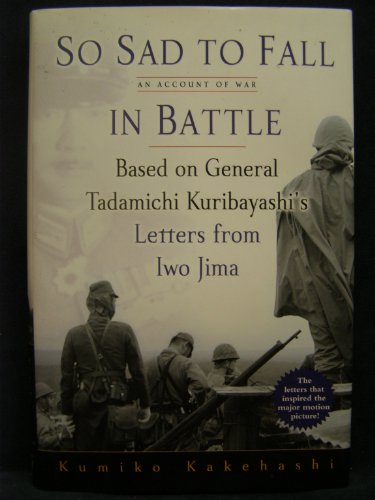
So Sad to Fall in Battle: An Account of War Based on General Tadamichi Kuribayashi's Letters from Iwo Jima - Rilegato
Sinossi
The Battle of Iwo Jima has been memorialized innumerable times as the subject of countless books and motion pictures, most recently Clint Eastwood’s films Flags of Our Fathers and Letters from Iwo Jima, and no wartime photo is more famous than Joe Rosenthal’s Pulitzer Prize-winning image of Marines raising the flag on Mount Suribachi. Yet most Americans know only one side of this pivotal and bloody battle. First published in Japan to great acclaim, becoming a bestseller and a prize-winner, So Sad to Fall in Battle shows us the struggle, through the eyes of Japanese commander Tadamichi Kuribayashi, one of the most fascinating and least-known figures of World War II.
As author Kumiko Kakehashi demonstrates, Kuribayashi was far from the stereotypical fanatic Japanese warrior. Unique among his country’s officers, he refused to risk his men’s lives in suicidal banzai attacks, instead creating a defensive, insurgent style of combat that eventually became the Japanese standard. On Iwo Jima, he eschewed the special treatment due to him as an officer, enduring the same difficult conditions as his men, and personally walked every inch of the island to plan the positions of thousands of underground bunkers and tunnels. The very flagpole used in the renowned photograph was a pipe from a complex water collection system the general himself engineered.
Exclusive interviews with survivors reveal that as the tide turned against him, Kuribayashi displayed his true mettle: Though offered a safer post on another island, he chose to stay with his men, fighting alongside them in a final, fearless, and ultimately hopeless three-hour siege.
After thirty-six cataclysmic days on Iwo Jima, Kurbiayashi’s troops were responsible for the deaths of a third of all U.S. Marines killed during the entire four-year Pacific conflict, making him, in the end, America’s most feared–and respected–foe. Ironically, it was Kuribayashi’s own memories of his military training in America in the 1920s, and his admiration for this country’s rich, gregarious, and self-reliant people, that made him fear ever facing them in combat–a feeling that some suspect prompted his superiors to send him to Iwo Jima, where he met his fate.
Along with the words of his son and daughter, which offer unique insight into the private man, Kuribayashi’s own letters cited extensively in this book paint a stirring portrait of the circumstances that shaped him. So Sad to Fall in Battle tells a fascinating, never-before-told story and introduces America, as if for the first time, to one of its most worthy adversaries.
Le informazioni nella sezione "Riassunto" possono far riferimento a edizioni diverse di questo titolo.
Informazioni sull'autore
Kumiko Kakehashi is a freelance writer and editor. So Sad to Fall in Battle, her first book, was published in Japan and became an instant bestseller, winning the prestigious Soichi Oya Nonfiction Prize. Kakehashi lives in Japan.
Le informazioni nella sezione "Su questo libro" possono far riferimento a edizioni diverse di questo titolo.
Risultati della ricerca per So Sad to Fall in Battle: An Account of War Based on...

Foto dell'editore
So Sad to Fall in Battle: An Account of War
Da: World of Books (was SecondSale), Montgomery, IL, U.S.A.
Valutazione del venditore 5 su 5 stelle

Hardback. Condizione: Very Good. The Battle of Iwo Jima has been memorialized innumerable times as the subject of countless books and motion pictures, most recently Clint Eastwood's films Flags of Our Fathers and Letters from Iwo Jima, and no wartime photo is more famous than Joe Rosenthal's Pulitzer Prize-winning image of Marines raising the flag on Mount Suribachi. Yet most Americans know only one side of this pivotal and bloody battle. First published in Japan to great acclaim, becoming a bestseller and a prize-winner, So Sad to Fall in Battle shows us the struggle, through the eyes of Japanese commander Tadamichi Kuribayashi, one of the most fascinating and least-known figures of World War II. As author Kumiko Kakehashi demonstrates, Kuribayashi was far from the stereotypical fanatic Japanese warrior. Unique among his country's officers, he refused to risk his men's lives in suicidal banzai attacks, instead creating a defensive, insurgent style of combat that eventually became the Japanese standard. On Iwo Jima, he eschewed the special treatment due to him as an officer, enduring the same difficult conditions as his men, and personally walked every inch of the island to plan the positions of thousands of underground bunkers and tunnels. The very flagpole used in the renowned photograph was a pipe from a complex water collection system the general himself engineered. Exclusive interviews with survivors reveal that as the tide turned against him, Kuribayashi displayed his true mettle: Though offered a safer post on another island, he chose to stay with his men, fighting alongside them in a final, fearless, and ultimately hopeless three-hour siege. After thirty-six cataclysmic days on Iwo Jima, Kurbiayashi's troops were responsible for the deaths of a third of all U.S. Marines killed during the entire four-year Pacific conflict, making him, in the end, America's most feared-and respected-foe. Ironically, it was Kuribayashi' s own memories of his military training in America in the 1920s, and his admiration for this country's rich, gregarious, and self-reliant people, that made him fear ever facing them in combat-a feeling that some suspect prompted his superiors to send him to Iwo Jima, where he met his fate. Along with the words of his son and daughter, which offer unique insight into the private man, Kuribayashi's own letters cited extensively in this book paint a stirring portrait of the circumstances that shaped him. So Sad to Fall in Battle tells a fascinating, never-before-told story and introduces America, as if for the first time, to one of its most worthy adversaries. Codice articolo 00102914569
Compra usato
EUR 4,05
Spedizione gratuita
Spedito in U.S.A.
Spedito in U.S.A.
Quantità: 2 disponibili
Foto dell'editore
So Sad to Fall in Battle: An Account of War
Da: World of Books (was SecondSale), Montgomery, IL, U.S.A.
Valutazione del venditore 5 su 5 stelle
Hardback. Condizione: Good. The Battle of Iwo Jima has been memorialized innumerable times as the subject of countless books and motion pictures, most recently Clint Eastwood's films Flags of Our Fathers and Letters from Iwo Jima, and no wartime photo is more famous than Joe Rosenthal's Pulitzer Prize-winning image of Marines raising the flag on Mount Suribachi. Yet most Americans know only one side of this pivotal and bloody battle. First published in Japan to great acclaim, becoming a bestseller and a prize-winner, So Sad to Fall in Battle shows us the struggle, through the eyes of Japanese commander Tadamichi Kuribayashi, one of the most fascinating and least-known figures of World War II. As author Kumiko Kakehashi demonstrates, Kuribayashi was far from the stereotypical fanatic Japanese warrior. Unique among his country's officers, he refused to risk his men's lives in suicidal banzai attacks, instead creating a defensive, insurgent style of combat that eventually became the Japanese standard. On Iwo Jima, he eschewed the special treatment due to him as an officer, enduring the same difficult conditions as his men, and personally walked every inch of the island to plan the positions of thousands of underground bunkers and tunnels. The very flagpole used in the renowned photograph was a pipe from a complex water collection system the general himself engineered. Exclusive interviews with survivors reveal that as the tide turned against him, Kuribayashi displayed his true mettle: Though offered a safer post on another island, he chose to stay with his men, fighting alongside them in a final, fearless, and ultimately hopeless three-hour siege. After thirty-six cataclysmic days on Iwo Jima, Kurbiayashi's troops were responsible for the deaths of a third of all U.S. Marines killed during the entire four-year Pacific conflict, making him, in the end, America's most feared-and respected-foe. Ironically, it was Kuribayashi' s own memories of his military training in America in the 1920s, and his admiration for this country's rich, gregarious, and self-reliant people, that made him fear ever facing them in combat-a feeling that some suspect prompted his superiors to send him to Iwo Jima, where he met his fate. Along with the words of his son and daughter, which offer unique insight into the private man, Kuribayashi's own letters cited extensively in this book paint a stirring portrait of the circumstances that shaped him. So Sad to Fall in Battle tells a fascinating, never-before-told story and introduces America, as if for the first time, to one of its most worthy adversaries. Codice articolo 00104300285
Compra usato
EUR 4,05
Spedizione gratuita
Spedito in U.S.A.
Spedito in U.S.A.
Quantità: 4 disponibili
Immagini fornite dal venditore
So Sad To Fall In Battle: An Account of War Based on General Tadamichi Kuribayashi's Letters from Iwo Jima
Da: Zoom Books Company, Lynden, WA, U.S.A.
Valutazione del venditore 5 su 5 stelle
Condizione: very_good. Book is in very good condition and may include minimal underlining highlighting. The book can also include "From the library of" labels. May not contain miscellaneous items toys, dvds, etc. . We offer 100% money back guarantee and 24 7 customer service. Codice articolo ZBV.0891419039.VG
Compra usato
EUR 4,06
Spedizione gratuita
Spedito in U.S.A.
Spedito in U.S.A.
Quantità: 1 disponibili
Immagini fornite dal venditore
So Sad To Fall In Battle: An Account of War Based on General Tadamichi Kuribayashi's Letters from Iwo Jima
Da: ZBK Books, Carlstadt, NJ, U.S.A.
Valutazione del venditore 5 su 5 stelle
Condizione: good. Fast & Free Shipping â" Good condition. It may show normal signs of use, such as light writing, highlighting, or library markings, but all pages are intact and the book is fully readable. A solid, complete copy that's ready to enjoy. Codice articolo ZWV.0891419039.G
Compra usato
EUR 5,15
Spedizione gratuita
Spedito in U.S.A.
Spedito in U.S.A.
Quantità: 1 disponibili
Immagini fornite dal venditore
So Sad To Fall In Battle: An Account of War Based on General Tadamichi Kuribayashi's Letters from Iwo Jima
Da: Greenworld Books, Arlington, TX, U.S.A.
Valutazione del venditore 5 su 5 stelle
Condizione: like_new. Fast Free Shipping â" Excellent condition book with clean cover and pages. Barely handled, with minimal wear. An outstanding copy, close to enjoy! Codice articolo GWV.0891419039.LN
Compra usato
EUR 5,15
Spedizione gratuita
Spedito in U.S.A.
Spedito in U.S.A.
Quantità: 2 disponibili
Foto dell'editore
So Sad to Fall in Battle: An Account of War
Da: World of Books Inc, Montgomery, IL, U.S.A.
Valutazione del venditore 4 su 5 stelle

Hardback. Condizione: Good. The Battle of Iwo Jima has been memorialized innumerable times as the subject of countless books and motion pictures, most recently Clint Eastwood's films Flags of Our Fathers and Letters from Iwo Jima, and no wartime photo is more famous than Joe Rosenthal's Pulitzer Prize-winning image of Marines raising the flag on Mount Suribachi. Yet most Americans know only one side of this pivotal and bloody battle. First published in Japan to great acclaim, becoming a bestseller and a prize-winner, So Sad to Fall in Battle shows us the struggle, through the eyes of Japanese commander Tadamichi Kuribayashi, one of the most fascinating and least-known figures of World War II. As author Kumiko Kakehashi demonstrates, Kuribayashi was far from the stereotypical fanatic Japanese warrior. Unique among his country's officers, he refused to risk his men's lives in suicidal banzai attacks, instead creating a defensive, insurgent style of combat that eventually became the Japanese standard. On Iwo Jima, he eschewed the special treatment due to him as an officer, enduring the same difficult conditions as his men, and personally walked every inch of the island to plan the positions of thousands of underground bunkers and tunnels. The very flagpole used in the renowned photograph was a pipe from a complex water collection system the general himself engineered. Exclusive interviews with survivors reveal that as the tide turned against him, Kuribayashi displayed his true mettle: Though offered a safer post on another island, he chose to stay with his men, fighting alongside them in a final, fearless, and ultimately hopeless three-hour siege. After thirty-six cataclysmic days on Iwo Jima, Kurbiayashi's troops were responsible for the deaths of a third of all U.S. Marines killed during the entire four-year Pacific conflict, making him, in the end, America's most feared-and respected-foe. Ironically, it was Kuribayashi' s own memories of his military training in America in the 1920s, and his admiration for this country's rich, gregarious, and self-reliant people, that made him fear ever facing them in combat-a feeling that some suspect prompted his superiors to send him to Iwo Jima, where he met his fate. Along with the words of his son and daughter, which offer unique insight into the private man, Kuribayashi's own letters cited extensively in this book paint a stirring portrait of the circumstances that shaped him. So Sad to Fall in Battle tells a fascinating, never-before-told story and introduces America, as if for the first time, to one of its most worthy adversaries. Codice articolo CIN0891419039G
Compra usato
EUR 5,89
Spedizione gratuita
Spedito in U.S.A.
Spedito in U.S.A.
Quantità: 4 disponibili
Foto dell'editore
So Sad to Fall in Battle: An Account of War
Da: World of Books Inc, Montgomery, IL, U.S.A.
Valutazione del venditore 4 su 5 stelle
Hardback. Condizione: Very Good. The Battle of Iwo Jima has been memorialized innumerable times as the subject of countless books and motion pictures, most recently Clint Eastwood's films Flags of Our Fathers and Letters from Iwo Jima, and no wartime photo is more famous than Joe Rosenthal's Pulitzer Prize-winning image of Marines raising the flag on Mount Suribachi. Yet most Americans know only one side of this pivotal and bloody battle. First published in Japan to great acclaim, becoming a bestseller and a prize-winner, So Sad to Fall in Battle shows us the struggle, through the eyes of Japanese commander Tadamichi Kuribayashi, one of the most fascinating and least-known figures of World War II. As author Kumiko Kakehashi demonstrates, Kuribayashi was far from the stereotypical fanatic Japanese warrior. Unique among his country's officers, he refused to risk his men's lives in suicidal banzai attacks, instead creating a defensive, insurgent style of combat that eventually became the Japanese standard. On Iwo Jima, he eschewed the special treatment due to him as an officer, enduring the same difficult conditions as his men, and personally walked every inch of the island to plan the positions of thousands of underground bunkers and tunnels. The very flagpole used in the renowned photograph was a pipe from a complex water collection system the general himself engineered. Exclusive interviews with survivors reveal that as the tide turned against him, Kuribayashi displayed his true mettle: Though offered a safer post on another island, he chose to stay with his men, fighting alongside them in a final, fearless, and ultimately hopeless three-hour siege. After thirty-six cataclysmic days on Iwo Jima, Kurbiayashi's troops were responsible for the deaths of a third of all U.S. Marines killed during the entire four-year Pacific conflict, making him, in the end, America's most feared-and respected-foe. Ironically, it was Kuribayashi' s own memories of his military training in America in the 1920s, and his admiration for this country's rich, gregarious, and self-reliant people, that made him fear ever facing them in combat-a feeling that some suspect prompted his superiors to send him to Iwo Jima, where he met his fate. Along with the words of his son and daughter, which offer unique insight into the private man, Kuribayashi's own letters cited extensively in this book paint a stirring portrait of the circumstances that shaped him. So Sad to Fall in Battle tells a fascinating, never-before-told story and introduces America, as if for the first time, to one of its most worthy adversaries. Codice articolo CIN0891419039VG
Compra usato
EUR 5,89
Spedizione gratuita
Spedito in U.S.A.
Spedito in U.S.A.
Quantità: 2 disponibili
Foto dell'editore
So Sad To Fall In Battle: An Account of War Based on General Tadamichi Kuribayashi's Letters from Iwo Jima
Da: HPB-Diamond, Dallas, TX, U.S.A.
Valutazione del venditore 5 su 5 stelle
hardcover. Condizione: Very Good. Connecting readers with great books since 1972! Used books may not include companion materials, and may have some shelf wear or limited writing. We ship orders daily and Customer Service is our top priority! Codice articolo S_477898644
Compra usato
EUR 2,76
Spedizione EUR 3,35
Spedito in U.S.A.
Spedito in U.S.A.
Quantità: 1 disponibili
Immagini fornite dal venditore
So Sad To Fall In Battle: An Account of War Based on General Tadamichi Kuribayashi's Letters from Iwo Jima
Da: -OnTimeBooks-, Phoenix, AZ, U.S.A.
Valutazione del venditore 5 su 5 stelle
Condizione: good. A copy that has been read, remains in good condition. All pages are intact, and the cover is intact. The spine and cover show signs of wear. Pages can include notes and highlighting and show signs of wear, and the copy can include "From the library of" labels or previous owner inscriptions. 100% GUARANTEE! Shipped with delivery confirmation, if you're not satisfied with purchase please return item! Ships via media mail. Codice articolo OTV.0891419039.G
Compra usato
EUR 6,29
Spedizione gratuita
Spedito in U.S.A.
Spedito in U.S.A.
Quantità: 1 disponibili
Foto dell'editore
So Sad To Fall In Battle: An Account of War Based on General Tadamichi Kuribayashi's Letters from Iwo Jima
Da: HPB-Ruby, Dallas, TX, U.S.A.
Valutazione del venditore 5 su 5 stelle
hardcover. Condizione: Very Good. Connecting readers with great books since 1972! Used books may not include companion materials, and may have some shelf wear or limited writing. We ship orders daily and Customer Service is our top priority! Codice articolo S_482010706
Compra usato
EUR 3,67
Spedizione EUR 3,35
Spedito in U.S.A.
Spedito in U.S.A.
Quantità: 1 disponibili