
Articoli correlati a Drug Development: Molecular Targets for GI Diseases
Sinossi
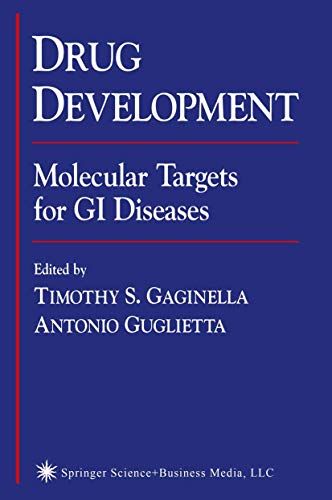
The application of molecular techniques to gastroenterology continues to yield important advances in the development of drugs to treat gastrointestinal disorders. Important new drugs have emerged through the collaborative and complementary efforts of basic scientists, clinicians, and clinical researchers in academia and the pharmaceutical industry. The challenge has been exciting, with a few surprises along the way. Consider peptic ulcer disease as an example. The discovery of H receptors and the availability of potent and 2 selective H-receptor antagonists signaled the beginning of a new era 2 in the treatment of gastric hypersecretory states and peptic ulcers. Introduction of proton pump inhibitors offered another therapeutic option. Though H-receptor antagonists and proton pump inhibitors 2 are important and useful drugs, the discovery of the link between H. pylori infection and peptic ulcer disease has led to even more effective pharmacotherapeutic regimens. Our intent in Drug Development: Molecular Targets for GI Diseases is to bring together hands-on experts to review promising areas of gastrointestinal pharmacology. The contemporary topics covered, from a mechanistic viewpoint, are relevant to gastrointestinal inflammation and motility disorders. Authoritative opinions are offered on both future research directions and potential applications for new therapies.
Le informazioni nella sezione "Riassunto" possono far riferimento a edizioni diverse di questo titolo.
Dalla quarta di copertina
Drug Development: Molecular Targets for Gastrointestinal Disease brings together a panel of distinguished experts to critically review the many promising new areas of gastrointestinal pharmacology at the molecular level. Key chapters discuss such major themes as the cyclooxygenase-2 inhibitors, the complexities of nitric oxide pathways in the gut, and the influence of cytokines on inflammatory bowel disease, as well as new opportunities for pharmacotherapy, including peptide growth factors, tachykinins-particularly substance P and neurokinins-cholecystokinin receptors, and serotonin. Also examined as possible sites for treating motility disorders and visceral pain are the opioid receptors residing in the gut, and the H3-receptor agonists for treating gut inflammation and pain. Drug Development: Molecular Targets for Gastrointestinal Disease provides a comprehensive review of today's molecular pharmacological approaches to the discovery and development of novel drugs for gastrointestinal and liver diseases. Its extensive references, richly experienced contributors, and cutting-edge syntheses of past, present, and emergent research establish the book as an essential resource for all pharmacologists, medicinal chemists, and clinicians seeking more powerful drugs for the prevention and treatment of gastrointestinal disorders.
Le informazioni nella sezione "Su questo libro" possono far riferimento a edizioni diverse di questo titolo.
Risultati della ricerca per Drug Development: Molecular Targets for GI Diseases

Foto dell'editore
Drug Development: Molecular Targets for GI Diseases
Editore:
Humana Press, U.S.A, 1999
ISBN 10: 0896035891
ISBN 13: 9780896035898
Antico o usato
Rilegato
Da: RIVERLEE BOOKS, Waltham Cross, HERTS, Regno Unito
Valutazione del venditore 5 su 5 stelle

Hardcover. Condizione: Very Good. Very good condition hard cover, some wear to cover and spine, internally clean and tidy with unmarked pages, in a good readable condition. Codice articolo 79849
Compra usato
EUR 4,92
Spedizione EUR 17,92
Spedito da Regno Unito a U.S.A.
Spedito da Regno Unito a U.S.A.
Quantità: 1 disponibili
Foto dell'editore
Methods in Plant Electron Microscopy and Cytochemistry
Editore:
Humana Press, Totowa, N.J., 2000
ISBN 10: 0896035891
ISBN 13: 9780896035898
Nuovo
Paperback
Da: Tiber Books, Cockeysville, MD, U.S.A.
Valutazione del venditore 4 su 5 stelle

Paperback. Condizione: New. 8vo, paperback, spiral-bound. NEW. Bright, crisp & clean, unread. xi, 300 p., illus. (some color). Codice articolo 1030116.69
Compra nuovo
EUR 28,46
Spedizione EUR 4,89
Spedito in U.S.A.
Spedito in U.S.A.
Quantità: 1 disponibili
Foto dell'editore
Drug Development: Molecular Targets for GI Diseases
Da: World of Books (was SecondSale), Montgomery, IL, U.S.A.
Valutazione del venditore 5 su 5 stelle
Hardback. Condizione: Good. The application of molecular techniques to gastroenterology continues to yield important advances in the development of drugs to treat gastrointestinal disorders. Important new drugs have emerged through the collaborative and complementary efforts of basic scientists, clinicians, and clinical researchers in academia and the pharmaceutical industry. The challenge has been exciting, with a few surprises along the way. Consider peptic ulcer disease as an example. The discovery of H receptors and the availability of potent and 2 selective H-receptor antagonists signaled the beginning of a new era 2 in the treatment of gastric hypersecretory states and peptic ulcers. Introduction of proton pump inhibitors offered another therapeutic option. Though H-receptor antagonists and proton pump inhibitors 2 are important and useful drugs, the discovery of the link between H. pylori infection and peptic ulcer disease has led to even more effective pharmacotherapeutic regimens. Our intent in Drug Development: Molecular Targets for GI Diseases is to bring together hands-on experts to review promising areas of gastrointestinal pharmacology. The contemporary topics covered, from a mechanistic viewpoint, are relevant to gastrointestinal inflammation and motility disorders. Authoritative opinions are offered on both future research directions and potential applications for new therapies. Codice articolo 00107629973
Compra usato
EUR 50,66
Spedizione gratuita
Spedito in U.S.A.
Spedito in U.S.A.
Quantità: 1 disponibili
Foto dell'editore
Drug Development
Da: Majestic Books, Hounslow, Regno Unito
Valutazione del venditore 4 su 5 stelle
Condizione: New. pp. 292 Illus. Codice articolo 7590583
Compra nuovo
EUR 45,32
Spedizione EUR 7,76
Spedito da Regno Unito a U.S.A.
Spedito da Regno Unito a U.S.A.
Quantità: 1 disponibili
Foto dell'editore
Drug Development: Molecular Targets for GI Diseases
Da: World of Books Inc, Montgomery, IL, U.S.A.
Valutazione del venditore 4 su 5 stelle
Hardback. Condizione: Good. The application of molecular techniques to gastroenterology continues to yield important advances in the development of drugs to treat gastrointestinal disorders. Important new drugs have emerged through the collaborative and complementary efforts of basic scientists, clinicians, and clinical researchers in academia and the pharmaceutical industry. The challenge has been exciting, with a few surprises along the way. Consider peptic ulcer disease as an example. The discovery of H receptors and the availability of potent and 2 selective H-receptor antagonists signaled the beginning of a new era 2 in the treatment of gastric hypersecretory states and peptic ulcers. Introduction of proton pump inhibitors offered another therapeutic option. Though H-receptor antagonists and proton pump inhibitors 2 are important and useful drugs, the discovery of the link between H. pylori infection and peptic ulcer disease has led to even more effective pharmacotherapeutic regimens. Our intent in Drug Development: Molecular Targets for GI Diseases is to bring together hands-on experts to review promising areas of gastrointestinal pharmacology. The contemporary topics covered, from a mechanistic viewpoint, are relevant to gastrointestinal inflammation and motility disorders. Authoritative opinions are offered on both future research directions and potential applications for new therapies. Codice articolo CIN0896035891G
Compra usato
EUR 53,19
Spedizione gratuita
Spedito in U.S.A.
Spedito in U.S.A.
Quantità: 1 disponibili
Foto dell'editore
Drug Development
Da: Basi6 International, Irving, TX, U.S.A.
Valutazione del venditore 5 su 5 stelle
Condizione: Brand New. New. US edition. Expediting shipping for all USA and Europe orders excluding PO Box. Excellent Customer Service. Codice articolo ABEOCT25-133149
Compra nuovo
EUR 77,94
Spedizione gratuita
Spedito in U.S.A.
Spedito in U.S.A.
Quantità: 1 disponibili
Foto dell'editore
Drug Development
Da: Romtrade Corp., STERLING HEIGHTS, MI, U.S.A.
Valutazione del venditore 5 su 5 stelle
Condizione: New. This is a Brand-new US Edition. This Item may be shipped from US or any other country as we have multiple locations worldwide. Codice articolo ABBB-165742
Compra nuovo
EUR 78,99
Spedizione gratuita
Spedito in U.S.A.
Spedito in U.S.A.
Quantità: 1 disponibili
Foto dell'editore
Drug Development
Da: Books Puddle, Woodside, NY, U.S.A.
Valutazione del venditore 4 su 5 stelle
Condizione: Used. pp. 292. Codice articolo 26290152
Compra usato
EUR 101,48
Spedizione EUR 3,56
Spedito in U.S.A.
Spedito in U.S.A.
Quantità: 1 disponibili
Foto dell'editore
Drug Development
Da: Biblios, Frankfurt am main, HESSE, Germania
Valutazione del venditore 4 su 5 stelle
Condizione: Used. pp. 292. Codice articolo 18290146
Compra usato
EUR 102,28
Spedizione EUR 9,95
Spedito da Germania a U.S.A.
Spedito da Germania a U.S.A.
Quantità: 1 disponibili
Foto dell'editore
Drug Development: Molecular Targets for GI Diseases
Da: California Books, Miami, FL, U.S.A.
Valutazione del venditore 5 su 5 stelle
Condizione: New. Codice articolo I-9780896035898
Compra nuovo
EUR 121,16
Spedizione EUR 2,67
Spedito in U.S.A.
Spedito in U.S.A.
Quantità: Più di 20 disponibili