
Articoli correlati a Philip Roth Considered: The Concentrationary Universe...
Sinossi
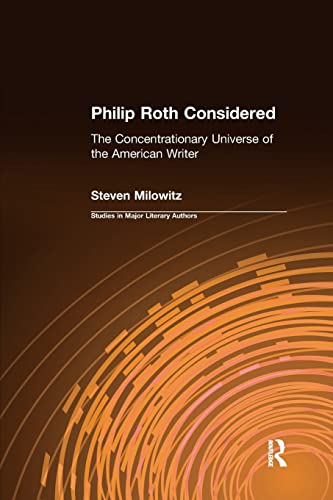
This book comprehensively surveys Philip Roth's published and unpublished works, focusing on the thematic unity which binds them together: the memory of the Holocaust and the altered universe born of that memory. The Holocaust is understood as the orienting event for Roth's fiction and non-fiction, the force that surrounds the characters and the narratives at all times. Roth's obsession with questions of the Holocaust, questions of responsibility, meaning, and powerlessness, explains his recurring discussion of entrapment, dehumanization, nihilism, guilt, and coercion. The concentrationary universe of the title is defined, in this work, as not only the universe of camps, but also the universe that exists after the devastation. Moral and philosophical norms are revoked in this new world. Roth's early works are presented on a desolate landscape. The introduction explicates this landscape, specifically by invoking an early play of Roth's, a play which is set in a Jewish ghetto during the Holocaust. This unpublished work introduces the historical period that shapes the visions of Roth's future protagonists. The next three chapters study Roth's relentless excavation of the dilemmas of fathers, mothers, authority figures, and the inner discord of need and purpose. These seemingly quotidian problems are exacerbated and intensified by the Holocaust's shadowy presence. No relationship, no effort at fulfillment, no action is untempered by history in Roth's varied fictions. Chapters four and five look directly at Roth's allusions to the Holocaust. They explore, through each of Roth's works, how the Holocaust-thematic -the play of ideology and nihilism-and the Holocaust-pattern -the idea of the past encroaching upon the present -work through Roth's career, informing his readers not only of his fascination with the Holocaust, but of his particularly human way of dealing with it. The last chapter briefly summarizes the findings of the previous chapter and connects Roth's specific concentrationary universe to the larger world. The linguistic clues of Roth's novels are revealed and investigated, pointing to Roth's celebration of ambiguity and individuality as parts of an imperfect formula for writing and living in the debased aftermath of the Holocaust.
Le informazioni nella sezione "Riassunto" possono far riferimento a edizioni diverse di questo titolo.
Informazioni sull'autore
Steven Milowitz
Le informazioni nella sezione "Su questo libro" possono far riferimento a edizioni diverse di questo titolo.
Risultati della ricerca per Philip Roth Considered: The Concentrationary Universe...

Immagini fornite dal venditore
Philip Roth Considered : The Concentrationary Universe of the American Writer
Da: GreatBookPrices, Columbia, MD, U.S.A.
Valutazione del venditore 5 su 5 stelle

Condizione: As New. Unread book in perfect condition. Codice articolo 26086983
Compra usato
EUR 47,02
Spedizione EUR 2,27
Spedito in U.S.A.
Spedito in U.S.A.
Quantità: Più di 20 disponibili
Foto dell'editore
Philip Roth Considered: The Concentrationary Universe of the American Writer (Studies in Major Literary Authors)
Da: Majestic Books, Hounslow, Regno Unito
Valutazione del venditore 4 su 5 stelle

Condizione: New. pp. 227. Codice articolo 371945215
Compra nuovo
EUR 53,75
Spedizione EUR 7,57
Spedito da Regno Unito a U.S.A.
Spedito da Regno Unito a U.S.A.
Quantità: 3 disponibili
Immagini fornite dal venditore
Philip Roth Considered : The Concentrationary Universe of the American Writer
Da: GreatBookPrices, Columbia, MD, U.S.A.
Valutazione del venditore 5 su 5 stelle
Condizione: New. Codice articolo 26086983-n
Compra nuovo
EUR 59,19
Spedizione EUR 2,27
Spedito in U.S.A.
Spedito in U.S.A.
Quantità: Più di 20 disponibili
Foto dell'editore
Philip Roth Considered (Studies in Major Literary Authors)
Da: California Books, Miami, FL, U.S.A.
Valutazione del venditore 4 su 5 stelle
Condizione: New. Codice articolo I-9781138978393
Compra nuovo
EUR 62,01
Spedizione gratuita
Spedito in U.S.A.
Spedito in U.S.A.
Quantità: Più di 20 disponibili
Foto dell'editore
Philip Roth Considered
Print on DemandDa: PBShop.store US, Wood Dale, IL, U.S.A.
Valutazione del venditore 5 su 5 stelle
PAP. Condizione: New. New Book. Shipped from UK. THIS BOOK IS PRINTED ON DEMAND. Established seller since 2000. Codice articolo L0-9781138978393
Compra nuovo
EUR 63,24
Spedizione gratuita
Spedito in U.S.A.
Spedito in U.S.A.
Quantità: Più di 20 disponibili
Foto dell'editore
Philip Roth Considered: The Concentrationary Universe of the American Writer
Editore:
Taylor & Francis Ltd, 2016
ISBN 10: 1138978396
ISBN 13: 9781138978393
Nuovo
Paperback / softback
Da: THE SAINT BOOKSTORE, Southport, Regno Unito
Valutazione del venditore 5 su 5 stelle
Paperback / softback. Condizione: New. New copy - Usually dispatched within 4 working days. Codice articolo B9781138978393
Compra nuovo
EUR 51,04
Spedizione EUR 17,38
Spedito da Regno Unito a U.S.A.
Spedito da Regno Unito a U.S.A.
Quantità: 1 disponibili
Immagini fornite dal venditore
Philip Roth Considered : The Concentrationary Universe of the American Writer
Da: GreatBookPricesUK, Woodford Green, Regno Unito
Valutazione del venditore 5 su 5 stelle
Condizione: New. Codice articolo 26086983-n
Compra nuovo
EUR 51,03
Spedizione EUR 17,47
Spedito da Regno Unito a U.S.A.
Spedito da Regno Unito a U.S.A.
Quantità: Più di 20 disponibili
Foto dell'editore
Philip Roth Considered: The Concentrationary Universe of the American Writer (Studies in Major Literary Authors)
Da: Books Puddle, New York, NY, U.S.A.
Valutazione del venditore 4 su 5 stelle
Condizione: New. pp. 227. Codice articolo 26375181600
Compra nuovo
EUR 65,79
Spedizione EUR 3,43
Spedito in U.S.A.
Spedito in U.S.A.
Quantità: 3 disponibili
Immagini fornite dal venditore
Philip Roth Considered : The Concentrationary Universe of the American Writer
Da: GreatBookPricesUK, Woodford Green, Regno Unito
Valutazione del venditore 5 su 5 stelle
Condizione: As New. Unread book in perfect condition. Codice articolo 26086983
Compra usato
EUR 51,97
Spedizione EUR 17,47
Spedito da Regno Unito a U.S.A.
Spedito da Regno Unito a U.S.A.
Quantità: Più di 20 disponibili
Immagini fornite dal venditore
Philip Roth Considered
Print on DemandDa: BuchWeltWeit Ludwig Meier e.K., Bergisch Gladbach, Germania
Valutazione del venditore 5 su 5 stelle
Taschenbuch. Condizione: Neu. This item is printed on demand - it takes 3-4 days longer - Neuware -This book comprehensively surveys Philip Roth's published and unpublished works, focusing on the thematic unity which binds them together: the memory of the Holocaust and the altered universe born of that memory. The Holocaust is understood as the orienting event for Roth's fiction and non-fiction, the force that surrounds the characters and the narratives at all times. Roth's obsession with questions of the Holocaust, questions of responsibility, meaning, and powerlessness, explains his recurring discussion of entrapment, dehumanization, nihilism, guilt, and coercion. The concentrationary universe of the title is defined, in this work, as not only the universe of camps, but also the universe that exists after the devastation. Moral and philosophical norms are revoked in this new world. Roth's early works are presented on a desolate landscape. The introduction explicates this landscape, specifically by invoking an early play of Roth's, a play which is set in a Jewish ghetto during the Holocaust. This unpublished work introduces the historical period that shapes the visions of Roth's future protagonists. The next three chapters study Roth's relentless excavation of the dilemmas of fathers, mothers, authority figures, and the inner discord of need and purpose. These seemingly quotidian problems are exacerbated and intensified by the Holocaust's shadowy presence. No relationship, no effort at fulfillment, no action is untempered by history in Roth's varied fictions. Chapters four and five look directly at Roth's allusions to the Holocaust. They explore, through each of Roth's works, how the Holocaust-thematic -the play of ideology and nihilism-and the Holocaust-pattern -the idea of the past encroaching upon the present -work through Roth's career, informing his readers not only of his fascination with the Holocaust, but of his particularly human way of dealing with it. The last chapter briefly summarizes the findings of the previous chapter and connects Roth's specific concentrationary universe to the larger world. The linguistic clues of Roth's novels are revealed and investigated, pointing to Roth's celebration of ambiguity and individuality as parts of an imperfect formula for writing and living in the debased aftermath of the Holocaust. 228 pp. Englisch. Codice articolo 9781138978393
Compra nuovo
EUR 48,50
Spedizione EUR 23,00
Spedito da Germania a U.S.A.
Spedito da Germania a U.S.A.
Quantità: 2 disponibili