
Articoli correlati a Constraints On Conceptual Development: A Case Study...
Constraints On Conceptual Development: A Case Study Of The Acquisition Of Folk Biological And Folk: A Case Study of the Acquisition of Folkbiological and Folksociological Knowledge in Madagascar - Brossura
Sinossi
The results of a collaboration between an anthropologist (Astuti)
and two developmental psychologists (Solomon and Carey),
this monograph unites two literatures that make very different
tacit assumptions about the very nature of conceptual development.
Anthropologists' focus on the cultural construction of
knowledge leads many of them (including Astuti) to expect radically
different conceptual understandings across cultures. In
contrast, some cognitive developmental investigators (including
Solomon and Carey) work to discover innate representational
constraints that channel cognitive development, thus expecting
cross-cultural universality in representations of the world.
The studies concern Malagasy children's and adults' conceptual
representations of human and animal kind, biological
inheritance, innate potential and family relations. The Vezo of
Madagascar were chosen because the ethnographic literature
has attributed to them folkbiological and folksociological
theories that are radically different, even incommensurable,
with those of North American adults. Vezo therefore provide a
challenging test for the innate conceptual constraints hypothesis.
The results of the studies reported here have surprises
both for anthropological claims of cross-cultural differences
and psychological claims for cross-cultural universality.
Le informazioni nella sezione "Riassunto" possono far riferimento a edizioni diverse di questo titolo.
Informazioni sull'autore
Rita Astuti and Gregg Solomon are the authors of Constraints on Conceptual Development: A Case Study of the Acquisition of Folkbiological and Folksociological Knowledge in Madagascar, published by Wiley.
Dalla quarta di copertina
The results of a collaboration between an anthropologist (Astuti)
and two developmental psychologists (Solomon and Carey),
this monograph unites two literatures that make very different
tacit assumptions about the very nature of conceptual development.
Anthropologists&; focus on the cultural construction of
knowledge leads many of them (including Astuti) to expect radically
different conceptual understandings across cultures. In
contrast, some cognitive developmental investigators (including
Solomon and Carey) work to discover innate representational
constraints that channel cognitive development, thus expecting
cross-cultural universality in representations of the world.
The studies concern Malagasy children&;s and adults&; conceptual
representations of human and animal kind, biological
inheritance, innate potential and family relations. The Vezo of
Madagascar were chosen because the ethnographic literature
has attributed to them folkbiological and folksociological
theories that are radically different, even incommensurable,
with those of North American adults. Vezo therefore provide a
challenging test for the innate conceptual constraints hypothesis.
The results of the studies reported here have surprises
both for anthropological claims of cross-cultural differences
and psychological claims for cross-cultural universality.
Le informazioni nella sezione "Su questo libro" possono far riferimento a edizioni diverse di questo titolo.
I tuoi diritti di garanzia legale: Ogni consumatore nell'UE beneficia di almeno 2 anni di garanzia legale per qualsiasi bene di consumo venduto nell'UE. Scopri di più
Risultati della ricerca per Constraints On Conceptual Development: A Case Study...

Foto dell'editore
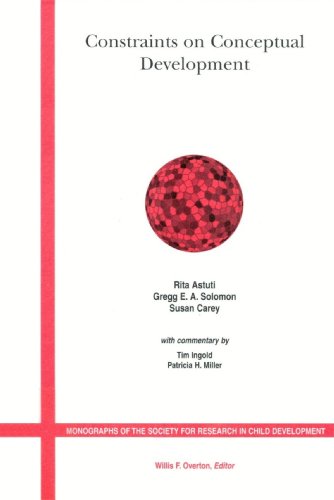
Constraints on Conceptual Development : A Case Study of the Acquisition of Folkbiological and Folksociological Knowledge in Madagascar
Editore:
Wiley & Sons, Incorporated, John, 2004
ISBN 10: 1405132299
ISBN 13: 9781405132299
Antico o usato
Brossura
Da: Better World Books: West, Reno, NV, U.S.A.
Valutazione del venditore 5 su 5 stelle

Condizione: Very Good. Former library copy. Pages intact with possible writing/highlighting. Binding strong with minor wear. Dust jackets/supplements may not be included. Includes library markings. Stock photo provided. Product includes identifying sticker. Better World Books: Buy Books. Do Good. Codice articolo 9875748-6
Compra usato
EUR 37,22
Spedizione gratuita
Spedito in U.S.A.
Spedito in U.S.A.
Quantità: 1 disponibili