
Articoli correlati a Malaria: Genetic and Evolutionary Aspects
Sinossi
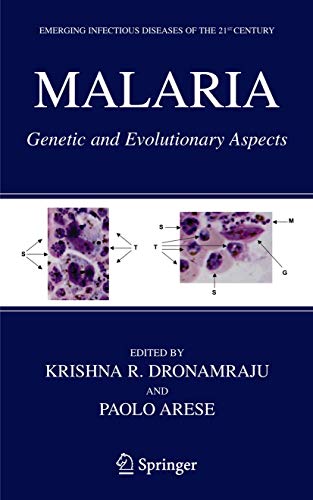
This book was originally conceived at a conference at the University of Turin in Italy. The conference was organized to examine the so-called “Malaria Hypothesis”, that is to say, the higher fitness of t- lassemia heterozygotes in a malarial environment, and to pay tribute to the proponent of that hypothesis, J.B.S. Haldane. Contributors to this book examine certain genetic and evolutionary aspects of malaria which is a major killer of human populations, especially in Africa and Asia. There were attempts to discredit Haldane’s contribution from two directions: (a) it has been suggested that the “Malaria Hypothesis” was known long before Haldane and that there was nothing original about his idea (Lederberg 1999), and that (b) the hypothesis of heterozygote su- riority was first suggested by the Italian biologist Giuseppe Montalenti who communicated his idea to Haldane (Allison 2004). Surely, both c- not be right. In fact, the evidence presented in this book clearly indicates that both are wrong. Haldane’s malaria hypothesis has stimulated a great deal of research on the genetic, evolutionary and epidemiological aspects of malaria d- ing the last 50 years. It has opened up a whole new chapter in the study of infectious diseases. It deserves serious consideration. For helpful discussions we thank Lucio Luzzatto, Alberto Piazza, Guido Modiano and David Roberts.
Le informazioni nella sezione "Riassunto" possono far riferimento a edizioni diverse di questo titolo.
Recensione
From the reviews:
"Malaria focuses on genetic and evolutionary insights into a paradise blamed for the death of a child every 30 s worldwide. ... Malaria: Genetic and Evolutionary Aspects will benefit a broad range of medical, scientific, and public health professionals. Besides strengthening our understanding of the evolutionary origins of malaria, the text opens new perspectives into infectious diseases." (Richard A. Stein, American Journal of Physical Anthropology, Vol. 133, 2007)
Contenuti
J.B.S. Haldane (1892–1964).- Removal of Early Parasite Forms from Circulation as a Mechanism of Resistance Against Malaria in Widespread Red Blood Cell Mutations.- Clinical, Epidemiological, and Genetic Investigations on Thalassemia and Malaria in Italy.- Resistance to Antimalarial Drugs: Parasite and Host Genetic Factors.- Evolutionary Origins of Human Malaria Parasites.- Vector Genetics in Malaria Control.- The Rate of Mutations of Human Genes.- Disease and Evolution.
Le informazioni nella sezione "Su questo libro" possono far riferimento a edizioni diverse di questo titolo.
Risultati della ricerca per Malaria: Genetic and Evolutionary Aspects

Foto dell'editore
Malaria (eng)
Print on DemandDa: Brook Bookstore On Demand, Napoli, NA, Italia
Valutazione del venditore 5 su 5 stelle

Condizione: new. Questo è un articolo print on demand. Codice articolo XPR6COZPBJ
Compra nuovo
EUR 86,24
Spedizione EUR 5,50
Spedito da Italia a U.S.A.
Spedito da Italia a U.S.A.
Quantità: Più di 20 disponibili
Immagini fornite dal venditore
Malaria
Editore:
Springer New York Nov 2010, 2010
ISBN 10: 1441921028
ISBN 13: 9781441921024
Nuovo
Taschenbuch
Da: BuchWeltWeit Ludwig Meier e.K., Bergisch Gladbach, Germania
Valutazione del venditore 5 su 5 stelle
Taschenbuch. Condizione: Neu. This item is printed on demand - it takes 3-4 days longer - Neuware -This book was originally conceived at a conference at the University of Turin in Italy. The conference was organized to examine the so-called 'Malaria Hypothesis', that is to say, the higher fitness of t- lassemia heterozygotes in a malarial environment, and to pay tribute to the proponent of that hypothesis, J.B.S. Haldane. Contributors to this book examine certain genetic and evolutionary aspects of malaria which is a major killer of human populations, especially in Africa and Asia. There were attempts to discredit Haldane's contribution from two directions: (a) it has been suggested that the 'Malaria Hypothesis' was known long before Haldane and that there was nothing original about his idea (Lederberg 1999), and that (b) the hypothesis of heterozygote su- riority was first suggested by the Italian biologist Giuseppe Montalenti who communicated his idea to Haldane (Allison 2004). Surely, both c- not be right. In fact, the evidence presented in this book clearly indicates that both are wrong. Haldane's malaria hypothesis has stimulated a great deal of research on the genetic, evolutionary and epidemiological aspects of malaria d- ing the last 50 years. It has opened up a whole new chapter in the study of infectious diseases. It deserves serious consideration. For helpful discussions we thank Lucio Luzzatto, Alberto Piazza, Guido Modiano and David Roberts. 204 pp. Englisch. Codice articolo 9781441921024
Compra nuovo
EUR 106,99
Spedizione EUR 23,00
Spedito da Germania a U.S.A.
Spedito da Germania a U.S.A.
Quantità: 2 disponibili
Immagini fornite dal venditore
Malaria
Print on DemandDa: moluna, Greven, Germania
Valutazione del venditore 5 su 5 stelle
Condizione: New. Dieser Artikel ist ein Print on Demand Artikel und wird nach Ihrer Bestellung fuer Sie gedruckt. An edited collection of papers by leading experts on the population genetics and evolutionary biology of malariaThis book was originally conceived at a conference at the University of Turin in Italy. The conference was organized to examine the so-called. Codice articolo 4172636
Compra nuovo
EUR 92,27
Spedizione EUR 48,99
Spedito da Germania a U.S.A.
Spedito da Germania a U.S.A.
Quantità: Più di 20 disponibili
Immagini fornite dal venditore
Malaria : Genetic and Evolutionary Aspects
Da: AHA-BUCH GmbH, Einbeck, Germania
Valutazione del venditore 5 su 5 stelle
Taschenbuch. Condizione: Neu. Druck auf Anfrage Neuware - Printed after ordering - This book was originally conceived at a conference at the University of Turin in Italy. The conference was organized to examine the so-called 'Malaria Hypothesis', that is to say, the higher fitness of t- lassemia heterozygotes in a malarial environment, and to pay tribute to the proponent of that hypothesis, J.B.S. Haldane. Contributors to this book examine certain genetic and evolutionary aspects of malaria which is a major killer of human populations, especially in Africa and Asia. There were attempts to discredit Haldane's contribution from two directions: (a) it has been suggested that the 'Malaria Hypothesis' was known long before Haldane and that there was nothing original about his idea (Lederberg 1999), and that (b) the hypothesis of heterozygote su- riority was first suggested by the Italian biologist Giuseppe Montalenti who communicated his idea to Haldane (Allison 2004). Surely, both c- not be right. In fact, the evidence presented in this book clearly indicates that both are wrong. Haldane's malaria hypothesis has stimulated a great deal of research on the genetic, evolutionary and epidemiological aspects of malaria d- ing the last 50 years. It has opened up a whole new chapter in the study of infectious diseases. It deserves serious consideration. For helpful discussions we thank Lucio Luzzatto, Alberto Piazza, Guido Modiano and David Roberts. Codice articolo 9781441921024
Compra nuovo
EUR 124,85
Spedizione EUR 35,00
Spedito da Germania a U.S.A.
Spedito da Germania a U.S.A.
Quantità: 1 disponibili
Foto dell'editore
Malaria
Da: Books Puddle, Woodside, NY, U.S.A.
Valutazione del venditore 4 su 5 stelle

Condizione: New. pp. 204. Codice articolo 263064296
Compra nuovo
EUR 156,55
Spedizione EUR 3,56
Spedito in U.S.A.
Spedito in U.S.A.
Quantità: 4 disponibili
Immagini fornite dal venditore
Malaria | Genetic and Evolutionary Aspects
Da: preigu, Osnabrück, Germania
Valutazione del venditore 5 su 5 stelle
Taschenbuch. Condizione: Neu. Malaria | Genetic and Evolutionary Aspects | Krishna R. Dronamraju (u. a.) | Taschenbuch | Emerging Infectious Diseases of the 21st Century | xi | Englisch | 2010 | Springer | EAN 9781441921024 | Verantwortliche Person für die EU: Springer Verlag GmbH, Tiergartenstr. 17, 69121 Heidelberg, juergen[dot]hartmann[at]springer[dot]com | Anbieter: preigu. Codice articolo 107253173
Compra nuovo
EUR 95,25
Spedizione EUR 70,00
Spedito da Germania a U.S.A.
Spedito da Germania a U.S.A.
Quantità: 5 disponibili
Foto dell'editore
Malaria: Genetic and Evolutionary Aspects
Da: Revaluation Books, Exeter, Regno Unito
Valutazione del venditore 5 su 5 stelle
Paperback. Condizione: Brand New. 190 pages. 9.00x6.00x0.46 inches. In Stock. Codice articolo x-1441921028
Compra nuovo
EUR 154,96
Spedizione EUR 11,94
Spedito da Regno Unito a U.S.A.
Spedito da Regno Unito a U.S.A.
Quantità: 2 disponibili
Immagini fornite dal venditore
Malaria
Editore:
Springer, Springer Nov 2010, 2010
ISBN 10: 1441921028
ISBN 13: 9781441921024
Nuovo
Taschenbuch
Da: buchversandmimpf2000, Emtmannsberg, BAYE, Germania
Valutazione del venditore 5 su 5 stelle
Taschenbuch. Condizione: Neu. This item is printed on demand - Print on Demand Titel. Neuware -This book was originally conceived at a conference at the University of Turin in Italy. The conference was organized to examine the so-called ¿Malaria Hypothesis¿, that is to say, the higher fitness of t- lassemia heterozygotes in a malarial environment, and to pay tribute to the proponent of that hypothesis, J.B.S. Haldane. Contributors to this book examine certain genetic and evolutionary aspects of malaria which is a major killer of human populations, especially in Africa and Asia. There were attempts to discredit Haldane¿s contribution from two directions: (a) it has been suggested that the ¿Malaria Hypothesis¿ was known long before Haldane and that there was nothing original about his idea (Lederberg 1999), and that (b) the hypothesis of heterozygote su- riority was first suggested by the Italian biologist Giuseppe Montalenti who communicated his idea to Haldane (Allison 2004). Surely, both c- not be right. In fact, the evidence presented in this book clearly indicates that both are wrong. Haldane¿s malaria hypothesis has stimulated a great deal of research on the genetic, evolutionary and epidemiological aspects of malaria d- ing the last 50 years. It has opened up a whole new chapter in the study of infectious diseases. It deserves serious consideration. For helpful discussions we thank Lucio Luzzatto, Alberto Piazza, Guido Modiano and David Roberts.Springer-Verlag KG, Sachsenplatz 4-6, 1201 Wien 204 pp. Englisch. Codice articolo 9781441921024
Compra nuovo
EUR 106,99
Spedizione EUR 60,00
Spedito da Germania a U.S.A.
Spedito da Germania a U.S.A.
Quantità: 1 disponibili
Foto dell'editore
Malaria
Print on DemandDa: Majestic Books, Hounslow, Regno Unito
Valutazione del venditore 4 su 5 stelle
Condizione: New. Print on Demand pp. 204 49:B&W 6.14 x 9.21 in or 234 x 156 mm (Royal 8vo) Perfect Bound on White w/Gloss Lam. Codice articolo 5865015
Compra nuovo
EUR 164,28
Spedizione EUR 7,76
Spedito da Regno Unito a U.S.A.
Spedito da Regno Unito a U.S.A.
Quantità: 4 disponibili
Foto dell'editore
Malaria
Print on DemandDa: Biblios, Frankfurt am main, HESSE, Germania
Valutazione del venditore 4 su 5 stelle
Condizione: New. PRINT ON DEMAND pp. 204. Codice articolo 183064290
Compra nuovo
EUR 164,88
Spedizione EUR 9,95
Spedito da Germania a U.S.A.
Spedito da Germania a U.S.A.
Quantità: 4 disponibili